Autor Cointelegraph By Ezra Reguerra

UAE regulators pave way for crypto and blockchain adoption, says legal expert

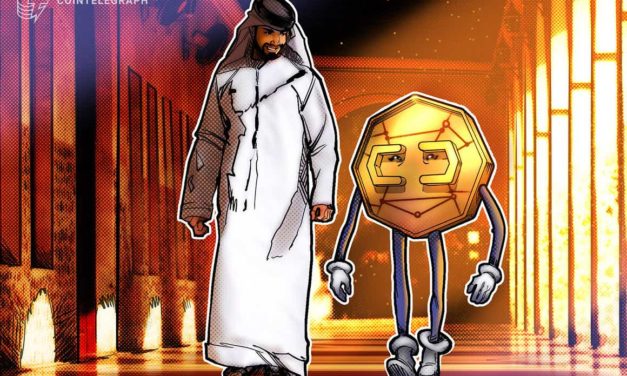
While many countries are inclined to simply ban the use of Bitcoin (BTC) and virtual assets, regulators in the United Arab Emirates are taking a different approach. The country has been consistently enacting its vision of becoming a blockchain capital by providing frameworks to guide crypto businesses on how to operate in accordance with the laws.Jurisdictions in the country are divided between the mainland, where the regulator is the Securities and Commodities Authority (SCA), and free zones i.e. geographically-specified areas within the UAE with relaxed taxation and regulatory regimes. Such free zones include the Dubai International Financial Centre (DIFC), which is regulated by the Dubai Financial Services Authority (DFSA), Abu Dhabi Global Markets (ADGM) which is regulated by the Financial Services Regulatory Authority (FSRA), and the Dubai Multi Commodities Centre (DMCC) which falls under regulatory remit of the SCA.In an interview with Cointelegraph, Kokila Alagh, the founder and CEO of Karm Legal Consultants, shared a brief overview of the regulatory situation in the country. According to Alagh, the SCA, the mainland regulator, provides certainty and opportunities for crypto and blockchain businesses:“The regulations provided certainty and have opened new opportunities in the UAE, which makes SCA a progressive regulator in the global landscape, as they haven’t ignored this vital growing sector and are continuously working on developing the frameworks to adjust as per these emerging sectors like DLT, blockchain.” The FSRA, ADGM’s financial services regulator, was the first to introduce digital asset regulations in the country back in 2018. Alagh said that ADGM was also one of the first regulators globally to introduce digital securities regulations and guidance on virtual assets, adding that ADGM is “one of the topmost jurisdictions for established blockchain companies.” Alagh also discussed regulations in the DIFC. According to Alagh, the DFSA, DIFC’s regulator, “is one of the first regulators from a major financial free zone to bring regulations in regard to security tokens.” Current DFSA regulations cover the tokenization of securities through blockchain and distributed ledger technology, including the tokenization of shares, derivatives, bonds, debentures, certificates or units of a fund. However, consultation papers for stablecoins, fungible cryptos and nonfungible tokens are still in the process of being drafted.Related: Dubai World Trade Centre to create new crypto hub and become regulator Lastly, Alagh noted DMCC. The free zone issued special licenses such as the DLT technology service provider license and proprietary trading in crypto commodities license. It also has a crypto-dedicated center called Crypto Oasis, where more than 130 blockchain companies have registered. Alagh said that “the DMCC is one of the most advanced regulators in this space and has spearheaded the development of the crypto ecosystem in the UAE. The DMCC is a crypto-friendly regulator and provides companies with a friendly framework for setting up a business.” Meanwhile, crypto exchange Binance has set out to collaborate with the UAE government to assist crypto exchanges and businesses to get their licenses in Dubai. The firm signed a memorandum of understanding with the Dubai World Trade Centre Authority as they launched a crypto hub.  

Čítaj viac
Rapper Nas to let fans own part of his music through NFTs

Award-winning rapper Nas will release nonfungible tokens (NFTs) that will let his fans own a stake in two of his songs, Ultra Black and Rare. Users who buy and hold the NFTs, dubbed limited digital assets (LDAs), will get the specified percentage of streaming royalty ownership depending on the token that they hold. Ultra Black comes from Nas’ 2021 Grammy award-winning Album King’s Disease, while Rare is from the follow-up 2022 Grammy-nominated album, King’s Disease II. The former song will have a limited supply of 760 tokens, while the latter will have 1,110 tokens. Both will be released on Jan. 11, 2022, and buyers will be able to acquire the tokens on a first-come, first-served basis.Without further ado.. we’re honored to announce Hip Hop legend, innovator and entrepreneur @Nas will be the first artist to drop his music on royal on January 11th! https://t.co/TkyWvOJOvY pic.twitter.com/hQGGXVuPhz— royal (@join_royal) January 6, 2022The LDAs will be sold through the NFT music platform Royal.Back in November 2021, Royal CEO Justin “3LAU” Blau told Cointelegraph that the platform’s number one objective is to allow fans to co-own the music by their favorite artists. “We’re starting off with a curated group of artists for our initial sales, but we plan on opening up the platform to more artists in the future,” Blau said.Related: Snoop drops ‘Decentral Eyes Dogg’ NFT like it’s hotNas also reportedly invested in one of the biggest exchange platforms, Coinbase, when it went public last year. In a song with DJ Khaled and JAY-Z, Nas bragged about his crypto wealth and Coinbase investment. “I’m coin-based, basically cryptocurrency Scarface,” says Nas in the song’s lyrics.In addition to Nas, prominent rapper Eminem recently joined the “Bored Ape Yacht Club” after reportedly buying a Bored Ape nicknamed “Eminape” for $462,000 in OpenSea. The rapper is known to own several other NFTs such as “Ditaggdogg#1” and “Superlative Apes #3880”.

Čítaj viac

Solana network faces degraded performance for the second time this week

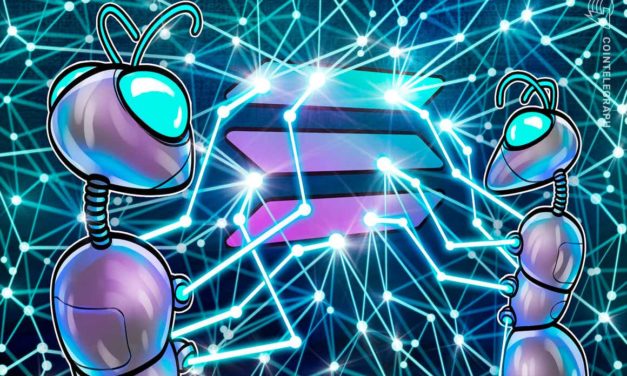
The Solana blockchain has faced its second network performance degradation incident this week. According to Solana, this is happening because of a rise in high compute transactions. As a result, the network capacity, which was originally advertised to be 50,000 transactions per second (TPS), was reduced to several thousand TPS. Solana cited this as the reason why users experienced failed transactions and added that its developers are already working to fix the issues.This latest network issue came only a few days after a similar incident on Tuesday, where users experienced the same problems. Many speculated that the Tuesday incident was due to a distributed denial-of-service (DDoS) attack, but Solana co-founder Anatoly Yakovenko responded on Twitter, saying that it’s just the “pain of getting a new runtime commercialized.”Amid these recent events, Cyber Capital chief investment offic Justin Bons expressed his disapproval with Solana and published a series of tweets enumerating the reasons why he doesn’t support the project. Bons claims that Solana is “consistently displaying a pattern of bad behavior” and “prioritizing attracting ignorant investors over good blockchain design.”Bons also criticized the security of the network, mentioning that DDoS attacks are not the only concern. He said that DDoS can be combined with a 51% attack. With this, he claims that attackers can “temporarily gain proportional-staked control over the network by attacking other stakeholders.”Yakovenko dismissed this as “exhausting nonsense,” stating, “It’s impossible to DDoS a private key.”Related: Solana reportedly hit by DDoS attack, but network remains onlineLast year, Solana was hit by a DDoS attack causing a similar effect and degrading the network’s performance. Solana Labs head of communications Austin Federa said that the outage came after a number of transactions during an initial DEX offering “landed in a Solana block that took an excessive amount of compute power.” “Compute for those kinds of transactions wasn’t properly metered by the network, and caused blocks to take much longer to process than the network expected,” Federa stated.

Čítaj viac

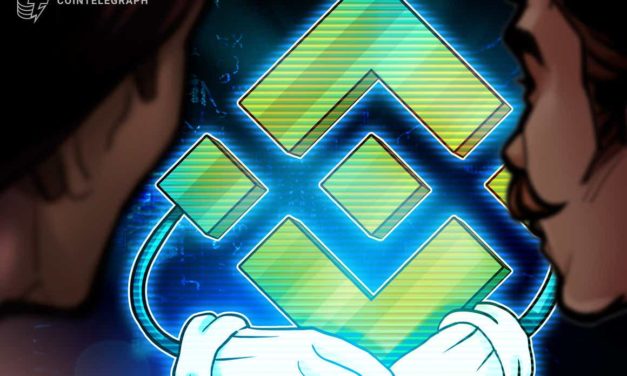
Binance implements a ‘fair way’ to purchase NFTs

Due to the rise in demand, it’s increasingly harder to purchase nonfungible tokens (NFTs) on their initial launch. Because of the limited supply, and high demand, some NFT drops have sold out after only a few seconds of release. With this, users who are interested in purchasing newly-released collections have no choice to wait until the initial owners decide to flip the NFTs for some profit, resulting in having to pay more or not being able to acquire any of the NFTs entirely. Because of this, Binance introduced a subscription mechanism that lets everyone have an equal opportunity to buy newly-released NFTs on its marketplace. The marketplace’s new NFT Subscription Mechanism lets users have a higher chance of being able to purchase NFTs by limiting the allowed amount of NFT purchase per person and following a randomized buyer selection process.Users who want to participate in NFT Subscription Mechanism sales need to follow a process that consists of four phases — preparation, subscription, calculation and distribution. In the preparation phase, users have to hold the minimum amount of tokens required to participate. Binance notes that the minimum entry requirement is determined by the creators or project that will conduct the NFT sale. The subscription phase comes next. Here, qualified participants will then be given participation tickets which will have purchase limits per user set by the NFT creators. The number of tickets received by a user will be the maximum amount of NFTs that can be purchased. However, users have the option to decide whether to use all or only a few of their tickets. Having more tickets doesn’t mean you will get the NFT. However, it will give you more chances to succeed in your purchase. Related: Biggest NFT drops and sales in 2021After this, the process moves forward to the calculation phase. This incorporates a randomized selection system to choose winning participation tickets from all who subscribed. The selected participants will be able to successfully purchase the NFTs. The final phase is the distribution, where the sale will proceed.It’s undeniable that NFTs have grown immensely in recent months. With the global NFT sales volume approaching $20 billion, many speculate that NFTs may someday surpass even Bitcoin. 

Čítaj viac

CertiK identifies Arbix Finance as a rug pull, warns users to steer clear

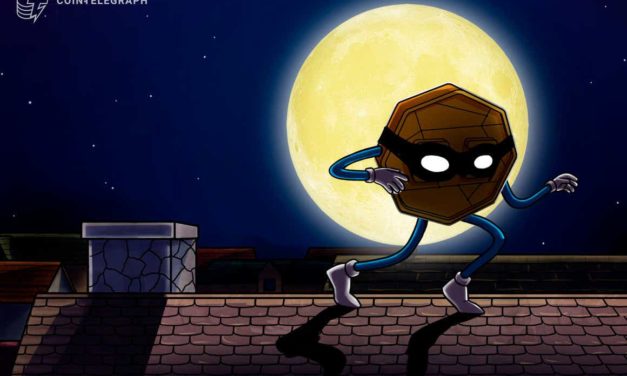
Binance Smart Chain-based yield farming protocol Arbix Finance was identified by blockchain security company CertiK as a rug pull. According to the firm’s incident analysis, there were several reasons why the project was flagged. The security firm states that “The ARBX contract has mint() with onlyOwner function, 10 million ARBX tokens were minted to 8 addresses,” and 4.5 million ARBX was minted to a single address. Following this, CertiK confirmed that “The 4.5M minted tokens were then dumped.”The firm also reported that the $10 million in funds deposited by users was directed to pools that are unverified, and eventually, a hacker drained all the assets from the pools. Using the platform’s Skytrace tool to analyze the risk of fraud, the firm determined that the hacker moved the funds to Ethereum through decentralized exchange AnySwap USDT.The term “rug pull” is used to define events where developers abandon projects entirely after receiving a huge amount of investments in their fake crypto or decentralized finance project. Scams such as this are very prevalent in the crypto industry and record over $7.7 billion worth of cryptocurrency funds lost by scam victims globally.A report by Chainalysis suggests that rug pulls contributed the most to the increase of money lost through crypto scams in 2021. The report notes that “37% of all cryptocurrency scam revenue in 2021” were rug pulls. Related: How to spot a rug pull in DeFi: 6 tips from CointelegraphBack in November 2021, investors lost around $57 million worth of Ether (ETH) in a rug pull by AnubisDAO, a fork of OlympusDAO. Investors noted extravagant gains in the popular canine-themed meme coins were some of the reasons why they invested in the rug pull.

Čítaj viac

Získaj BONUS 8 € v Bitcoinoch

nakup bitcoin z karty

Registrácia Binance

Burza Binance

Aktuálne kurzy