Autor Cointelegraph By Ezra Reguerra

Tax expert says buying crypto is not a taxable event

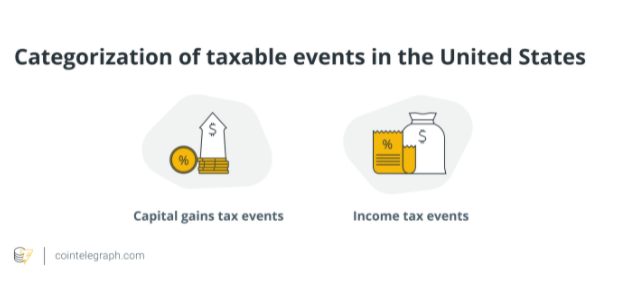
While many refer to crypto as the “Wild West,” some believe that this may only continue for a little longer.Thomas Shea, crypto tax leader at EY Financial Services, told Cointelegraph that taxation for crypto is an evolving area and new regulations may be implemented soon. “There is new legislation that will require reporting for at least some crypto transactions and when those rules go into effect there will be significant changes,” says Shea.The EY executive notes that with the increased popularity of crypto, lawmakers are continuously exploring how to generate revenue by taxing and regulating digital assets.“We’re seeing certain jurisdictions develop regimes, rates, and reporting unique to digital assets. In the U.S., we’re seeing digital assets being subject to rules and reporting typically limited to securities (and not property).”While not many may appreciate the taxation of their crypto assets, understanding the changing tax impacts associated with crypto is crucial according to Shea. The tax expert notes that market participants need to be aware of the “scope of their transactions that potentially trigger a taxable event and the associated reporting requirements.”According to Shea, buying or selling crypto influences whether it’s taxable or not. Purchasing crypto with fiat and any unrealized appreciation are not taxable events. However, the tax executive notes that selling your crypto is a taxable event. He explains that “the gain or loss is generally capital in nature” and this could be taxed.Even if a holder exchanges their crypto for other assets like Bitcoin (BTC) or Ethereum (ETH), the EY executive notes that this gives users a “taxable event and are required to report gain or loss on the disposed crypto.”The same applies to nonfungible tokens (NFTs). “If you purchased an NFT with fiat, no taxable event,” says Shea. However, purchasing NFTs with crypto is treated very similarly to a crypto-for-crypto exchange. “The gross proceeds less your tax basis in the asset, generally including any associated fees/costs,” says the crypto tax expert.The EY executive also urges people to seek the counsel of proper advisors once they are aware of their tax obligations.“In an industry in which technology serves as the architectural framework, having an advisor that has an accompanying technology solution and understands your goals, will enable you to make the best decisions possible to minimize your tax burden.”Related: How are cryptocurrency taxes reported?Meanwhile, in Thailand, crypto traders are reportedly exempt from the 7% VAT on authorized exchanges. Traders within the country will also be able to offset losses against gains annually.Back in February, the Indian government proposed a 30% income tax on crypto revenue. However, many opposed the proposal as a 30% crypto tax is almost double compared to corporate tax rates hovering at 16%.

Čítaj viac

Women-led startup to help consumers monetize their data through blockchain

Web2 lets big tech companies collect consumer data without paying the people behind the statistics. However, the advent of Web3 technologies may change the way data is collected and let consumers get compensation for the information they share, according to the founders of Chain Collective, a Web3 startup that enables consumers to monetize their data using blockchain.Skills acquired from working in business intelligence and machine learning coupled with a passion for Web3 technologies led Jenny Walker and Greta Menzies to create a data marketplace. With blockchain technology, the all-female team aims to help consumers monetize their data and inspire women to enter the Web3 space. Jenny Walker and Greta Menzies, founders of Chain Collective.Greta Menzies, the co-founder of Chain Collective, told Cointelegraph that at the moment, consumer data is being “collected, bought, sold and profited from.” However, the consumers who are the true owners of the data have no way to claim their share from “the value of their data.”“Our initiative empowers consumers with a data exchange marketplace allowing a fair and equitable exchange of the economics of data between consumers and businesses.”According to Menzies, companies have been crafting data policies that are very complex and difficult to understand for everyday consumers. The co-founder believes that these are designed to confuse consumers about how their data are being used. “We believe consumers and businesses alike would benefit from a cross-industry standardized framework and consumer-friendly language to unlock transparency and build trust between both parties around data sharing.”Using blockchain, the team will make digital certificates that will be available on their nonfungible token (NFT) marketplace. These certificates will represent consumer data assets and will be exchanged through a smart contract. Relying on the inherent security and transparency provided by blockchain and enhancements offered by machine learning, the team aims to provide “dynamic and equitable pricing models.”Related: Happy International Women’s Day! Leaders share their experiences in cryptoApart from these, Menzies also recognizes a need to create space and opportunities for women in crypto. The data executive says that they are using this chance also to inspire women, like their own daughters, and show them that they can do this themselves.“We believe it is important to create spaces and opportunities for women. We are digging deep and are so appreciative when people reach out and provide those opportunities to us and we are trying to create that for other women too.”Being based in Australia, the co-founder also shared her thoughts on blockchain adoption within the region. While regulators in Australia try to push crypto adoption, Menzies believes that “the barrier to entry remains too high for more widespread adoption” in the region. 

Čítaj viac

GSR partners with Chainlink to integrate price data for smart contracts

Crypto market-making firm GSR has partnered with Chainlink to contribute price data to decentralized oracle networks (DONs) to be used within decentralized finance (DeFi) and smart contract applications, highlighting that the blockchain industry is moving forward to interoperability and more cross-platform compatibilities.In an announcement, Sergey Nazarov, the co-founder of Chainlink, said that “high-quality market data is vital to the growth of the multi-chain ecosystem.” According to Nazarov, GSR launching its data service will enable the firm to access the ever-growing blockchain economy and assist in the innovation of smart contracts.Chainlink co-founder Sergey Nazarov. Source: OceanProtocol YouTubeFrancisco Lopez, a GSR executive, also mentioned that the collaboration with Chainlink Labs will allow GSR to speed up the adoption of “trust-minimized financial data products.” According to Lopez, because Chainlink is blockchain-agnostic, GSR will have a “future-proof bridge” that connects data to the blockchain.As a result of the collaboration, developers will have access to GSR’s analytics data to be applied in use cases that depend on the aggregation of crypto market data sources such as yield products, prediction markets, options and futures and algorithmic stablecoins.Apart from this, the announcement also mentions that the collaboration will allow the creation of various other data products to be used within the DeFi landscape. Related: Oracle tokens turn bullish as blockchain projects focus on interoperabilityBack in February, climate-focused project Hyphen also integrated Chainlink to track and verify greenhouse gas data and hold companies accountable for their environmental impact reports. The project integrates organizational data and makes it available for smart contract use. This will allow tracking and regulatory services for both public and private entities.Meanwhile, a DeFi banking firm has joined a council formed by various traditional finance bigwigs. Scallop has recently entered the PCI Security Standards Council (PCI SSC) which is a worldwide community of projects aiming to enhance payment data security globally.

Čítaj viac

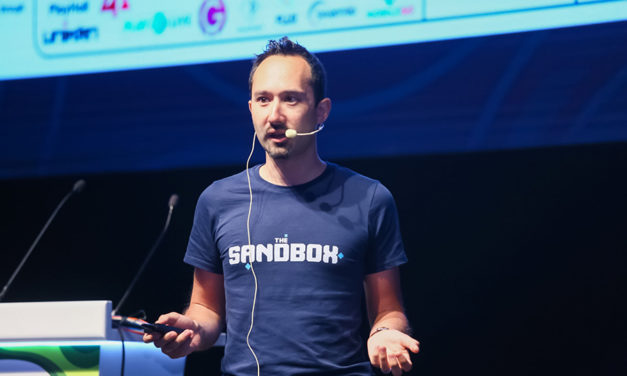
The metaverse lets us explore human imagination, says The Sandbox founder

While the interest in metaverse seems to slow down, a pioneer in the space is still hard at work, advocating the open metaverse, a decentralized and interoperable multiverse.In an interview with Cointelegraph Brazil, Sebastien Borget, the founder of the open-world blockchain game The Sandbox, shared some of his thoughts and expertise when it comes to Web3 and the state of the metaverse.According to Borget, the metaverse is a gateway to new experiences limited only by what users can think of. He explained that:“Web 3.0 and the metaverse are enabling each of us to become an explorer of our human imagination, inventing new parallel universes where we can choose the experiences we want to live.”The Sandbox founder also mentions that the metaverse has already started to influence the way people “socialize, form economic relationships, and gather in communities.” He believes that within a decade, there will be more developments in the space. “We envision that within the next 10 years, the metaverse will have transformed profoundly how we’re thinking about the way we’ll be working, socializing, playing, and earning through the economic opportunities and jobs it is creating.”Borget believes that the role of platforms must be to ensure that the process of creation is fun and rewarding and that listening to what users want should be the priority. “We’ve brought this ecosystem into being, but experiences and assets that players make and share are what drives it,” says Borget.Apart from these, the governance of the metaverse must be transferred over to the users according to Borget. This will be done through a decentralized autonomous organization (DAO) launch with voting mechanisms.Related: The Sandbox metaverse hits 2M users, begins K-pop partnershipThe Sandbox is offering a decentralized metaverse. Borget explains that this means that its users are not locked within its platform. “It’s important to us that the content you own or create in The Sandbox can be transferred to other open metaverses, and vice versa,” he said. Borget also stresses that decentralization is the way forward, rather than being stuck in a Web2 “microverse,” where content ownership is trapped by big tech.“We’re strongly advocating for the core of the open metaverse to be decentralization, interoperability and creator-generated content.”When asked what’s next for The Sandbox, the founder explained that the team is building the platform step by step. “Our vision of a decentralized entertainment metaverse where everyone can play, create, and be rewarded for their time through play-to-earn is resonating strongly. Step by step, we’re building out the ecosystem to realize the potential The Sandbox offers to players, creators, and partners,” says Borget.Sebastien Borget, Founder and COO of The Sandbox. Source: borget.netApart from this, the founder explains that up next is enabling creators to build and share experiences within their lands. Borget says that people can expect more original content generated by the community going forward.The Sandbox executive also underscored that despite nations like the United States, China and Turkey announcing metaverse strategies, these parties would be unable to control the metaverse. “This diversity of ownership means that no single party can control the metaverse,” he said.Borget also mentions that the Sandbox also aims to make gaming more equitable. The founder says that they “especially want to make The Sandbox a welcoming place for women as creators and players.” This can potentially also bring more women to Web3.“We support creator efforts to build inclusive worlds that can inspire players to see beyond the external differences while still appreciating them.”

Čítaj viac

The future of work: Companies open offices in the metaverse

There’s been a sharp decline in interest for the “metaverse” keyword in Google search. However, while the hype may be waning, it seems that companies are still very keen on dipping their toes into the virtual world.In March alone, companies have either launched or revealed plans to build metaverse offices that would be used for online meetings with international clients, internal innovation hubs and enhancing social communication with users.While we may be witnessing its earlier versions, metaverse offices seem like a sneak peek into the future of work. With this, let’s take a look at some companies that have recently entered the metaverse.Events firm Atom sets up a metaverse officeAtom, an events firm based in Mumbai, has recently set up its metaverse office. The firm purchased digital space in Decentraland, and it’s planning to use the virtual office as a new way to reach out to its international clients. The company also plans to use it for future metaverse events.Yash Kulshreshtha, the creative head for Atom, said in an interview that the move aims to expand the company’s global operations and cater to younger generations. “The young generation growing up today will find it completely natural,” said Kulshreshtha.KuCoin exchange launched KuCoin Meta OfficeDigital asset exchange KuCoin has launched an office based on the Bloktopia Digital Space. In a press release, the trading platform revealed its KuCoin Meta Office. The office aims to provide an immersive metaverse experience to its visitors as well as access to interactive social communication.KuCoin CEO Johnny Lyu said that this milestone helps bring adoption to the metaverse and blockchain. “KuCoin is exploring the application scenarios of metaverse and blockchain technology,” said Lyu.Related: The Sandbox metaverse hits 2M users, begins K-pop partnershipBjarke Ingels designs first virtual officeProminent architecture firm Bjarke Ingels Group worked with Vice Media’s creative agency Virtue Futures to design a new metaverse office located in Decentraland. Dubbed as the “Viceverse office,” the digital space will be a hub for Vice Media Group employees.In an interview, Virtue Futures executive Morten Grubak described the office as an “experimental playground.” According to Grubak, the office allows its teams to experiment with nonfungible tokens, decentralized autonomous organizations and Web3.SCB 10x reveals plans to launch The Sandbox-based officeSCB 10x, the venture arm of Siam Commercial Bank, has revealed plans to launch a virtual office based in The Sandbox. According to the announcement, the office will be launched later in 2022 and will be used for connecting with the global community of builders.Apart from connecting with the community, the digital office will allow visitors to attend events, join product demonstrations and visit uniquely crafted environments.

Čítaj viac

Získaj BONUS 8 € v Bitcoinoch

nakup bitcoin z karty

Registrácia Binance

Burza Binance

Aktuálne kurzy