Autor Cointelegraph By Ezra Reguerra

Cryptopedia: Learn about Web3 and how it aims to transform internet services

In the newest episode of Cryptopedia, Cointelegraph’s Jackson DuMont dissects Web3 and gives an insightful overview of how the next generation of the internet works. DuMont discusses the basics of Web3 and how it’s different from its predecessors Web1 and Web2.Web1 was the first version of the internet, which occurred from 1991 to 2003. It involved static and read-only HTML web pages with simple design, and DuMont described Web1 users as only “consumers of content.” On the other hand, Web2 brought innovations like images, videos, applications, games and ads. The second iteration of the internet relied on the exchange of information between companies and users and has developed a centralized social ecosystem.The term Web3 was first used by one of the Ethereum founders, Gavin Wood, back in 2014. He described this version of the web as decentralized and blockchain-based with technologies that verify information through various protocols.With Web1 being past and Web2 being the present, Web3 opens the way to a futuristic version of the internet that is more decentralized and secure. DuMont summarized Web3 as a “read, write and own” phase of the internet.Related: What the hell is Web3 anyway?While Web3 is described a decentralized and owned by the people, the current iteration of the supposed third generation of the web is criticized for being centralized and owned by venture capitalists and not the people. Back in 2021, Twitter co-founder and former CEO Jack Dorsey warned people that companies own Web3. “You don’t own Web3,” he wrote.Despite the criticism, companies still continue to build and put money into the development of Web3 infrastructures. In March, Web3 giant Animoca Brands started to target social media giants in an effort to speed up the development of an open metaverse. On the other hand, investor Katie Haun also recently raised $1.5 billion for a Web3 fund.

Čítaj viac
IOSCO says DeFi is quickly evolving and 'cloning financial markets'

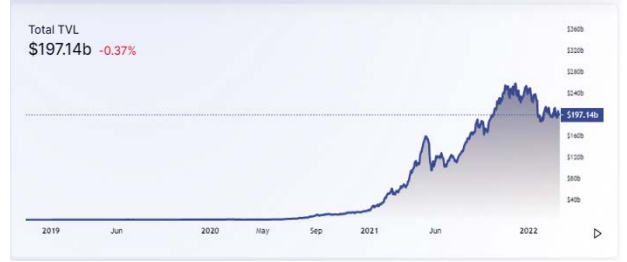
As decentralized finance (DeFi) space grows, regulators are giving more effort to conducting research and providing a means to better understand the emerging industry.Today, the International Organization of Securities (IOSCO) published a report that aims to give a perspective on DeFi and highlight some areas that may be potential areas of concern to regulators. According to the report, DeFi is growing and many of its mechanisms are very similar to traditional financial markets.Total Value Locked in DeFi. Source: IOSCO reportApart from mirroring traditional finance, IOSCO mentions that a lot of financial products, services, arrangements, and activities in the DeFi industry sometimes overlap with more traditional finance operations.Because of this, IOSCO encouraged regulators to understand the implications of DeFi developments with regard to their jurisdictions. As the DeFi market expands, IOSCO notes that “a granular and holistic understanding of the DeFi market” can enhance regulators’ ability to create laws relevant to their domains.In the report, IOSCO recognized that there are many benefits presented by the DeFi industry. IOSCO chair Ashley Alder said that “DeFi is a novel and fast-growing area of financial services.” However, the organization also noted the risks that it poses to users as the industry develops. Adler described the report as an outline of the “key areas of concern for IOSCO.”Along with the report, IOSCO created a task force that will cover the DeFi market. Tuang Lee Lim, the chair of the newly-formed task force, mentioned that:”IOSCO’s decision to establish the task force signifies our members’ resolve to take timely and coordinated policy action to appropriately address the risks arising from this fast-growing area.”Related: DeFi to reach mass adoption via institutional participation, DEX founder saysMeanwhile, a report by KuCoin Labs published in February notes that DeFi players may opt for DAO governance as regulatory risks are closing in. The report mentioned that DAOs can be recognized as legal entities and with it, community interest may be prioritized.

Čítaj viac

Chainlink launches startup program to provide blockchain resources to early-stage projects

Chainlink Labs recently announced a program that provides a blueprint to help new crypto projects in their blockchain business building journey. According to the company, the program called Startup with Chainlink will help early-stage founders and entrepreneurs with free information resources, community groups and access to mentors from a pool of business and technical experts. David Post, a Chainlink Labs executive who contributed to creating the program mentioned that the it will let startups access scaling information, operations best practices, webinars, events and community groups. However, top projects will be able to access more benefits such as mentors and venture capitalists. All of these are designed to help new blockchain projects survive in the long term. “Startup with Chainlink helps founders get it right from the beginning so that they can scale their operations sustainably and become long-term players in the ecosystem.” While starting a crypto business may be good for the blockchain ecosystem, doing it wrong gives crypto a bad reputation. Apart from that, cluelessness can lead to employees quitting immediately after seeing red flags. Because of these, resources from top experts may go a long way. Additionally, a program to aid startups can help projects to focus on creating new designs rather than reinventing existing ones. “Despite the fact that there is a repeatable blueprint for launching crypto projects, all too often founders try to reinvent the wheel on critical design decisions,” said Post. Post also believes that the program will have a significant positive impact on the blockchain community as a whole. He explained that: “The result is a more interconnected blockchain ecosystem built on sustainable projects with stronger community ties. Individual projects’ stability and strength will help create a lasting Web3 ecosystem that benefits people all around the world.” Related: Indian state government to accredit Web 2.0 and Web 3.0 blockchain startupsBack in January, The Sandbox launched a startup accelerator program that aims to invest in 30 to 40 businesses annually. The firm partnered with accelerator company Brinc to allocate investments into potential projects and give access to high-profile mentors.

Čítaj viac

Lemonade partners with blockchain bigwigs to combat climate change

Insurance company Lemonade has partnered with prominent blockchain companies to form the Lemonade Crypto Climate Coalition (L3C) decentralized autonomous organization (DAO) to protect farmers from climate change by offering blockchain-based insurance. The insurance firm founded Lemonade Foundation, a nonprofit focused on creating social and environmental change with the use of blockchain-enabled technologies. The foundation will work closely with members of the L3C including Chainlink, Avalance, DAOstack, Etherisc, Hannover Re, Pula and Tomorrow.io.The climate insurance will take the form of a decentralized application (DApp) on the Avalanche platform. The DApp will also enable farmers to make and receive payments using crypto or with their local currencies. According to the announcement, the DApp will be rolled out to Africa in 2022.Daniel Schreiber, director at the Lemonade Foundation, said that the foundation was created to build technologies that are exponentially impactful. With this, they “expect to harness the communal and decentralized aspects of web3 and real-time weather data to deliver affordable and instantaneous climate insurance to the people who need it most,” said Schreiber.The move is expected to impact around 300 million farmers in Africa. Rose Goslinga, co-founder of Pula, a Kenya-based insurance tech firm says that “the majority face real climate risks to their livelihoods, as traditional, indemnity-based insurance is often unaffordable or unavailable to them.” Goslinga notes that an on-chain solution will have a scalable positive impact on the region.Related: SushiSwap community proposes Swiss legal structure to limit DAO liabilityChainlink, a founding member of L3C, also plans to contribute its team and tech to the cause. “We plan to make the Chainlink team and platform available to L3C in an effort to protect the millions of farmers who depend on what they grow from the devastation of climate change,” said Sergey Nazarov, co-founder of Chainlink.Meanwhile, a report shows that crypto users in Africa increased by 2,500 percent in 2021. Data shown by KuCoin exchange notes that crypto transactions based on the region grew significantly in 2021. Because of this, the region holds around 2.8% of the global trading volume.

Čítaj viac

Turning losses to wins: How a Ponzi victim became a crypto evangelist

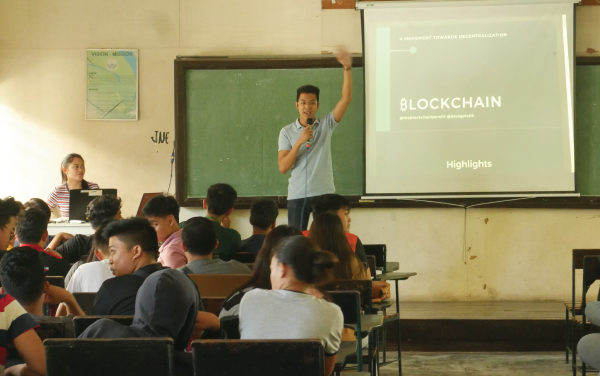
Losing money to a Ponzi scam is not the ideal introduction to the crypto ecosystem. Thankfully, Mark Dave Manansala gave crypto and blockchain a second chance and discovered a new passion.It all started when Manansala was invited by an acquaintance to join a very popular crypto project in 2017. The project’s team asked him to create a video of himself in exchange for free tokens. After this, he was advised to reinvest the gains. Baited by the high returns, Manansala ended up investing more money into the scheme only to discover that it was a scam.“After studying and putting my money in for about three months, it became clearer that it was a scam. I did what a can to recover and pull out what I could, and I was able to save some of the investments before their token totally crashed.”When asked about how the experience changed his perspective of crypto, Manansala noted that he didn’t perceive crypto as a negative thing despite being “totally pissed off by that particular platform.”As life gave Manansala lemons, he made lemonades. “Because of the encounter, I became curious about crypto, Bitcoin and the tech behind it,” said Manansala. The Ponzi victim told Cointelegraph that he started educating himself, and after being confident about the life-changing opportunities within the industry, he wanted to share what he knew so that others would find crypto as well.“After knowing quite a bit about it, I started a weekly meetup in GenSan. It was a somewhat simple, informal seminar or an ‘open talk’ in a cafe, inviting anyone who wanted to learn about crypto and blockchain. ”Back in 2017, Manansala started his crypto crusade with the person closest to him — his girlfriend. The crypto evangelist said that she was studying to be a pharmacist but ended up going all-in on the crypto industry.“From there, we became like a tandem. We’ve had a common language which was crypto – our topic all the time. Then, together, we started the meetup in 2018 when we were confident with what we knew,” said Manansala.Mark teaching students about blockchain at NDDU School in General Santos City, Philippines. Source: Mark ManansalaAfter that, the Filipino Bitcoiner moved on to friends and family. Then, he opened up the meetup for anyone in his city who wanted to learn about crypto or blockchain. After a year, he started being invited to talk in schools and events and was able to go to countries like Vietnam and Indonesia to spread the good news about Bitcoin (BTC) and blockchain.Related: ‘How I met Satoshi’: The mission to teach 100M people about Bitcoin by 2030The crypto speaker shared that many of his audience have very little knowledge about crypto and blockchain. Because of this, he mostly discussed the history of money during his talks. “Blockchain is kind of too technical to some, but if they just wanted to know the basics of crypto, having an understanding of where money comes from is important,” said Manansala.“Some thought that Bitcoin and blockchain were the same thing. So, we had to work on that. I gave them examples and explained that Bitcoin is only one way to use and apply blockchain technology. I also explained possible use cases of blockchain.”According to Manansala, many of the previous attendees to his meetups became traders. At the moment, the crypto advocate says that he is training four students that started with zero knowledge. He is also training an advanced team who are learning to make smart contracts and advanced websites. Manansala dreams of a time when his audiences would have enough skills to get a job with what they learned from him. He said that he wants to become an advocate of opportunities by educating others. The crypto advocate believes that even if the markets go down, knowledge can enable people to work and earn a living. 

Čítaj viac

Získaj BONUS 8 € v Bitcoinoch

nakup bitcoin z karty

Registrácia Binance

Burza Binance

Aktuálne kurzy