Autor Cointelegraph By Ezra Reguerra

The state of Web3: Community talks about opportunities around the world

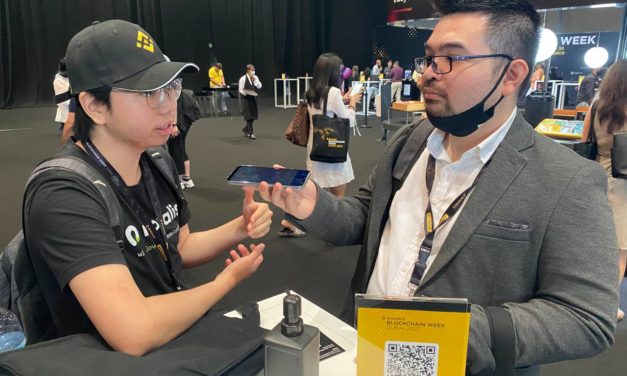
Delegates at the Binance Blockchain Week talked about their Web3 stories and the growth of Web3 opportunities within their local communities. The recent conference brought crypto community members from all over the world to share their passions, meet like-minded people, learn from keynote speeches by community leaders, and share their perspectives on the state of Web3. One of the topics people showed interest in was the growing demand for Web3 talent. As the internet is evolving from Web2 into Web3, reports show that the demand for talent within the Web3 space is rapidly increasing and there are lots of opportunities popping up within the industry.While statistics are very important, insights directly from the people who are witnessing the transformation of the industry are just as crucial. Bringing “endless” opportunities to Indonesia Joko Crypto, a masked crypto crusader from Indonesia, shared his insights about what Web3 is currently doing to his country. According to Joko, people are very excited about Web3 and that opportunities in the space are “always lingering.” “In a country like Indonesia, […], the excitement of Web3 job opportunities are always lingering. From being a play-to-earn ‘freelancer’ to becoming a paid admin for Telegram, the opportunities are endless.” The anonymous crypto evangelist also believes that the same thing is happening globally. Meanwhile, Yoseph Soenggoro, a Web3 developer from Indonesia, agrees with the masked crusader. According to Soenggoro, “it’s definitely a $1 trillion opportunity for our generation.” Yoseph Soenggoro  (left) sharing his perspectives. Source: Joanna AlhambraThe developer explains that currently, the most established projects in their local Web3 landscape are centralized exchanges. However, Soenggoro believes that over time, there are going to be more decentralized finance protocols that are going to be built in Indonesia and that this will bring many “potential jobs for people in Web3.” Related: Indonesia’s crypto industry in 2021: A kaleidoscope Changing lives in Nigeria “Crypto changed my life,” said Chike Okonkwo as he described his personal experience in Nigeria. He started his Web3 journey in 2016, and now, Okonkwo is working as an executive at a blockchain gaming project. According to Okonkwo, he tried to do a couple of things as a student to make money. However, crypto has been the most impactful and has given him many opportunities. “I have not just only made money trading cryptocurrencies but also have worked with crypto companies,” he said. Chike Okonkwo (far fight) with his teammates at Gamic Guild.Okonkwo explained that the blockchain offers “a lot of opportunities for us in Africa and the world globally.” He believes that it enables people to build solutions that are able to have a significant impact by helping people solve problems. “I am introducing more and more people, young people, into this space because it can change their lives economically.” Apart from Okonkwo, Ukeme Okuku who is also from Nigeria, shared his thoughts on Web3 within their local communities. According to Okuku, while there are many active Africans in design and community management, the “biggest issue” now is awareness. “Because of the crypto and blockchain, space is still a niche. There are very few people that know about it.” Breaking qualification barriers in India Speaking from an Indian perspective, a delegate from India that wanted to stay anonymous also shared his thoughts on what Web3 is doing within the country. According to him, there were barriers for people in India. He noted: “They needed to study in a good school, go to a good university, and then apply for jobs. Without these good credentials, you couldn’t apply to anything.” However, the delegate stated that in Web3, it’s very easy for a person without a sparkling academic track record to get in. He believes that in Web3, “a person only needs to have abilities.” The delegate explained that, within his country, there are many areas in which the people don’t get enough support. However, these restrictions are lessened when it comes to Web3 and this is because of the internet. “You have the internet, you have the power,” he said. Changing skeptics’ minds in the Philippines A Web3 developer from the Philippines, Jene Dizon, believes that at the moment, there are plenty of opportunities for Filipinos in the Web3 industry. As a person who worked in crypto for more than five years, Dizon thinks that there’s a huge demand for Web3 talent in the region. He noted: “There are lots of opportunities in Web3 for Filipinos. Adoption of Web3 is not just for first-world countries, but also for developing countries. Though, I believe it may take around 2-3 years before it gets fully integrated into the mainstream.” Apart from this, Dizon pointed out the similarities between the beginning of the internet and the current start of Web3 within the country. “When the internet started in our country, there were also a lot of skeptics. But now, everything is online,” he said. Jene Dizon (left) with Brazilian celebrity Daniel Matsunaga. “I believe the same will happen to Web3 back home,” said Dizon. He noted that, while there are still many skeptics, they are slowly changing their minds and are looking into the technology, and at the right time, it will be applied to all industries. Making its way to Uruguay Alexis Martinovic, a tech content creator from Uruguay also attended the conference to learn more about Web3 and expand his network. At the moment, Martinovic believes that in his country, Web3 adoption is just starting and that soon, people will be seeing Web3 projects in his country. “There are no local projects supporting Web3 at the moment. […] But it’s I think that soon we will start seeing them. Of course, everybody in every country is going in that direction.”Martinovic also highlighted the low barriers to coming into Web3. “In order to just jump to Web3, you don’t need you don’t even need a bank account,” he said. Because of this, even developing regions have a chance to jump in. 

Čítaj viac

The future of cashback: Companies adopts crypto back rewards for card purchases

Receiving cashback from your credit and debit card purchases has been a long-time benefit for credit card users. However, crypto entered the scene as projects start to implement crypto back rewards for card purchases. Back in 2021, BlockFi launched a Visa-backed Bitcoin rewards card as a way to welcome users into the crypto ecosystem. With the card, users can get 1.5% back in Bitcoin (BTC) instead of other rewards like cashback or miles. In the same year, Venmo also employed mechanics that allows users to buy crypto with their cashback rewards. A program called Cash Back to Crypto allowed credit card users to spend their cashback rewards on crypto-assets like BTC, Ethereum (ETH), Litecoin (LTC) and Bitcoin Cash (BCH). Some companies started to follow the trend and integrated new crypto rewards for the old cashback mechanic. Let’s have a look at two projects that started to provide crypto rewards for card purchases.Payments platform Paystand announced the introduction of a corporate expense card that offers crypto rewards. Through the card, businesses can get Bitcoin back without needing to redeem points. Through this, users can earn BTC automatically as they make purchases for their business. Jeremy Almond, the CEO and co-founder of Paystand, expressed his excitement over their project’s new offering. “We believe blockchain technology and cryptocurrency is the future of finance, and we’re excited to help businesses participate and grow in the digital economy,” he said. Related: We have to be in the crypto space, Mastercard CEO saysA project called Plutus started offering 3 percent crypto back on Nike purchases back in 2020. More recently, the company announced that it’s extending its crypto back rewards to payments for subscriptions such as Netflix, Spotify, Disney+ and more.Apart from this, the company has also revealed that they will increase the cryptoback rewards to 8%. This means that when users purchase with their cards, they are automatically accumulating crypto.

Čítaj viac

MENA Climate Week notes blockchain's potential for climate action

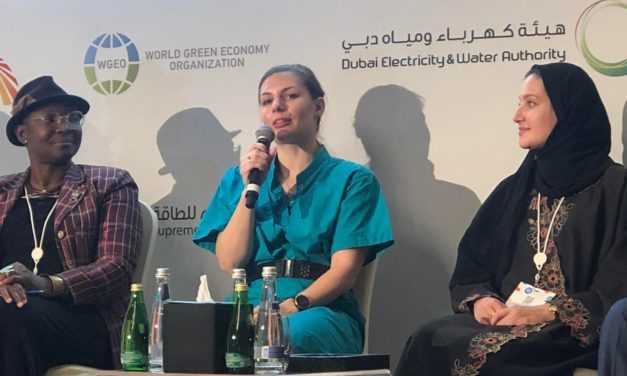
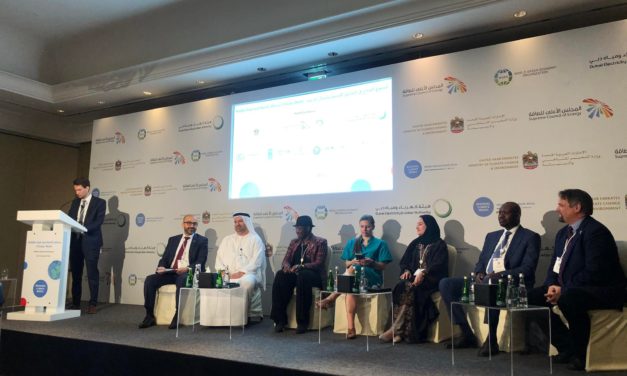
Panelists at the recent MENA Climate Week 2022 examined how blockchain technology can contribute to green initiatives.Hosted by Dubai’s Ministry of Climate Change and Environment, Dubai Electricity and Water Authority, and the World Green Economy Organization along with various institutions under the United Nations Environment Programme and in partnership with renewable energy groups, the event explored how to promote climate action using digital innovations.In one session, a hybrid panel made up of experts in blockchain and climate action discussed how blockchain use cases can contribute to a greener future in the Middle East and North Africa (MENA) and globally during the event held in Dubai, United Arab Emirates.The session, titled “Transformative Climate Action through Digitalization: Blockchain Technologies,” grabbed insights from prominent blockchain figures Dr. Marwan Al Zarouni of the Dubai Blockchain Centre, Dr. Jane Thomason, Frontier Technology Leader and Cointelegraph’s own editor-in-cheif Kristina Lucrezia Cornèr.Panel members of the Transformative Climate Action through Digitalization: Blockchain Technologies session at MENA Climate Week. The blockchain figures are joined by climate advocates Sami Dimassi of the UN Environment Programme, Dr. Miroslav Polzer of the IAAI, Tia Kansara of Replenish Earth, Her Royal Highness Princess Abze Djigma of Burkina Faso, who is also a member of the African Union and European Union Digital Economy Task Force, Dr. Massamba Thioye of the UNFCCC Global Innovation Hub and Youth Climate Action Leader Ameera Al Haranki. Each shared their perspectives and knowledge on how they can see blockchain being connected to climate action initiatives.In his opening remarks, Sami Dimassi, Regional Director and Representative of the UN Environment Programme for West Asia highlighted several actions that can be done to “tap into blockchain use” in contributing to climate actions. He noted promoting shifts in policies, bringing technological evolution to the climate sector and increasing awareness and collaboration between communities.During today’s event on Transformative Climate Action through Digitalization at #MenaClimateWeek @samidimassi_UN highlighted the importance of Blockchain technology and their potential in relation to transparency, clean energy attribute, carbon markets and climate finance. pic.twitter.com/pj8JcLwUfc— UN Environment Programme West Asia (@UNEP_WestAsia) March 29, 2022Promoting shifts in policies and government regulationsAccording to Dimassi, because there are many growing climate issues in the world today, it’s necessary to promote government regulations and policies that enable people to adopt digital innovations such as blockchain technology. The UN director noted that blockchain is itself just a neutral technology and that it’s up to the users what they do with it:“Blockchain can improve efficiency and transparency in climate actions if it’s used in the right manner. Blockchain in itself is neither good nor bad for achieving climate targets. It depends on what we make of it.”He said that the case for digital transformation is very “compelling,” and that solutions like blockchain can be a great asset to support transformative climate action because of their inherent abilities.Apart from Dimassi, Al Zarouni also highlighted efforts within the UAE government to support the adoption of blockchain technology. Al Zarouni noted the Dubai Blockchain Strategy, a government-backed effort to push blockchain adoption in the region.He also stated that his organization, the Dubai Blockchain Centre, is focused on helping the ecosystem within the UAE understand blockchain technology and focus on discussions that bring together regulators, educators and community members to get to know the technologies behind blockchain.Dr. Marwan Al Zarouni, CEO of Dubai Blockchain Centre at MENA Climate Week. Bringing ‘technological evolution’ to climate actionThomason highlighted the many ways how technological evolution is being brought to the climate sector through existing blockchain initiatives. According to Thomason, blockchain technology is currently contributing to climate action goals through green digital asset projects, smart grid management, nonfungible tokens and gamification, measurement and reporting, and the use of decentralized autonomous organizations for climate action.Thomason joined the session remotely to talk about blockchain for climate action.Thomason also noted one of the inherent characteristics of blockchain which is transparency, stating that blockchains can be used to automate the detection of environmental contributions and reward contributors with tokens. She explained: “Blockchains can automate measurement and remunerate those responsible for positive contributions to individual areas, which benefits the environment as a whole.”Apart from Thomason, Thioye also recognized what blockchain can do for climate action during his talk. Thioye believes that current green initiatives could “definitely improve” the climate in the long run through incremental effects. However, by bringing blockchain tech into the mix, the sector could solve issues that are “in front of us.”“If we combine IoT for the production of data, blockchain for the transfer, artificial intelligence for the processing, and cloud computing with its almost infinite storage capacity, and quantum computing which can greatly increase the computing speed, we can build something very powerful.” Related: UAE regulators pave way for crypto and blockchain adoption, says legal expertIncreasing awareness and collaborationYouth Climate Action Leader Ameera Al Haranki noted that action for climate empowerment is crucial and increasing awareness and collaboration within this sector is very important. While she doesn’t claim to be an expert in blockchain, the youth leader said that she “sees potential” in the technology to be used in climate action.“We need to engage the youth and all members of the society in climate action to learn more about what’s going on,” said Al Haranki. The youth leader mentioned the need to provide the necessary tools such as education, training and public awareness to preserve the future for the next generations.During the panel, Cornèr, the editor-in-chief of Cointelegraph, also explained that the blockchain community is characterized not only by transparency but also by collaboration. According to her, this manifests in the many readily-available open-source tools brought by members of the community:“You can actually search for solutions and the quickest way to achieve them with different tools. And this is what the blockchain community is about. […] You can find open-source tools that are available for building your projects.”Cornèr also noted that, through informative and educational content in the blockchain media, the climate action community can learn about new terms and tools to aid it, as well as give a voice to those working toward climate action.

Čítaj viac

Blockchain and climate action gets highlighted at MENA Climate Week

MENA Climate Week kicked off on Tuesday with a focus on discussing the use of blockchain technology for bringing transformative climate action to the region. Kristina Cornèr, Cointelegraph’s editor-in-chief, shared her insights in a panel discussion at the event about how the climate action sector can benefit from the crypto and blockchain community.In the session held in Dubai, United Arab Emirates, Cornèr discussed topics ranging from the media’s role in educating the masses about blockchain to trust and collaboration within blockchain projects and how the climate action community could use the blockchain community’s strengths such as ambition, action and diversity to promote positive environmental impact.Cointelegraph Editor-in-Chief speaks at the MENA Climate Week panel in Dubai, UAE.Explaining the mindset that the crypto community has when creating blockchain projects, Cornèr highlighted that ambition and action are some of the most important driving forces within natives of the blockchain sphere.“The people who created this community are ones who are daring and ambitious, and I think that this is what climate action needs now. Shifting discussions from ‘what can we do’ to ‘let’s do it’ is how the blockchain community members are building their projects.”Related: Crypto sustainability and green solutions highlighted at COP26Apart from this, Cornèr also noted the importance of bringing diversity into the mix. She said that by being diverse, blockchain projects are able to come up with a variety of new solutions that can create various levels of change within the community.“Collaboration is bringing as many voices as possible, similar to this panel and how you are bringing diversity here. This is what blockchain is also about because you can bring different voices and this can bring different solutions.”Cornèr concluded her talk by reiterating that the Cointelegraph team is always open to giving a voice and a platform to those who are working within the blockchain and climate action space and that she hopes that both communities will have more collaborations in the future.

Čítaj viac

Cardano founder talks about Web3 and the comfort of Bitcoin at Binance Blockchain Week

Cardano founder Charles Hoskinson gave a keynote speech on the first day of this year’s Binance Blockchain Week, held at the Dubai World Trade Centre in the United Arab Emirates.  Addressing the audience, Hoskinson used his keynote to discuss topics like Bitcoin (BTC), Web3 and philosophy, bringing up topics like what happens next when the community moves forward from the comfort of Bitcoin and toward centralization.“As blockchains become more advanced and more powerful, we have to start making some difficult and uncomfortable philosophical decisions.”The CEO raised questions about Web3 and what the lines are between decentralization and regulation. “At what point do you cross the threshold where you’re no longer decentralized? You’re no longer the arbitrator of trust?” asked Hoskinson to an audience made up of blockchain enthusiasts from all over the world. “When you move past the comfort of Bitcoin, you start entertaining many other ideas.”He pointed out that since regulators have started to look at blockchain, questions that used to not be considered have started to surface. Ideas like “At what point can we reverse a transaction?” and “if we can, at what point can we freeze your funds?” now pop up in blockchain discussions. “I thought we could never do that,” said Hoskinson. Apart from this, Hoskinson also emphasized the importance of focusing on blockchain technology and not just the profits. He underscored that blockchain brings fairness and equality to everyone, giving smaller entities a fighting chance.“If you’re just here to make money, you lose all the things that make the technology special.”Related: Decentralization, DAOs and the current Web3 concernsThough the Cardano founder did not directly reference decentralized autonomous organizations, he said that the people must be involved in the decision making of blockchain projects. He described a future where DAOs may be the foundation of Web3. “If we’re truly decentralized, we have to figure this out for ourselves,” said Hoskinson.

Čítaj viac

Získaj BONUS 8 € v Bitcoinoch

nakup bitcoin z karty

Registrácia Binance

Burza Binance

Aktuálne kurzy