Autor Cointelegraph By Erhan Kahraman

China aims to separate NFTs from crypto via new blockchain infrastructure

China is planning to draw a clear line between cryptocurrencies and nonfungible tokens (NFTs), pretty much the same way it did with its digital currency efforts, before the crypto crackdown in the country harms the local NFT industry.The Blockchain-based Service Network (BSN), a government-backed blockchain project in China, is working on infrastructure that would support businesses and individuals to build platforms and apps to manage NFTs, the South China Morning Post reported.Officially called the BSN-Distributed Digital Certificate (BSN-DDC), the project aims to support the deployment of non-crypto NFTs by offering application programming interfaces for the development of user portals and apps where fiat money would be the sole payment method. Underscoring that NFTs have no legal trouble in China as long as they are not used with Bitcoin (BTC) or other cryptocurrencies, the BSN tech support provider Red Date Technology’s CEO Yifan He said that the upcoming infrastructure would use an open, permissioned blockchain to enable an on-chain governing body.”Public chains can’t be legally operated within China,” He told Cointelegraph, adding that a credible, low-cost infrastructure is desperately needed to host all NFTs in China. Without a dedicated nationwide NFT infrastructure, NFTs can only be deployed on “unreliable” private chains in the country, the exec added.By enabling a centralized entity to govern the infrastructure and intervene in the event of illegal activity, Red Date plans to create a compliant NFT platform that is fully separated from the regular profile of crypto.He noted that Red Date is working with all DDC project partners to make the network as transparent as possible, while staying compliant with Chinese regulations and laws. All the gas fees on the BSN-DDC network are paid with fiat money.”We will provide services to NFT companies in Hong Kong, which means if there is any international business involving issuing NFTs inside China, they definitely can choose to use the BSN-DDC network via our Hong Kong gateway.”Related: CBDC wallet tops mobile app store charts in ChinaState-owned China Mobile, China UnionPay and State Information Centre support BSN’s NFT infrastructure. The BSN-DDC will integrate 10 blockchains including the adapted version of Ethereum and Corda as well as WeBank’s Fisco Bcos, He said.Last year, Red Date Technology signed an agreement with a Turkish consultancy firm Turkish Chinese Business Matching Center to launch two international BSN portals in Turkey and Uzbekistan.As Cointelegraph reported, the new portals will enable blockchain developers in Turkey and Uzbekistan to build blockchain-as-a-service applications using the global BSN portal hosting major blockchains like the Ethereum network, Algorand, Polkadot, Tezos, ConsenSys Quorum, Corda and others.

Čítaj viac

IMF: Bitcoin matured to ‘an integral part of digital asset revolution’

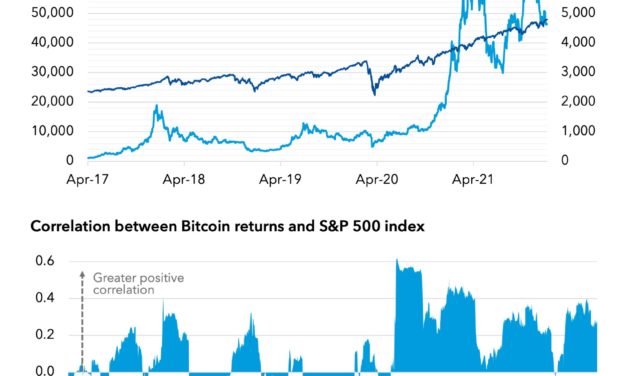
Crypto is no longer an obscure asset class within the financial ecosystem, but a growing correlation with the stock market undercuts the “investment hedge” role of Bitcoin (BTC) and other cryptocurrencies, according to new International Money Fund (IMF) research.A blog post accompanying the survey highlights new risks associated with the growing interconnectedness between virtual assets and financial markets. Penned by IMF Monetary and Capital Markets Department director Tobias Adrian as well as economist Tara Iyer and Research deputy division chief Mahvash S. Qureshi, the article claims that the increasing correlation between crypto assets and stocks “limits their perceived risk diversification benefits and raises the risk of contagion across financial markets.”“Crypto assets such as Bitcoin have matured from an obscure asset class with few users to an integral part of the digital asset revolution,” the article read, adding that this transition comes along with financial stability concerns. Nothing that BTC and Ether (ETH) rarely correlated with major stock indexes before the pandemic, the authors agreed that crypto assets helped diversify risk for investors by acting as a hedge against swings in other asset classes. “But this changed after the extraordinary central bank crisis responses of early 2020,” the article reads, adding that crypto and stocks surged hand in hand as investors’ risk appetite grew.60-day correlation coefficient between Bitcoin and S&P 500 index. Source: IMFThe correlation coefficient between BTC and the S&P 500 index has jumped 3,600%, going from 0.01 to 0.36 after April 2020. This means that the two asset classes have been more closely rising and falling together since the coronavirus pandemic.Related: What should the crypto industry expect from regulators in 2022? Experts answer, Part 1With stronger correlation comes greater risks for Bitcoin, according to IMF experts. The growing interconnectedness between crypto and equity markets would permit the transmission of shocks that can destabilize financial markets. Noting that crypto assets are no longer on the fringe of the financial system, the authors summarized:“Given their relatively high volatility and valuations, their increased co-movement could soon pose risks to financial stability especially in countries with widespread crypto adoption.”The experts further called for a coordinated global regulatory framework “to guide national regulation and supervision and mitigate the financial stability risks stemming from the crypto ecosystem.”Last month, IMF chief economist Gita Gopinath made a similar call for a global policy regarding crypto. She argued that if countries were to ban crypto then they would not have any control over offshore exchanges that are not subject to their country’s regulations.

Čítaj viac

CBDC wallet tops mobile app store charts in China

The official digital yuan wallet app that was released as a pilot version to be used in select cities has still managed to top app store charts in its first week.Developed by the Digital Currency Research Institute of the People’s Bank of China (PBoC), the app became available for download on Chinese Android and Apple app stores last Tuesday.The app is still in an experimental phase and is only accessible to select individuals through authorized e-CNY service providers. While anyone in China could download the app, its usage is limited to select cities. Despite these limitations, the South China Morning Post reported that e-CNY managed to become the most downloaded app on Apple’s App Store one day after its launch, surpassing Tencent’s super app WeChat. It was dethroned by video-sharing app Kuaishou on Saturday.The app enjoyed similar success in Xiaomi’s mobile app store, a popular platform for Chinese Android users. It topped the list within a day before falling to the second spot on Monday according to market researcher Qimai. The app ranked 43rd on Huawei’s mobile store on Monday, jumping 10 spots in a day.Related: China wants US senators to ‘stop making trouble’ out of digital yuanAfter years of development, China started digital yuan pilots in April 2020 and since has become a pioneer in central bank digital currency (CBDC) development, to the point where the country plans to enable CBDC payments at the 2022 Winter Olympic Games in Beijing, scheduled for next month. The digital yuan even became a topic of debate for several United States senators, who have signed a letter urging Olympic officials to forbid American athletes from using the digital yuan during the event.

Čítaj viac

German neobank N26 to launch crypto trading later this year

German neobank N26, one of the biggest European fintechs with over $9 billion in valuation, is finally ready to tackle crypto and equities trading after striving for a global expansion.Despite being an early player in the financial technology boom across Europe, the Berlin-based online bank N26’s global ambitions induced a setback in its diversification of services, N26 co-founder and co-CEO Max Tayenthal said in an FT interview.After exiting two critical fintech markets, the United States and the United Kingdom, N26 plans to “sharpen its focus on its European business” by introducing new products and services to its 7 million customers.According to Tayenthal, who admitted that the online bank needs to expand its product universe, N26 aims to launch a crypto trading business in 2022, followed by an equities brokerage, instead of “putting flags in new markets.” The N26 mobile app currently doesn’t offer crypto functionality, and features of the upcoming product related to crypto trading are yet to be revealed. Cointelegraph reached out to N26 for more information, and this article will be updated pending new details.Related: Retailers to drive crypto payments adoption: SurveyN26 announced its exit from the U.S. market in November when it teased additional financial products and services for its European customers. “N26 will focus its strategy on broadening its digital banking experience into new verticals to include investment products in the coming year,” the announcement said.The company was hit by several restrictions from German financial watchdog BaFin in May 2021, partly due to its lacking Anti-Money Laundering controls. BaFin decreed that N26, which accepted an average of 170,000 new clients per month last year, can not onboard more than 50,000 customers per month.Describing the BaFin-enforced new customer cap as a massive restriction for the growth investor-funded fintech, Tayenthal said he expects the condition to by late summer 2022.

Čítaj viac

Bitcoin $100K possible by chipping away at gold’s market share: Goldman Sachs

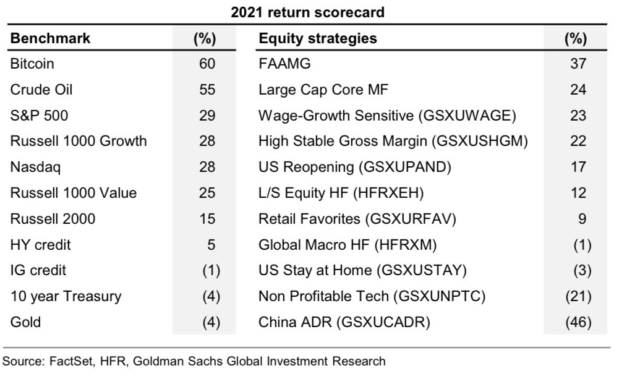
Bitcoin (BTC) failed to close 2021 above the long-expected $100,000 level, but experts believe the psychological horizon is still achievable by taking gold’s market share, albeit over a more extended period.In a note released to investors on Tuesday, Goldman Sachs co-head of global FX and EM strategy Zach Pandl hypothesized that if the largest cryptocurrency could overtake 50% of the store of value market share over the next five years, BTC price would increase to just over $100,000, marking a compound annualized return of 18%.While the current market cap of BTC is close to $884 billion, Goldman Sachs estimates the float-adjusted market cap of Bitcoin is under $700 billion, accounting for one-fifth of the “store of value” market. The said market is not crowded, though. The only other participant of Goldman’s store of value market is gold, with an available investment at $2.6 trillion.Despite its ups and downs, Bitcoin still managed to top Goldman Sachs’ 2021 return scorecard with over 60% yearly returns. Gold is placed at the bottom in the same chart with a 4% yearly loss.Yearly returns scorecard. Source: Goldman Sachs Global Investment ResearchRelated: Wait-and-see approach: 3/4 of Bitcoin supply now illiquidGoldman Sachs experts believe that the demand for BTC will not be harmed by the hot debate surrounding the Bitcoin network’s energy consumption. While a recent study claims the Bitcoin ecosystem consumes eight times the energy of Google and Facebook combined, New York Digital Investment Group estimates that Bitcoin mining will not represent more than 0.4% of global electricity consumption over the next decade.As detailed in a Cointelegraph New Year Special, Bitcoin saw a bumpy ride over the last year. Many experts believed that $100,000 was an easy target for the flagship cryptocurrency for 2021. However, BTC closed the year around $47,000 after touching an all-time high around $69,000 in November, falling short of analysts’ ambitious target.

Čítaj viac

Získaj BONUS 8 € v Bitcoinoch

nakup bitcoin z karty

Registrácia Binance

Burza Binance

Aktuálne kurzy