
Autor Cointelegraph By Emily Tonelli

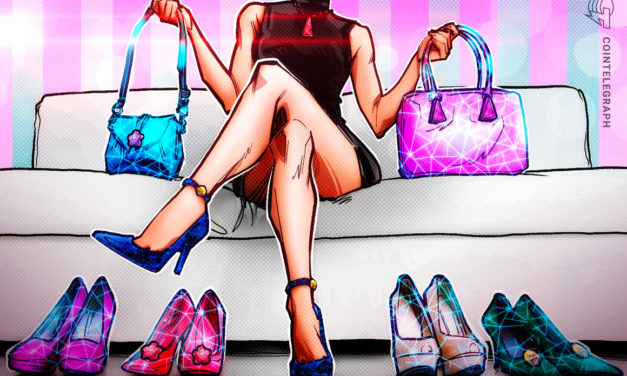
How NFTs and the Metaverse can keep fashion luxurious

It’s no secret that the fashion industry has started to explore the cryptoverse, with brands like Dolce & Gabbana, Gucci, Philipp Plein and Tiffany & Co. taking their own path down the metaverse runway. Decentraland’s Metaverse Fashion Week hinted at a new wave of fashion, while Philipp Plein brought the metaverse and nonfungible tokens (NFTs) right into his London shop. The innovative technology mixed with the ever-changing fashion world was an inevitable pair, but there is always room for more.Even during its inception, the promise of the metaverse has convinced people to pay millions for land in the virtual worlds — so, why not fashion? The fashion industry is always looking for new ways to innovate and create new traditions. While the metaverse removes the tangible aspect that captivates many in the fashion industry, it is a new way to experience wearing and using beautiful pieces digitally on a personal avatar. Lokesh Rao, CEO of Trace Network Labs, previously told Cointelegraph that “a digital avatar can wear any garment without any constraints of type, design, fabric and use.”As many know, however, the fashion industry remains one of the most exclusive industries in the world. With Chanel’s bag quota or purchase criteria and the long waiting list to get a Hermès Birkin or Kelly, a lot of the influence in the fashion industry comes from exclusivity, price, outfits and, in many cases, who one knows. And as many fashion enthusiasts understand, there is nothing like opening the box of a long-coveted piece and holding, wearing and loving it for the first time. The idea of luxury is a melange of both exclusivity and passion. Why should fashion in the metaverse be any different?Keep and grow traditions While prominent brands value their traditions, they should also evolve as time goes on. However, appealing to a new user base while keeping the existing ones entertained is not easy. In a fight to keep customers and enthusiasts loyal to the brand, Indrė Viltrakytė, a fashion entrepreneur and the founder of Web3 fashion venture The Rebels, suggested they “co-create digital wearables with members of their community and sharing commercial rights/profits or royalties with them.” In this case, Viltrakytė told Cointelegraph that digital collectibles could help showcase fashion enthusiasts’ interest in a brand. These would not only be available to influencers, or the lucky ones who are given PR packages for their large following and interest in a brand, but could be for everyone. For example, Maison Margiela could offer a set amount of digital wearables when buying a pair of the Bianchetto Tabi Boot. The boots can be worn in the Metaverse and in real life for those diehard fans who do not necessarily have a following behind them.Recent: The Caribbean is pioneering CBDCs with mixed results amid banking difficultiesTiffany & Co. has already done something similar with their CryptoPunk NFT collection NFTiff, a collection of CryptoPunk-inspired NFTs that are “exclusive to CryptoPunk holders.” We’re taking NFTs to the next level. Exclusive to CryptoPunks holders, NFTiff transforms your NFT into a bespoke pendant handcrafted by Tiffany & Co. artisans. You’ll also receive an additional NFT version of the pendant. Learn more: https://t.co/FJwCAxw8TN #NFTiff #TiffanyAndCo pic.twitter.com/pyKlWejHv4— Tiffany & Co. (@TiffanyAndCo) July 31, 2022For 30 Ether (ETH), CryptoPunk holders can secure a physical version of their favorite and probably most expensive NFT to be worn as a status symbol. This is something that would not be exclusive to those with influence and can carry online into the new era of Tiffany’s little blue box, an iconic emblem of the brand.Digital fashion items are nonfungibleNFTs, according to the Ethereum Foundation, are “tokens that we can use to represent ownership of unique items.” They are not able to be modified or deleted once minted, and “digital assets never deteriorate,” said Viltrakytė. Unfortunately, many assets in the fashion industry, such as the aforementioned Birkin, which has “outperformed the S&P 500 over 35 years,” according to Finty, can be stolen, destroyed or worn down over time without proper care. This is where digital assets rise above because, “like some ultra-exclusive, non-tangible experiences currently available, not everything expensive needs to be ‘touched’ to have value,” Viltrakytė noted. Plus, outside of collectors and caretakers, it is almost impossible for an enthusiast to get their hands on an archive piece, especially if preservation could be a problem. Sometimes, brands will showcase their archive in cities like Paris or Milan for a limited time, but in many cases, it is a private affair owned by private people. However, one way that brands can utilize this exclusivity of a non-deteriorating asset is through NFTs and blockchain-based NFT museums. Viltrakytė said, “If an NFT gives you direct access to Chanel archives or the creative director of Hermès, it signifies the special status you can have or even upgrade with time.” The NFT will never expire, and there will always be a way to create a luxurious and exclusive experience.Another way, she suggested, is to create something like a fashion bond, where after some point, the NFT can be exchanged for a luxury item. “For example, if you are a Hermès client and would like to purchase a deed for your daughter to redeem it for a one-of-a-kind bag on her 18th birthday, you can do it seamlessly as an NFT,” she said, adding:“Paper certificates burn; servers crash and lose data; but blockchain does not lie, and a nonfungible token like that would be 100x more liquid, verifiable and longer-lasting than any traditional document.”Embrace e-commerce and the technologyAs exciting as it is to go to the shop and try on, feel, walk around and experience the shop and its clothes, e-commerce is already on its way to becoming the main way to shop. The metaverse can help make it as luxurious and modern as traveling to Paris to buy a beloved Kelly. A new and creative approach is necessary because, as Viltrakytė said, “now, post-covid, 99.99% of brands are selling online, including Hermès.” Brands need to embrace what technology can do for their image and customers.Viltrakytė believes that the industry is in the experimental phase of Web3 and virtual reality to see how they really affect the fashion industry, as “we don’t have solutions capable of making a digital garment ‘fit.’ When we have a ‘good enough’ depth sensors in our smartphones’ front camera and AR technology that can ‘fit’ any item perfectly on anyone, it will be the true start of the digital wearables era.” According to Vogue Business, a Los Angeles modeling agency, Photogenics, has already experimented with this type of technology by creating “avatars via 3D scans of models’ faces, while their bodies were rendered from scratch.” The models and their avatars, personalized to the model’s preference of reality or creativity, are available for use in the metaverse as virtual models. Recent: Are decentralized digital identities the future or just a niche use case?Digital wearables can also shape who we are online. If one decides to move into the metaverse for various reasons, an identity there is as important as it is in real life. In fashion, people use details to express themselves, adding their own embroidery to pieces and customizing it to represent their personality. This concept will be just as important online as it is offline, as Viltrakytė suggested: “The virtual presence can be an extension of one’s physical self and personality, or it can be something completely different from who a person is in real life. I think we’ll be seeing a mixture of those two concepts.” The simple fact is that the technology is not there yet. But as the fashion industry has proven time and time again, “our creativity shows how we can leverage all of this potential in the fashion industry.” 

Čítaj viac
How blockchain archives can change how we record history in wartime

Decentralized blockchain technology has been around for a relatively short period of time, in the grand scheme of things, but its decentralized nature has the power to keep data and information out of the hands of censors looking to create a “safe” and “faultless” version of history. Blockchain is permissionless and literally owned by no one. So, while we can’t save the Alexandria libraries of the past, we can make sure the future is well equipped with the tools necessary to preserve historical records.Here we’ll look at some of the ways nonfungible tokens (NFT) and blockchain technology have been used for keeping archives, the potential downfalls of such technology, and what the future holds for blockchain-based storage systems. NFTs and archivesWhile many current use cases surrounding NFTs deal with digital art, there is another side of nonfungible tokens that has only started to be explored.Keeping an archive can be a costly and time-consuming endeavor, but NFTs can serve as a form of fundraising to support archival development. For example, fashion designer Paco Rabanne is selling NFTs to fund his physical archive and support his brand name.Furthermore, the technology itself can be used as means to store information.Archangel, a test project of a “trusted archive of digital public records” at the Unversity of Surrey, has done just that. From 2017 to 2019, the university was able to create a test blockchain archive storage system that used distributed ledger technology (DLT) and NFTs and shifted “from an institutional underscoring of trust to a technological underscoring of trust.”Cointelegraph reached out to Foteini Valeonti, a research fellow at University College London and founder of USEUM Collectibles — an organization advising museums, policymakers and cultural organizations on NFTs — to talk about the role of blockchain and NFTs in archives.Valeonti said that blockchain technology can be a way for museums to “leverage their inherent capacity for provenance and metadata consolidation. So that, finally, each museum exhibit will only have one unique identifier across different institutions, projects and all kinds of different information systems.” It could be a way to track which museum owns what and who had it last. Last year, the family of the Hobby Lobby empire was found to have hoarded 17,000 ancient Iraqi artifacts looted during the war. This breach of security of ancient artifacts shows that in times of war and instability, the right (or wrong) person can come and steal prized pieces of cultural identity. The subsequent difficulties in repatriating the stolen artifacts highlight the problem of how cultural items are often poorly cataloged. Valeonti added: “Keeping unique data for provenance’s sake could help resolve numerous information science challenges that the cultural heritage sector is currently facing.”Preserving records of war Digital media is vulnerable to propaganda that aims to shift blame and claim that certain events either happened or didn’t, while people fall into a rabbit hole of constant misinformation in the propogandists’ attempt to invalidate the experience of those living in war-torn regions.In the case of the current conflict in Ukraine, there has been a huge shift in the way crypto and blockchain can be used to help preserve Ukrainian culture and record people’s experiences of the war. The Meta History Museum is one decentralized project that is keeping real-time records of events from the ongoing war. First, they sell NFTs to raise money for war funds by showcasing Ukrainian artists around the world. Then, the money is used not only to fund data collecting but also to support Ukrainian forces. So far, the Meta History Museum has raised 270.37 Ether (ETH) or $611,953 at the time of writing. The Meta History Museum collects tweeted events such as shellings or bombings from the war from Ukrainian state officials and international agencies such as the North Atlantic Treaty Organization or BBC News as a “place to keep the memory of war.” In support of the Meta History Museum’s efforts, Ukrainian Vice Prime Minister Mykhailo Fedorov tweeted, “While Russia uses tanks to destroy Ukraine, we rely on revolutionary blockchain tech.” Work by Ukrainian artist Alisa Gots. Source: The Meta History MuseumPreventing catastrophes In wartime, it is essential to have systems in place to protect those in danger. One of these systems is the Hala Sentry system, designed to record immutable data on Ethereum of instances of airstrike alarms, bomb threats and events that could lead to the death of thousands and the destruction of entire cities. It does this by providing “an interface to data from its sensors, human observers, and strategic partners, along with information from open media.” While this does have an aspect of using automated systems to record wartime history, this makes the data and airstrike records immutable. People can check and see what is happening at any given moment, even if news channels or people are blocking information about certain events. The project has had a reasonable amount of success, too, as the Hala Sentry system stated that “according to a preliminary assessment, the system reduced the lethality of airstrikes by around 20–30 percent in areas under heavy bombardment in 2018.”Is there a downside? As a nascent technology, blockchain tech still suffers from some growing pains in terms of development (scalability is a major problem) as well as regulations surrounding the space. As stated by Valeonti, “NFT technology is still in its infancy, especially when it comes to record-keeping.” She added that right now, most of the information that is available for data storage is kept partly in decentralized storages and partly in centralized servers. Archangel noted, “A centralized authority model simply doubles down on an institutional basis for trust.”The adaptation of technology and Web3 must expand onward to ensure that it can handle the sheer amount of data and information that is necessary for decentralized archives to thrive. Blockchain is simply not there yet, according to Valeonti, and developing the tech needs to happen first before trusting barely used technology with priceless information. In addition to trust, another aspect that puts blockchain technology at a disadvantage is more anthropologically driven mainly because copyright claims on artifacts hold a strong cultural presence over a museum’s use of an artifact. According to a publication by the World Intellectual Property Organization, “Cultural institutions, including museums, libraries and archives, play an invaluable role in the preservation, safeguarding and promotion of collections of indigenous and traditional cultures, such as artifacts, photographs, sound recordings, films and manuscripts, among others, which document communities’ lives, cultural practices and knowledge systems.” It is the job of these institutions, first, to protect the artifacts because it does not belong to them, and second, “for the collecting institution, membership records, Internet tracking data and other activities that gather personal information about patrons have to be managed in keeping with privacy legislative requirements,” as well as uphold a private agreement with the parties involved in any sense. For example, the National Museum of the American Indian in Sutherland, Maryland offers private tours of its artifact collections but only showcases artifacts approved by the Native American tribes that allow the museum to store their people’s history.Valeonti stated that “a decentralized storage solution that would automatically make all images and assets openly accessible to all would not be an option for the vast majority of museums, which have restrictive copyright policies either because there are other entities — e.g., artist estates — holding copyright onto their artifacts or because they are unable to make their artifacts available in open access — e.g., cannot afford to lose image licensing revenue.”Another issue with using a blockchain-based decentralized storage system is one that many crypto hodlers can relate to: protecting private keys. Valeonti explained that a “critical barrier, in my view, is the inherent inflexibility of blockchain technology.” “Unless one uses a centralized, custodial platform, if someone loses their passphrase, then all their assets are lost forever.” As such, who gets to control the seed phrase? Who will be responsible for making sure the seed phrase is in the right hands? Valeonti further mentioned that “there has been research proposing potential solutions, but it may be a while before we see such inventions deployed live on leading blockchains.” How to fix this for the betterHowever difficult the application could be, there are concrete ways to use blockchain, DLT and NFTs to protect data and archives.Valeonti suggested, “What museums can do is to take a part in these discussions and help shape the future of Web3.” She also said that cultural organizations should be at the forefront of the future — as technology changes, the world of archive storage and museum records must change with it. Valeoti and her colleagues at UCL are exploring these challenges of “robustness of decentralized storage, metadata consolidation and off-chain metadata permanence” with a national museum in the United Kingdom. It is a great example of blockchain and museums coming together to change how they use and employ archives.

Čítaj viac

Mixing reality with the Metaverse: Fashion icon Phillip Plein goes crypto

In an attempt to bring the fashion industry into new innovations and trends, many brands are entering the cryptoverse to test out the waters. Fortunately, the crypto industry has its arms wide open, ready to accept the fashion world and grow.One fashion designer who has recently started dipping his toes in the crypto world is Philipp Plein. He participated in Decentraland’s Metaverse Fashion Week, showcasing a collection alongside Dolce & Gabbana, watch company Jacob & Co and many others who joined Decentraland in an attempt to bring fashion and the Metaverse together. During the show, Plein used the skull that is so apparent in his brand to not only present the models but showcase his work. Cointelegraph stopped by the launch event for Plein’s new Museum of NFT Art concept store, which brings his brand into the crypto industry and showcases how it plans to take a fashion-forward approach to crypto — in style and in the heart of London. His crypto startIt wasn’t just Metaverse Fashion Week that got Plein into crypto. In 2021, something sparked within him. “There was no built plan. It was just everyone was talking crypto, everyone was saying it was cool, and it was happening. I didn’t have any vision,” the designer told Cointelegraph.Regardless, he discovered that his vision was to help people like his mother understand and participate in the crypto industry — but to make it high fashion and ensure that it’s truly accessible for everyone.Plein first started accepting crypto in his online shops, but the payment option was soon introduced to the brick-and-mortar stores around the world as well, allowing anyone to take advantage of the new technology. Garments in the stores have QR codes that, when scanned, direct the prospective buyer to a website that shows how much they cost in British pounds, Bitcoin (BTC), Ether (ETH) and TerraUSD (UST), among the other accepted cryptocurrencies. When asked how exactly the brand organizes 25 different cryptocurrencies plus the local currency, Plein told Cointelegraph that “We’ve developed a very complex way to do it. Every 10 minutes, we update the exchange rate on the website. So, if you go on the website and click on the sneaker to know the price, every 10 minutes you will get an updated price. So, we are getting really close to the actual price of the moment.”But what if you want to return the product and the price of Bitcoin has increased? Plein has come up with a solution. “If you want to return it in a month or two, we will give you the same value of what you spent in the currency in the country you live in. For example, if you buy this for 100 pounds, which is 1 Ether, and in three months ETH goes up, you will get 100 pounds back.”Plein wants to make the onboarding processing easier. As such, the offline stores cultivate an environment where everyone can learn about crypto through an application developed by Plein and his team. Sales associates are there to answer questions and provide insight on how Philipp Plein and crypto are a match made in fashion, bringing everyone interested into the crypto community without any of the intimidating parts. Plein added:“I have to make it accessible for my mum, so that is my vision and my mission.”MONAThe event was put together to celebrate the opening of the Museum of NFT Art, or MONA. On the third floor of Plein’s London shop, he invited guests to view a presentation of his nonfungible tokens. He showcased NFTs of monster figures along with screens that displayed his products. Here and in his stores, Plein wants to be “the one who makes you own your first NFT.”The Museum of NFT Art was built in-house because Plein does not “like to work with agencies. So, I created my own publishing house and started to work with the people. Now, we pick our own team and offer our services for free.” The issue with other NFT platforms is the fees, he said. But Plein sees NFTs and onboarding people differently: “We don’t aim for money. We make our money with our products. We developed this platform for our needs, and now we make it accessible for other people.” Now, here’s where it gets interesting.The NFTs can be bought in-person via a sales association, but this is only one part of what customers experience when visiting the MONA London shop. He aims to provide a variety of ways for users to experience NFTs that can help anyone with any level of crypto knowledge.“People started to be interested, but they weren’t able to pay with crypto because they didn’t have crypto. They started to ask, ‘How could we get a Philipp Plein NFT monster?’ And then we started selling them from the website like a shoe. You can pay with a credit card, Apple Pay — you can pay with whatever you want, and then we send you the NFT. And this was interesting. We sold about 1 million in NFTs in two to three months.”On top of a direct credit card or Apple Pay purchase, NFTs can also be bought with cash. “I’ve never heard of paying for an NFT in cash. So, if you want to come to London, you can pay in cash.” He wants to make NFTs accessible “to my mother, who will never buy an NFT.”As a cherry on top of this innovation in the ever-changing NFT market, Plein laid out his biggest issue with NFTs: gas fees. “They sell you the NFTs, and then you have to pay gas fees,” He added: “Explain to my 67-year-old mum what a fucking gas fee is.”So, Plein decided to bunch together the NFT’s price and the gas fees so that customers don’t have to think about it. Indeed, with reports of Yuga Labs’ Otherdeeds NFTs spiking some gas fees up to 5 ETH, the issue presents a huge problem, one that many don’t anticipate. “Some people see 10 euro shipping and will not even buy the product because they have to pay for shipping. We will sell all of our NFTs at a price that includes the gas fee, so you don’t have to think about it.”As part of the running joke of what one can actually do with an NFT, another part of the Plein NFT experience includes a picture frame, or hardware for a wall, and even a Christmas tree ornament. Anyone has the chance to hang their Plein NFT right next to their favorite ornaments, and maybe Santa will bring one that can be burned into a wearable in Decentraland.“So, my mum, who now has an NFT, asks, ‘Well, what do I do with it?’ Okay, mum, now you hang it on your wall.”The futureCointelegraph asked Plein about the future of the Philipp Plein brand and its Metaverse endeavors — in particular, how he mixes his personal ideas with both his real-life and Metaverse brand. According to Plein, fashion is one of the toughest industries imaginable, one where “You have to reinvent yourself from zero several times a year. Each season, the trends are so unpredictable, and the consumer is very hard to control in regard to these unpredictable seasonal trends.”Plein has himself tried out many new things to see what sticks, not only with Metaverse Fashion Week but also with his spring/summer 2022 campaign with Megan Fox and photographer Stephen Klein. “The only way to work with this is to be open-minded, to be experimental, and to try new things to understand what the consumer likes.”Plein also sees the Metaverse as a way to explore trends to see what will stick. He believes that while “The Metaverse is not there yet, it’s not going to take too much time, maybe three to five years, because the technology is much faster now than in the past.”

Čítaj viac

Získaj BONUS 8 € v Bitcoinoch

nakup bitcoin z karty

Registrácia Binance

Burza Binance

Aktuálne kurzy

