

Autor Cointelegraph By Elizabaeth Gail

DeFi attacks are on the rise — Will the industry be able to stem the tide?

The decentralized finance (DeFi) industry has lost over a billion dollars to hackers in the past couple of months, and the situation seems to be spiraling out of control.According to the latest statistics, approximately $1.6 billion in cryptocurrencies was stolen from DeFi platforms in the first quarter of 2022. Furthermore, over 90% of all pilfered crypto is from hacked DeFi protocols.These figures highlight a dire situation that is likely to persist over the long term if ignored.Why hackers prefer DeFi platformsIn recent years, hackers have ramped up operations targeting DeFi systems. One primary reason as to why these groups are drawn to the sector is the sheer amount of funds that decentralized finance platforms hold. Top DeFi platforms process billions of dollars in transactions each month. As such, the rewards are high for hackers who are able to carry out successful attacks.The fact that most DeFi protocol codes are open source also makes them even more prone to cybersecurity threats.This is because open source programs are available for scrutiny by the public and can be audited by anyone with an internet connection. As such, they are easily scoured for exploits. This inherent property allows hackers to analyze DeFi applications for integrity issues and plan heists in advance.Some DeFi developers have also contributed to the situation by deliberately disregarding platform security audit reports published by certified cybersecurity firms. Some development teams also launch DeFi projects without subjecting them to extensive security analysis. This increases the probability of coding defects.Another dent in the armor when it comes to DeFi security is the interconnectivity of ecosystems. DeFi platforms are typically interconnected using cross-bridges, which bolster convenience and versatility. While cross-bridges provide enhanced user experience, these crucial snippets of code connect huge networks of distributed ledgers with varying levels of security. This multiplex configuration allows DeFi hackers to harness the capabilities of multiple platforms to amplify attacks on certain platforms. It also allows them to quickly transfer ill-gotten funds across multiple decentralized networks seamlessly.Besides the aforementioned risks, DeFi platforms are also prone to insider sabotage.Security breachesHackers are using a wide range of techniques to infiltrate vulnerable DeFi perimeter systems. Security breaches are a common occurrence in the DeFi sector. According to the 2022 Chainalysisreport, approximately 35% of all stolen crypto in the past two years is attributed to security breaches.Many of them occur due to faulty code. Hackers usually dedicate significant resources to finding systemic coding errors that allow them to carry out these types of attacks and typically utilize advanced bug tracker tools to aid them in this.Another common tactic used by threat actors to seek out vulnerable platforms is tracking down networks with unpatched security issues that have already been exposed but yet to be implemented.Hackers behind the recent Wormhole DeFi hack attack that led to the loss of about $325 million in digital tokens are reported to have used this strategy. An analysis of code commits revealed that a vulnerability patch uploaded to the platform’s GitHub repository was exploited before the patch was deployed.The mistake enabled the intruders to forge a system signature that allowed the minting of 120,000 Wrapped Ether (wETH) coins valued at $325 million. The hackers then sold the wETH for about $250 million in Ether (ETH). The exchanged Ethereum coins were derived from the platform’s settlement reserves, thereby leading to losses.The Wormhole service acts as a bridge between chains. It allows users to spend deposited cryptocurrencies in wrapped tokens across chains. This is accomplished by minting Wormhole-wrapped tokens, which alleviate the need to swap or convert the deposited coins directly.Recent: How blockchain archives can change how we record history in wartimeFlash loan attacksFlash loans are unsecured DeFi loans that require no credit checks. They enable investors and traders to borrow funds instantly.Because of their convenience, flash loans are usually used to take advantage of arbitrage opportunities in connected DeFi ecosystems.In flash loan attacks, lending protocols are targeted and compromised using price manipulation techniques that create artificial price discrepancies. This allows bad actors to buy assets at hugely discounted rates. Most flash loan attacks take minutes and sometimes seconds to execute and involve several interlinked DeFi protocols.One way through which attackers manipulate asset prices is by targeting assailable price oracles. DeFi price oracles, for example, draw their rates from external sources such as reputable exchanges and trade sites. Hackers can, for example, manipulate the source sites to trick oracles into momentarily dropping the value of targeted asset rates so that they trade at lower prices compared to the wider market.Attackers then buy the assets at deflated rates and quickly sell them at their floating exchange rate. Using leveraged tokens obtained through flash loans allows them to magnify the profits.Besides manipulating prices, some attackers have been able to carry out flash loan attacks by hijacking DeFi voting processes. Most recently, Beanstalk DeFi incurred a $182 million loss after an attacker took advantage of a shortcoming in its governance system.The Beanstalk development team had included a governance mechanism that allowed participants to vote for platform changes as a core functionality. This setup is popular in the DeFi industry because it upholds democracy. Voting rights on the platform were set to be proportional to the value of native tokens held.An analysis of the breach revealed that the attackers obtained a flash loan from the Aave DeFi protocol to get almost $1 billion in assets. This enabled them to get a 67% majority in the voting governance system and allowed them to unilaterally approve the transfer of assets to their address. The perpetrators made off with about $80 million in digital currencies after repaying the flash loan and related surcharges.Approximately $360 million worth of crypto coins was stolen from DeFi platforms in 2021 using flash loans, according to Chainalysis. Where does stolen crypto go?For a long time now, hackers have used centralized exchanges to launder stolen funds, but cybercriminals are beginning to ditch them for DeFi platforms. In 2021, cybercriminals sent about 17% of all illicit crypto to DeFi networks, which is a significant jump from 2% in 2020.Market pundits theorize that the shift to DeFi protocols is because of the wider implementation of more stringent Know Your Customer (KYC) and Anti-Money Laundering (AML) processes. The procedures compromise the anonymity sought after by cybercriminals. Most DeFi platforms forego these crucial processes.Cooperation with the authoritiesCentralized exchanges are also, now more than ever before, working with authorities to counter cybercrime. In April, the Binance exchange played an instrumental role in the recovery of $5.8 million in stolen cryptocurrencies that was part of a $625 million stash stolen from Axie Infinity. The money had initially been sent to Tornado Cash.Tornado Cash is a token anonymization service that obfuscates the origin of funds by fragmenting on-chain links that are used to trace transacting addresses. A portion of the stolen funds was, however, tracked by blockchain analytic firms to Binance. The loot was held in 86 addresses on the exchange.In the aftermath of the incident, a spokesperson for the United States Treasury Department underlined that crypto exchanges that handle money from blacklisted crypto address risk sanctions.Tornado Cash also seems to be cooperating with the authorities to stop the transfer of stolen funds to its network. The company has said that it will be implementing a monitoring tool to help identify and block embargoed wallets.There seems to be some progress in the seizure of nicked assets by the authorities. Earlier this year, the U.S. Department of Justice announced the seizure of $3.6 billion in crypto and arrested two people who were involved in laundering the funds. The money was part of the $4.5 billion purloined from the Bitfinex crypto exchange in 2016.The crypto seizure was among the biggest ever recorded.DeFi CEOs speak about the current situationSpeaking exclusively to Cointelegraph earlier this week, Eric Chen, CEO and co-founder of Injective Labs — an interoperable smart contracts platform optimized for decentralized finance applications — said that there is hope that the problems will subside.“We are seeing the tide continuing to subside, as more robust security standards are put into place. With proper testing and further security infrastructures put into place, DeFi projects will be able to prevent common exploit risks in the future,” he said.On the measures that his network was taking to avert hack attacks, Chen provided an outline:“Injective ensures a more tightly defined application-centric security model compared to traditional Ethereum Virtual Machine-based DeFi applications. The design of the blockchain and the logic of core modules protect Injective from common exploits such as re-entrancy, maximum extractable value and flash loans. Applications built on top of Injective are able to benefit from the security measures that are implemented in the blockchain on the consensus level.”Recent: Rising global adoption positions crypto perfectly for use in retailCointelegraph also had the chance to speak with Konstantin Boyko-Romanovsky, CEO and founder of Allnodes — a non-custodial hosting and staking platform — about the increase in hack incidences. Regarding the main catalysts behind the trend, he said:“No doubt it will take some time to lower the risk of DeFi hacks. It is unlikely, however, that it will happen overnight. There is a lingering sense of a race in DeFi. Everyone seems to be in a hurry, including the project founders. The market is evolving faster than the speed at which programmers write code. Good players who take every precaution are in the minority.”He also provided some insight on procedures that would help counteract the problem:“The code must get better and smart contracts must be thoroughly audited, that’s for sure. In addition, users should be constantly reminded of cautious etiquette online. Identifying any flaws can be attractively incentivized. This, in turn, might promote healthier conduct across a particular protocol.”The DeFi industry is having a hard time thwarting hack attacks. There is, however, hope that increased monitoring from the authorities and greater cooperation among exchanges will help curb the scourge.

Čítaj viac

First steps: Basic tips for getting started investing in DeFi

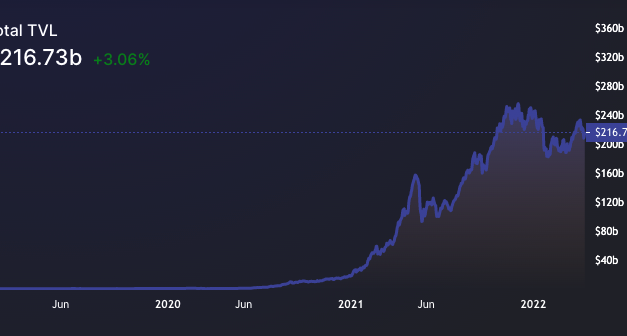
Decentralized finance (DeFi) protocols have diversified investment opportunities in the crypto industry by facilitating novel and innovative passive income generation schemes.Delving a bit into how they work, DeFi systems are based on blockchain technology and run on programmable chains such as the BNB Chain and the Ethereum Network.The chains use decentralized peer-to-peer (P2P) finance architectures to cut out the middleman and enable lending, borrowing and liquidity provision. This leads to higher interest rates compared to those provided by regulated financial institutions such as banks. For perspective, many regulated banks provide interest rates of less than one percent per year, while some DeFi platforms offer interest rates of over 20% per year.Investing in DeFi provides numerous benefits. Yubo Ruan, CEO and founder of Parallel Finance, told Cointelegraph:“DeFi has immense potential for users compared to traditional markets. For example, DeFi trading is available 24/7 and 365 days a year, which can create new opportunities and even the ability to trade after hours alongside a full-time career independent of finance.” “DeFi’s speed and efficiency create immense opportunities for moving in and out of positions very quickly for arbitrage for example. Additionally, no matter what background or money you have access to, you can have access to DeFi,” he said, adding, “There are more than a billion people who are unbanked and unable to use traditional markets. This is a massive benefit for the unbanked to access and invest with DeFi in a world where banks simply don’t exist for them.”There are over 100 DeFi projects in the crypto sector today. As such, finding the ideal project can be challenging, especially for newbie investors. The following is a breakdown of factors to consider when choosing a well-grounded DeFi project.Total value lockedTotal value locked (TVL) should be considered when looking for an outstanding DeFi project. A high TVL is a strong indicator of investor confidence in a platform and its core drivers.DeFi projects with significant assets locked in custody are generally perceived to have more upside potential and are deemed to be more secure compared to those with low TVL. Projects with a consistently positive TVL growth rate are desirable.Total value locked in DeFi markets. Source: DeFiLlamaCheck the fully-diluted valuationIt is important to consider a DeFi token’s fully-diluted valuation (FDV) before investing. FVD in DeFi is the theoretical market cap of a token relative to the prevailing market price and the number of coins in circulation.When the fully-diluted valuation is too low, the consistent increase of new tokens is likely to outpace demand for the token leading to a price drop. In DeFi investments, native tokens are adversely affected in low FDV market situations.Token price stabilityPromising DeFi tokens typically have a consistent long-term uptrend. Of course, rallies of over 30% within a short period of time are enticing at first glance, but they could be unstainable parabolic market reactions that are usually followed by a significant drop.Pump and dump schemes play a role in some momentary price hikes. These types of ploys are prevalent in the crypto space and usually affect low and mid-cap tokens.Subsequently, investors should disregard short-term price performances in the absence of other positive indicators and choose tokens backed by projects with stellar long-term growth fundamentals.RisksRisks such as platform exploits and rug pulls are common in the DeFi industry. As such, it is important for investors to do significant background research on platform security before investing in DeFi projects.Security audits by independent cybersecurity firms usually reveal potential loopholes. Investors are advised to take these assessments into consideration.Choosing the right DeFi investment strategyChoosing the right DeFi investment strategy can yield significant returns. The following is an outline of some common DeFi investment strategies.StakingStaking is among the easiest DeFi investment strategies. It entails locking idle assets in a smart contract for a stipulated amount of time.Staking a DeFi asset allows an investor to become a validator in a proof-of-stake (PoS) network. Proof-of-stake systems differ from proof-of-work (PoW) consensus algorithms, which usually require computing devices to validate transactions.PoS mechanisms are run by validators who earn rewards based on the number of tokens that they have.DeFi projects typically reward investors with governance tokens, which increase investors’ voting power. The coins can also be traded for other cryptocurrencies.In DeFi, platforms that support staking usually also provide lending and borrowing services.Related: How to stake cryptocurrencies in 2022, explainedYield farmingYield farming is a sophisticated investment mode that combines staking, lending and borrowing to optimize earnings.Yield farming protocols typically have high returns. However, they also have higher risks compared to just holding prime cryptocurrencies.In yield farming networks, users can, for example, use their staked assets as collateral to take out loans and buy tokens with huge upside potential. This is usually done to maximize staking rewards.Utilizing leveraged products, however, magnifies losses.Unlike in commercial banks, only collateral is needed to get a loan. No credit checks are performed. This is because the ecosystems are managed via smart contracts, which automatically enforce rules written in code.Apart from borrowing and lending, some DeFi yield farming pools support token pairs to earn rewards. Putting money in these investment vehicles allows investors to earn a certain percentage in fees each time the tokens are used in a transaction.Rising demand for certain token pairs typically leads to more trades and higher yields for investors. That said, investing in volatile liquidity pairs can lead to impermanent loss.Related: What is yield farming?DeFi indexesDeFi indexes provide stakeholders with a diversified cryptocurrency asset portfolio. Their compounded structure is similar to that of exchange-traded funds (ETFs) in traditional finance. S&P 500 ETFs, for example, track the value of 500 major companies listed on United States stock exchanges. DeFi indexes have a similar framework but track cryptocurrency tokens.The DeFi Pulse Index is an example of a popular DeFi index. It tracks projects with significant usage and a committed development team.The MetaVerse Index is another notable DeFi index. It tracks a basket of tokens in various virtual environments such as sports, entertainment and business. Token market capitalization and liquidity weighting are taken into account when including a token. DeFi indexes with a consistent long-term growth rate and low volatility are recommended.Choosing a wallet and buying tokensAfter determining the ideal DeFi protocol and investment strategy, getting a crypto wallet will help to facilitate token purchases. Crypto wallets are used to store coins that are needed to purchase tokens on DeFi platforms.When choosing the ideal wallet, it is important to consider factors such as accessibility, compatibility and whether it is a custodial or non-custodial wallet. Software-based wallets, for example, offer higher accessibility and are more convenient when compared to hardware-based wallets.However, hardware wallets are safer because of their sophisticated encryption mechanisms, which are designed to thwart most cyberattacks. Some popular software, or hot, crypto wallets include MetaMask, Coinbase, Brave and Fortmatic. Trezor and Ledger are among the most trusted hardware, or cold, wallets.Most popular wallets can connect to exchanges where DeFi coins can be traded. The first step in obtaining a DeFi token is visiting the protocol’s website and linking the wallet to buy native coins. One can then invest in the pool of their choice on the platform.

Čítaj viac

Jamaica’s central bank digital currency and the problems it hopes to solve

The Central Bank of Jamacia recently announced that it would be launching its central bank digital currency (CBDC), dubbed the Jamaican Digital Exchange, or Jam-Dex, in the first quarter of 2022. According to the Jamaican government, the national digital currency will help to lower transaction costs while allowing the unbanked to access financial services.It is estimated that over 17% of Jamaicans are unbanked, but it is feared that many more are underbanked. This is largely due to systemic financial sector impediments. High transaction costs, in particular, are a huge limitation. Consequently, many Jamaicans believe that banks are a preserve of the rich.That said, internet penetration in Jamaica boasts impressively at over 55%, while mobile phone usage is at 100%. The Jamaican government is banking on these positive technological dynamics to catalyze the adoption of its national digital currency.As things stand, the Jamaican banking sector is highly centralized. Two banks dominate over 60% of the nation’s entire banking sector. The situation has brought healthy competition and led to the compounding of retrogressive oligopoly issues such as high interest rates.Jamaican banks have also hiked up transaction fees which “penalise depositors for having monies in the bank,” according to local Member of Parliament Fitz Jackson. The Jamaican government seeks to subvert these suppressive financial service trends by introducing the Jam-Dex digital currency. It will help devolve the country’s financial system away from the control of monopolistic banking giants.Uptake in the next couple of yearsOver 70% of the Jamaican population is expected to take up the new digital currency within the next five years. The country’s central bank, the Bank of Jamaica, is hoping to replace at least 5% of Jamaican dollars in circulation each year for the next couple of years.The establishment has hailed Jam-Dex as a solution to greater transparency. All transactions done on the Jam-Dex network including government welfare payments will be traceable to enhance accountability.The Jamaican central bank recently issued a total of around six million Jamaican dollars, or $44,000, to two major banks to carry out real-world testing of the Jam-Dex network before its official debut.Customers looking to use Jam-Dex will be required to sign up for a digital wallet and make a deposit via an accredited Jamaican financial institution.Problems facing the unbanked in JamaicaDue to their avoidance of regulated financial institutions, many unbanked Jamaicans miss out on progressive socio-economic opportunities. Some government and nonprofit assistance programs, for example, make use of regulated financial institutions to distribute monetary aid. Because the unbanked lack bank accounts, many of them are left out.Speaking to Cointelegraph, Daniel Polotsky, the founder of CoinFlip, the largest Bitcoin (BTC) ATM network in America, said:“Users looking to open traditional bank accounts undergo tedious approval processes and usually expose themselves to potential overdraft fees or other hidden expenses that they often cannot afford to pay.” Another problem that the unbanked face is the reliance on exploitative credit sources. Many of them are likely to take out payday loans due to a lack of access to formal credit institutions. Payday loans are incredibly expensive to finance. 1,000 Jamaican dollar banknote featuring former Prime Minister Michael Norman Manley. Source: Bank of Jamaica.Many Jamaicans are hooked on such services because the loans are easy to access, especially during emergencies. This ultimately leads to a vicious borrowing cycle.The lack of a credit history among the unbanked in Jamaica further contributes to their economic segregation. Credit history is typically needed by employers, insurance companies and landlords when making assistance and compensation considerations. Because unbanked individuals rarely have these records, they cannot get the help they need.Many unbanked people also lack substantial savings and when they do, they keep the funds in unsafe places, usually at home. This makes the money more susceptible to risks such as theft.The Jamaican CBDC aims to provide financial services to the unbanked, helping them overcome many of the aforementioned problems.Greater inclusion with a CBDCThe Jamaican digital currency is set to have a disruptive effect on Jamaica’s financial sector, particularly for its unbanked citizens. The financial inclusion of unbanked Jamaicans calls for the implementation of a radical financial system that promotes inclusivity, and Jam-Dex has the necessary properties needed to achieve this.Polotsky highlighted the importance of such CBDCs:“Central Bank digital currencies like Jamaica’s are an important step in building widespread familiarity around digital currencies. They also allow underbanked and unbanked individuals the opportunity to digitally hold and send cash for a lower fee than traditional banks, which can be crucial. While they won’t replace cryptocurrencies, these currencies can seamlessly co-exist in our digital world.”He also explained that the new Jamaican digital currency would help popularize the use of prime deflationary cryptocurrencies such as Bitcoin, which are typically used to hedge against inflation. Using the digital currency would enable relevant government agencies to monitor purchases of subsidized goods and detect pricing anomalies.Setting consumer prices and countering price gougingThe rollout of the Jamaican digital currency will enable the government to counter price cartels, especially in instances where there is a need to regulate prices. Such scenarios usually occur when government subsidies cover certain products.In recent years, Jamaican legislators have had to move swiftly to enact laws preventing the price cartels, especially in times of calamity. Price gouging in the nation is particularly rampant during the hurricane season when opportunistic traders hike the prices of building materials such as lumber, tarpaulin and zinc sheets.During the onset of the COVID-19 pandemic, disinfectants, hand sanitizers and masks were targeted by Jamaican price-gouging cartels forcing the government to intervene. Fines of up to 2 million Jamaican dollars, or $13,066 at the time of writing, were imposed on retailers found to be price gouging.Of course, verifying each reported price gouging case is a time-consuming process. The Jamaican digital currency will make it easier for the authorities to verify such reports by analyzing point-of-sale records on the blockchain.Countering money launderingJamaica had a Basel AML Index score of 5.77 in 2021. The nation’s index has been on a downtrend since 2017. The current rating means that Jamaica is highly prone to money laundering and terrorist financing schemes. The composite index score considers numerous factors including the nation’s corruption levels, its financial standards, adherence to the rule of law and political disclosure.In 2020, Jamaica was added to the European Union’s blacklisted countries after the EU found that Jamacia’s Anti-Money Laundering (AML) protocols were lacking.The country was also included in the Financial Action Task Force gray list, a move that led to Jamaican merchants and clients being blocked from transacting on major international retail platforms.The introduction of the Jamaican digital currency is expected to improve transaction transparency and help the nation overcome its current AML issues.More effective monetary policiesThe rollout of the Jamaican digital currency will enable the country’s central bank to track transactions with an aim to improve monetary policies.The central bank, for example, would be able to establish overall credit scores compared to debt when formulating relevant regulatory rules.James Bond Beach in Oracabessa. CBDC surveillance will also help the authorities crackdown on businesses involved in tax evasion schemes. This is thanks to Jam-Dex’s transaction traceability.The Jamaican digital currency is bound to bring many benefits to the Caribbean island nation. Still, its adoption is likely to take a long time due to resistance by politicians and a population that is apprehensive of government surveillance.A section of politicians has already accused the Jamaican government of bribery after it recently announced a 2,500 Jamaican dollars incentive to the first 100,000 Jam-Dex users.Full adoption of the Jam-Dex digital currency is expected to take several years due to teething problems.

Čítaj viac

Získaj BONUS 8 € v Bitcoinoch

nakup bitcoin z karty

Registrácia Binance

Burza Binance

Aktuálne kurzy

