Autor Cointelegraph By Elias Ahonen

What really goes on at a crypto OTC desk?

Over-the-counter, or OTC, trading refers to any trading that is not done via an automated exchange. What exactly is OTC trading? Who does it, and why? To learn more about what an OTC desk is and how these “under the radar” exchanges operate, Magazine spoke to a few insiders to get the scoop.The most popular conception of OTC trading revolves around massive off-market deals, like when companies such as MicroStrategy make multimillion-dollar purchases using OTC desks run by the likes of Coinbase or Kraken.OTC trading is, however, not the exclusive domain of the rich, as it can also refer to peer-to-peer platforms like LocalBitcoins, which has been helping individuals trade BTC both in-person and via bank transfer since 2013. Even some crypto ATMs can be categorized as OTC trading, as these transactions do not always clear on an exchange. In between these two are medium-sized regional OTC desks, which facilitate purchases and sales of crypto by both individuals and companies.What really goes on behind the scenes at an OTC desk?Going over-the-counterWhy do people seek out OTC deals in the first place when existing exchanges like Binance and Coinbase offer easy fiat on-ramps?Amin Rad, CEO of Dubai-based OTC broker Crypto Desk, explains that this way of trading offers advantages for some people. He says there are only “a few ways of converting fiat currency into cryptocurrency,” highlighting three:1. Credit and debit cards are a popular way for new users to purchase cryptocurrency via an exchange, but they come with high fees of up to 10%. However, many banks and credit card issuers still consider such transactions suspicious, locking or even closing accounts after learning the nature of the transactions. On the exchange side of things, the credit cards of certain countries — including Russia, Kazakhstan and Ukraine — are automatically rejected. “A further limitation is that users cannot sell crypto in this way, only buy it,” Rad adds, as it is usually impossible to “withdraw” money onto a credit card.2. “The second channel is purchasing through bank transfer,” he says, which involves sending fiat to an exchange’s bank account. Rad considers this problematic because many banks, in some countries more than others, don’t want to be associated with cryptocurrency nor have their clients trade it. “If you want to do a bank transfer, 99% of the time you will have to lie to the bank because otherwise, they will close the account,” he says, with his views likely most applicable to his own region, the United Arab Emirates. [Editor’s note: Don’t lie to your bank lest you end up like Peter McCormack.]Banks that do tolerate transfers to cryptocurrency exchanges may still involve their compliance teams to ask detailed questions regarding the exact destination of funds and the reasoning behind crypto purchases. And when transfers do go through, they can take several days. Someone might try to wire money to an exchange on Monday to buy BTC at $30,000, only to watch it rise to $40,000 before the money arrives on Thursday.3. OTC is the third method, allowing buyers and sellers to exchange directly or via a trading desk such as the one Rad operates. No credit cards are involved, and banks cannot easily determine that the funds sent to them are destined to be used for cryptocurrency. With immediate confirmations of receipt, there is no need to wait around for days and potentially miss an opportunity.Rad in his Dubai office.“A big driver of OTC is that it allows a buyer to deal with larger amounts of cryptocurrencies, such as 100 BTC from one seller at one agreed price, as compared with buying over an exchange,” explains Jerry Tan, OTC payments manager at Singapore-based exchange XT, which operates an OTC desk. From the perspective of whales, such as funds that deal in large sums of cryptocurrency, OTC desks are valuable due to their ability to conduct large trades without moving the market against them. This effect is known as “slippage” and occurs when large-scale buying causes prices to immediately rise before the targeted amount of cryptocurrency has been purchased, while selling causes it to fall before it’s all sold.“Odds are that a single seller in the order book is not able to transact such a large amount as 100 BTC. Hence, you will need to buy from multiple sellers at higher prices. This is where slippage from your initial desired price occurs.”Despite the many reasons to engage with OTC trading, there are risks, according to Victor Olmo, fund partner at NewTribe Capital. “One of the most significant is counterparty risk — the possibility of the other party’s default before the fulfillment or expiration of a contract,” he explains. Scams are another common pitfall, many of which were described in a recent Journeys in Blockchain article profiling Rad and his Crypto Desk OTC exchange.Rad told his story, and gave tips on avoiding crypto scams, in a recent Journeys in Blockchain article.Who uses OTC exchanges like Crypto Desk?Though Rad’s operations are local to the UAE, he says clients tend to fit into two major categories: Local buyers of cryptocurrency tend to represent “traditional finance” diversifying into the industry, while expat sellers already hold crypto and need to swap it for local currency “in order to purchase real estate, cars and pay their living expenses in the UAE.”These expenses may even include the purchase of real property, in which case it is quite understandable that neither sellers nor buyers want to risk going through a traditional exchange and bank transfers, as banks may block, freeze or question large sums being withdrawn directly from crypto exchanges. Though his daily turnover is in the single-digit millions, it tends to consist of several much smaller OTC deals that are not above the means of fairly normal people — many of whom do not want to risk trouble with their banks, which might block transfers between crypto exchanges.Differing regulationsThe Dubai-based Crypto Desk is an example of a brokerage with a low regulatory threshold, as clients must only prove their identity and sign a declaration letter saying that they are not involved in terrorism, money laundering or trading with sanctioned countries. “Once I obtain this from you, I am safe. Even if the government comes after you later, I can say I did my job.” Rad says he is not required to report transactions, no matter their size, but he keeps records indefinitely.When it comes to other OTC desks, regulations are usually on par with normal exchanges in terms of KYC identity requirements, though they tend to be less policed.According to Panu Peltola, chief compliance officer of Finland-based LocalBitcoins, most regions in the world are tightening regulations. He cites Asia as having some of the “most advanced” regulations, followed by North America.“The EU is just planning more comprehensive regulation,” he notes regarding proposed rules to flag all transactions over 1,000 euros from “unhosted wallets” — any wallet whose private keys are not held by a centralized company like a crypto exchange or payment provider.“Global policymakers have taken note of the increasing volumes and adoption rates and are currently balancing innovation, growth and risks.”In the United States, all transactions above $10,000 involving cash must be separately reported to the Internal Revenue Service, regardless of whether an individual or financial institution is receiving the cash. This form requires the full personal information of whomever the cash was received from. Though only a minority of OTC deals involve physical cash, this $10,000 line in the sand, similar to the EU’s proposed 1,000 euro limit, also marks the maximum limit after which financial institutions across the U.S. must report electronic money transfers. The real values of these sums are notably getting progressively smaller due to compounding inflation.When cash changes hands, the IRS wants to know all about it! Source: IRSThe regulatory landscape in Asia, which has many more countries and lacks supranational centralized decision-making organs like the EU, appears more fragmented and difficult to describe, with each country having its own existing and forthcoming regulatory procedures. Mainland China, a country with strict capital controls, is perhaps the most restrictive, with its ambition to completely ban trading and mining. In October 2021, Cointelegraph spoke with Henri Arslanian, PwC crypto lead and former chairman of the FinTech Association of Hong Kong, regarding a “flood” of brick-and-mortar OTC shops, many of which are located in touristic areas to cater to visitors from the mainland.“One could assume that if mainland Chinese tourists visit Hong Kong, nothing will stop them from buying crypto at these OTC shops.”But even Hong Kong, a place once considered among the world’s most financially open, is on the cusp of banning the retail trading of cryptocurrency, which would theoretically include OTC, likely sending OTC shops underground.Singapore recently introduced stricter measures, according to Tan from XT. “Companies that wish to operate cryptocurrency trading and OTC services to Singaporeans have to obtain a license from the Payment Services Act,” he explains, adding that exchanges without the PSA license are not allowed to offer services to Singaporeans. In addition, all Bitcoin ATMs on the island were ordered to shut down earlier this year.Talking moneySo, how do OTC desks make money? With spread, in a way comparable to normal exchanges. While popular exchanges might charge 0.25% on transactions, it is common for OTC desks to take well above 1% in commission. Back in 2017, 2%–3% margins were common, Rad says.Fundamentally, an OTC desk operates either by matching buyers and sellers or by fulfilling orders automatically from its own liquidity pool, with the former carrying less overhead and risks for the exchange and the latter allowing for instant transactions. “That’s why clients prefer to deal with me,” Rad says regarding his desk’s advantage in having its own pool of funds that allow for reliable transactions.OTC desks provide a way to avoid slippage on exchanges.Another differentiator between desks is whether they trade fiat for cryptocurrencies like Bitcoin or Ether or only for stablecoins like USDT or USDC. In recent times, there has been a trend toward stablecoins because they give buyers greater flexibility to exchange into more volatile cryptocurrencies when they see fit. Some exchanges such as Rad’s Crypto Desk deal exclusively with stablecoins, further reducing the risks of maintaining a liquidity pool.Rad is confident that the OTC market will flourish, both among retail and institutional clients, due to its more direct, intimate nature when compared with larger exchanges. For many, dealing person-to-person is more comfortable than wiring money to an exchange overseas, especially when it comes to making large, one-off transactions.“Local [OTC] exchanges will control the local markets because they have better knowledge about their own market — they have better compliance solutions and better licensing solutions.”

Čítaj viac

Ralf Glabischnig on Crypto Valley and the Crypto Oasis

Having supported Zug’s Crypto Valley in the early days and founded Crypto Oasis in Dubai to serve as blockchain innovations hubs with regulatory certainty, Ralf Glabischnig is practically a node of the blockchain industry.When Bitcoin companies began pouring into his small town in Switzerland in 2013, Ralf Glabischnig was an IT consultant turned entrepreneur running a coworking space. It helped turn the town into ground zero for some of the earliest crypto companies, the Ethereum Foundation among them. Today, Glabischnig wears many hats, working across timezones to help build both Switzerland and the United Arab Emirates into regional powerhouses of the blockchain revolution. He holds decentralization dear to his heart — of regulations, companies and power — which he hopes will create an increasingly heavy counterweight to the powers that be.Ralf Glabischnig works across timezones to transform Switzerland and the UAE into blockchain powerhouses.DubaiIn many ways, Glabischnig sees places like Dubai and Zug as the long-foretold Bitcoin citadels of blockchain legend — secure cities catering to the nouveau riche of cryptocurrency.“A few spots worldwide will attract the people who can afford it because it’s safe for their family — and those people bring the business.”When it comes to Dubai as an emerging citadel of blockchain innovation, there is every reason to be optimistic. Last year, Glabischnig set a seemingly bold goal to see 1,000 blockchain companies in the UAE by the end of 2022 — a 90% increase in one year — but he now expects the number to be reached by summer. By comparison, Switzerland had 1,100 companies in 2021, after six years of being known as the “Crypto Valley.”Glabischnig first visited Dubai in 1998. He recalls seeing the five- and six-story buildings going up in its internet and Media City district and wondering who would ever use them because “no one was here.” He’s been coming back annually since the early 2010s, now living between Switzerland and the UAE. “Switzerland has decentralization in its DNA,” he says, explaining that tax structures are made locally, and the 26 Cantons — administrative districts — compete with one another to attract business. The consensus mechanism in Switzerland “is very similar to how a decision is made in a blockchain network,” he explains.The DMCC Crypto Centre sits among the top floors of Almas Tower in Dubai’s Jumeirah Lakes Towers district, blocks away from journalist Elias Ahonen’s home. Photo by Elias Ahonen.“People see an overnight success in Dubai, but even an overnight success needs a few years of preparation,” he adds.Glabischnig, who has three children, explains that Switzerland and the Middle East have something in common — security. “In Dubai, you see people using their wallet to reserve a table while they go buy coffee — you can’t do that elsewhere, not even in Switzerland,” he says. There is a difference, however, with the inherent safety of Swiss society coming bottom-up from the grassroots level, whereas in the Middle East, it is derived from the top-down via strict laws and advanced surveillance. Integration and bureaucracy, however, can be particularly difficult for foreigners coming to Switzerland, while Dubai accepts all nationalities, and almost anyone can simply pay for a visa, he notes.Seeing the city as a ripe cradle for innovation, Glabischnig began looking for partners in the Dubai blockchain community in 2016. He envisioned “a hub where everyone comes together from the industry” and says that Marwan Al Zarouni, now the head of the Dubai Blockchain Center, and Saed Al Darmaki, CEO of Sheesha Finance, were early participants in the local crypto scene. “We want to create a soccer field where the players congregate — then we can see which players are good, which to invest in, and which to avoid because they are playing fouls.”Headquartered on one of the highest floors of the Almas Tower, the DMCC Crypto Center plays host to nearly 300 blockchain companies. For Glabischnig, it is the beating heart of the Crypto Oasis. Glabischnig explains that while the idea of Crypto Valley encompasses both Switzerland and Lichtenstein with Zug as its heart, the Crypto Oasis consists of the entire Middle East, with Dubai at its center. “And the very heart is DMCC with over 280 companies, but I believe it will grow out of Dubai and into other countries here like Saudi Arabia and Bahrain,” he adds excitedly.The DMCC, or Dubai Multi Commodities Centre, is a free zone. This means that it exists under special legislation, with companies incorporated there enjoying unique regulations and special treatment, including 0% corporate tax. With crypto as its newest field, the DMCC has a long history as a global hotspot for companies trading gold, coffee and diamonds between the East and the West.The DMCC Crypto Center provides many incentives for companies incorporating there. Source: DMCCOne factor influencing Dubai’s success in attracting new companies, according to Glabischnig, has been its soft response to the pandemic compared to peers such as Singapore or Hong Kong, which all but shut down for months on end. “When you own the infrastructure, like Dubai owns the hotels, the airlines, the shopping malls and so on, then you think twice if you close it down,” he spells out.Swiss timeGlabischnig lived in Germany for much of his career, during which he worked as a software consultant with consulting firms such as Accenture. In 2005, he accepted a job in Switzerland in order to gain experience as a project manager, moving to a small town with a beautiful lake called Zug. Glabischnig chose the city — which he describes as a tax haven — because it was halfway between his head office in Zurich and a major client in Lucerne. With his low salary, the tax rate did not move the dial, however.In 2013, Bitcoin companies such as Bitcoin Suisse and Monetas began setting up in Zug owing to its regulatory flexibility. Back in the 1970s, Glabischnig explains, Zug started to grow wealthy due to the commodities business initiated by controversial Glencore entrepreneur Marc Rich, who was once indicted by United States authorities for breaking an embargo on Iranian oil. His business brought oil trading and even blood diamonds into the town’s economy, he notes, and “Zug has been open enough to give them space” — an openness that extended to Bitcoin, which, in 2013, still held a difficult reputation as a currency of the illegal drug trade.A view of Zug. Source: PeakVisor“A big step in Zug becoming Crypto Valley was the Ethereum Foundation forming in Zug,” he reasons, referring to the group headed by Vitalik Buterin, who later received an honorary doctorate from the nearby University of Basel. The idea of organizing the project as a foundation to serve as Ethereum’s global headquarters came from lawyer Luka Müller, a friend.“Müller had the idea to use the foundation system of Switzerland for blockchain projects, especially for layer-1 projects. I think this is the reason why we see a lot of the layer-1 blockchains set up in Switzerland as foundations,” Glabischnig explains, adding that Müller was paid in ETH for the assistance he provided in 2014.In 2014, Glabischnig and his business partner Marco Bumbacher created the Lakeside Business Center, a coworking space in the center of Zug. As the city gained a reputation as a blockchain hub, “people started knocking on the door, asking if there were crypto companies here.” Seeing the demand was there, Glabischnig decided to put together Crypto Valley Labs, a dedicated space for the new industry helping blockchain startups incorporate and settle into the Swiss surroundings.“We have not been the early innovators — we have been the supporters of the innovators.” Crypto ValleyBefore long, he became a founding member of the Crypto Valley Association, a local government initiative to promote the Canton of Zug as a node of the burgeoning global industry and the Swiss Blockchain Federation, which has similar aims for the country at large.He played a key role in organizing a blockchain competition with a $100,000 prize, each year in a different category like banking, real estate, and insurance — with related companies invited to join as sponsors and judges. “We learned what the ideas in the blockchain space are” through the contest, Glabischnig recounts, explaining that he went on to create CV VC (Crypto Valley Venture Capital) to strategically invest in the industry.“We saw that there is something else to invest in than just equity — there are these tokens, and we began investing in small amounts.”In 2017, these contests evolved into Blockchain Summit Crypto Valley, the first of its kind in Switzerland. This being the time of the ICO hype, Glabischnig recalls that not only did participants pay to attend, but companies also paid to exhibit and reserve speaker slots, which did not quite sit right with him. “Everyone was paying to be at these events — this was a sign of big hype,” he reasons. With hype came opportunity. The years that followed saw him play an increasingly influential role not only in organizing the industry from afar but also in being an entrepreneur. He is a founder and remains on the boards of ProofX, Inapay, GenTwo Digital and Tokengate and serves as a managing partner of Inacta. Glabischnig’s workdays span 18 hours, he tells me.The internet eraThough Glabischnig came from what he describes as “simple family circumstances” in Austria, he was given one luxury: an Amigo 500 computer, about which he had been reading for months to the extent that he “knew everything in detail” before even opening the box. He put his skills to use in 1993, aged 16, with a business of creating flyers and later websites.In 1995, he went to technical school to study software development and economics, the former thanks to his passions and experience, and the latter because he wanted to understand how to reach economic success beyond his childhood environment. “I needed a keyboard,” he notes, due to his bad handwriting. In those days, he describes, the internet was very slow, and one had to ”dial in” using special hardware — a modem. Back then, people were still figuring out what the internet could be used for. “The first thing we did was download pictures of Samantha Fox,” Glabischnig recalls of his early activities online.“I came to the first internet era, and I like to compare this to the blockchain era today.”Glabischnig’s career began with “a very boring problem — the year-2000 problem” at various banks and insurance companies, as he recounts his first job as a software developer at a consulting company. This problem, also known as “Y2K,” came about as the turn of the millennium approached, and computer programs were not configured to count years beyond 1999, leading to fears of a societal meltdown.Glabischnig at the DMCC Crypto Center. Photo by Elias AhonenHe soon began working on optimizing data transfers between organizations, including with a teledata system by which companies could automatically exchange information with the Swiss government. What interested Glabischnig about B2B data exchange at the turn of the millennium “is also what interests me today in the blockchain space” over 20 years later. He sees this trend as the “Internet of Value.” “While the Internet of Things involves all types of items connecting to the internet, the Internet of Value means that we are putting every object that has value on the blockchain,” he says with confidence. This might well mean a tokenization of everything.Having moved away from the consulting world, Glabischnig is more fulfilled by what he calls venture building, something he’s been able to take part in as part of his venture capital role. “In IT consulting, you give advice and get paid, and if the customer isn’t doing what you told them to, you don’t get to wrestle,” he says with a laugh, as he goes on to elaborate:“I’m always very open to invite people to work together, and I try to make small organizations” because he finds companies of around 20 people to be nimble, effective and a decentralizing counterbalance to the giants of Silicon Valley.“I don’t like the centralization of power in Silicon Valley. That’s the reason I dedicate my time to building Crypto Valley and Crypto Oasis — to bring some of it back.”

Čítaj viac

Helping Ukraine without donating: Laura’s DeFi staking plan

Laura K. Inamedinova is a marketing agency CEO from Lithuania who started early with ICOs, a journey that has led her to launch UkrainianPool, an initial staking pool offering raising money for the Ukrainian government.Inamedinova got into ICOs right out of university in 2016 and is shy to mention the name of the first crypto fundraising project she worked for. “There were definitely not only bad projects, but you didn’t know at that time,” she explains, referring to the early days of the industry. “You didn’t know that anything was off at the time,” she says with a chuckle.Inamedinova’s early plunge into the industry may not have met with success, but after a number of more successful projects such as Waves and CoinGate, her experience has led to a most interesting development: a humanitarian fundraiser in collaboration with the Ukrainian government.Laura Inamedinova created Ukrainian Pool.UkrainianPool is a Cardano staking pool that works by allowing anyone to deposit Cardano into the pool, which grows at 5% per year, according to Cardano’s staking rewards schedule. Inamedinova explains that this form of charitable support is effectively risk-free because staked tokens can be un-staked at any time and never leave the owner’s wallet. Inamedinova explains: “Every five days, accumulated rewards get passed on to the Ukrainian government’s wallet.”The project became possible after Inamedinova, who was close to a DeFi project that incorporated the ISPO strategy, came to the realization that the staking pools could be used for charity. She shared the idea with Nadiia Dvoinos, a serial entrepreneur who used to run Quadrate 28 — an in-house marketing firm for startups. Inamedinova met her on her first visit to Dubai and describes Dvoinos as a mentor. Dvoinos got in touch with her former business partner Valeriya Ionan, who now serves as Ukraine’s deputy minister for eurointegration at the Ministry of Digital Transformation. A zoom call was arranged with various government figures on March 8, and UkrainianPool went live soon after. Only 10 days after the call, Ukrainian Deputy Minister of Digital Transformation Alex Bornyakov explained the project to The New York Times: “Participants do not need to directly donate assets to raise money. Instead, they ‘stake’ their funds temporarily, which generates high-interest yields that are transferred to a wallet owned by our ministry.” He added that the pool’s goal is to raise $10 million “for humanitarian efforts” — things such as food, medicine and protective equipment, including helmets and ballistic vests, according to other publications by the ministry.“As far as I know, this is the first charitable project using the ISPO model,” Inamedinova notes, referring to an initial staking pool offering.A publication posted on Twitter shows donations made by the ministry. Source: Ukrainian Ministry of Digital TransformationLKI ConsultingInamedinova runs LKI Consulting, which has a team of 10 staff members distributed across Europe. “We have two Ukrainians; we just hired a refugee,” she notes. The company represents Inamedinova’s return to the blockchain marketing niche. As we meet in Dubai’s Marina Mall in an office overlooking a yacht club, she recounts a meeting she just left. “I had to sit through the whole hour to be polite, though I knew within five minutes that it wasn’t going to work — these guys don’t even know what they are building,” she laments regarding her prospective clients. “The industry sucked me in without me even planning that,” Inamedinova recounts regarding her return to the blockchain industry in 2020 after having previously left behind the glamorous life of an initial coin offering consultant in the 2016–2017 bull market. This time, the cryptocurrency market was different, as the ICO funding mechanism had gone out of style in part owing to the fact that the majority of ICO investors had lost money during the 2017 cryptocurrency bubble, during which anonymous teams were raising tens of millions of dollars with just a white paper or vague slideshow.The famous meme detailing exactly how many ICOs played out.The initial stake pool offering was thought up as an alternative by DeFi project Meld, which conducted one to successfully raise millions in October 2021 after 40,000 users staked over $1 billion of Cardano’s ADA. While discussing Meld’s success with a close friend in the early days of the Russian invasion of Ukraine, they came to a realization that “ISPO and Ukraine — these two words just made sense,” Inamedinova recounts. In addition to Inamedinova, the initiative includes Paulius Vaitkevičius, Ugnius Šeškas and Karolis Gogaitis, all of whom are from Lithuania.ICO promoterThough Inamedinova was born in Lithuania’s capital, Vilnius, she spent much of her childhood abroad, first in Vietnam and later in Thailand, where her father worked in the real estate industry. The family moved back to Lithuania as Inamedinova reached her teens, and at 14, she was excited to get a job with a home appliance business owned by a family friend. “My first job wasn’t glamorous. It was literally cleaning used washing machines and refrigerators,” she recalls, adding that the 15 Litas she made per machine was a significant amount for someone her age in pre-euro Lithuania.Upon graduating high school, she began a Bachelor of Physics on a full scholarship at Vilnius University in 2012. Despite her love of science, Inamedinova soon decided, “I’m not going to be a scientist; I don’t want to be in the lab for extended periods of time, as I’m more of a people person.” As she excelled in giving group presentations, Inamedinova “felt that my role could be to communicate difficult concepts in a way that is easy to understand” and began pursuing internships outside the lab.Her first internship was in cybersecurity with Barclays bank. The experience broadened her horizons, fuelling a deeper interest in economics and finance. Describing herself as always having held a libertarian outlook, Inamedinova joined a free-market think tank, which she saw as a way to break into the field of economics. After some time in what she describes as a male-dominated industry, Inamedinova says that “it was quite clearly communicated between the lines that I’m never going to be taken seriously in that sector due to my gender,” so she changed course toward the technology industry.She began helping a friend with a startup that resembled a “Kickstarter for startups, where the best ideas get funded,” but the project failed to take off.She also interned at Vinted, a company selling used clothing that went on to become the first unicorn tech company in Lithuania. “They were still a small company at the time; I was doing customer support,” she recalls.Inamedinova tells her story from a conference room overlooking the Dubai Marina. Photo by Elias AhonenThough she had no real experience in public relations, she was hired as a communications for Plag, a social media app, whose hiring manager told her, “You talk a lot, so I think you’ll be good with journalists.” While taking care of marketing for her employer, Inamedinova came to realize that she also wanted to build a personal brand as an expert in the business and technology sector. While attending Web Summit in Ireland, Inamedinova met Forbes managing editor Bruce Upbin, who mentioned that the magazine was looking for someone to cover technology in the Baltics, which is where Lithuania is located. “I think he liked that I was hustling and building something,” and he offered her the opportunity. Beginning in April 2016, she wrote pieces such as “20 Growth-Hacking Strategists You Should Follow In 2016” and, in July, began contributing what she calls “thought leader articles” to Huffington Post as well.Her career as a reporter came to an end, however, when a new managing editor took issue with Inamedinova’s work in marketing and told her that she should choose to be either a journalist or a public relations person. “I was, like, ‘Sorry, I’m going to be a PR person,’” she recalls telling her manager.It was around this time that “crypto came knocking at my door” in 2016 when, due to her experience in public relations, a friend of a friend asked for assistance in launching an initial coin offering, or ICO. Though Inamedinova knew little about the blockchain industry, she felt she had nothing to lose. “Laura, why don’t you help us fundraise money for our project? We’re only gonna have three Ws: Website, White paper, and a Wallet. We’re going to be rich. That was his pitch.”The team managed to raise a few million dollars, and Inamedinova realized that she had a unique opportunity at hand. “When you do one ICO and talk about it, others start approaching you. This was a huge opportunity for me, as I was only 21 at the time,” she recounts. With a year in the industry, she knew she could build a personal brand. “I can actually make a difference here. I can be listened to and build something,” she reasons, with the existing technology marketing world being far more competitive for a newcomer.The ICO consulting industry gave Inamedinova the opportunity to travel the world, attending conferences and often giving speeches. Companies she worked with in this time included CoinGate and Waves, both of which “were proper and are still operational,” she notes.“I was speaking about crypto everywhere — in London, Belgrade and a workshop in New York. So, basically, after a year and a half doing crypto, I was the OG, honestly,” she says with a laugh.“The clients I worked with in 2016–2017 raised more than $200 million via crypto funding methods — ICOs, STOs, everything like that.”Despite loving the spotlight, Inamedinova took a break for a year as the ICO market dried up. After some reflection, she decided that “my career, my business is the most important thing for me” and, in 2019, returned to PR work — her bread and butter — taking the lead of communications at both Cybernews, a technology media outlet, and Aurora Cannabis’ hemp division. “I was always doing at least two things at a time,” she explains, adding that she ultimately developed a dislike for the cannabis industry and its promotion of recreational use.As signs of optimism returned to the crypto market around 2020, so did the need for crypto PR.“I started to get a lot of inquiries from my old acquaintances — they needed everything related to crypto marketing.”The future of ISPOsConsidering Cardano’s 5% annualized payout, the $10-million goal would require $200 million of ADA to be staked for one year — a little less than 1% of the $23.4 billion of ADA, which is currently staked. So far, however, only about $200,000 is staked in the pool, meaning that the biweekly payout to the ministry would amount to a measly $400 — funding is 0.1% complete, in other words.This lack of engagement is somewhat surprising, considering that the vast majority of Cardano staking pools operate in countries considered supportive of Ukraine’s cause, which would suggest that the Cardano community might also be generally supportive. That said, the drawback of ISPO strategies as they exist so far is that they are limited to single cryptocurrencies, meaning that promotion must target a highly specific community as opposed to cryptocurrency holders in general.Adatainment.com collects information on the locations of Cardano staking pool operators.ISPOs can be conducted using “any token that offers API for staking,” possibly including Ethereum later on.Inamedinova believes that the ISPO model has a bright future both in charity donations and startup funding because the psychology of contributing money from staking is different from that of more traditional philanthropy or investing, which typically involves budgeting and allocating money away from other competing purposes. Since “the whole idea of the staking pool offering is that you don’t actually have to give away money,” participating in an ISPO does not feel like money is actually being spent. “When people invest, they think there needs to be a certain percentage likelihood of it actually working — I could see ISPOs becoming a fun way of funding moonshots.”

Čítaj viac

4 clever crypto scams to beware — Dubai OTC trader Amin Rad

Aminhossein “Amin” Rad runs an over-the-counter trading desk in Dubai, United Arab Emirates. Searching for a business after dropping out of university, he started to style himself as a Bitcoin broker in 2016. Starting with his first deal after five months of wading through scammers and tire-kickers, Rad went on to found Crypto Desk, a business-to-business exchange that now deals millions of dollars of private crypto transactions among its 2,500 clients every day. But why do people use OTC desks when centralized exchanges offer lower fees, and what dangers come with the business? Rad spills the beans on a sector of the crypto world that flies under the radar for most retail traders.Dubai OTC trader Amin is Rad by name and nature.The devil is in the deal-tailsThe crypto asset industry has its share of rampant unethical behavior that is encouraged by anonymity and a lack of regulation or enforcement. Having come across all types of scams over his years in the industry, Rad differentiates between what he calls soft scams and hard scams. The former are things such as indirect and impersonal rug-pulls, while the latter are more direct and targeted.He says most buyers see “shitcoins and memecoins as a joke or a game,” and relatively few experience much emotional trauma when the game ends and prices take a nosedive. However, getting scammed is far from a joke when a serious investor is looking to invest a portion of their hard-earned wealth into the crypto market or cashing out to buy real estate.“The psychological effects of hard scams are much more deteriorating” in part because they are direct, playing on the mark’s trust rather than greed, and the money is not always an amount that the victim can afford to lose. Rad goes on to explain the common scams.Amin Rad, CEO of Crypto Desk, is at home in his office in downtown Dubai. Photo by Elias Ahonen.Third-party scam A third-party scam involves a cybercriminal who finds a buyer and seller, introduces themselves as a broker, and offers an attractive deal to both. Rad explains that after building trust and “playing mind games,” the scammer will convince both the buyer and seller to meet in person for the exchange, with perhaps the buyer arriving at the seller’s office with cash. Between these transacting parties will be a broker, or, more commonly at least, what appears to be a chain of brokers. The buyer will share their address with the broker, who will instead forward their own address to the seller. The seller then “transfers the coins to the address without thinking twice because the cash is right in front of him, and the coins will arrive in the cybercriminal’s wallet,” Rad explains. With a suitcase of money on the table, chaos will ensue as the BTC fails to arrive.“Huge volumes of money can disappear in a second — even professional people who get scammed once can sometimes get distracted and lose focus, only to fall victim again.”Fake crypto coin scamA fake crypto coin scam involves the scammer sending a different, usually worthless cryptocurrency to the buyer who mistakes it for the real thing. This could be as simple as sending Bitcoin Cash or Ethereum Classic instead of BTC or ETH. Often, it involves the creation of an entirely new token that looks like the real thing when it arrives in the buyer’s MetaMask wallet. This is easily done because “Ethereum is an open platform, and anyone can create any coin they want, like USDTx in place of USDT,” Rad stresses. To be sure, one should check the smart contract — don’t trust, verify.OpenSea offers on an NFT listed for 121.95 ETH — note the currency! Screenshot by Elias AhonenA variant of this has been seen on NFT marketplace OpenSea, where buyers can bid in Ether or stablecoins USDC or Dai, both of which are worth $1 each. As the Dai symbol can be mistaken for that of Ether’s, an inexperienced or tired user might accept a bid of 79 Dai on their 80-ETH NFT, only to realize too late that they are down by a quarter of a million dollars. While it can be argued whether such a transaction is a scam in the legal sense since there is no direct misrepresentation, those making such offers in bad faith are surely bankrupt in terms of morality.Transfer recall scamA transfer recall scam works by way of chargebacks, where a dishonest buyer of a cryptocurrency sends funds to the seller, receives cryptocurrency, and goes on to file a fraudulent complaint with their bank or payment provider, alleging that they themselves have fallen victim to a scam. “Some banks immediately return the money,” Rad says. “This is actually one of the most difficult types of scams to follow up on” because neither banks nor the police are likely to understand much about cryptocurrency. “Let’s say this case goes to court — you will end up having to pay the government to hire a specialist to make sure that you transferred cryptocurrency to that guy. It is very difficult unless you have powerful lawyers and are willing to spend a lot of money,” Rad describes.Wallet import scamA wallet import scam happens when a seller of cryptocurrency says that they cannot send directly to the buyer’s wallet by way of a public address but insists that the Bitcoin must be imported. “They import a watch-only address to your wallet,” Rad says, referring to a setting that allows the wallet to mirror an address it does not control.“If you are not experienced, you will open your wallet and think, ‘Ooh, I have 100 Bitcoins here in my wallet,’ and you will hand over the cash, but later on, when you try to sell the Bitcoins, you understand that the coins are not transferable.”In order to pull off this scam successfully, the scammer must generally know which Bitcoin wallet the unwitting buyer is using. “You should never tell anyone what wallet you’re using. It’s none of their business. If the cryptocurrency is sent correctly, it will be received correctly,” Rad warns, using the analogy that you do not need to know whether someone is using an iPhone or Nokia in order to call them. Of course, you should never allow anyone to see your seed phrases or private keys or hand them your wallet for any reason, he adds.In addition to avoiding scams, Rad recommends that anyone conducting OTC trades should take care to obtain and verify the identity of the other party and, regardless of regulations, sign an agreement stating that they have exchanged cryptocurrency and fiat with each other.The workings of an OTC deskNow in his mid-20s, Rad was born to a Middle Eastern family and grew up in Dubai, UAE. In 2012, he enrolled in an electrical engineering program at the American University of Sharjah, just north of Dubai. After studying in Sharjah for three years, he was not entirely satisfied with his prospects and dreamed of moving to America, receiving acceptances to continue his electrical engineering studies at both Stanford and the University of Texas at Austin. Despite what would appear to be a solid opportunity, Rad felt a deeper call to start a business back home in the UAE and decided not to move to the United States. He decided to drop out, as he saw no future in engineering.“I wanted to get into the technology business, but I didn’t know what to start with,” Rad recalls. It was around then that he heard Bitcoin and blockchain being discussed in his friend circles. “I got curious, so I independently went on to learn about this technology — blockchain and decentralization,” he explains.“There was no example in this region that I could follow — all the blockchain entrepreneurs were in China and the USA. There was no one here who was doing blockchain entrepreneurship.”Soon he found an opportunity: There was money to be made by brokering Bitcoin deals. Rad started to seek out contacts who were interested in buying or selling cryptocurrency and connecting them. “A lot of them were non-serious, and a lot of them were scammers,” he recalls, adding that filtering serious traders from time-wasters was a drain. Introducing himself as a broker and getting business through word of mouth, he also used online platforms like LocalBitcoins to find business. Often, he would pass referral fees to those introducing new clients.“It took five months until I made my first deal. For five months, I kept encountering non-serious people and scammers — a lot of scammers.”Rad explains that the margins on OTC transactions were higher in the early days, with 2%–3% being common in 2016 and 2017. “Now, there are more competitors in the market,” and rates have gone down, while volume has risen. Exact percentages change constantly according to market demand, but “the golden number is half a percent” for high-volume deals, while lower-volume retail traders can expect to pay double or triple. While he describes $1-million and $2-million transactions as common, “anything over $1 million is considered high volume,” Rad says. Business was informal at first, and Rad came up with the Crypto Desk name in 2018. The company received a crypto trading license in early 2021, which he says makes the business easier and safer “because we can work in a regulated space instead of a gray one.”More than margins have changed since the early days. “At the moment, most deals on the OTC market are in USDT,” Amin states, which is a departure from the past when most people looked to buy or sell specific quantities of Bitcoin. USDT is easy to exchange into any cryptocurrency on both centralized and decentralized exchanges or back into fiat. While USDC and Dai appear to be held in higher regard in DeFi and NFT circles, “most people who use USDT are not so familiar with blockchain, and are afraid to change to another stablecoin,” Rad admits. USDT was the first stablecoin, after all. Journey’s scribe Elias Ahonen visits Crypto Desk in Dubai’s downtown and just happens to have a copy of his book Blockland on hand!As Crypto Desk deals only in UAE dirhams, whose exchange rate has been pegged at 3.6725 dirhams to the U.S. dollar since 1997, exchanging USD stablecoins and AED is a relatively straightforward process with little exchange risk.“My daily turnover is $4 million–$5 million, but that comes from several different transactions,” Rad clarifies, adding that all of his clients are based in the UAE. He explains that there is a natural balance to the business, with UAE locals tending to be buyers looking to allocate money into the crypto sphere, while those from abroad are most often looking to sell cryptocurrency “in order to purchase real estate, cars, and pay their living expense in the UAE,” Rad explains.“In my opinion, the UAE will be the center of blockchain in the world.”In the future, Rad foresees his localized model thriving around the world. Though the market is now controlled largely by big players, Rad believes that “local exchanges have better knowledge of the local market’s needs and regulations.”So, what about the mythical buyer who is looking for $100 million in cryptocurrency?“They exist. I can facilitate up to $30 million per day, but I don’t find them,” he says, adding that $4 million–$6 million is the maximum he regularly sees from any single client. When a large order comes in, it falls onto Rad to figure out if the deal is real, a process he says takes only two or three minutes.“When I see them, I understand: Are they a $100-million person or not?” Rad says with marked confidence. For him, conversation is a better marker of seriousness than appearance. “Most scammers have branded items, and most serious people try to keep a low profile,” he concludes.

Čítaj viac

Manzi the magnificent: From millionaire at 16 to incredible IoT inventor

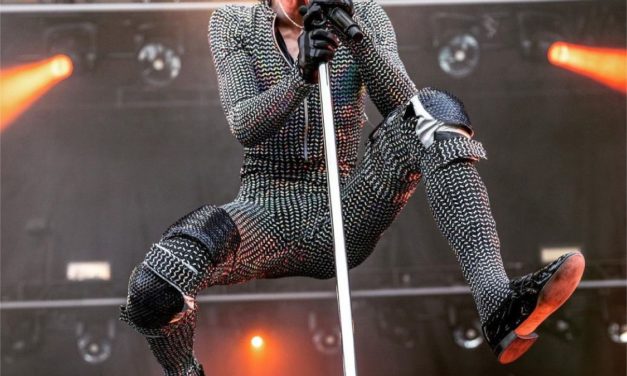
A self-made millionaire by 16, Jonathan Manzi is no ordinary entrepreneur. Now 31, the past 15 years have seen him start an energy drink business but shutter it once he realized that there wasn‘t enough of the required kava-plant ingredient in the world to feed his ambitions of competing against Gatorade. Becoming the youngest bar owner in San Francisco at 22, Manzi went on to create a robotic FedEx-like printing office with his company INK and later launch Beyond Protocol, a blockchain that styles itself as the “internet” for the Internet of Things (IoT).Whether it’s a biometric suit that records the vital signs of Cage The Elephant’s lead singer or an electric vehicle charging system spreading across Slovenia, Manzi the magnificent continues to create opportunities for machines and devices to talk and interact via blockchain as they emerge from the old internet.Teenage millionaireManzi grew up in a small town in Massachusetts “near Salem, where the witch trials happened many years ago.” His first foray into business came about while in high school in 2007 when he started an internet marketing company called Vintage Network based on ad serving technology. He says the challenge and joy of problem-solving “got me working 20 hour days to continue to build it.” Solving problems was not the only reward, as Manzi found himself a millionaire at a mere 16 years of age.Of such wealth at a young age, Manzi explains that he largely compartmentalized his success, buying only a used BMW in order to go snowboarding in New Hampshire. Biometric suit records the vital signs of Cage The Elephant’s lead singer. Source: Beyond Protocol via Twitter“There was a kind of a sense of ‘I‘m doing something different versus others, but I hope you know I still feel very connected to the others,” he explains of his experience of trying to live a normal teenage life as an internet millionaire. Eventually, he found ‘his people’ — entrepreneurs and hacker-types.“We had a $5 million in revenue by the time I finished high school”As he finished secondary education with a multi-million dollar business, Manzi felt that he had pigeonholed himself in “this kind of niche internet marketing world.” Wanting to move beyond its limits, he applied to Stanford believing that it was “where all the innovation was happening.” Predictably enough, he was accepted. As Manzi started his management science and engineering and philosophy degree in 2009 in the depths of the Great Recession, he sold his stake in Vintage Network as it faced turbulence due to businesses cutting their marketing spend. He soon also decided to drop out of university because though he enjoyed the academic environment, he felt he “could probably read those books and do it on a different schedule” while continuing on his entrepreneurial journey.The journey continuesOne of the projects he dreamed up was an energy drink created with kava, a fruit indigenous to the South Pacific, which he says lowers the stress hormones in athletes, a claim supported by research Manzi participated in at Stanford’s Human Performance Lab. However, Manzi discovered a roadblock after one of his schoolmates traveled to Tonga on a kava buying mission only to find out that the supply chain was limited in such a way that “if we were to have the success of Gatorade, it would be impossible nearly impossible to consistently supply” enough kava to keep stores stocked. To further complicate matters, the plant and its sale are heavily regulated in many countries.Next, Manzi looked to get involved with a printing kiosk business in Slovenia which aimed to replace print shops. He worked with the company’s founder Denis Benic to bring the firm to Silicon Valley with Manzi taking a CEO role. Still, after spending three months in the capital Ljubljana trying to get the expansion deal through, the board rejected his plan. Despite this, he’d convinced Benic, who soon left Slovenia, to live in Manzi’s apartment while building a new business called Ink, “an automated FedEx office,” together. “In the meantime, I bought a bar in San Francisco and I was the youngest bar owner at 22,” Manzi recalls of the few months before Benic arrived.Manzi the magnificent is highly inventive.Manzi knew about and “philosophically celebrated” Bitcoin since 2012, having previously followed the “libertarian” eGold project while he was in high school. Despite this, he did not see it as an attractive investment and instead “backed into” blockchain technology through the cybersecurity needs of HP printers related to his printing business, in which he worked to make enterprise printers less hackable through a system of validating nodes and hardware signatures. Soon, he began to believe that blockchain was the answer to “the number one issue in Internet of Things (IoT) and will be over the next decade,” that is, the question of how exactly interconnected devices will be able to best talk to each other in a reliable way.“Getting into blockchain was an exercise in finding a solution for HP’s cybersecurity problems and getting immersed in things like provenance and supply chain management.”The problem, according to Manzi, is that “TCP/IP protocol — the internet — did a fantastic job connecting nodes and servers but it never anticipated a moment like this,” he says, explaining that everything from satellites in the sky to smart pills that track vitals inside someone‘s body needs to be able to identify themselves. “You have the information superhighway, but you don’t identify the cars on it,” Manzi says of the current internet — but with blockchain integration, each unit can become connected.[embedded content]Beyond ProtocolIn 2018, Manzi co-founded Beyond Protocol to serve as a way for devices to better connect and communicate. He explains the Beyond Protocol thesis as a “blockchain providing a structure and a platform for IoT to achieve its full potential,” emphasizing that it is very natural for these two technologies to function together with blockchain effectively providing the environment in which the “things” of the internet can function.“Devices now, for the first time, can kind of open up and start talking to each other because of the technology that blockchain provides.”So far, the protocol shows promise as demonstrated through some interesting applications that Manzi has spearheaded. Earlier this year, the company partnered with Vanderbilt University to create a biometric suit that can track a person’s vital signs and, by extension, mental health. The suit, made using 3D printers and containing various sensors that communicate with one another on Beyond Protocol, was tested on stage by lead singer of the band Cage the Elephant Matt Schultz as part of his campaign to raise awareness for mental health. Though it looks like a cross between medieval chainmail and a futuristic spacesuit, Schultz is able to jump on stage without hindrance.Beyond Protocol x @CageTheElephantMatthew Ray Shultz, frontman of CTE, which won Best Rock Alum at the 2020 Grammys, dons a 3D printed suit produced in collaboration with @beyondprotocol1 that measures his biometric information, and allows developers to build apps on top of it pic.twitter.com/9OOssJSakq— Beyond Protocol (@beyondprotocol1) October 3, 2021“It‘s a good way to illustrate how blockchain can be used with data coming off of devices,” Manzi says. He goes on to explain the cybersecurity value of using blockchain to validate the signatures of individual devices to protect against hacking. Further, he adds that blockchain integration allows for the entire dataset to be cross-validated in such a way that knows which devices have accessed which data and, by extension, which has had access to specific pieces of information. This allows for a higher capacity in privacy protection, at least in theory, because such an arrangement can ensure that unauthorized components can not and have not gained access to specific data. This, however, can represent a double-edged sword because it is conceivable that the full tracking data could end up in the wrong hands after it is uploaded onto a computer.The true purpose of the suit comes from the data which, when collected and combined, can result in the building of customized applications to benefit the wearer. “Developers can come in and say to Matt, ‘here are some different applications that I can build based on your vitals,’” Manzi explains.“Let‘s say he‘s getting a little agitated. The biometric suit could trigger a vibrating pulse to the wrist area to suggest that he, for example, calms his breathing down,” Manzi explains regarding the suit‘s function. Functions like these carry potential benefits in areas including mental health, with Manzi adding that performers face immense stress while on tour and the ability to track stress levels can be beneficial — doubly so for someone like Schultz who has a history of battling depression and is now active in promoting good mental health.How cool would it be if such a suit could be used in conjunction with a metaverse avatar, such as one created using the “Polish Elon Musk’s” portal to the Metaverse or even one performing in a 3D Animal Concert?Talking carsAnother recent proof of concept can be found in Manzi’s co-founder Benic’s native Slovenia, where Beyond Protocol has partnered with the European Union Commission to set up an eBike charging station outside Parliament in Ljubljana.(1/3) Beyond Protocol’s technology has been selected to power European Union green initiative. Alongside partners, Beyond Protocol has deployed an eBike solar powered station in Slovenia, with a systems architecture built from blockchain technology. The station is located in… pic.twitter.com/RLvG32IB8O— Beyond Protocol (@beyondprotocol1) November 19, 2021What makes these bikes special is that they are more than mere electrical devices that blindly charge when plugged in but, instead, are “individuals” that can independently communicate with the charger.“The bike to identify itself with hardware and when it goes up to a charger, say “Hey, this is ___ type of bike therefore I need ___ type of charging — it should happen at ___ charging rate and here are my billing details.”“This bike charging concept is currently being scaled out to electric vehicle charging stations in Slovenia. We started looking at the electric vehicle infrastructure in Europe and we determined that we can develop these charging stations where the cars can pull up to them and seamlessly pay for electricity,” Manzi explains. Each car is given a unique identity with which the driver can connect their Stripe account as one connects to a wireless speaker. When the car connects to an electric charging port, it identifies the charging station’s wallet address via Bluetooth and pays automatically for the electricity it receives. Validation is the key word — the integrated Beyond Protocol blockchain allows the machines to seamlessly recognize each other and transact without fear of imposters. This means that stealing your credit card would not be enough for an identity thief to buy gas at the pumps — they’d need to steal your car, too.Though Manzi initially considered having payments settle in Beyond Protocol’s native token BP, he came to the conclusion that initial adoption would be more seamless when allowing for fiat payments through Stripe, where, for example, a credit card can be used as a source of funding instead of crypto.Despite the initial lack of utilization, Manzi sees future use cases for the BP token “as like a natural resource for this new economy of devices waking up and starting to communicate with each other in all these new ways that can’t necessarily even be imagined right now.” He says that is likely to include a role interacting between cars and charging stations in practice.“It allows us to do what we do great, and that‘s provide the car with the identity and the charging station the identity and allow them to transfer value.”

Čítaj viac

Získaj BONUS 8 € v Bitcoinoch

nakup bitcoin z karty

Registrácia Binance

Burza Binance

Aktuálne kurzy