
Autor Cointelegraph By Elena Perez

Mining worldwide: Where should crypto miners go in a changing landscape?

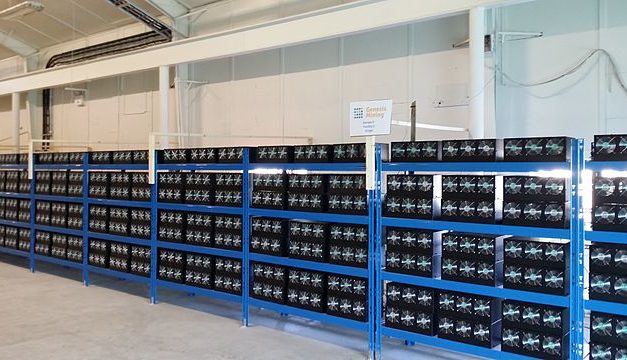
One of the main themes among the crypto community in 2021 was China’s aggressive policy toward mining, which led to a complete ban on such activities in September. While mining as a type of financial activity has not gone away and is unlikely to disappear, Chinese cryptocurrency miners had to look for a new place to set up shop. Many of them moved to the United States — the world’s new mining mecca — while some left to Scandinavia and others to nearby Kazakhstan, with its cheap electricity.Mining activities can’t stay under the radar forever, and governments around the world have begun to raise concerns over electricity capacity and power outages. Erik Thedéen, vice-chair of the European Securities and Markets Authority — who also serves as director general of the Swedish Financial Supervisory Authority — has called for a ban on mining proof-of-work cryptocurrencies like Bitcoin (BTC) in Europe.As jurisdictions around the world begin to crack down on mining-related activities, it begs the question: “Where is it still profitable, and legally favorable, to mine crypto?”Related: Finding a new home: Bitcoin miners settling down after China exodusNorth AmericaIt’s no secret that the U.S. is the main country for crypto mining, particularly in the Lone Star State, Texas. After the exodus from China, crypto miners and billions of dollars of capital flooded into the southern state. This is largely due to state policy, with Governor Greg Abbott having actively supported the Bitcoin industry.Philip Salter, CEO of crypto mining firm Genesis Digital Assets, told Cointelegraph the reason the state became a popular destination for miners:“The most prominent location for miners worldwide may be Texas right now. Its huge amounts of wind and solar power are causing a surplus of affordable energy. Privately owned power grids ensure a fast path for new projects, without being hindered by slow bureaucracy. The benefits of Texas aren’t so new though. Miners started building there already years ago, even if not as aggressively as now.”Texas has experienced its own problems with electricity infrastructure, with massive blackouts affecting much of the state in 2021 amid unseasonable winter storms. But miners there have been relatively understanding about electricity consumption, and large companies have even periodically turned off equipment to give priority to residential consumers and critical infrastructure.America’s northern neighbor, Canada, has also been actively attracting mining companies. Recently, authorities in Alberta invited cryptocurrency miners to the province, touting its cheap electricity prices thanks to an abundance of local natural gas.Latin AmericaLatin American countries have been expending considerable effort to attract miners, with El Salvador, in particular, showing a favorable attitude toward mining. The country was the first in the world to recognize Bitcoin as legal tender. The Salvadoran government has not hesitated to directly invest in Bitcoin and even plans to build a city dedicated to the preeminent cryptocurrency where electricity to mine BTC will reportedly come from volcano-fired geothermal plants.Costa Rica is also gradually becoming mining-friendly due to low electricity prices. Thanks to mining, a hydroelectric power plant that was closed during the COVID-19 pandemic has now reopened. Large crypto companies have also begun to set up operations in Costa Rica. Chia Network, a blockchain network created by BitTorrent founder Bram Cohen, has agreed to provide technical services for Costa Rica’s national climate change initiatives.Argentina was very popular among miners until the government decided recently to cut subsidies for miners and raise taxes on mining activities. So far, these financial policy changes for mining are limited to the province of Tierra del Fuego, which is known for its cold climate. Nevertheless, Argentina remains a good place for mining farms even after the electricity price increases, keeping in mind the energy crisis in competing regions like Europe. Mining is still possible in EuropeCrypto mining operations in Europe remain relatively limited, as high electricity prices amid the energy crisis and a generally skeptical attitude toward cryptocurrencies from regulators make crypto firms think twice before locating to the continent. Indeed, the Nordic nation of Iceland was previously a hotspot for Bitcoin mining, with its subarctic volcanic landscape providing cheap electricity and low cooling costs for mining farms.A mining farm of Genesis Mining in Iceland. Source: Marco Krohn.However, late last year, the country’s national electrical company, Landsvirkjun, cut the amount of power it would provide to energy-intensive industries like Bitcoin mining and aluminum smelting, citing capacity concerns. Despite limitations on the continent, there are a few spots in Europe where miners have decided to set up shop where geography and climate play an important factor in attracting business.In Georgia, located in the Caucasus region, the large number of hydroelectric power plants built during the country’s time as a Soviet republic — along with its relatively modest population — have provided a large amount of cheap electricity for miners.Major crypto mining companies have already set up operations in the country. Back in 2014, Dutch mining company Bitfury opened its first data center, with a draw of 20 megawatts, in the eastern Georgian city of Gori.The success of Bitfury opened the eyes of many Georgians who actively began to acquire powerful video cards and create their own small crypto mining farms. According to the World Bank, 5% of the Georgian population was engaged in crypto mining in 2018.It should also be noted that Russia remains an epicenter for crypto mining thanks to low energy costs and a cold climate.Andrei Loboda, public relations director of BitRiver — the largest cryptocurrency mining colocation services provider in Russia — shared with Cointelegraph some specific regions where it will be convenient for miners to work if the Russian government becomes more supportive of cryptocurrencies:“According to BitRiver, today, about 300,000 individuals are engaged in mining Bitcoin alone in the Russian Federation. Our company performs energy-intensive, high-speed computing in data centers in a number of the Russian Federation regions, including the Irkutsk Region and the Krasnoyarsk Territory. The green and digital technologies that we implement in our work as part of the digital energy transition have already given an additional impetus to the development of the regions.”Is mining worth it?Geography is a critical element for miners to consider, be it for electricity and cooling costs or regulatory concerns. However, there are some expenses, like hardware, that miners will carry with them wherever they go.With demand for mining equipment on the rise and a recent slump in the markets after 2021’s bull run, when is mining worth it with all the hardware costs?A homemade Bitcoin mining rig with GPUs. Source: Bitcoin Wiki.2021 was the most profitable year for mining Ether (ETH) with graphics processing units since 2016. This is not surprising, as Ether’s price more than quadrupled last year. But the main issue for miners is electricity and equipment expenses, and the price of the latter is growing rapidly.Nevertheless, while the profitability of Ether mining remains high, the payoff period for equipment purchases is growing, partly due to the London hard fork in August 2021 that reduced the payout for each block mined from 8–20 ETH to 2 ETH. Another negative factor for miners will be the much-anticipated transition of the Ethereum blockchain to a proof-of-stake consensus, after which they will have to start mining altcoins or recertify as stakers on the network.The Bitcoin network’s mining difficulty recently hit an all-time high despite the strong decrease in BTC’s price in January, which hit a monthly low of around $34,300. It is surprising that, against this background, the cost of ASICs didn’t fall. At the same time, the ASIC payoff period this year is a little over 1,000 days, or almost three years. Not everyone can afford to carry those expenses for such a long time.There are a multitude of changing factors that miners have to take into consideration, but one thing is clear: Cryptocurrency mining is a flexible, adaptive industry, and firms have proven they are willing to relocate to more beneficial locations should their current one prove less than ideal.

Čítaj viac


Russia prioritizes CBDC ruble as overall crypto outlook seems positive

After the Chinese authorities introduced a complete ban on cryptocurrency transactions in September by equating them to illegal financial activity, local cryptocurrency miners either dropped off the radar or moved to other countries in order to continue with their business.The United States subsequently became the leader in terms of Bitcoin (BTC) mining volumes with a share of 35.4%. Modest Kazakhstan is currently in second place (18.1%), and the bronze spot was secured by Russia (11.23%).It’s not surprising because Russia has several advantages, meaning that conducting crypto business in the country is extremely lucrative for almost any miner. There is cheap electricity and, at least for now, friendly legislative regulation. According to analysts in spring 2021, the price of electricity in Russia was $0.06 per kilowatt-hour for household use and $0.08 for business. To compare, in France, a kWh of electricity costs $0.2 for householders and $0.14 for business, which is four times more expensive than in Russia. Other estimates suggest that the difference in the cost of electricity when mining Bitcoin in Russia and Europe is actually closer to 7.5 times.Many private crypto farms and mining companies have emerged in the country. Of course, as in the rest of the world, many Russian miners did not survive the “crypto winter” in 2018, when Bitcoin’s price dropped to almost $3,500, making crypto mining unprofitable. But COVID-19 has forced many to look for additional income and search for alternative ways to replenish their capital.Favorable conditions for mining even contributed to the fact that state oil companies suggested crypto mining at their fields and using associated gas to generate electricity. By the way, Gazprom Neft, the largest gas supplier to European countries, launched a data center for mining at its facility in Siberia back in 2020.Vitaliy Borshenko, co-founder of industrial mining operator BitCluster, is sure that even with high power consumption, mining in Russia will find support not only from private companies but also from the authorities:“The Bitcoin mining industry is a unique purchaser of electricity. The uniqueness comes from the highly flexible nature of the sector in terms of payment method location indifference and electrical load distribution. Huge facilities are built in remote parts of the country, giving tax revenues to local budgets and jobs to local residents. And since there is no shortage in electricity, the authorities can only support this process.”Is crypto legal in Russia?Each state today regulates the crypto industry based on its own interests and in completely different ways. Some countries fully prohibit cryptocurrencies, while others have made steps to legalize them.There are already rules and regulations governing the circulation of cryptocurrencies in the Russian market. But as is the case with many other countries, there are problems with regulating cryptocurrencies since the industry is very young and not all the regulators are familiar with it.Like many countries, Russia followed the global trends, and in 2014, there were early signs of various proposals for bills to regulate the industry. The first distinct steps toward regulation began in 2018, and in 2019, the federal law “On Digital Rights” came into force, which provided the procedure and rules for using digital assets and tokens. A full-fledged law “On Digital Financial Assets” also began to be discussed. Finally, in January 2021, the still very “crude” and unfinished piece of legislation came into effect. This was the first law that aimed to specifically regulate cryptocurrencies and mining, as well as introduce taxation, but it still didn’t recognize cryptocurrencies as a means of payment. Russian banks and stock exchanges are able to conduct transactions of purchase, sale and exchange of assets if they are included in a special register of the central bank. Nevertheless, the state doesn’t have a mechanism to track profits derived from cryptocurrencies. When applying this law to ordinary users, a person who wants to store Bitcoin and doesn’t tell anyone about it, they can safely do it thanks to the network’s anonymity. Deanonymization occurs when cryptocurrencies get exchanged for rubles, dollars or any other fiat currencies, making it possible for the state to intervene in these transactions and create obstacles.In general, regulators in Russia cannot find a consensus, not only regarding the adoption of cryptocurrencies but how to even label and subsequently regulate them. Recently, the Russian Ministry of Economic Development proposed to understand mining as a business activity in accordance with the civil code. The proposal was supported by the Ministry of Finance, the Ministry of Energy and the lower house, the State Duma. The Ministry of Energy specified that consumers must indicate the level of power consumption for business or for personal spending. The State Duma also proposed to increase the electricity tariff for miners since they do not pay any taxes. But the Central Bank of Russia did not support this initiative and called mining a “monetary surrogate.” In September, the Central Bank suggested banks slow down payments of Russian users in crypto exchanges to combat “emotional purchases” of cryptocurrencies. For Valeriy Petrov, vice president of the Russian Association of Cryptoeconomics, Artificial Intelligence and Blockchain, this suggests that the Central Bank is stalling to make a decisive regulatory move despite the desire from the local industry to work with the regulators:“Regulation of mining is required only in two issues: recognition of its entrepreneurial activity and the legalization of the sale of earned crypto assets outside the Russian Federation in order to organize an inflow of foreign exchange funds into the country and determine the procedure for paying taxes to the state treasury. The crypto community has developed all the questions for a long time.”A digital rubleWhat if the Russian Central Bank does want to get involved in the young and uncontrolled financial sphere but only to become a monopolist and create its own cryptocurrency?Back in 2020, the Central Bank announced that it was studying the possibility of a digital ruble. The new currency would potentially be used both online and offline and would be stored in a special wallet. The regulator emphasized that its digital currency will be an equivalent form of the national currency. The digital ruble will become a project of a new payment infrastructure that will increase the availability and reduce the cost of payments and transfers for citizens and businesses. According to the Central Bank, in 10–30 years, the digital ruble should completely replace cash.This summer, the bank clarified that the development of a prototype of the platform for the digital ruble is planned to be completed in December 2021. Testing of the currency is planned for January 2022, which will take place in several stages throughout the year. After this test, the regulator will define a plan for its implementation.Related: Asian CBDC projects: What are they doing now?In addition to the usual means of payment, in the future, the digital ruble can be used to pay taxes, which can only be paid in a non-cash form in Russia.Since the Central Bank hasn’t yet disclosed all the details about the digital ruble, some financial organizations such as the Association of Banks of Russia have raised questions and suspicions. The critics cite the security of transactions. It isn’t yet clear how the regulator will ensure the safety of data in the digital ruble system and protect it from unauthorized access and data leaks.The Central Bank reports that settlements using the digital ruble will be reasonably safe and stable. In particular, through a hybrid of systems based on the principles of centralization and decentralization, data protection of the system must be ensured. The regulator has outlined plans to introduce multi level protection against unauthorized transactions and appeals against disputed transactions. Perhaps, a digital citizen profile, biometric data and other tools will be used.Security issues are not limited to questions about the digital ruble itself. Some see it as another instrument of monetary control over the population and business. The role of commercial banks in the digital ruble system is also questionable. With the growth of the circulation of the digital ruble, the volumes of their assets may decrease. Due to the fact that they will become intermediaries in the system, the role of their own products may be diminished. This can lead to a general drop in the stability of banks, which could harm the economy.Is Russia a threat to crypto?It is too early to speak about the consequences of the introduction of the digital ruble. The entral Bank has not yet disclosed all plans for a new payments instrument and details on its implementation. But if the system is launched successfully, then it could seriously change the financial sector, weakening the role of banks and making control of settlements more stringent. The regulator hopes that the launch of the digital ruble will become another impetus for the development of financial technologies in the country and will help to ensure additional stability of the economy.Related: Lines in the sand: US Congress is bringing partisan politics to cryptoHowever, some economists in Russia are afraid that the introduction of the digital ruble on the Russian market may turn into a ban on cryptocurrencies. The overall interest in cryptocurrencies is caused by a whole range of advantages that the technology brings, including the possibility of making cross-border payments.The Russian government may be wary that the ban on cryptocurrencies could lead to an outflow of funds from the country and the departure of many miners and crypto activists to the black market. Borshenko believes that Russia will not prohibit cryptocurrencies when introducing the digital rouble:“The authorities are currently showing a positive attitude. Vladimir Putin, in the middle of October, said that cryptocurrencies may exist as a means of payment.”

Čítaj viac

Získaj BONUS 8 € v Bitcoinoch

nakup bitcoin z karty

Registrácia Binance

Burza Binance

Aktuálne kurzy
