Autor Cointelegraph By Elena Perez

Georgia crypto mining’s potential: What’s driving growth in the industry?

Who would have thought that a small country in the Caucasus Mountains could become one of the world’s leaders in cryptocurrency mining?Despite its small size and population, Georgia has become a popular spot for cryptocurrency mining thanks to its cheap electricity, the absence of legislative restrictions and attractive tax incentives. This combination of factors has engaged not only Georgian citizens but also foreigners who want to try their hand at cryptocurrency mining. Oasis for miners Georgia’s economy is actively developing, but it has not yet grown up to the level of other developed countries. In 2015, in order to attract foreign investment and boost the economy, Georgian authorities established a Free Economic Zone (FEZ) in Tbilisi, the capital of the country.This action turned out to be a boon for the cryptocurrency business. By 2018, the country ranked second in the profitability of Bitcoin (BTC) mining. The low cost of electricity attracted foreign investors to the country, namely the Dutch company Bitfury, an industrial miner and one of the largest in the world. In June 2014, it opened its first data center with a capacity of 20 MW in Gori. In December of the following year, Bitfury launched a more powerful (40 MW) data center in the Gldani district of Tbilisi. Thus, the company increased its capacity in Georgia to 60 MW.The citadel in Gori. Source: PetrshviliThe mining company became the administrator of the Free Industrial Zone in Tbilisi, where 18 hectares of land were allocated for just $1. In addition to cheap electricity, Bitfury registered the company in the zone in order to get a tax break, avoid currency regulations and get access to cheaper utilities and other services.Bitfury also noted its role in applying blockchain technology in state registries. In 2017, Georgia became the first country in the world to start using blockchain in the state land cadastre. At the beginning of 2019, the government decided to use blockchain technology to issue education certificates.The success of Bitfury turned the heads of many Georgians, who actively began to acquire powerful GPU cards and create their own small mining farms. According to the World Bank report, about 200,000 people were engaged in cryptocurrency mining in Georgia in 2018.Related: Mining worldwide: Where should crypto miners go in a changing landscape?Crypto legislation Until recently, Georgian state authorities didn’t influence the circulation of digital money in any way. Several times, representatives of the national bank of the country have stated that it is necessary to be careful with cryptocurrencies, as they are not legal tender.By 2019, the great influence of this sphere on the country’s economy led the Ministry of Finance of Georgia to clarify the taxation of cryptocurrencies.Individuals in Georgia are exempt from income tax on any profits received from the sale of cryptocurrencies, while the sale of cryptocurrencies or its exchange for lari (the national currency) or another currency is not subject to value-added tax (VAT), which is 18%.Furthermore, the sale of computing power from Georgia abroad is not subject to VAT, while the sale of computing power within the territory of Georgia is.Unlike individuals, corporate income is taxed on corporate profits derived from sources around the world. As a result, if a Georgian company receives income from crypto transactions, it will have to pay a 15% tax on the transaction. But, if a company doesn’t fix profits and doesn’t pay dividends and directs all the income received to its development, then it is exempt from paying corporate income tax.Land plots in the Tbilisi Free Zone. Source: Tbilisi Free Zone In addition to the VAT, income from the purchasing or sale of hash to a non-resident is subject to an income tax rate of 10% if it is obtained from the source of Georgia. Other than taxes, there is no clear regulatory framework for cryptocurrencies in the country at the moment. Additionally, any business can obtain a cryptocurrency license in the FEZ. The license can be obtained in just 5-10 days and is issued in the form of a limited liability company or a joint-stock company, where founders may be residents of any country. In particular, the license gives the right to write off and enroll funds in accounts, produce digital money and provide payments and transfers using such money.Nevertheless, some Georgian authorities have turned their attention to the cryptocurrency market. Natalia Ivanidze, manager of the financial innovation office of the National Bank, told Cointelegraph that the regulator will be more active in this sphere:“At the moment, according to ‘The organic law of Georgia on the National Bank of Georgia,’ trading virtual currencies is not a supervisory area of ​​the National Bank of Georgia. However, we would like to inform you that it is planned to regulate this sector in the future.”Earlier in 2021, the National Bank of Georgia announced that it was considering a central bank digital currency (CBDC) called the digital lari, for which the pilot program could launch this year. As is characteristic of bank-issued digital currencies, the digital lari would not be a cryptocurrency but only an evolution of cash. It could not be mined, and the sole issuer would be the National Bank. At the initial stage, the digital lari is planned to be introduced for retail sales. The National Bank believes that national digital currency will help increase the efficiency of the payment system and financial integration. Related: The race for semiconductors: Are crypto miners taking the lion’s share?Miners’ futureAny business has its complexities and crypto mining in Georgia is no exception. After the mining farms set up shop in the Free Economic Zone in Tbilisi, several questions arose in relation to both the business and the status of the zone itself.Some residents of the country feel that crypto miners and enthusiasts don’t bring any benefit to the country and enjoy the tax advantages provided by the FEZ.The unregulated production of digital currencies and non-controlled use of electricity leads to frequent power outages in some areas of Georgia, much to the dismay of the country’s citizens. The Svaneti area suffers more than the others. This region is fully exempted from payment for electricity as an effort to support the more rural and remote towns and villages. Therefore, it is not surprising that nearly 1,000 miners quickly appeared there. Their powerful computers began to use almost all electricity in the region, which led to the disconnection of light in homes, hospitals and schools.Such cases are not uncommon in all of Georgia, but it doesn’t stop miners since this field of activity is not explicitly prohibited by regulators. Furthermore, for many Georgians, cryptocurrency mining is a form of supplemental income that is relatively passive, as mining rigs can be set up in the basements, garages, hangers and apartments.Mining in Georgia was and remains attractive thanks to the obvious benefits like cheap electricity, but the question still remains how long this will last.

Čítaj viac
Review: Gala Games blockchain platform combines gaming and commerce

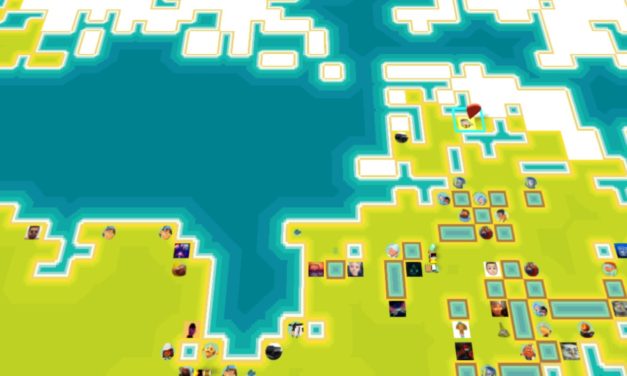
Crypto games that combine play-to-earn (P2E) and nonfungible token (NFT) mechanics found a huge boost in 2021, thanks to the success of Axie Infinity and metaverse hype. However, playability still remains a major problem, as most crypto games focus on tokenomics rather than providing a fun and enjoyable gaming experience. Apart from the earning aspect, they often offer nothing special compared to traditional PC or console video games, where players can find interesting plots, nice visual effects and addictive gameplay. Axie Infinity has become known for its repetitive gameplay, known among gamers as “grinding,” while The Sandbox and Decentraland don’t really provide attractive graphics.There is one worth the attention out of the many games out there, which actually isn’t really a game itself, but a platform. Gala Games presents itself as a gaming blockchain ecosystem. Its digital fuel is the Gala Games (GALA) token, created according to the ERC-20 standard on the Ethereum blockchain. It is also compatible with the Binance Smart Chain.The decentralized ecosystem of Gala Games aims to provide gamers with control over gaming assets. Thanks to decentralization, they not only own their game items but also have a right to influence the whole project. Players will be engaged through distributed voting mechanisms to help determine which games should be added to the platform.The Gala Games ecosystem includes five components: the games themselves, the game publishing platform, the NFT marketplace, cloud hosting and tokenomics.Gaming platform: A combination of everythingGala Games has a video game platform like Steam, PlayStation Store or Xbox Store, but unlike these platforms, Gala Games doesn’t rely on traditional video games but on projects that combine P2E mechanics, NFTs and decentralized finance (DeFi). Gamers can play freely and earn money just by playing.Another feature of the platform is that the players themselves decide which games to add to Gala Games. Voting will be held among all Gala nodes and any player can create a node using their PC. In addition to the choice of the game, users will also be able to influence the development of the platform itself such as features to add and where it is better to direct the efforts of developers like creating new games, improving the interface or fixing bugs.In February 2022, users of Gala Games decided to add the game called GRIT, akin to PUBG, to the platform. Free P2E video game developmentThe second important component of Gala Games is the creation of video games based on the blockchain and NFTs. To do this, the company will open a separate division dedicated only to the development of blockchain games. Currently, there are nine games on the Gala Games platform, and only two of them are in beta testing: Spider Tanks and Town Star. The next game, Mirandus, was supposed to come out in December 2021, but the release was pushed back to the end of 2022 or even 2023. The launch date of other projects is also unknown.President of blockchain of Gala Games Jason Brink told Cointelegraph that the main idea of the project is gameplay that will be interesting for gamers:“The key differentiating factor for us is that we put the game and the gameplay first, before anything else. We believe that games and gamers should always be at the forefront of the gaming ecosystem. This is why we focus on AAA-quality game development. We deployed over $150 million in capital in January alone to acquire games for the platform. It is important to note that these are fully fleshed out AAA games from teams with decades of experience making winning games.”Town Star is a mixture of a city sim and a farming sim like Zynga’s Farmville. It is currently the only fully released game available on PC. In October 2021, Town Star added an NFT and a P2E feature that allows players to earn money by participating in weekly tournaments, completing daily challenges and earning special rewards.Screenshot of my own town on the map of the United States in Town Star, where I built several farms and sold wood.Spider Tanks is a session PvP shooter where one team of mechanical spiders fights another team. The peculiarity of this game is that players can create their own spiders from various parts such as chassis, weapons, skills and skins that are NFTs. The game is currently in beta and can run on PC. Users can also buy and sell in-game NFTs.Screenshot of the shop in the game where NFT components are sold.Mirandus looks like the most anticipated game from Gala. The project is a fantasy role-playing game (RPG) similar to Skyrim, where players fight monsters, create cities and complete quests. Every kingdom, city, character, weapon and armor in the game is an NFT that players can buy. The Walking Dead is a multiplayer survival video game set in the world of The Walking Dead series. Players will kill zombies, collect supplies and build houses. The release date has not been announced, as the project is at an early stage of development and will be available on PCs.Echoes of Empire is a sci-fi strategy game. Players can recruit heroes, hire armies, gather resources and build, buy and upgrade a Starfleet. Echoes of Empire has two modes: solo and team, which become available after creating a guild or joining it. As of right now, the game is under development. The estimated release date is the second quarter of 2022.Legends Reborn is a card game where players need to build decks (collections) of fantasy creatures and fight against opponents. Unlike other similar games such as Hearthstone, all creatures in Legends Reborn will not be represented as cards but as 3D characters. In addition, users will be able to own the playing fields on which players will fight. The release date has not yet been announced.According to the Gala Games team, the Last Expedition will be a AAA first-person shooter based on blockchain and NFTs. Last Expedition was created by renowned development studio Certain Affinity, which helped other companies with add-ons for Call of Duty: World at War and several parts of Halo. Moreover, it was the Halo series that became the source of inspiration for Last Expedition. A release date for the game has not been announced.Fortified is a PvP tower defense game where players test their strategies using various assets they own. Players will build, develop and defend their cities, as well as raid the settlements of other players. The release date and launch date of Fortified have not been announced.Legacy will present a city-building business simulation. In Legacy, players will be able to organize resource production chains and sell them on the market, maximizing their profits. The release of the game is scheduled for 2022.Platform tokenomics and P2E modelGALA exists both as ERC-20 on Ethereum and BEP-20 on BNB Smart Chain. In 2022, the platform plans to migrate to its own chain called GalaChain. According to the project’s team, this will increase the speed of transactions, reduce their cost and solve many of Ethereum’s scaling problems that hinder the long-term development of the project.Little is known about the platform’s tokenomics, Gala will be used to purchase NFTs and pay for licenses to run nodes, according to the project’s website. At the same time, each game project will be able to launch its own token, which can be bought and sold both in the Gala Games marketplace and on cryptocurrency exchanges and exchangers.Gala Games claims that any player can not only play in their games but also earn money without any investments — after all, these are free P2E games. However, this is not entirely true. For example, if taking the already launched game Town Star, the player can get the internal token of the Town project and sell it for real money in two ways: by completing tasks or by participating and winning in weekly tournaments. But, in order to complete tasks, the player needs to have at least one special NFT project, which can be bought only if they have a first-level account in the Gala Games network. So, it’s very similar to staking. Participation in tournaments is also not an option since players with special NFTs have advantages over other players. For example, NFT buildings can provide a bonus to resource production speed or reduce cost. Therefore, players without these NFTs are unlikely to be able to win tournaments and thus earn real money. Such a mechanism cannot be called play-to-earn — it’s more of a pay-to-win model.Prospects for Gala GamesGala Games now has 1.3 million active players. At the same time, they bought more than 26,000 NFTs, the most expensive of which sold for $3 million. These figures testify to the considerable success of the project at the moment. However, the prospects for Gala Games in the medium and long term are still in question.The fact is that the development of video games is a very complex and expensive process with unpredictable results. The history of video games is full of examples when a very promising game with cool developers and an unlimited budget failed miserably after release. Therefore, it is very difficult to predict the future of any company in this industry.It turns out that the prospects of Gala Games are completely dependent on the success of their games. If they gather a large enough audience and are financially successful, then the startup will live. If not, Gala Games will be another company that video games have killed.Brink is quite optimistic about the future of the project:“Our current release cadence is planned to be about eight games per year. We have 26 titles in development, and we are very much looking forward to releasing more titles.”The views and opinions expressed here are solely those of the author and do not necessarily reflect the views of Cointelegraph.com. Every investment and trading move involves risk, you should conduct your own research when making a decision.

Čítaj viac

The race for semiconductors: Are crypto miners taking the lion's share?

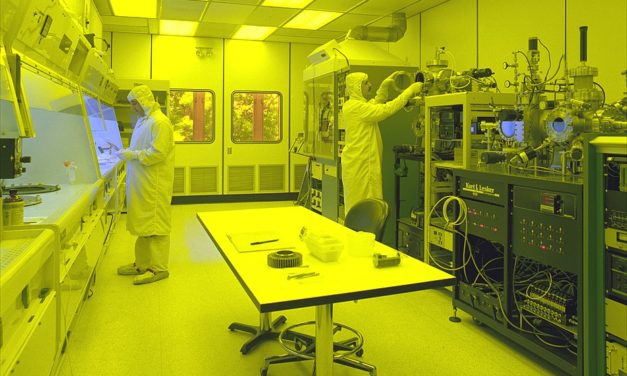
Over the last couple of years, the world has been grappling with the lack of semiconductors, which are the substances that conduct electricity between metals and isolates. The most famous semiconductor is silicon. If correlating this concept to electronic devices, then the key semiconductors are processors and other microcircuits that are present in almost all devices that people use every day, from smartphones to cars. In 2021, semiconductors hit a world record in terms of sales. Electronics production also boomed, with hundreds of millions of complex semiconductors being devoured by gaming consoles. The number of GPUs produced grew to unseen levels, with major manufacturers like Nvidia seeing all-time highs in terms of production.Despite all this, electronics prices skyrocketed and manufacturers of related goods were struggling to find semiconductors. Crypto miners: Guilty or innocent? It has become customary to not only mention but to blame cryptocurrency miners for the global shortage of GPU cards and semiconductors. To their credit, miners would buy up huge swaths of graphics processing units, sometimes emptying whole stores at once.Some countries that are feeling the shortage of cards acutely are already fighting against cryptocurrency mining.At the same time, the manufacturers, themselves, do not take such a definite position. AMD CEO Lisa Su said in June 2021 that miners are far from guilty for the lack and even complete absence of certain GPU cards. She said that their influence on the market is generally minimal and does not exceed 5%–10% of the total demand. Andy Long, CEO of White Rock Management, a digital asset technology company situated in Switzerland, agreed with Su that mining isn’t entirely to blame:“GPUs are still in high demand to power Ethereum and other altcoin mining. Nvidia’s published estimate for the percentage of traditional GPUs going to miners is in the single digits, but the true figure is likely higher than that — somewhere around 20%.”Another important factor behind the shortage of GPU cards is the COVID-19 pandemic. The supply chain showed that due to the many employees who began to work at home, the number of buyers increased so much that graphics processors — a crucial component in home computers — simply disappeared from sale.However, the situation with miners’ appetite for GPU cards began to change noticeably at the beginning of this year. Firstly, the change is due to Ethereum (ETH) switching to the proof-of-stake (PoS) protocol, which is slated to take place in the summer of 2022. Currently, the Ethereum blockchain is maintained by miners solving cryptographic puzzles and subsequently receiving a reward, the value of which is calculated according to the hash rate of each individual GPU.This is called proof-of-work (PoW). As soon as Ethereum switches to the new protocol, miners will no longer be needed as crypto holders will validate block transactions based on the number of tokens they stake.Since GPU cards will no longer be needed for Ether mining, once Ethereum 2.0 goes into effect, the demand for them will reduce drastically. This shift in demand is already very noticeable. In the first two months of 2022, Nvidia’s GPU card sales are down by 75% compared to 2021 as large mining companies that used to purchase such cards have stopped buying. This also means that Nvidia will be forced to redirect GPU cards to the gaming sector and cut prices. There are other reasons for the price decrease. Since April of this year, the United States has reduced import tariffs on the supply of goods from China by 25%. America is one of the main players in the GPU market, where companies such as Nvidia, AMD and Intel operate, so the tariff cuts have led to lower prices for GPU cards.Clean room at NASA’s Glenn Research Center. Such clean rooms are essential for semiconductor wafer fabrication.Buyers’ interest in the cards is also declining against the backdrop of a gradual return of people to offices after two years of remote work and the need to have a modern computer at home to comfortably perform work duties.“Dedicated mining cards are also a larger part of the picture now,” said Long, “These are cards without video output that are solely for data processing. We first saw these in 2017 with the launch of dedicated Pascal architecture cards such as the P106 and P104. Now the Nvidia CMP range explicitly targets the miners — with some dedicated high-end SKUs only available to those willing to place orders in the tens of millions of dollars. The shortage in dedicated gaming cards is as much to do with simple supply and demand for the core purpose of gaming — and also “HPC” type applications where people use gaming cards for rendering and AI tasks.”The deficit is not overThe solution to the problem of the shortage of GPU cards sounds simple: Producers need to make more cards to meet the demand. However, in practice, this is not the case. One of the problems is the supply of silicon wafers, which are used to produce the chips. In 2019, the demand for wafers was rather low, but in 2020, after the whole world went into quarantine, the demand for computers, tablets, TVs and other equipment that requires chips rose sharply. The demand for wafers has increased so much that Sumco Corp, the second-largest manufacturer of wafers, said that its production is booked until 2026.Samsung’s Xian, China 300mm wafer facility, May 2014. Source: iTers News However, the production of processors, GPU cards and memory cards requires more than just silicon wafers. After the start of war actions in Ukraine, world manufacturers of semiconductors faced a shortage of neon, which is necessary for the operation of the laser systems used to create the chips. The problem is that the two Russian companies, Ingas and Krion, produce 45%–54% of the world’s supply of neon-containing gas mixtures. How global manufacturers will look for a way out of this situation is not yet clear.In March 2022, some experts believed that the semiconductor shortage could end in 2023. In particular, the head of Micron Technology, one of the biggest producers of computer memory and computer data storage, believes that starting this year, manufacturers will be able to build up a significant stock of chips as well as arrange supplies. In 2023, there will be no such problems and global companies will largely be able to reach the level of production that they had before the pandemic. But the situation in Ukraine can stop this recovery and redouble the deficit of chips, forcing the price to rise with renewed vigor. Recently, Intel has claimed that it has stockpiled and continues to monitor supply disruptions while trying to find alternative sources of neon. Samsung stated that some factories may face shortages, the Dutch ASML, which produces scanners for printing chips that are used by TSMC and Samsung, didn’t hide their concerns and said that over the next two years, producers could face a shortage of major machinery equipment. So what will happen to semiconductors in the nearest future, and therefore to equipment? The GPU market could likely recover from the COVID-19 pandemic and the declining demand from miners, but global events are once again putting manufacturers to the test with the lack of components for the production of equipment. Of course, it is worth believing that the business will find the raw materials and build new supply chains, but no one can predict how soon this can happen. In any case, the shortage of semiconductors seems to continue, and GPU card prices will go up again, but in this case, the miners will have had nothing to do with it.

Čítaj viac

Is Illuvium the first fun crypto RPG video game?

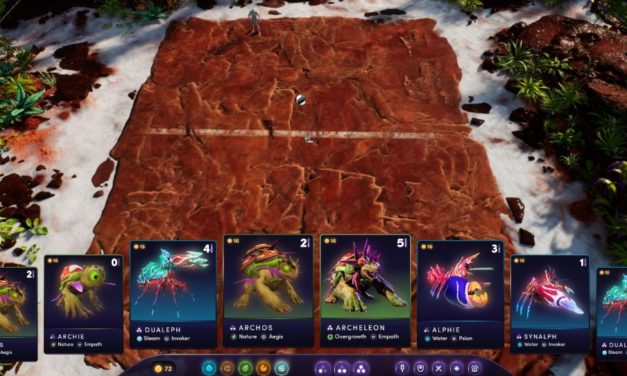
Blockchain games have been quite popular among crypto enthusiasts for a long time because they use cryptocurrency as an in-game tool.In these kinds of games, blockchain technology is used to secure the absolute ownership of game items, represented by tokens.For example, by purchasing an in-game nonfungible token (NFT), a player can be sure that he possesses a truly rare item that can be stored and controlled outside the game. This ownership provides a completely new player-driven economy where players can create their own unique content.However, crypto games are still far from the legacy PC or console games in terms of quality and gameplay, perhaps because the world is still cautious about the blockchain technology itself and is not ready to integrate it into the multi-billion dollar industry. Nevertheless, there has been some progression in this direction.One of the largest companies in the gaming industry, Ubisoft, announced plans to integrate blockchain tech and nonfungible tokens into games back in 2021, but no further news has been heard so far. The company also invested in Animoca brands, sparking a price spike in the latter’s game tokens.Illuvium: A typical NFT game?In the first quarter of 2022 gamers were checking out the beta version of Illuvium, which aims to become the first AAA project among decentralized finance (DeFi) games.Illuvium is an open-world role-playing game (RPG) built on the Ethereum blockchain. The player starts the game in a crash-landed transport ship in an intergalactic fleet on a dying planet. Because of the accident, the player cannot leave the planet, so they discover mysterious creatures, illuvials, which can be captured in crystal fragments.Each illuvial has its own properties and creatures are divided into classes and have special abilities. Some illuvials are more common than others. There is a blending mechanism in which they can merge into rarer powerful forms or turn into rarer variations. The creatures are presented in the form of NFTs that can be won in-game or purchased on the in-game IlluviDEX and external exchanges.Screenshot from a battle.As a rule, NFT games look extremely unattractive and are absolutely boring to play. The gameplay comes down to collecting NFT items and then exchanging them for certain tokens. A specific problem with Ethereum games was overload, which made the gameplay very tiring at key moments.The Illuvium development team aims to solve this problem by integrating the Immutable X layer-2 protocol. This network greatly improves the performance of Ethereum-based projects.With Immutable X, the project ensures that players can sell their NFT tokens with zero fees and instant transactions. NFT assets are stored in the IMX protocol.Unlike the majority of projects, where game mechanics serve only as an add-on to token farming, Illuvium really looks interesting. From a visual point of view, Illuvium, powered by the Unreal engine, can be compared to major titles like The Outer Worlds or Borderlands.[embedded content]How to playThe game, which is available for download for PC, starts with the player customizing a character and choosing a robot assistant.Users play not only their illuvials but also as themselves. The choice of available weapons depends on the character. Weapons can be given additional power with the help of rare minerals.On the surface of the planet, the player will meet creatures with whom they can engage in battles. First, players can use free tools that can tame some weak illuvials. After a few victories, illuvials become more powerful and can be strengthened with special items. Developers give players the opportunity to study the gameplay without investment. In order to develop to visit new places in the Illuvium world and open new areas of the map in the future, players will need to unlock the Obelisks and purchase more powerful illuvials with Ether (ETH).It is worth noting the game’s combat requires players to think and strategize, lest they be defeated in a matter of seconds. Players need to develop strong units that have good synergy with each other. Good armor can also decide the outcome of the battle and can be forged from items found on the surface of the planet or purchased from IlluviDEX.According to Kiernan Warwick, co-founder of the project, the combat in Illuvium is a combination of several genres of online games:“We took the DNA of time-honored autobattlers like Teamfight Tactics and merged it with competitive strategy like the games Hearthstone and Starcraft. The exciting new hybrid of the two pushes skill and strategy to the absolute limit of engaging gameplay. Our studio’s focus is on creating interesting, visually-heightened, player-friendly experiences.” Although many illuvials have already been developed, the developers aim to expand their number and properties. New illuvials will be released at regular intervals as rarity increases.Nowhere without tokensThe game’s native token ILV can be bought on Binance, KuCoin, Poloniex, Gate.io and other exchanges. ILV enables holders to participate in the development of the network. Owners of ILV receive the right to vote on determining the amount of bonus payments. 100% of game and sales revenues will be distributed to members of the ILV community by default.The game seems really promising as its audience is growing steadily. ILV went on sale at the very beginning of 2021 at $53 per token and has since skyrocketed to $606, according to data from CoinMarketCap.Promising Future?Illuvium promises to be an interesting project that can unify an NFT game and a well-designed RPG game. Thoughtful mechanics, rewards and modern graphics could allow it to take a leading position in the industry.Illuvium is a fully 3D game. All the details of the game world are thought out quite well by the project team. One of the game’s main strengths is the plot, which is critical for any RPG and sets it apart from most crypto games that are mostly concentrated on farming tokens. Another strength is the game’s scaling mechanism, which reportedly allows it to host hundreds of thousands of players around the world. In an “ordinary” RPG game, users play on different servers in order to avoid congestion that leads to lags when playing. In Illuvium, developers use a scaling model incorporating cloud storage resources that, they say, will unite the world of the game. At the moment, the Illuvium team is focused on marketing and promotion. The game has appeared on lists of the most anticipated games of the year. The only anxiety for gamers is that the developers still haven’t finalized the game, but they hope to start deploying an open Beta version in the middle of 2022.The views and opinions expressed here are solely those of the author and do not necessarily reflect the views of Cointelegraph.com. Every investment and trading move involves risk, you should conduct your own research when making a decision.

Čítaj viac

Crypto mining’s cost: How has hardware availability changed the industry?

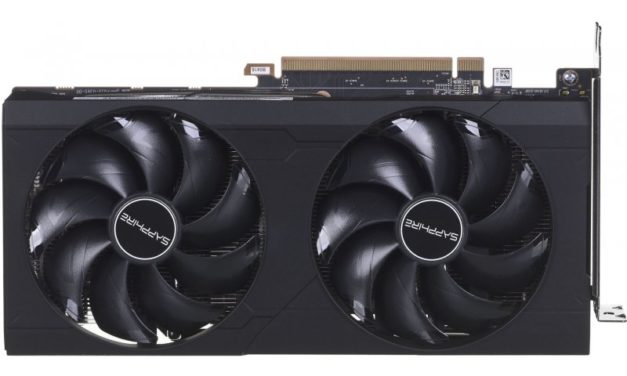
Cryptocurrency mining has been and remains an attractive endeavor not only for fans of alternative financial instruments but also for those serious about investing.When deciding whether to start mining, potential miners keep several well-known factors in mind: equipment and electricity costs, suitable climate and favorable legislation in the country of operation. At least, that was the case until recently.In 2022, the situation changed and became more complicated. A few years ago, it was possible to mine cryptocurrencies by purchasing a graphics processing unit (GPU), reading a guide on how to construct a rig and simply mining coins. Such income was attractive for many online entrepreneurs, and soon new miners flooded the global market. Yet over time, the complexity of mining has increased and led to the emergence of special equipment for crypto mining — i.e., application-specific integrated circuits (ASICs), which can mine far faster and more efficiently than GPUs. As a result, problems of a different nature have arisen such as green energy concerns, qualified personnel and equipment availability.Related: Fortunes turning? Specialized GPUs and SSDs come to aid crypto minersIn the summer of 2021, many buyers of GPU cards — the main component of any farm and rig — sounded the alarm when it became nearly impossible to obtain them. The few latest-generation GPU cards available had prices far above what many considered to be fair value.Exploding demand for GPUs was further exacerbated by the COVID-19 pandemic — which saw hunker-downers building and buying PCs to entertain themselves during quarantine — in addition to supply chain disruptions across the globe. Major GPU manufacturer Nvidia attempted to curb miner demand by installing special hardware that would limit hash rates, but miners eventually prevailed after finding a means to circumvent the new features.At the beginning of 2022, the situation has changed, but not by much. At the end of January, the cost of the main cryptocurrencies Bitcoin (BTC) and Ether (ETH) dropped to their lowest levels since July 2021.The price fall caused a chain reaction in the GPU market as mining became less and less profitable and was under threat of bans in various jurisdictions across the globe.In January and February, interest in GPU cards designed for cryptocurrency mining waned along with a drop in mining profitability. Nvidia reported the price of the Sapphire GPro Radeon X080 card, specifically designed for mining, dropped by almost 40% during this period. At the end of January, the card cost more than $1,400 and can now be found for around $860.Sapphire GPro Radeon X080 card. Source: OX.eeThe appetite for GPU cards has also been curbed by the upcoming transition of the Ethereum blockchain to its proof-of-stake protocol, where powerful cards and large computing power will no longer be needed. It is worth noting that a price reduction was also observed in the market for “usual” GPU cards — that is, cards with video outputs designed for processing graphics. The price drop for Nvidia and AMD gaming series cards was about the same as specialized mining solutions. Several companies such as Ajinomoto Fine-Techno have reported that a shortage of components for GPUs, including those important for the production of Ajinomoto build-up film substrates, will significantly decrease by the summer of 2022. Intel also plans to release a line of equipment for mining BTC this year. The situation with ASICs remains fairly stable since BTC miners have no other options in choosing equipment. Popular models for BTC mining today are the Antminer S7, Antminer S9 and Antminer D3 from Bitmain. In addition, Bitmain representatives announced a new line of products with hydro cooling, which will supposedly allow miners to work year-round regardless of external environmental factors. Nonetheless, the cost of such an ensemble remains extremely high.Sell ​​and resellAs a more affordable option, miners can buy used equipment. Unsurprisingly, this method of acquiring equipment became increasingly popular as GPU prices were increasing, especially during the general decline in income during the OVID-19 pandemic.Every day, more people want to mine cryptocurrencies, and reselling equipment is profitable — especially regarding powerful GPU cards and ASICs. The remaining necessary elements for mining such as motherboards, coolers and more are still mostly purchased in stores because of their relatively reasonable price points.Before buying a product, it is important to study the market in detail to understand who sells what and at what price. The easiest way to buy in a large online store is by making a wholesale order. A more difficult route, but profitable, is the option of buying directly from the manufacturer.GPU cards are affordable and versatile in sources when purchased wholesale: A high-quality ASIC will cost $1,600, and a GPU card will cost $200 per unit. The mining equipment resale market is becoming a popular option both for single users and companies alike.In November 2021, Compass Mining, a BTC mining service provider, launched a secondary resale market for retail mining customers to sell hardware. The company’s management said that miners spent hundreds of millions of dollars every month on the secondary market, which indicates high demand.A month later, digital asset developer and staking company Foundry Digital launched FoundryX, a new marketplace for buying and selling BTC-mining machines. The company received more than 40,000 of the latest-generation mining machines from MicroBT and Bitmain for immediate delivery before 2022 for the new market. In addition to being able to flexibly relocate to places with cheap electricity and friendly crypto regulation, it is also relatively easy for miners to find and set up new equipment.Even in the context of the global economic crisis, mining is developing in various directions, and it is expected that by 2026, the global crypto mining equipment market could be worth $1.2 billion.Bitmain marketing director Nathaniel Yu told Cointelegraph that the company has seen an expansion in the market and its drive toward green energy:“Bitmain continues to see the digital currency-mining industry develop further as new mining operators enter the market. Green mining has experienced substantial growth in the past year. The industry can expect more energy providers to enter the mining space. As for mining hardware, hydro- and liquid-cooling technologies will play a growing trend. Data center development will continue to incorporate new technologies to ensure longer mining cycles.”

Čítaj viac

Získaj BONUS 8 € v Bitcoinoch

nakup bitcoin z karty

Registrácia Binance

Burza Binance

Aktuálne kurzy