Autor Cointelegraph By Elena Perez

Blockchain gaming adoption means more options for gamers

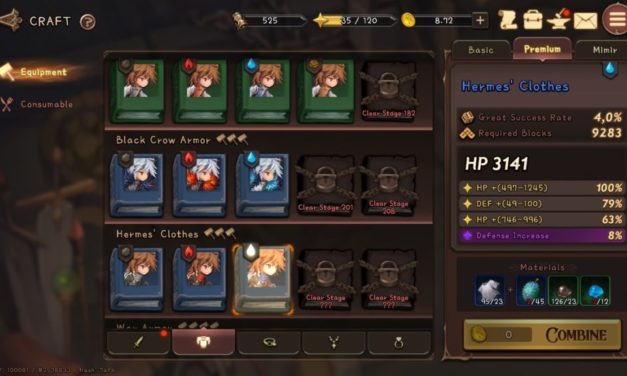
Over the past couple of years, games that use blockchain technology have increased their presence in the gaming industry.While there were early examples like CryptoKitties — launched in 2017 — the trend has truly gained steam, with major gaming studios even exploring the technology.At the beginning of 2022, the market capitalization of blockchain games was around $25 billion and it doesn’t seem to be decreasing anytime soon, even in the depths of a bear market. According to the analytical service DappRadar, the two most stable areas this year in the cryptocurrency market are blockchain games and nonfungible tokens (NFT), which have recently become very tightly intertwined, creating a new economic phenomenon.A striking example here is the well-known game Axie Infinity, the token price of which rose above $150 last fall, providing the project with a capitalization exceeding $9 billion. During the same period, the daily audience of the game was approaching 2 million people. In December 2021, when Bitcoin (BTC) began to fall from its record highs, the Axie Infinity (AXS) token also began to sink, but the Axie Infinity audience grew to almost 3 million people a day, and the transaction activity in its network increased four times.There are objective reasons for such dynamics. Firstly, most blockchain games use browsers and the creators use HTML5 and WebGL technologies, which have radically expanded the possibilities for developing browser games. Such games repopulated browsers and, at the same time, provided the ability to connect crypto wallets and withdraw NFTs to external marketplaces without any regulatory restriction.Secondly, blockchain games have no competition as such, as the traditional PC game industry still refers to the blockchain as an incomprehensible or even “toxic” space. This gives small studios, which are not yet able to create large gaming franchises, a huge head start on development. The ability to quickly launch the in-game economy allows developers to immediately fund the continued development of their game worlds without getting into debt and without inflating working capital.Finally, blockchain games are mostly about income because in blockchain-based games players can earn money just by playing. For completing tasks and spending time in the game, users receive tokens that can then be invested or converted into real money.What genre to chooseJust like classic PC games, blockchain games cater to all tastes. They have a number of common features: They work from a browser or a mobile app, have simple controls and have a user-friendly interface that even a beginner can handle.Blockchain games relate to different genres, while they all have one common feature: They are developed by using smart contracts. That is, they provide an opportunity to receive valuable virtual assets. Therefore, all games, no matter what visual component or story they have, are all play-to-earn (P2E) games. Genres of such games include actions, strategy, online multiplayer arenas, sandboxes and more, but it is possible to define the most popular.Massive multiplayer online role-playing games (MMORPGs) usually have a dynamic reward system where players get tokens by completing in-game tasks. Tokens are used to upgrade characters in order to gain an advantage over opponents in the form of a fortified arsenal or the development of character abilities. The most popular games in this genre are CryptoBlades, My Crypto Heroes and, of course, Axie Infinity.If pocket monsters and endless battles seem boring, gamers can pay attention to collectible card games. Such games use the NFT system so that the digital cards look like real collectibles. Players need to strategically outplay their opponents by building decks to counter different tactics, and cards can be bought, sold or traded — just like real cards. Some of the most popular card games are Splinterlands, Gods Unchained and Sorare.Another interesting genre is “x-to-earn,” that is, to do something to earn income and not necessarily just “play” the game. The concept of “X-to-earn” was first proposed by Ben Schecter, head of operations at RabbitHole — a platform that rewards users for learning about crypto. In this equation, “X” can be any daily activity like eating, exercising, sleeping, shopping or studying. “To earn” is the financial profit received as a result of performing these specific actions.In blockchain games, the concept of “x-to-earn” was developed primarily in the form of move-to-earn, with the example of the famous STEPN game that rewards users for playing sports or exercising. In the English learning game Let Me Speak, the main way to earn money is to buy NFT avatars and start learning English in the app. Every few minutes, players are instantly rewarded with tokens for their progress.The most ambitious and large-scale projects are AAA games, or games developed by a major publisher, which require a lot of time, a lot of resources and a lot of money to develop. Such games are designed not only to attract players with the opportunity to earn money but simply to enjoy the gameplay. The combination of real AAA gameplay and stunning graphics sets them apart from the rest. The best example of a AAA game right now is Illuvium, which has been in development since 2020 and was released this year. The Illuvium “ILV” token is currently trading at around $60, according to CoinMarketCap, with a market capitalization of $560 million.Related: Is Illuvium the first fun crypto RPG video game? Lesley Fung, a content operation specialist from Footprint Analytics, believes that AAA games are the future of GameFi:“Some of the AAA Games combine the experienced team with delicate production. The teams behind these projects have a record of success in both blockchain and gaming, and the resources to potentially make a AAA title work. The narrative in GameFi is that current games lack quality and have unsustainable tokenomics. However, once AAA games come out, these will bring GameFi to the masses after the bear market, solving much of the current problems.”According to Footprint Analytics, which is engaged in discovering and visualizing blockchain data, the most popular blockchain game genre for the first nine months of 2022 was card games such as Splinterland, leaving x-to-earn and AAA games behind.So, the gaming space is replete with various blockchain games for any taste. Here we chose some unique games from each genre. Nine ChroniclesNine Chronicles is an Idle MMORPG developed by Planetarium in partnership with Ubisoft. The client works on the Unity engine, and the backend is completely on the blockchain. Robert Hoogendoorn, head of content at DappRadar, told Cointelegraph:“When we’re talking about gameplay, it’s difficult to really point one out. However, on a technological level Nine Chronicles is very unique. While most blockchain games rely on existing blockchain ecosystems like Ethereum, Polygon or BNB Chain, Nine Chronicles runs on its own custom blockchain.” Furthermore, the entire set of game rules exists on the blockchain, making it impossible for gamers to cheat. Each player can manage a node, participating in the maintenance of the network. Therefore, updating the game also requires all users to update their nodes.The game focuses on crafting and in order to develop a character, the player has to constantly loot in player-versus-environment (PvE) and craft more powerful equipment.Armor inventory in Nine Chronicles.All fights are resolved automatically, with victory determined by the level of a player’s equipment, its element and randomness in hits. Using the same equipment, the player can both win and lose.In March 2022, the developers made a global change in the gameplay, wherein equipment level restrictions were introduced. Solitaire BlitzIn the genre of card games, the fantasy game Splinterlands is now very popular. But, what if a gamer wants to play an old-fashioned card game on the blockchain? One of the most widely played card games of all time was the classic Solitaire, a game that can be played by people everywhere and of almost any age. Perhaps that is why the developers of Solitaire Blitz took the game as a basis for their project, which now enjoys a considerable number of active players. It is the standard Solitaire card game built on the Flow blockchain. The game has seamless and fairly simple gameplay that makes it attractive.Screenshot of Solitaire Blitz.In Solitaire Blitz, a player competes with opponent players who have similar ranks. The player with the most points wins the game. With a unique algorithm, the skill-based matchmaking system ensures fair competition. Solitaire Blitz is a mobile game and can be downloaded from Google Play or the iOS App Store.XCAD NetworkWhen thinking of the x-to-earn genre, the first image that comes to mind is move-to-earn games, but this genre is not limited to movements. One of the most intuitive variations of x-to-earn is watch-to-earn, a model that allows players to earn tokens by watching videos.At the moment, the watch-to-earn industry is run by the XCAD Network project, not a game but a platform that allows YouTube content creators to make fan tokens and release NFTs, thus opening up new sources of monetization and ways to attract fans. As for the fans themselves, they earn fan tokens for watching the content of their favorite bloggers.XCAD Network differs from other x-to-earn projects in that the amount of reward directly correlates with user activity. The total number of subscribers of all bloggers working with XCAD Network is already more than 260 million.Another unique feature of the project is that on the XCAD Network, users do not need to watch what the platform offers them. Instead, they simply install the XCAD plugin and watch the same videos as before. And, since the platform is built on the Zilliqa blockchain, users do not face any minimum withdrawal amounts.MIR4MIR4 is a AAA game that appeared on the crypto game market in August 2021 and became successful both on mobile platforms and Steam, the largest online store for computer games.The most important distinguishing feature of the game is partial automation. Auto-battles, auto-collection of game resources and auto-completion of tasks will partly replace manual gameplay, which is suitable for players who do not have enough time.The storyline continues The Legend of MIR3 PC game, which was closed back in February 2012. The player takes on the role of an archmage’s apprentice guarding the princess, and the main attraction of the game is to upgrade everything, mining hundreds of components and resources. The interface of the game is quite pleasing to the eye and the game world is huge. The game store has a great selection of items, including leveling boosters, currency, scrolls, power-up stones and others.As a mobile game, MIR4 is quite beautiful. Of course, for a player who is not used to such projects, it seems that the screen is too loaded with information and inscriptions, but everything is done compactly. Models of characters and monsters are well-detailed.Interestingly enough, the developers officially allow four windows to be played: one on Steam, two on the official game client and one on a phone. It is worth noting that the Steam version, according to the terms of the platform, is not tied to cryptocurrency and money withdrawal.The controls are better on the PC version, but the graphics are much nicer on mobile.PC screenshot of a fight between the author’s character and a monster.In terms of earning real money in the game, the game is filled with “dark steel,” a resource that after level 40, can be exchanged for DRACO tokens. This metal is required for crafting and upgrades. The rate varies but roughly corresponds to the value of 100 thousand dark steel for 1 DRACO. The tokens can be converted into fiat currency and transferred to a bank card.Trading on the in-game market also starts at level 40. Goods and resources are sold for gold coins, which can later be exchanged for dark steel and converted into DRACO.MIR4 has good graphics, animation, special effects, dynamic battles and beautiful characters. It attracts with the cross-platform, automation, branching development system and a lot of tasks.The views and opinions expressed here are solely those of the author and do not necessarily reflect the views of Cointelegraph.com. 

Čítaj viac

Scams in GameFi: How to identify toxic NFT gaming projects

Over the last couple of years, games using blockchain technology have been actively developing and attracting new players, and the decentralized games market — broadly referred to as GameFi — has gained great popularity. The GameFi industry started back in 2013, and since then, the sphere has been slowly developing, but in 2021 the popularity of decentralized games exploded along with the boom in nonfungible tokens (NFT). According to the DappRadar analytical service, the total value of one of the most popular blockchain-based games, Axie Infinity, exceeds $550 million.But the GameFi industry has its issues. Many projects often “launch” regardless of the game’s development stage.And while Bitcoin’s (BTC) price trend can enhance or weaken the success of GameFi projects, there isn’t necessarily a direct correlation. Despite the bear market, the price of many GameFi tokens is growing today due to their NFT component as investors aim to make money on the resale of in-game heroes and digital items, rather than concentrating on the improvement of game mechanics.When choosing a GameFi project, it is worth considering the marketing and technological component: How actively the project is promoted, and what benefits the project’s token bestows upon its participants.However, one needs to be wary about pie-in-the-sky promises from GameFi token projects, as scams abound within the space.One of the biggest GameFi scandals was in the fall of 2021 when the Squid cryptocurrency based on the Squid Game show collapsed to almost zero after rising to $2,800. The token, which was based on but not affiliated with the Netflix series Squid Game, first appeared in October 2021. It was a crypto game that would consist of six rounds, similar to the rounds of deadly competition in the series’ plot. To participate in each round, users needed to pay with Squid Tokens. The game was scheduled to launch in November. Developers would receive 10% of the funds raised, and the winners of the game 90%. At the time of the token’s release, users noted that it was impossible to sell the purchased currency. Furthermore, observers started to grow suspicious when it was discovered that there had been no official connection between the token, Netflix and the authors of the series, so they began to warn users about a possible scam. When such warnings became widespread, the scammers promptly withdrew all the money. According to several reports, the scammers made away with $3.38 million in total.The leaders of the “classic” gaming industry are highly suspicious GameFi and tend to avoid the industry altogether, which is a sign for users to be cautious. Gabe Newell, CEO of Valve — one of the biggest video game developers in the United States — in February 2022 commented on his firm’s decision to stay away from the GameFi sector. Newell claimed that games with NFT and blockchain mechanics are “superficial and sketchy” and that NFT creators and projects are “not people you really are wanting to do business with.” Newell added that there are purportedly rampant instances of fraud within the NFT sector, stating that due to the volatility of token prices, players don’t even understand when and what to buy.Recent: Elusive Bitcoin ETF: Hester Peirce criticizes lack of legal clarity for cryptoEpic Games CEO Tim Sweeney joined his colleague earlier this month by calling the Fortnite Token a scam and stating that the company is preparing legal action to shut it down. However, the creators of Fortnite Token responded by describing it as a fan-made project with no specific owner or company behind it. Fortnite Token first appeared in late 2021 and, without a doubt, was trying to tie into Epic’s mega-hit battle royale game.How do NFTs fit into gaming?To understand GameFi, one should get acquainted with NFTs and their integration with smart contracts. An NFT is an asset whose digital receipt is placed in the blockchain. The smart contract is associated with the NFT. This sounds serious and professional; although, in reality, it is just a small piece of code. And this little piece of code can be anything, including a link that leads to a JPEG file stored on a central server. Indeed, the lion’s share of NFTs presently is just that. A smart contract, which is used to “manipulate” an NFT object between games, is not a multifunctional tool. It doesn’t include a model, textures, description, sound, animation, etc. so that an item or character can be easily transferred from one title to another. Thus, for the integration between two games to work, these games must be built, run and maintained through a single infrastructure or gaming engine. Such integrations currently don’t exist in the gaming industry.Furthermore, an NFT game can work only if it has a large pool of users with its own economy, where players can buy and sell in-game items in the form of NFTs. However, a lot of traditional games already have such economies. For example, Eve Online sells and buys ships for real money, while Counter Strike: Global Offensive is pushing skins for the price of apartments and cars. In general, NFTs themselves have no value, and it is the task of the NFT owner to convince users that their assets are worth real money.It turns out that even if the developers of a particular game do not want to deceive the players, but really develop their project, they need to convince users of the uniqueness, freshness and point of interest of their project, and this is extremely rare.How to spot a scam game?NFT scam games are often large-scale and premeditated. Most investors in such projects are not experts but beginners, and scammers take advantage of and lure inexperienced users with the help of advertisements and beautiful sites. Users should, therefore, pay close attention to several details (explained below).The project’s teamDevelopers of professional projects always have accumulated experience. Their biographies can be easily found on the internet, with a track record of how successful their past ideas were.However, there are many serious projects in GameFi that are launched by anonymous teams. Little information can be found about them because they are hidden behind nicknames or pseudonyms. Reviews on professional platformsWhen studying a project, one should never rely on advertising slogans. It is better to read reviews about them on independent professional platforms. The blockchain community quickly responds to the emergence of new projects. Within a few hours, any idea will be analyzed from all sides.But scammers have adapted and figured out how to deceive users. Some teams shill projects by writing positive reviews about the company on third-party sites. They pre-register several hundreds of accounts on large forums under the guise of real users. When a command is given, they send the text prepared according to the training manual. So, investors can’t rely on reviews alone.Projects on social networksBe sure to look through the social networks of the project and pay attention to the number of people involved by their activity in chats and comments and the nature of the messages. There are no secret projects without users.Smart contractThe easiest way to check the project’s smart contracts is to use such resources as Etherscan or BscScan. The block explorers will provide you with information about when the project was created, brought to the market, how many users it has, and how many tokens were issued. Future income of the projectEvery project is created to make money, and it is important to understand where the added value will come from. A person shouldn’t invest until they understand the source of a project’s profit.Network marketing There are many GameFi projects that are built on a multilevel marketing (MLM) system. This is similar to classic network marketing, which isn’t a scam in and of itself. A large number of good projects have used MLM to attract new users, but if the project has no source of income other than network marketing, then it is likely a scam. In addition to MLM, there must be value-added mechanisms. Real projects can’t unreasonably promise users huge percentages of profits.From games to piggy banks: Educating the Bitcoin ‘minors’ of the futureRecent: From games to piggy banks: Educating the Bitcoin ‘minors’ of the futureEthan McMahon, an economist at Chainalysis, told Cointelegraph that one should pay attention to the links that appear on a project’s website:“Scam projects like Squid Game often start with just a white paper, a landing page and a token listing on a major crypto exchange. They may tout fake partnerships, non-existent employees, and/or 3D renderings stolen or purchased pre-made. Other potential red flags include typos and broken links. Of course, it’s also worth checking out whether you can actually play the game. If not, it could be a pump-and-dump or rug-pull scheme.”Although the NFT gaming market is indeed overvalued, NFTs as an investment have yet to reach their potential. NFTs need to be understood more broadly rather than believing they are mere items you receive after countless hours of grinding. The negative bias toward NFT games among skeptics was formed precisely against the backdrop of volatile trading in assets with no clear use case. NFTs can and should have intrinsic value. In order for the NFT market to mature, a strong link to real assets and services is needed.Pedro Herrera, head of research at DappRadar, believes the future of crypto gaming is bright, hinting that it might move on without NFTs:“In my perspective, blockchain games will be massive, but we are still a couple of years away from seeing an actual mass adoption event. Traditional gaming is a $60-billion industry where people spend around $20 billion per year on game purchases like wearables, guns and skins. When the first blockchain AAA game combines a good gaming experience with crypto assets, we’ll see traditional gamers, purists turn their attention to blockchain games. And also, there is the Web3 metaverse where MMORPGs will become a predominant way of socializing and playing. So, the future of blockchain games is bullish. As for scams, there will probably be a couple, but it is more common to see them in NFTs.”

Čítaj viac

Mental health and crypto: How does volatility effect well-being?

The crypto world is well known for its volatility. Especially in the early days, digital assets experienced wild price swings, gaining or losing double-digits in the course of a day. It appears that the current bear market is no exception to this trend. While wild price swings provide opportunities to make gains — if you’re lucky enough — the volatile behavior of digital assets can pose a threat to the mental and emotional health of investors.Mental health is an extremely important aspect of human life, which, until recently, wasn’t given much importance in mainstream media and discourse. Finances and investments can play an important role in emotional well-being, while constant despair due to the volatility of the crypto markets can hurt. This was well displayed after the Terra debacle, when the ecosystem’s stablecoin depegged, sending the crypto market as a whole into a spiral and eroding confidence in the crypto ecosystem. Indeed, after the price crash, suicide hotlines for numerous countries appeared in the LUNA subreddit, as the savings and investments of many investors were wiped out in a matter of hours.Fears and failuresEven when equipped with investment knowledge, beginners can make bad decisions under emotional pressure. In addition to technical and fundamental analysis, the right mental attitude plays an important role in trading. Under the pressure of emotions, rash acts can be committed, which usually cause mistakes and serious losses. These mistakes can be divided into several groups:Gambler syndrome: New investors begin to open a large number of transactions without thinking them through. Premature exit from a deal: At the first successful transaction, beginners tend to quickly take profits and close the position prematurely. In this case, they lose part of the profits that they could gain. Dependence on other market participants: Many traders are guided by the signals and opinions of established market participants. To obtain the maximum benefit, however, it is necessary to become independent of these factors.Coming to terms with losses: the cryptocurrency market is very susceptible to emotional trends. Prices immediately react to a variety of statements and rumors, so it won’t be possible to completely get rid of the influence of emotions. Euphoria from the first deal: The first profit gives the trader a positive emotion, which can only push them to become undisciplined.Many crypto enthusiasts refer to FOMO, or the fear of missing out, on a potential deal. Another major fear in the crypto world is related to hackers. The digital, decentralized and often anonymous nature of crypto makes these assets more vulnerable to hacking and scams.Recent: Crypto knocking on the WEF’s door: The view from DavosThese are just some of the many factors that can affect the mental health of cryptocurrency investors. To limit the psychological impact of financial stress, it is important for investors to decide how much they can afford to risk. New diseaseOver the past couple of years, cryptocurrencies have risen and fallen many times, which couldn’t help but affect the mental health of crypto investors.According to experts, crypto trading can turn into a real addiction. The first signs of this psychological disorder occur when traders constantly follow the price fluctuations in digital currency. Experts refer to this process as “day trading” and consider it to be another form of gambling, and people who are addicted to trading cryptocurrencies are referred to as “crypto addicts.”Source: Paget Michael CreelmanThe main symptoms of crypto addiction are muscle tension, anxiety, round-the-clock monitoring of digital asset prices and constant thoughts about trading digital currency even while doing other things not related to the crypto industry. All this leads to depression and insomnia. In some countries, specialized programs have already appeared that help address mental health problems related to digital asset trading.Who is at risk?Luckily, not every crypto investor is subject to mental health issues. Scientists from the Queensland University of Technology in Australia recently conducted a study in April regarding who is most susceptible to crypto addiction and which personalities should pay special attention to their mental health while trading.Those who are prone to crypto addiction are people who love gambling and don’t really trust authorities. A strong desire to have nothing to do with the state makes such people turn to cryptocurrency.People who like to deceive and manipulate others for the sake of their own interests, such as cynical and prudent people, are also prone to a crypto addiction.Narcissists are also susceptible to crypto addiction. Such individuals are usually incredibly confident and, therefore, prone to risky investments. At the same time, they prefer to focus on the positive side of life, believe in their bright future and think that nothing bad can happen to them. This unshakable self-confidence is what drives narcissists to take risks and buy cryptocurrencies.People with a high level of psychopathy are characterized by heartlessness, low emotional intelligence and a lack of empathy. Such people usually have reduced emotional reactions, which makes them resistant to stress and anxiety, so they probably like risk. In addition, psychopaths are impulsive. This quality, combined with a propensity for risky behavior, makes them prone to risky trading behavior. They are afraid of afraid missing out on the benefits that others might receive.Recent: Anonymous culture in crypto may be losing its relevanceSadists also like to invest in Bitcoin (BTC) because, like psychopaths, they don’t want to miss out on potential reward. For them, the pleasure of someone else’s pain is associated with a sense of superiority over others. At the same time, both psychopaths and sadists, unlike narcissists, have no illusions about their prospects, which is reflected in their passion for cryptocurrency.Of course, not every crypto investor is mentally disturbed. However, most people don’t develop an addiction to trading digital assets. It is worth remembering that when starting to trade cryptocurrencies, one must take into account all the facts that can affect one’s health and well-being. To limit the psychological impact of cryptocurrency stress, it is important for investors to decide how much they can afford to risk. According to Sergey Miheev, product manager from investment platform United Traders, investors shouldn’t focus only on the cryptocurrencies themselves:“First of all, stop perceiving crypto only as a trading instrument, unless you’re a professional daytrader with many years of experience. If you are an investor, it is better to understand how price is created and why it changes, the value of a certain coin and market behavior patterns. Then, you get a bigger picture. One way or another, you realize that a crypto is a developing industry, which means that the best strategy is simply buy and hold. Remember that time is on your side.”

Čítaj viac

Review: Bots abound in NFT castle-building game League of Kingdoms

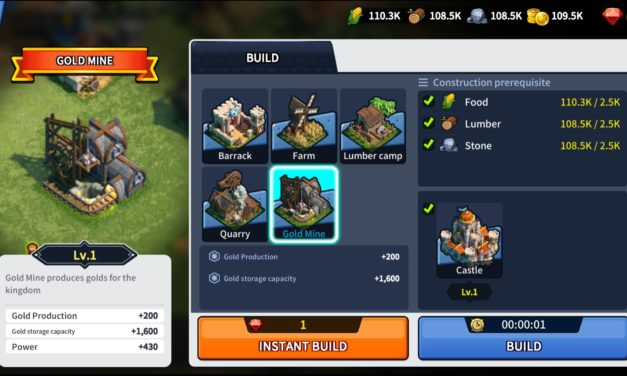
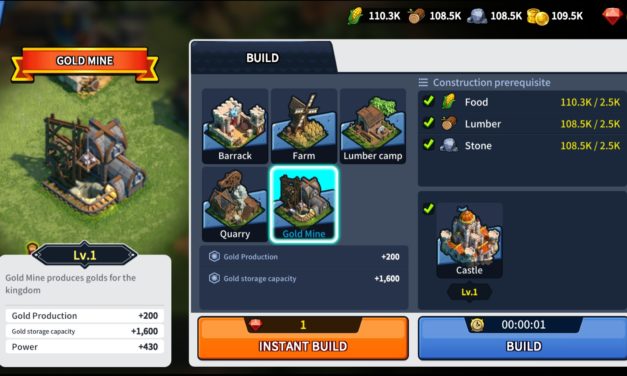
With the development of gaming platforms, virtual items have also become a popular method of monetization, but most games store data on private servers, giving gamers a reason to doubt their reliability and transferability. Developers can change the game policy at any time to maximize their profits. They are not obliged to consult users or take responsibility for the harm caused to the game ecosystem. This problem can be solved by blockchain technology which makes it possible to own and transfer virtual assets to anyone through nonfungible tokens (NFT). In a world where gamers spend a lot of time and money developing their characters and seeking out unique items, games that allow them to earn and influence the game’s development are very attractive. One of the most popular genres of games is massive multiplayer online (MMO) strategy games that are focused on building civilizations and managing the gaming ecosystem. One such game is called Leagues of Kingdoms (LOK). PC gaming is one of the most popular forms of entertainment worldwide, with more than three billion fans of PC and console games in the world and a sales income calculated in hundreds of billions of dollars. What is LOK?League of Kingdoms (LOK) is an MMO strategy game based on the Ethereum blockchain. It is a decentralized and independent ecosystem. Gamers can buy land and other NFT assets in the official game store or from other players on the OpenSea marketplace. Ownership is secured on the blockchain.Gamers can create their own kingdoms and raise armies to protect their subjects and participate in battles. Players can also participate in various quests, events, contests and competitions to win awards. Kings can team up with other kingdoms to create alliances, which fight for control of different territories.Players also can take part in decision-making processes, like voting for new game content. Proposals that receive the most votes are implemented in the following update of the game. Game modes and earning Every gamer starts with a single-player mode and is immediately ordered to complete simple tasks for which bonuses will be awarded. The game also offers to join one of the alliances. But, in order to fully play, the gamer needs to purchase additional resources in the gaming store.The NFT land token is the centerpiece of the game, and kingdom-building is the central element of League of Kingdom’s gameplay. Gamers start with a small primitive city-state and develop it into a powerful kingdom. One of the unique features of League of Kingdoms is its treasure and skill system. There are artifacts that can be crafted and used to unlock special magical abilities.Buying the “Gold Mine” to build it and get resources.The League of Kingdom platform has several game modes. The single-player mode is designed to create a kingdom. The gamer creates buildings, explores the ecosystem, collects resources and prepares an army to protect their own kingdom and strengthen the alliance.In player-versus-environment mode, gamers farm valuable resources and send warriors to hunt evil monsters. According to the developers, in the future, a monster invasion mode called Trial of Agony will be introduced.Player-versus-player is designed for competition between gamers. Players fight for resources and ownership, using game elements and special skills to strengthen their armies and capture enemy castles.MMO mode allows players to participate in alliance wars, the siege of shrines and other competitions.On my way to defeat another castle.Making money in LOK is the most important occupation. Gamers can earn cryptocurrency by owning NFTs. Part of the gaming fees goes to reward active players and landlords. Players can also trade game elements on NFT markets.The landowner receives 5% of the collected resources, which can be used to benefit the kingdom or mine NFTs. LOK has a Dai (DAI) prize pool to pay landowners.The land in the project is a unique unit of digital real estate, presented in the format of an NFT, which can be used to play and earn points for development. In total, there are 65,536 plots located on several continents. Dragos are mythical creatures with the powers of various elements. Each dragon is unique. They serve their master and fight for him in battle. This is a decisive element of the battles in the game, which determines tactical and strategic options. Dragos are collectible NFTs with unique appearances and features. Owning a Drago provides various benefits in different areas of the game. By owning a dragon, the player also gets the opportunity to earn Dragon Soul tokens (DST).Han Yoo, chief operating officer of LOK, told Cointelegraph that the project team places particular emphasis on these NFTs:“Drago — a dragon-like creature NFT, was introduced in the League of Kingdoms on May 16. Drago NFT and DST token loop will usher in a new era of play-to-earn in the LOK. Drago will also launch with a rental system. More gameplay content related to Drago will be released as well. One of them will be Drago Arena where Dragos can fight and compete with each other. It will be a sort of mini-game to diversify the entertainment of our game.”Trouble in the kingdomLOK is available for PC and also has a mobile version, which can be downloaded from Google Play and the Apple App Store, although the developers are experiencing difficulties on the latter.The game may be interesting, but many mobile-version players complain that there are still many bugs and the translation of the interface into different languages ​​​​is not done professionally. Recently, bots have become a major problem in the game as the user base rapidly grows.The project team has recognized these difficulties. Yoo mentioned that in order to boost the attractiveness of the game, the developers used too many bots and, as a result, the game has a lot of errors:“We’ve been updating our server with several patches and updates to accommodate the growing number of users, but the proportion of bots is quite high compared to other games, and it is causing lag and bugs in our game. We’ve developed an anti-bot system to filter out the flood of bot accounts. Also, we are encrypting the codes to prevent bot developers and abusers from exploiting our game. Currently, we are building a dedicated unit to monitor and ban the bot and cheaters, as well to comb out the malicious users from the game.”Despite these hiccups, the project has a roadmap for two years ahead and an extensive community of players. LOK is already a full-fledged working app that thousands of users have downloaded. At the moment, the game itself looks like a niche product compared to currently popular NFT games like Axie Infinity and Gods Unchained. But, LOK is a real-time strategy game which is a rather unusual choice for an NFT game. Real-time strategies are interesting in the context of complex game mechanics and LOK seems to succeed in transforming into a cross between a farm simulator and Pokémon with the introduction of the Drago ownership system. However, the game’s large community and powerful team of specialists speak to its viability.The views and opinions expressed here are solely those of the author and do not necessarily reflect the views of Cointelegraph.com. Every investment and trading move involves risk, you should conduct your own research when making a decision.

Čítaj viac

Review: Bots abound in NFT castle-building game League of Kingdoms

With the development of gaming platforms, virtual items have also become a popular method of monetization, but most games store data on private servers, giving gamers a reason to doubt their reliability and transferability. Developers can change the game policy at any time to maximize their profits. They are not obliged to consult users or take responsibility for the harm caused to the game ecosystem. This problem can be solved by blockchain technology which makes it possible to own and transfer virtual assets to anyone through nonfungible tokens (NFT). In a world where gamers spend a lot of time and money developing their characters and seeking out unique items, games that allow them to earn and influence the game’s development are very attractive. One of the most popular genres of games is massive multiplayer online (MMO) strategy games that are focused on building civilizations and managing the gaming ecosystem. One such game is called Leagues of Kingdoms (LOK). PC gaming is one of the most popular forms of entertainment worldwide, with more than three billion fans of PC and console games in the world and a sales income calculated in hundreds of billions of dollars. What is LOK?League of Kingdoms (LOK) is an MMO strategy game based on the Ethereum blockchain. It is a decentralized and independent ecosystem. Gamers can buy land and other NFT assets in the official game store or from other players on the OpenSea marketplace. Ownership is secured on the blockchain.Gamers can create their own kingdoms and raise armies to protect their subjects and participate in battles. Players can also participate in various quests, events, contests and competitions to win awards. Kings can team up with other kingdoms to create alliances, which fight for control of different territories.Players also can take part in decision-making processes, like voting for new game content. Proposals that receive the most votes are implemented in the following update of the game. Game modes and earning Every gamer starts with a single-player mode and is immediately ordered to complete simple tasks for which bonuses will be awarded. The game also offers to join one of the alliances. But, in order to fully play, the gamer needs to purchase additional resources in the gaming store.The NFT land token is the centerpiece of the game, and kingdom-building is the central element of League of Kingdom’s gameplay. Gamers start with a small primitive city-state and develop it into a powerful kingdom. One of the unique features of League of Kingdoms is its treasure and skill system. There are artifacts that can be crafted and used to unlock special magical abilities.Buying the “Gold Mine” to build it and get resources.The League of Kingdom platform has several game modes. The single-player mode is designed to create a kingdom. The gamer creates buildings, explores the ecosystem, collects resources and prepares an army to protect their own kingdom and strengthen the alliance.In player-versus-environment mode, gamers farm valuable resources and send warriors to hunt evil monsters. According to the developers, in the future, a monster invasion mode called Trial of Agony will be introduced.Player-versus-player is designed for competition between gamers. Players fight for resources and ownership, using game elements and special skills to strengthen their armies and capture enemy castles.MMO mode allows players to participate in alliance wars, the siege of shrines and other competitions.On my way to defeat another castle.Making money in LOK is the most important occupation. Gamers can earn cryptocurrency by owning NFTs. Part of the gaming fees goes to reward active players and landlords. Players can also trade game elements on NFT markets.The landowner receives 5% of the collected resources, which can be used to benefit the kingdom or mine NFTs. LOK has a Dai (DAI) prize pool to pay landowners.The land in the project is a unique unit of digital real estate, presented in the format of an NFT, which can be used to play and earn points for development. In total, there are 65,536 plots located on several continents. Dragos are mythical creatures with the powers of various elements. Each dragon is unique. They serve their master and fight for him in battle. This is a decisive element of the battles in the game, which determines tactical and strategic options. Dragos are collectible NFTs with unique appearances and features. Owning a Drago provides various benefits in different areas of the game. By owning a dragon, the player also gets the opportunity to earn Dragon Soul tokens (DST).Han Yoo, chief operating officer of LOK, told Cointelegraph that the project team places particular emphasis on these NFTs:“Drago — a dragon-like creature NFT, was introduced in the League of Kingdoms on May 16. Drago NFT and DST token loop will usher in a new era of play-to-earn in the LOK. Drago will also launch with a rental system. More gameplay content related to Drago will be released as well. One of them will be Drago Arena where Dragos can fight and compete with each other. It will be a sort of mini-game to diversify the entertainment of our game.”Trouble in the kingdomLOK is available for PC and also has a mobile version, which can be downloaded from Google Play and the Apple App Store, although the developers are experiencing difficulties on the latter.The game may be interesting, but many mobile-version players complain that there are still many bugs and the translation of the interface into different languages ​​​​is not done professionally. Recently, bots have become a major problem in the game as the user base rapidly grows.The project team has recognized these difficulties. Yoo mentioned that in order to boost the attractiveness of the game, the developers used too many bots and, as a result, the game has a lot of errors:“We’ve been updating our server with several patches and updates to accommodate the growing number of users, but the proportion of bots is quite high compared to other games, and it is causing lag and bugs in our game. We’ve developed an anti-bot system to filter out the flood of bot accounts. Also, we are encrypting the codes to prevent bot developers and abusers from exploiting our game. Currently, we are building a dedicated unit to monitor and ban the bot and cheaters, as well to comb out the malicious users from the game.”Despite these hiccups, the project has a roadmap for two years ahead and an extensive community of players. LOK is already a full-fledged working app that thousands of users have downloaded. At the moment, the game itself looks like a niche product compared to currently popular NFT games like Axie Infinity and Gods Unchained. But, LOK is a real-time strategy game which is a rather unusual choice for an NFT game. Real-time strategies are interesting in the context of complex game mechanics and LOK seems to succeed in transforming into a cross between a farm simulator and Pokémon with the introduction of the Drago ownership system. However, the game’s large community and powerful team of specialists speak to its viability.The views and opinions expressed here are solely those of the author and do not necessarily reflect the views of Cointelegraph.com. Every investment and trading move involves risk, you should conduct your own research when making a decision.

Čítaj viac

Získaj BONUS 8 € v Bitcoinoch

nakup bitcoin z karty

Registrácia Binance

Burza Binance

Aktuálne kurzy