Autor Cointelegraph By Editorial Staff

6 Questions for Pat Duffy of The Giving Block

We ask the buidlers in the blockchain and cryptocurrency sector for their thoughts on the industry… and throw in a few random zingers to keep them on their toes!This week, our 6 Questions go to Pat Duffy, co-founder of The Giving Block — a crypto donation solution that provides an ecosystem for nonprofits and charities to fundraise Bitcoin and other cryptocurrencies.Pat is co-founder of The Giving Block, and has raised over $100,000,000 in crypto for nonprofits in the last year. From 2020 to 2022, Pat and his co-founder Alex Wilson grew The Giving Block from a four-person team into one of the fastest growing companies in the nonprofit sector, with thousands of nonprofit clients and the world’s largest crypto donor community.1 — What is the main hurdle to mass adoption of blockchain technology?People say education, and I think that’s wrong. When people say “education,” I think that leads to people getting up on stages and explaining blockchain to people who don’t even understand how their microwaves work. It feels very puritanical to me and it’s been stunting progress on adoption. I think people are too addicted to decentralizing everything, including crypto adoption, which leads to a lot of people creating “educational” content instead of building intermediary companies and encouraging beginner-level crypto ownership that doesn’t require staking yams. I’d love to see people stop trying to explain how the pistons fire in the engine block so we can focus more energy on creating a level of crypto access that requires zero technical understanding.2 — What has been the toughest challenge you’ve faced in our industry so far?Teaching young crypto owners about the tax incentive to donate crypto. It’s so hard to explain to a group of people who hodl at all costs that they actually end up with larger crypto positions when they donate crypto versus donating cash (they donate the crypto, then use the dollars they would have donated to buy crypto at today’s cost-basis. Voila — they owe no tax on the appreciated crypto they gave to a charity, and the new crypto they bought today resets their tax liability). That’s been a real uphill battle, since these folks haven’t been educated on this like older folks who donate stocks every year for the same reason.3 — Does it matter if we ever figure out who Satoshi really is or was? Why, or why not?I couldn’t care less, but a lot of people seem hell-bent on figuring it out. I don’t see the utility of it, and think it just opens folks up to getting tricked into investing or not investing based on the moral pros and cons of the individual. The ideas aren’t any more true or false regardless of who developed them. I would fear the same thing will happen that we see in politics, where people support ideas based on the person who’s saying it rather than the merit of the idea itself.4 — What do the people closest to you tell you off for? Feel free to offer more than one answer.This is a wild question, but I dig it. I’d say the main thing I hear is “That’s not funny” when I take a risk with a crazy joke. Which of course makes it more funny. I’ve never done heroin, but I imagine that the closest I’ve come to experiencing an opiate high would be telling jokes that make my mom a little mad while everyone else laughs.5 — What makes you angry, and what happens when you get mad?I’d say the main driver of seething rage these days would be seeing people I care about having heated discussions about things they aren’t actively working on (and never will actively work on). Seeing friends and family get upset about political situations or cultural changes that they’re not trying to impact personally is a bizarre self-harming obsession that every now and then gets me to blow up at the dinner table. Anytime someone is complaining about something, I like to ask them “What are you going to do about it?” If the answer is that there’s nothing they can or will do about it, I think we all have an obligation to beg them to stop reading about it. There is much less time in the day than people think there is. All the time people spend “staying informed” directly takes away from time they’re spending bettering their life or the lives of the people they care about. Would love to see more people obsessively learning about subjects that they actually leverage to make things work better.6 — What’s the silliest conspiracy theory out there, and which one makes you pause for a moment?The Flat Earth theory is the funniest one right now. Right at that perfect intersection where just enough people are bought in to make you think the end of the world is near. “Birds Aren’t Real” would be my favorite if there were some NBA players who were pumped on that. Ones that make me pause aren’t all that outside the box — generally it’s suicides or assassinations where there’s a great deal at stake. When there are obvious reasons certain folks might want you dead, then it doesn’t take a leap of faith for you to start thinking there might be more to the story.A wish for the young, ambitious blockchain community:I hope you all leverage what you’re learning to improve the lives of the people you care about. That can be by making transformative money, by solving important problems, building important companies or making important connections. Whatever it might be, you’re in a position to do something important, so make the opportunity count.

Čítaj viac

NFTs banned in Minecraft, SEC lists 9 tokens as securities and 3AC founder blames cockiness for company meltdown: Hodler’s Digest, July 17-23

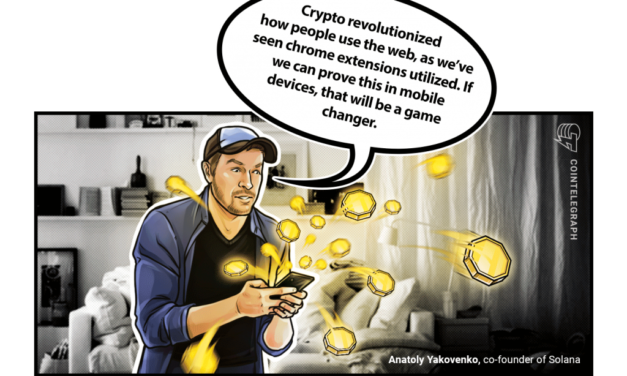
Coming every Saturday, Hodler’s Digest will help you track every single important news story that happened this week. The best (and worst) quotes, adoption and regulation highlights, leading coins, predictions and much more — a week on Cointelegraph in one link.Top Stories This Week3AC founders reveal ties to Terra founder, blame overconfidence for collapseAfter five weeks of being AWOL, the founders of defunct crypto hedge fund Three Arrows Capital (3AC), Su Zhu and Kyle Davies, resurfaced via an interview with Bloomberg. The duo admitted to operating the firm with overconfidence as a result of the multi-year bull market. They also noted that they were very close with Terra founder Do Kwon and, despite running a major hedge fund, were shocked that the project’s extremely risky algorithmic stablecoin went bust. Zhu and Davies said they overlooked several red flags as a result of the kinship.Mojang Studios bans Minecraft NFT integrationsMinecraft developers Mojang Studios banned nonfungible token (NFT) integrations in their wildly popular flagship game this week. The firm cited issues with NFTs being associated with price speculation, exclusion and rug pulls. “To ensure that Minecraft players have a safe and inclusive experience, blockchain technologies are not permitted to be integrated inside our client and server applications,” the firm announced. Crypto-skeptic gamers also called on Fornite developer Epic Games to follow suit, but the company said it “definitely won’t” institute a similar ban.SEC listing 9 tokens as securities in insider trading case ‘could have broad implications’ — CFTCThe U.S. Securities and Exchange Commission (SEC) has listed nine crypto assets as securities as part of the insider trading case against former Coinbase product manager Ishan Wahi. The SEC named Powerledger (POWR), Kromatika (KROM), DFX Finance (DFX), Amp (AMP), Rally (RLY), Rari Governance Token (RGT), DerivaDAO (DDX), LCX, and XYO. These were just nine of a total of 25 different assets that were allegedly used for insider trading.Experts reveal what Tesla’s $936M sell-off means for BitcoinFollowing the news that Tesla sold 75% of its Bitcoin in Q2 for roughly $936 million, experts have remained relatively unfazed. Markus Thielen, chief investment officer at digital asset manager IDEG, told Cointelegraph that Tesla likely sold off its BTC as it was “seen as a distraction from their core business.” Financial consultation site Finder’s share trading expert, Kylie Purcell, suggested that many firms have moved to “shore up capital in cash currencies” amid the current macroeconomic climate. Some Twitter users even called the move a “nothingburger,” implying that Tesla’s move may ultimately be insignificant.Amazon.eth ENS domain owner disregards 1M USDC buyout offer on OpenSeaOn Tuesday, the Amazon.eth ENS domain belonging to an anonymous OpenSea user fetched a bid of 1 million USD Coin. It has become a common practice for speculators to register ENS domains under the names of prominent entities in hopes of scoring a big payday. The bid went unanswered, however, and it is unclear why such a large sum of money was ignored. The next largest bid on the domain totaled just 6,300 USDC.Winners and LosersAt the end of the week, Bitcoin (BTC) is at $23,478.96, Ether (ETH) at $1,598.64 and XRP at $0.36. The total market cap is at $1.06 trillion, according to CoinMarketCap.Among the biggest 100 cryptocurrencies, the top three altcoin gainers of the week are Ethereum Classic (ETC) at 71.03%, Bitcoin Gold (BTG) at 50.95% and Lido DAO (LDO) at 48.60%.  The top three altcoin losers of the week are TerraClassicUSD (USTC) at 17.08%, Elrond (EGLD) at 5.05% and Internet Computer (ICP) at 1.85%. For more info on crypto prices, make sure to read Cointelegraph’s market analysis.Most Memorable Quotations“All the Ethereum killers from back in the day didn’t succeed, and I don’t expect them to succeed at all.” Freddy Zwanzger, Ethereum ecosystem lead at Blockdaemon“Developers should be free to decide how to build their games, and you are free to decide whether to play them.” Tim Sweeney, Founder and CEO of Epic Games“Don’t try to fix fraudsters or Nazis or terrorists. They will remain. They existed before the internet and they’ll exist after.”Tomer Poran, vice president of business development at ActiveFence “Crypto revolutionized how people use the web, as we’ve seen Chrome extensions utilized. If we can prove this in mobile devices, that will be a game changer.” Anatoly Yakovenko, co-founder of Solana “The Merge upgrade is like changing the engine on a plane mid-flight. We are overhauling everything from the consensus algorithm to the execution environment.” Vasily Shapovalov, co-founder of Lido “I would not be surprised if Tesla keeps nibbling in Bitcoin when Bitcoin stabilizes, otherwise they would have sold 100%.” Markus Thielen, chief investment officer at IDEGPrediction of the Week Bitcoin may hit $120K in 2023, says trader as BTC price gains 25% in a weekThe price of BTC could be heading to $120,000 next year, according to a Bitcoin trader who goes by TechDev on Twitter. They flagged the True Strength Index (TSI) for BTC as evidence, a metric that uses several base calculations to determine how overbought or oversold the asset is at a particular price. According to TechDev, the asset’s price decline since November has remained on trend, and if historical patterns repeat themselves, BTC could pump to a peak of between $80,000 and $120,000 next year. FUD of the Week Gemini cuts more staff as many crypto prices increase: ReportGemini, the crypto exchange owned by Cameron and Tyler Winklevoss, reportedly cut another 7% of its employees this week. The move came just two months after the firm laid off 10% of its employees as a result of the current bear market. The report came from TechCrunch, which cited a source close to the firm who noted that Gemini had 68 fewer employees on the company’s Slack channel this month.FBI issues public warning over fake crypto appsThis week, the U.S. Federal Bureau of Investigation issued a public warning over fake crypto apps. The FBI estimates that the apps have duped investors out of a whopping $42.7 million so far. Cybercriminals are said to have created the apps using the same logos and branding as legitimate crypto firms to scam investors. The FBI stated that 244 people had already fallen victim to these fake apps.Skybridge announces suspension of withdrawals from one of its crypto-exposed fundsTaking a cue from firms such as Celsius and Voyager, SkyBridge Capital has suspended withdrawals from its crypto-exposed Legion Strategies fund. Founder Anthony Scaramucci stated the decision was made to “temporarily suspend until we can raise capital inside the fund.” He stated that there was “definitely no fear of any liquidation whatsoever.”Best Cointelegraph FeaturesThe ‘godfather of crypto’ risked lifetime in jail, laying foundation for BitcoinWidely credited as the inventor of digital cash, David Chaum is sometimes known as the “father of online anonymity” or the “godfather of cryptocurrency,” whose work inspired the near-mythical group called the Cypherpunks from which Bitcoin emerged.Will intellectual property issues sidetrack NFT adoption?In posting NFT artwork on social media, a new owner could be breaking intellectual property laws. A “wave of litigation has already begun.”How blockchain technology is used to save the environmentIt’s hard to overestimate the role blockchain technology will play in achieving more sustainability and lessening the climate crisis.

Čítaj viac

6 Questions for Lisa Fridman of Quadrata

We ask the buidlers in the blockchain and cryptocurrency sector for their thoughts on the industry… and throw in a few random zingers to keep them on their toes!This week, our 6 Questions go to Lisa Fridman, the president and co-founder of Quadrata, a network that brings an identity and compliance layer to DeFi across existing public blockchains.Lisa Fridman was previously the head of blockchain strategy at Springcoin (Spring Labs). Prior to joining Spring Labs, Lisa served as a co-head of strategy at Martlet Asset Management, CEO of PAAMCO Europe and the global head of research at PAAMCO. Lisa is an experienced investor and a business builder. Throughout her career, she has worked closely with institutions, delivering bespoke solutions. She received her Master of Business Administration and graduated summa cum laude with a Bachelor of Arts in Business Economics from the University of California, Los Angeles.1 — What does decentralization mean to you, and why is it important?Decentralization, to me, means not having to depend on a single entity to continue operations. For example, creating a network where different parties can validate the data necessary for various use cases mitigates the potential risk of a single point of failure. We embrace this philosophy at Quadrata in the context of our passport ecosystem. 2 — What is the main hurdle to gaining mass adoption of blockchain technology?The main hurdle to mass adoption of blockchain technology is limited data availability on-chain and a lack of compliance-aware solutions. By understanding the need for identity, reputation and compliance on- and off-chain and creating products to address this gap in the market, we can help onboard more individuals and institutions to DeFi and Web3 overall. It’s still technologically challenging, so for further retail adoption, more streamlined, easy-to-access solutions need to exist.3 — What do you think will be the biggest trend in blockchain for the next 12 months?I think the biggest trend in blockchain for the next 12 months will be a reassessment of which products are solving a need that exists in the market today vs. the solutions which were lifted by the rising tide of the bull markets in crypto and cannot stand on their own during a downturn. At Quadrata, we believe that identity needs have not yet been addressed on-chain, and we expect to see more peers competing in this space. 4 — What’s a problem you think blockchain has a chance to solve but hasn’t been attempted yet?Blockchain has the potential to improve a number of areas of day-to-day life. It’s not that it hasn’t been attempted yet, but there’s a lot to cover. Being at the beginning of this journey is really exciting, and I look forward to contributing to future innovation.5 — Do you think governments will try and kill crypto?No, I don’t think governments will try to kill crypto. I do believe that for the digital asset markets to attract broader participation of institutions and individuals, a constructive regulatory framework would be necessary. For example, if a larger percentage of the population relies on DeFi for their financial needs, the governments would want to put protections in place to make sure people understand risks associated with these opportunities. The challenge is to put such a framework in place which creates the safeguards while still promoting innovation.6 — When you tell people you’re in the blockchain industry, how do they react?Anyone I tell that I am in the blockchain industry usually has a strong reaction. My friends who paved the way in transitioning to crypto years ago are welcoming me to the club of believers in the power of blockchain technology to transform our world. Many others are curious about what blockchain means in practice and what could be different ways to participate in the opportunities it creates. Almost uniformly, people are excited to talk about blockchain across settings, sharing perspectives on the value it brings and the hurdles to its adoption. 

Čítaj viac

Celsius is bankrupt with $1.2B balance sheet hole, Su Zhu returns to Twitter and OpenSea purges 20% of employees: Hodler’s Digest, July 10-16

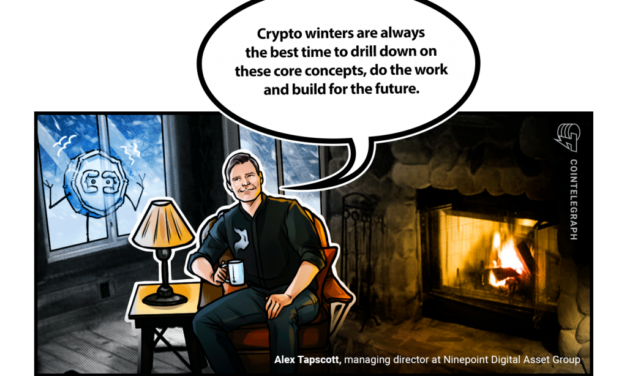
Coming every Saturday, Hodler’s Digest will help you track every single important news story that happened this week. The best (and worst) quotes, adoption and regulation highlights, leading coins, predictions and much more — a week on Cointelegraph in one link.Top Stories This WeekOpenSea lays off 20% of its staff, citing ‘crypto winter’Leading NFT marketplace OpenSea plans to lay off around 20% of its staff, with co-founder and CEO Devin Finzer citing “an unprecedented combination of crypto winter and broad macroeconomic instability” as the reasons behind the move. He also added, “The changes we’re making today put us in a position to maintain multiple years of runway under various crypto winter scenarios (5 years at the current volume), and give us high confidence that we will only have to go through this process once.”Celsius has filed for bankruptcyCelsius, the crypto lending platform that has had customer funds locked up for several weeks but previously claimed to be more trustworthy and safer than a bank, filed for Chapter 11 bankruptcy on Wednesday. According to an email received by Celsius customers, the company voluntarily filed petitions for Chapter 11 reorganization and used the same firm as Voyager Digital for its bankruptcy proceedings. It is unclear what will happen with users’ funds at this stage, given there may be a $1.2 billion hole in the firm’s balance sheet. Polygon selected to participate in Disney’s 2022 Accelerator ProgramEarlier this week, Disney invited Ethereum layer-2 scaling solution Polygon to participate in its prestigious 2022 accelerator program. Polygon was the only blockchain to receive an invite despite this year’s program being focused on augmented reality (AR), NFTs and AI. Disney offers participants mentorship from the Disney Accelerator team and guidance from the leadership of Disney itself.3AC co-founder returns to Twitter, blames liquidators for “baiting”Su Zhu, the co-founder of defunct and insolvent crypto hedge fund Three Arrows Captial (3AC), returned to Twitter on Tuesday after nearly a month of inactivity. In his first tweet upon returning, he cryptically suggested that liquidators baited the firm regarding StarkWare token warrants. Unsurprisingly, Zhu did not take any time to explain how he and his team ran the company into the ground, nor did he discuss the $650 million from Voyager Digital that it defaulted on.Voyager can’t guarantee all customers will receive their crypto under proposed recovery planSpeaking of the $650 million loan that 3AC defaulted on, Voyager Digital revealed this week that it can’t guarantee that it can return all its customers’ locked assets on the platform, as it is uncertain how much of the 3AC loan it will be able to reclaim. “The exact numbers will depend on what happens in the restructuring process and the recovery of 3AC assets,” the lending firm said.Winners and LosersAt the end of the week, Bitcoin (BTC) is at $20,877.21, Ether (ETH) at $1,219.26 and XRP at $0.33. The total market cap is at $939.8 billion, according to CoinMarketCap.Among the biggest 100 cryptocurrencies, the top three altcoin gainers of the week are Quant (QNT) at 66.94%, Lido DAO (LDO) at 63.32% and Aave (AAVE) at 34.44%.  The top three altcoin losers of the week are UNUS SED LEO (LEO) at 8.15%, Dogecoin (DOGE) at 8.74% and Basic Attention Token (BAT) at 7.71%. For more info on crypto prices, make sure to read Cointelegraph’s market analysis.Most Memorable Quotations“Deposits in banks aren’t even ‘customer assets’, let alone ‘assets under management’. They are unsecured loans to the bank. They are thus liabilities of the bank and fully at risk in bankruptcy.”Frances Coppola, economist and author of Coppola Comment blog “In the past, innovative firms would have been pleading for less regulation. Now they understand and appreciate that rules are there to help provide certainty.” Nikhil Rathi, chief executive of the U.K.’s Financial Conduct Authority “This could be Mt. Gox 2.0. Court proceedings may drag out the process of Celsius customers receiving any of their deposits back well into the future.” Danny Talwar, head of tax at Koinly“Inside growing companies, there’s a danger that product and engineering teams start shipping great slide decks instead of great products.” Brian Armstrong, CEO of Coinbase“Crypto winters are always the best time to drill down on these core concepts, do the work and build for the future.” Alex Tapscott, managing director at Ninepoint Digital Asset Group“I am confident that this latest judgment using NFT service has the potential to show the way to digital service over the blockchain, with all the benefits of immutability and authentication.”Demetri Bezaintes, associate at Giambrone & PartnersPrediction of the Week NFT market worth $231B by 2030? Report projects big growth for sectorGlobal research and consulting firm Verified Market Research (VMR) published a report this week that predicted that the NFT market’s total value could surge past $231 billion by 2030. The company estimated the global NFT market to be worth $11.3 billion as of 2021 in a 202-page deep dive into the sector. VMR predicted that the entire NFT market would expand at a compound annual growth rate of 33.7% over the next eight years.FUD of the Week ‘Nobody is holding them back’ — North Korean cyber-attack threat risesDuring an interview with CNN on Sunday, former CIA analyst Soo Kim suggested that the notion of generating foreign income via crypto cyber attacks has become a “way of life” for North Koreans due to several issues the current regime faces. “In light of the challenges that the regime is facing — food shortages, fewer countries willing to engage with North Korea, […] this is just going to be something that they will continue to use because nobody is holding them back, essentially,” she said. Tencent shuts down NFT platform as gov policy makes it impossible to thriveChinese technology giant Tencent shut down one of its two NFT marketplaces this week, with the firm citing a strong downturn in sales as a result of the regressive policies of the government. It’s been reported that sales have slowed down mainly because of a flawed government policy that prohibits buyers from selling their NFTs in private transactions after purchase, removing all speculative behavior and making the asset class not so lucrative.Sri Lanka central bank reiterates crypto warning following protestors seizing president’s residenceWith Sri Lanka facing economic and political turmoil, and the president’s house being overrun by protestors, the Central Bank of Sri Lanka has oddly warned against using cryptocurrencies due to a lack of regulatory oversight and risks associated with the assets. Given that the warning comes amid Sri Lanka’s inflation rates reaching more than 54% in June, a lack of regulation in crypto is probably a non-issue for a local citizen.Best Cointelegraph FeaturesAfter Terra’s fall to Earth, get ready for the stablecoin eraDid May’s algorithmic stablecoin crashes kill the concept, or is there still a role for fiat-pegged cryptocurrencies? US crypto regulation bill aims to bring greater clarity to DAOsThe Responsible Financial Innovation Act proposes a comprehensive set of regulations for the digital assets sector, and one potentially impactful section is DAOs.Your crypto wallet is the key to your Web3 identityWeb2 identity has been all about linked email addresses and social media accounts. Now that Web3 is poised to move in, here’s why crypto wallets will be the new key to ID.

Čítaj viac

6 Questions for Rene Reinsberg of Celo

We ask the buidlers in the blockchain and cryptocurrency sector for their thoughts on the industry… and throw in a few random zingers to keep them on their toes!This week, our 6 Questions go to  Rene Reinsberg, a co-founder of Celo, an open platform that makes financial tools accessible to anyone with a mobile phone. Rene Reinsberg is a co-founder of Celo and president of The Celo Foundation, a grant-giving organization supporting the carbon-negative Celo blockchain. He has been working at the intersection of finance, technology and development for the past 15 years, including at Morgan Stanley, McKinsey, General Catalyst Partners, the World Bank and TechnoServe. His previous company, Locu, was acquired by GoDaddy where he served as vice president of Emerging Products post-acquisition.1 — What is the main hurdle to mass adoption of blockchain technology?For blockchain to achieve mainstream adoption, there must be a broader understanding of the technology, which requires better awareness and education for everyone from crypto novices to crypto natives and beyond. This responsibility falls largely on crypto to do the work when thinking about last-mile solutions and go-to market approaches. We can build a protocol, but we’re also responsible for explaining our infrastructure and championing inclusivity. By presenting onboarding as a solution, dedicating resources to developing a simple or fun gamified user experience, and building quality ramps between crypto and fiat currencies, we make the industry more approachable and easier to navigate. Accessibility, which has always informed Celo’s mobile-first approach, is also key. With 6 billion smartphone users globally, easily accessible, decentralized financial building blocks are necessary for building long-term, real-world adoption. Lastly, we should shift mainstream conversations around Web3 toward real-world applications and use cases that serve everyday people around the world. As Web3 can be used as a transformative tool to help uplift historically disenfranchised communities, such as the un- and under-banked, sharing how blockchain has benefited farmers in Kenya to at-risk environments like the Amazon rainforest will further illustrate its impact.2 — What do you think will be the biggest trend in blockchain for the next 12 months?As early DeFi protocols mature, we are seeing a big push toward ReFi (regenerative finance) models, which align with the Celo Foundation’s values of recognizing individuals as unique and connected. Whereas classical economic models defined success by unfettered, exponential growth, they didn’t consider the extractive nature of the industry, viewing our environment as an empty world with unlimited resources. ReFi, however, acknowledges that we live in a “full world,” to quote economist Herman Daly, with planetary boundaries, carrying capacities and tipping points. ReFi aims to course-correct this exploitation, better intertwining our economic and ecological systems. By using money as a tool to ascribe value to natural capital-backed assets, ReFi places a price on externalities, charging those who create negative externalities and rewarding those who create positive externalities.Projects such as ReSource, a bankless infrastructure for circular trade and mutual credit networks that benefit small businesses, and Flow Carbon or Toucan Protocol, which are tokenizing carbon offsets, are indicative of these efforts, among other ReFi leaders within the Celo ecosystem.3 — What’s a problem you think blockchain has a chance to solve, but a solution hasn’t been attempted yet? Blockchain has the potential to help solve the world’s wicked problems, from environmental degradation to deep poverty. Combining blockchain technology with Web3’s ability to accelerate action is what inspired the creation of both Celo’s Climate Collective and the Alliance for Prosperity, designed to raise awareness for issues impacting individuals and communities throughout the world. We invite founders and builders to align with our shared purpose, leveraging Web3’s mass-coordination tools to tackle these mass-coordination problems.4 — What would you like to see tokenized? When, if ever would you expect this to happen?Bringing land and property on-chain would open up many interesting opportunities in creating use cases for DeFi beyond payments. Moss is a great example of restorative land-tokenization NFTs of the Amazon rainforest happening now, where one NFT represents one hectare of forest. Not only are owners bestowed with real estate rights, they are compelled to participate in the conservation process by digitally monitoring their biodiverse land via satellite.5 — What has been the toughest challenge you’ve faced in our industry so far?While market downturns, like the one we’re currently experiencing, come with significant challenges, they also present significant opportunities. Celo was built during a bear market, launching its mainnet on Earth Day 2020. Despite this, our community has continuously demonstrated its resilience and commitment to innovation. Navigating today’s market conditions is no exception for Celo’s ecosystem partners. There’s a palpable, new energy and optimism that has surfaced around Buidling our way out and returning back to the core mission: creating prosperity for all. 6 — What is the single most innovative use-case for blockchain you’ve ever seen? It doesn’t have to be the one likeliest to succeed!Jonathan Ledgard’s “Interspecies Money” proposes the establishment of the “Bank of Other Species” to issue a CBDC that disburses billions of dollars annually to “nonhuman life-forms (or their digital twins)” and correctly pricing natural capital, called L-Marks. This would help finance ecological conservation by paying local communities for services that improve species’ life outcomes. Since many of the poorest countries have the richest biodiversity, financial incentives for these countries to benefit their surrounding ecosystems can reduce extreme poverty while protecting the environment and its inhabitants. Ledgard’s proposal aligns with the primary principles of ReFi, highlighting the potential to solve the world’s cascading crises.

Čítaj viac

Získaj BONUS 8 € v Bitcoinoch

nakup bitcoin z karty

Registrácia Binance

Burza Binance

Aktuálne kurzy