Autor Cointelegraph By Dilip Kumar Patairya

What is Blocklords? And how to earn money playing it

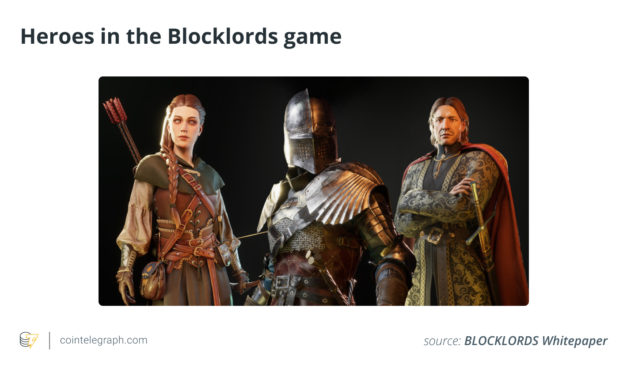
Highly anticipated medieval strategy massively multiplayer online (MMO) game Blocklords is out, unraveling iconic characters, pitched battles and engrossing drama. A genre-defining grand strategy game of MetaKing Studio, Blocklords introduces players to a universe where players’ actions have a bearing on their characters, other players and the medieval world around them. A captivating multi-player play-to-earn (P2E) game, Blocklords gives players the freedom to play the way they want. It is a distinct world in which the players drive the story, deciding the destiny of their heroes with their playing skills. Blocklords is not only brimming with fun but also enables the players to earn money passively while immersing themselves in nerve-rattling actions like capturing enemy strongholds or winning a round of fencing. This article reveals information on Blocklords gameplay and how to earn from it, along with a string of other intriguing facts.Blocklords introductionBlocklords was released in October 2019 by Metaking Studios as a novel, historic-themed game. In 2022, Blocklords was released as the first MMO game, with the support of Seascape Network.The founders, David Johansson and Nicky Li, wanted to create a world in which each player had complete control over their heroes (characters representing players in the game) and could also earn a living while playing. As a play-to-earn crypto game, Blocklords gamifies the process of onboarding new players, creating heroes in line with the attributes they choose.How to play BlocklordsBlocklords offers a player-driven narrative designed for players of all sorts, enabling them to play the game as they like. In this play-to-earn strategy game, players are empowered to shape the world around them at any level, gain experiences of their choice and own their digital assets.Related: How will GameFi and P2E blockchain gaming evolve in 2022?Players start from being a Farmer, go up levels like Knights/Raiders, Lords/Ladies and could eventually become Kings/Queens, the highest level in the game. Whether a player chooses to enjoy the life of a King or Queen or wants to be a simple Farmer, Blocklords rolls out plenty of experiences for them as a unique grand strategy game. Players are free to choose a legacy of their own for their heroes and enjoy gaming the way they want.Blocklords gameplay has the following components:HeroesBlocklords characters are minted as heroes, digital assets belonging to the user on creation. Heroes feature unique individual stats and traits. As a player progresses in the game, their hero’s character evolves,ultimately determining their path. Gameplay choices available to a player depending on their role. A player’s utility in Blocklords depends on their efforts and in-game skill.As heroes have a limited lifespan, they must continue their legacy through ancestry. The dynasty feature on Blocklords enables a player to pass on their heroes’ unique traits and attributes to descendants. The feature enables heroes to live on regardless of their fate. The game also allows players to exchange heroes for coveted characters, adding to the thrill. FarmBlocklords universe requires a steady supply of resources to succeed. This supply is ensured by Farmers who undertake tasks like gathering, mining, processing and crafting different materials to create a currency. When a player joins Blocklords, they begin as a Farmer unless they are someone who owns a character. Farmers can choose a region, controlled by a Lord or Lady, in which to settle. Lords/Ladies form groups, compete in battles, the ultimate winner of which becomes King/Queen. Participating as a Farmer, players work, harvest and build houses on farms. One can rent additional Farmers from other players to get helping hands, but be mindful that they consume food too. To award bonuses to a village, one can house the hired hands in buildings.In farms, players have multiple ways to get rewards. These include managing animals and livestock, trading at markets and crafting better items than others. Cooperating with other gamers helps players to garner more rewards.FightPlayers who cultivate enough resources leave their farms and choose between becoming a Raider or a Knight. Raiders are mercenaries who attack Farmers at will, plunder the villages and steal resources from Lords. They have limited timeframes for these activities, but if the players play right, they can get great rewards.Knights are salaried associates of a Lord. Their duty is to defend Farmers and villages, and kill the Raiders they come across. Their valor against the Raiders brings them a handsome profit and enables them to rise through the ranks. A Knight with enough resources might then opt for a new role. RuleSuccessful players can assume the role of Lords and Ladies, with a unique set of functions and responsibilities. Lords and Ladies exercise control on large tracts of land. Their actions directly impact the region they rule. They collect taxes and resources from Farmers, pay salaries and rewards to Knights and develop infrastructure.Lords and Ladies use their resources such as Knights, Farmers, and land efficiently and build cities into dynamic centers of trade and commerce. They also have to secure their settlements from Raiders and rival Lords. Having capable Knights and Farmers is key to their success. They can also form alliances with other Lords and Ladies. ConquerLords and Ladies who conquer the path like no other can rise to the rank of King or Queen, the ultimate rank in Blocklords. The way they rule, fairly or with an iron fist, is upon the rulers. The crown is responsible for managing currency, trade agreements, armies and regions. A King or Queen might also start or participate in realm-altering wars.Maps in Blocklords are dynamic and change with the tides of war. The choices of a King or a Queen profoundly affect all their subjects. Because their decisions impact the universe in Blocklords at the highest level, so they must use their power wisely. Smart rulers use diplomacy when faced with challenges and engage in warfare only when they have no choice.How to earn on BlocklordsBlocklords is tailormade for hardcore game aficionados wanting to have a hair-splitting experience in a shared universe. Players can make money playing Blocklords and feeling the adrenaline rush. In-game heroes are economic assets in Blocklords, with the earnings coming from activities like fighting bandits, winning battles, supporting allies, farming and trading.Related: How blockchain games create entire economies on top of their gameplay?The game is a player-owned economy rewarding players regardless of their role. For instance, a player could collect unique items and trade them for a decent profit. Heroes who demonstrate impressive leadership skills and win battles get their hands on unique items that the players can immediately turn into earning opportunities. Tradable nonfungible tokens (NFT) heroes on Blocklords can be potentially sold in any marketplace. Blocklords gameplay enables players to import NFTs in the game and launch battles to conquer territory. Leveraging their playing skills, they level up their heroes, send the NFTs outside the game and then sell them on any decentralized marketplace.Crowns (CWS) is an ERC-20 token used to purchase items within Blocklords. CWS token was introduced by Seascape Network, an incentivized ecosystem of gamers, developers and influencers. Every recharge within the game is distributed among all tokenholders as dividends, a feature that is termed Paywave. Ten percent of the total supply of 10,000,000 CWS has been earmarked for the community.Future of BlocklordsStrategy games have dedicated pools of gamers. From the ancient game of chess to Blocklords, strategy games have infused the domain with thrill and competition. The emergence of blockchain has led to a scenario where games exist with a user-driven economy and players can generate a passive income from their in-game activities.Blocklords gamifies strategy-making and playing at a grand scale. What makes the game astounding is that both the novice and experienced can enjoy the game to the hilt. They begin as Farmers, and as they gain skills and experience, they go through the levels like Knights/Raiders, Lords/Ladies, and ultimately Kings/Queens.Throughout the journey, the gamers learn social skills like team building and engagement, so Blocklords not just brings in a scintillating thrill of battles but also helps one learn some life-enhancing stuff. Due to its multiple features, Blocklords can be considered the standard and torchbearer for the upcoming strategy games.Purchase a licence for this article. Powered by SharpShark.

Čítaj viac
Who accepts Ethereum as payment?

Taking payment in Ethereum brings in a gamut of advantages for both users and entrepreneurs. Transitioning to a blockchain-based ecosystem brings in a string of advantages for users as well as entrepreneurs. Here is a drop-down detailing why accepting payment in Ethereum works well for the customers of an enterprise: Additional payment option In a world that is fast adopting cryptocurrencies, providing customers with an additional payment option gives businesses an advantage over their competitors. Cryptocurrency gateways enable merchants to accept digital payments and receive the amount in fiat. Transparency A decentralized ecosystem is inherently transparent, giving customers more confidence while making the purchase. Crypto transactions get executed on a blockchain where they are written irrevocably, without any prejudice of a centralized authority. Less fraud Ethereum transactions in such purchases get routed through a smart contract, making fraudulent activities less likely. When smart contracts are audited, scamsters have negligible chances of succeeding. Quick transactions  Global transactions in Ethereum are considerably quicker, compared to conventional international payments. Crypto transactions get executed in minutes, while fiat transactions routed through banks might take days to reflect in the account. Enterprises too have a set of strong reasons to begin accepting ETH. Finality Finality refers to a transaction’s status when it is part of a block that cannot change. In Ethereum, conventionally working on proof-of-work (PoW) consensus algorithm, the average time for achieving finality is six minutes (25 confirmations) while the average time to mine a single block is 15 seconds. This is considerably lower than Bitcoin (BTC), the largest cryptocurrency, which takes 60 minutes (six confirmations) to attain finality with the average time of 10 seconds to mine a block. When the Merge (the implementation of Ethereum’s consensus layer) is complete, the time it takes for an ETH transaction to reach finality will further decrease. Data coordination  Ethereum has a decentralized architecture designed to allocate information and trust without prejudice, eliminating any need for a central entity to coordinate data. The decentralized system seamlessly manages the system and processes transactions. Incentive layer  The ecosystem facilitates the development of mechanisms that reward supportive activities like verification and availability, while punishing activities that negatively affect the blockchain and surrounding mechanism. Incentives to promote honest behavior help to meet security requirements. Tokenization  Any asset that has been registered in a digital format can be tokenized on Ethereum. Tokenization helps fractionalize previously cumbersome assets such as real estate, which had become simply too expensive and unravel new economic models such as crowdsourced data management. Decentralized domain  Merchants with no prior exposure to crypto assets could find it overwhelming to send and receive cryptocurrencies. Crypto wallet addresses are a long string of digits and letters. Moreover, one requires a different address to collect each cryptocurrency payment. Thanks to the Ethereum Name Service (ENS), users can create a universal nickname for all their public addresses. Rather than using an unreadable array of keys for receiving crypto payments, they could have a single ENS domain, like ‘Joseph.eth.’

Čítaj viac

What is a decentralized money market and how does it work?

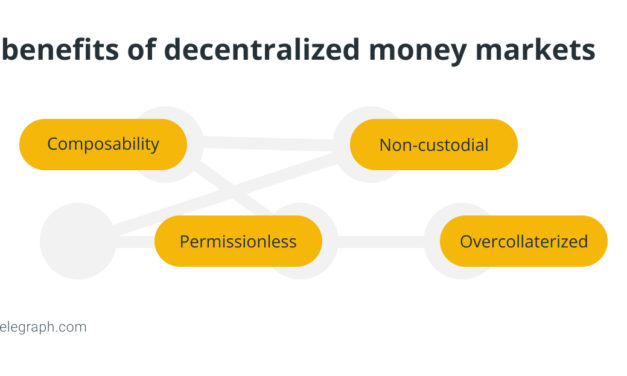
The seamless flow of capital between borrowers and lenders is a key aspect of a vibrant economy. Anyone with an extra asset can lend it to put their idle capital to work, while people needing it to grow business or meet operational costs can easily access it.Money markets are the platforms where borrowers and lenders can meet. Throughout history, money markets have been generators of economic activities. Though the structure of money markets has altered with time, their role has remained unchanged.How does the money market work?Conventionally, money markets were centralized structures facilitating the deals between lenders and borrowers. Borrowers would approach money markets to get a short-term loan (under a year) that might be collateralized. If the borrowers can’t pay back their loans, the lenders can sell the collateral to recover the loaned funds. When the loan is repaid, the collateral is returned.Borrowers are required to pay interest to the lenders (for providing them working capital) and a fee to the money market (for facilitating the deal). The interest rate provides adequate liquidity for borrowers as well as lenders. The fee paid to the money market helps them meet their operating expenses.There is a problem with centralized structure, though. It simply puts too much power and influence regarding user funds in the hands of a single entity that can change the terms and conditions for other stakeholders in an arbitrary manner. Worse, they can even siphon off the funds in their custody gains. A decentralized structure provides a robust alternative to centralized money markets.What is a decentralized money market?Working atop a blockchain, a decentralized money market is a self-propelled structure run by a smart contract, a software program. Once it is running, a smart contract cannot be interfered with, thus making it free of human prejudices.Managed by a global community of stakeholders through a highly decentralized network of nodes, the market rules out any role for intermediaries. In popular lingo, the money market is placed under the domain of decentralized finance (DeFi).Related: The DeFi Stack: Stablecoins, exchanges, synthetics, money markets, and insuranceLet’s understand the functioning of a decentralized money market through an example. Fringe Finance ($FRIN) is a decentralized money market that unlocks the dormant capital in all-tier cryptocurrency assets by rolling out collateralized loans. The platform facilitates decentralized lending and borrowing. Fringe Finance is a primary lending platform where anyone can lend extra funds and earn interest or collateralize altcoins to take a stablecoin loan. As mentioned, decentralized finance lenders and borrowers operate through on-chain programmatic code controlled by decentralized nodes, thus ending the monopoly of a single entity in control and reducing the points of failure. Here are a few benefits that decentralized money markets bring in:PermissionlessIn a decentralized environment, users don’t need to ask permission from a central authority before engaging in any money market activity. Anyone online can earn interest on their capital and/or borrow funds for their needs seamlessly. The decentralized protocols have an inherent censorship-resistant structure.NoncustodialIn centralized money markets, users’ funds lie in the custody of the central gatekeeper. However, DeFi protocols like money markets are noncustodial, and funds are directly in the control of borrowers and lenders. On-chain smart contracts, running on pre-defined logic, assure funds that cannot be compromised while users have full control on them.OvercollateralizedCentralized financial markets have usually functioned in an undercollateralized and fractional reserve manner. These markets, under peer pressure to gain more business, allow borrowers to withdraw more funds than what they have deposited as collateral. Decentralized money markets follow overcollateralization, bringing stability to the system. The smart contract simply liquidates the collateral of the borrowers who fail to pay back the debts.ComposabilityComposability is a design principle that allows for components of a system to interoperate with one another. Various applications and protocols can interact seamlessly in a permissionless way. DeFi apps are composable, creating a blank canvas with endless possibilities for novel mechanisms like yield extraction and complex derivatives.How upcoming decentralized money markets are stepping into unexplored territoryIn the initial years of DeFi, money market protocols were tilted in favor of better known cryptocurrencies with large market capitalizations and high liquidity. Upcoming money markets, however, are looking to try new models. Fringe Finance, for instance, focuses on altcoins having smaller market capitalizations and lower liquidity. Most DeFi money market protocols do not support altcoins and this is where Fringe Finance moves in.Related: What is an altcoin? A beginner’s guide to cryptocurrencies beyond BitcoinAs altcoins apply to a niche use case, they tend to be more speculative than large cap digital coins. However, as few decentralized finance lenders and borrowers were catering to such altcoins, the capital locked in them had gone untapped. Despite that, Fringe Finance has altered this scenario. Please be aware that altcoins are inherently more volatile, which does bring in some associated stability risks that the potential of profit can balance.How does an altcoin money market maintain financial stability?To neutralize volatility in altcoins, the money market protocol uses a slew of borrowing parameters and relevant mechanisms. Let’s continue the Fringe Finance example to better understand it. The parameters applied by Fringe Finance include a platform-wide maximum borrowing capacity for each collateral asset and automated computation of the LVR (loan to value ratio). For adequate implementation of these mechanisms, the system takes into account the asset’s available liquidity, historic volatility and other non-subjective metrics. The platform offers a sustained model of economic incentives for all participants like lenders, borrowers, altcoin projects, stablecoin holders, stakers and liquidators. For instance, it rolls out incentives for liquidators to help stabilize the platform like allowing native $FRIN token holders to stake coins to earn rewards from fees. To widen its operational base, a DeFi money market could include cross-chain collateralization, lending against NFTs, fixed-interest loans, embedded insurance and a decentralized UI as the platform grows.The future of decentralized money marketsIn an environment where people have become wary of self-serving biases in centralized money markets, the DeFi protocols have given them a lucrative option. The latter usually provides governance rights to all holding native coins and presents a blockchain-based ecosystem in its true decentralized ethos.Similar to the money markets that used to focus on popular cryptocurrency projects with significant market capitalization, novel projects are now focusing on altcoins, unlocking the value stored there. Going forward, it can be expected that upcoming DeFi money market protocols will explore territories previously untouched.

Čítaj viac

How to create and launch a cryptocurrency token with TokenMint?

Developing a cryptocurrency token has been a complex task, as it requires advanced blockchain programming skills. Until recently, only blockchain developers with strong coding skills could create a mechanism to mint digital coins. This scenario, however, led to the development of platforms where anyone, not knowing even an iota of programming, could launch their cryptocurrencies.The flagbearer of this change has been TokenMint, a no-code tokenization platform. The platform has bridged the gap between token creation and the mainstream, using automation to allow anyone with no development knowledge to create and mint tokens. This article dives into questions like what TokenMint is and how it works, how to create an ERC-20 token and launch the token using TokenMint. Users will also learn how to mint the tokens they want. But before that, it will help to understand what ERC-20 and ERC-223 tokens are. What are ERC-20 and ERC-223 tokens?Ethereum request for comments- (ERC)-20 is a standard for fungible tokens created on the Ethereum blockchain. These tokens can represent virtually anything on Ethereum, from lottery tickets to reputation points. How to develop an ERC-20 token is usually a question asked by anyone who wants to launch a cryptocurrency of their own.Related: History of ETH: The rise of the Ethereum blockchainERC-223 token is meant to enable users to securely transfer tokens to a wallet. It was created as a solution to a major problem with ERC-20: the lack of an event handling mechanism. ERC-223 standard offers a way to prevent unintentionally losing tokens inside of contracts that aren’t made to handle transmitted tokens.What is TokenMint and how does it work?Developed by Horizen, TokenMint is a tokenization platform designed to help anyone with little or no coding skills to create and launch their unique cryptocurrency tokens with custom tokenomics. The easy-to-use platform has put in place an automated drag-and-drop function, streamlining the entire tokenization process and helping one to quickly transit from a crypto enthusiast to a currency owner. TokenMint has simplified tokenization for mainstream users while integrating custom tokenomics and enhancing the privacy element. The platform eliminates the barriers between tokenization and the average person with no programming knowledge.Related: What is Tokenomics? A beginner’s guide on supply and demand of cryptocurrenciesThe mainnet of TokenMint was launched in early July 2022. This comes after successfully running on testnet for months. Users successfully created hundreds of tokens on the TokenMint testnet, leading to the successful launch of the mainnet version.Components of the TokenMint ecosystemThere are four key components of the platform that have a role in creating a cryptocurrency token: TokenMint chain, Token generator, Cobalt wallet and Block explorer. Here is a brief explanation of these components: TokenMint chainTokenMint chain is a sidechain built on the Horizen network meant to power tokens anyone builds on the platform. Developers can build other components atop the TokenMint sidechain as well.Token generatorThe crypto token generator is a web application and a token generation tool for creating and minting tokens. It involves a simple and streamlined process for creating fungible tokens. Cobalt walletA browser extension for managing and storing cryptocurrency tokens created using TokenMint, Cobalt wallet is used to manage and transact with tokens generated on the platform. TokenMint block explorerTokenMint block explorer enables anyone to see all transactions that took place on the chain. It allows users to access all details related to transactions. How to use TokenMint to create a token?Creating a token with TokenMint is a fast-forward process with a few easy drags and drops, as listed below:The token has been created by the system now with one’s preferred parameters. The platform is made to be easily accessible. And, even if the token’s creator doesn’t have the predetermined coding skills, it simply does not come into question because it’s all a matter of a few drags, drops and clicks. The next step is to mint a token. Keep reading to find out more!How to use TokenMint to mint a token?At the same screen space where “Create Token” appeared, once the token has been created, a new option, “Mint Token,” is then displayed and the user needs to click on it. When the next screen opens, the user has to populate the wallet address they want to mint to in the first box and in the second, the quantity of token they wish to mint. The system now deducts the required number of ZEN from the Cobalt wallet and dispatches the number of tokens entered to the designated address. Anyone may use the TokenMint block explorer as well to find details. Why use TokenMint for creating tokens?TokenMint hopes to trigger the new wave of cryptocurrency platforms, particularly for people from non-programming backgrounds. As a robust platform built on Horizen’s highly secure blockchain infrastructure, TokenMint brings along trust that is so crucial for any project. With the underlying Horizen blockchain having tens of thousands of active nodes — one of the largest in the blockchain space — TokenMint can support applications with large traffic on its platforms. On a zero code tokenization platform like TokenMint, a user without knowledge of software development can mint a token. Dragging and dropping enable anyone to feel confident like a blockchain developer. This easy-to-use platform has a very simple and intuitive interface, giving users a seamless experience. As Horizen introduces more components, the functionality will receive further upgrades. With security remaining essential for Horizen, they maintain a strict policy encompassing privacy, security and transparency. The TokenMint platform will harness the power of zero-knowledge cryptography in its future releases to keep a balance between privacy and security. The road aheadAt a time when tokenization is expected to be the driving force for a new wave of innovations in blockchain, TokenMint offers a platform for non-programmers to create or mint crypto tokens. While TokenMinthas has already made tokenization accessible to the mainstream, it will become even more efficient as the technology develops and expands. For anyone outside the tech domain looking to realize their business goals by creating a token, TokenMint has addressed the previous challenges and barriers. Moreover, users can continually customize their token design until it is in sync with TokenMint’s requirements. Privacy has been a pivot point of Horizen and the element will be there in upcoming releases of TokenMint. One can expect key features like zk-SNARKs, nonfungible token (NFT) functionality and EVM capability to further enhance the performance of the platform.

Čítaj viac

Can Metaverse technology enhance human-AI efficiency?

Conversational AI systems in the metaverse resemble human-to-human communication. Voice assistant AI has found its way to the metaverses of the new era, powering use cases like lifestyle assistance and personalized recommendations. For instance, rather than driving to a travel agency’s office or talking to their overburdened customer service, users can hop on the metaverse and take a tour of multiple awe-inspiring locations with the assistance of an AI-powered bot. An AI concierge in a metaverse is a personified machine that delivers unique recommendations based on the avatar’s preferences. Take into account the amount of data available on every person and you know the potential of this use case. Natural language processing in the metaverse makes it more personal than the real world. Voice AI can interpret avatar requests in a language that is more human and natural while factoring in individual tastes and preferences.  Speech technology has become more contextual and personalized, making the metaverse interface smarter in the process. For instance, Kai, the first AI concierge on Meetkai, has made voice assistance as easy as talking with a friend. Request a recipe for “steak” by saying, “Hey Kai, can you find me a nice recipe?” And you’ll receive the most delectable beef steak recipe in the world in seconds.

Čítaj viac

Získaj BONUS 8 € v Bitcoinoch

nakup bitcoin z karty

Registrácia Binance

Burza Binance

Aktuálne kurzy