

Autor Cointelegraph By Derek Andersen

New Hampshire hopes its express approval of crypto-friendly law will attract new business

The New Hampshire House of Representatives passed a bill on Tuesday to adopt the new version of Chapter 12 of the Universal Commercial Code, or UCC, which will govern transfers of digital assets. The chapter is still in draft form, but if HB1503 is signed into law, New Hampshire will be the first U.S. state to adopt the chapter. Like the draft chapter of the UCC, the bill — titled “Exempting the developer, seller, or facilitator of the exchange of an open blockchain token from certain securities laws” — seeks to create a “workaround” to make it easier to buy and sell cryptocurrencies by stipulating conditions under which “a developer or seller of an open blockchain token shall not be deemed the issuer of a security.” It passed by a vote of 187 to 150. The UCC is a set of model laws adopted in their entirety by nearly all U.S. states to facilitate interstate trade. Therefore, the changes are likely to be accepted throughout the country eventually. New Hampshire’s adoption of the new UCC chapter into law in advance of its finalization is intended to “attract investments and jobs by signaling to this rapidly growing industry that we are open for business,” according to House Majority Leader Jason Osborne.Representative Keith Ammon, a sponsor of the bill, said that “HB1503 is an opportunity for New Hampshire to become a leader in this [blockchain and cryptocurrency technology] industry.” The bill has yet to be considered by the state’s Senate.New Hampshire’s Republican Governor Chris Sununu did not endorse the bill, although he issued an executive order in February to create a commission to “make findings and determinations regarding the role and effectiveness of current state laws and regulations governing cryptocurrencies and other digital assets.”The UCC draft chapter will go to the American Law Institute for approval in May and to the Uniform Law Commission in July. Pending the commission’s approval, it will then be submitted to the states.With its desire to make state law more crypto-friendly, New Hampshire is following in the footsteps of Wyoming, which passed a series of laws in 2018 to create similar regulatory workarounds. Texas also passed a law last year that amended its version of the UCC to become more crypto-friendly.

Čítaj viac

Class action suit against Coinbase alleges unregulated securities sales

Three individuals who bought cryptocurrency through Coinbase filed a proposed class action March 11 in the Southern District Court of New York alleging that Coinbase is operating as an unregistered securities exchange. The lawsuit lists 79 tokens that it claims are securities Coinbase is selling in violation of state and federal law, and the buyers were not warned of the risks involved in their purchases.The plaintiffs, Christopher Underwood, Louis Oberlander and Henry Rodriguez, represented by Connecticut law firm Silver Golub & Teitell, filed the amended complaint naming Coinbase Global, Coinbase and CEO Brian Armstrong as defendants. The 255-page document argues separately for each token in question that it qualifies as a security under the Howey test as “investment of money in a common enterprise with a reasonable expectation of profits to be derived from the efforts of others.”In addition, the suit says Coinbase is the “actual seller” when an exchange takes place, crediting and debiting the parties involved in the transaction in its accounts, rather than facilitating a direct exchange between those parties.Philip Moustakis, counsel at Seward & Kissel, said, “The case is not much of a surprise. After all, the SEC has signaled that it intends to pursue investigations or actions against crypto-exchanges.”Similar cases that arose after the Securities and Exchange Commission, or SEC, began cracking down on initial coin offerings in 2018, Moustakis said. However, while the SEC has pursued cases against token issuers, such as its current dispute with Ripple, and market participants such as BlockFi, which offered a lending product based on digital assets, the SEC has not yet taken action against an exchange. Moustakis said the painstaking one-by-one examination of the tokens exemplifies the need for greater regulatory clarity. “Unless and until the SEC provides further guidance and a path to compliance for token issuers, crypto lending products, exchanges, and other market participants, the question of whether any particular cryptoasset or transaction is a security will be litigated one at a time,” he said. This is because, “While the tests to determine whether a token is a security […] are well established, the analysis depends on facts and circumstances and different evaluators weigh certain factors more than others, so it can yield different outcomes depending on one’s point of view,” he said.

Čítaj viac

Biden’s executive order promises great things for the crypto industry — Eventually

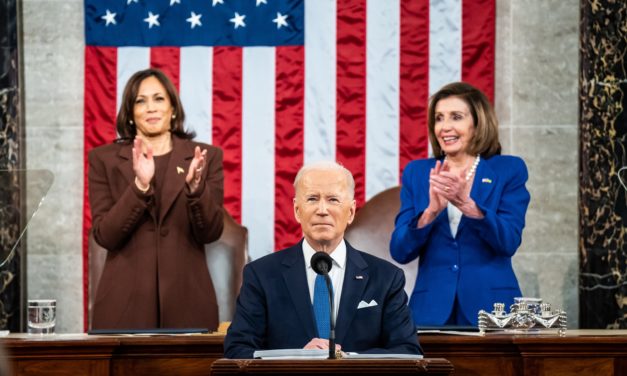
United States President Joe Biden signed the Executive Order on Ensuring Responsible Development of Digital Assets on March 9. The order had been expected for several months, giving some in the industry ample time to build up trepidation. Once the executive order, or EO, was released, however, it was met with a chorus of approval.“I was expecting certain things and the positive tone was not necessarily one of them,” TRM Labs head of legal and government affairs Ari Redborn said of the order. Crypto advocacy group Coin Center executive director Jerry Brito tweeted that the EO is “further affirmation that when serious officials take a sober look at crypto, the reaction is not to light their hair on fire, but instead to recognize it as a[n] innovation that the U.S. will want to foster.” Among the supportive lawmakers, Republican “Crypto Senator” Cynthia Loomis of Wyoming said in a statement, “It’s great to see the Biden administration’s growing interest in digital assets.”The EO acknowledges the place of digital assets in the national and global economies, noting that non-state digital assets have increased in market capitalization from $14 billion in November 2016 to $3 trillion five years later. Rapid development and inconsistent controls “necessitate an evolution and alignment of the United States government’s approach to digital assets,” it continues. The EO sets out policy objectives relating to consumer protection, financial stability, illicit finance and national security, U.S. leadership, services for the underbanked and responsible development. Getting their act togetherThe EO does not specify any regulatory actions. Rather, it outlines an interagency process that will involve 16 high officials, including several Cabinet members, with independent regulatory agencies potentially participating as well. Their first duties will be to produce an elaborate series of reports, with a variety of supplements and annexes, due at intervals ranging from 90 days to well over a year from the publication of the EO. Assistant to the President for National Security Affairs Jake Sullivan and Assistant to the President for Economic Policy Brian Deese will coordinate the interagency process.The complexity of the EO as project management should not be underestimated. Former FDIC associate director Alexandra Barrage, now a partner at Davis Wright Tremaine LLP, told Cointelegraph the interagency process is “a testament to the fact that digital assets cross over so many issues, there is no one agency that can tackle it.” The reports and recommendations will build on each other, Barrage said, and they will require quality control oversight. “You don’t want 20 different opinions that don’t hang together,” she said.Once the reporting has been completed, implementation of the administration’s policy objectives will remain a goal. The EO “has very well-balanced, very intentional” language, Oleg Elkhunovich, partner at Susman Godfrey LLP, told Cointelegraph, and it is “thought-through and cogent.” Nonetheless, the final impact of the EO is “anyone’s guess.” “Most of the industry is asking for the rules,” Elkhunovich said because the absence of actively enforced regulation makes innovation risky. The EO also marks the end of the perception of cryptocurrency as the Wild West. “It’s a $3 trillion market,” Elkhunovich said. “You can’t have that.” Joseph Robinette Biden Jr. the 46th president of the United States. Source: www.facebook.com/WhiteHouse.Consistent regulation without gaps “is certainly the ideal goal,” Peter Hardy, co-lead of the anti-money laundering team at Ballard Spahr LLP, told Cointelegraph by email, but that goal “will be elusive in practice — particularly given the constant and rapid changes in technology, which means that regulations will need to be constantly sprinting just to try to keep up.”“Just knowing with some certainty whether one is regulated by the SEC, or the CFTC, or FinCEN, or some combination thereof — and if so, exactly how — would be extremely valuable,” Hardy added. Before crypto companies find out what agencies will regulate them, there is a lot to sort out behind the scenes. The EO mentions seven regulatory agencies by name, and some of them have been jostling for power already. The Office of the Comptroller of the Currency (OCC) and Consumer Financial Protection Bureau (CFPB) disagreed over chartering fintech companies last year, for example, and the director of the Commodity Futures Trading Commission (CFTC) pressed for increased enforcement authority over crypto in the Senate last month. The Securities and Exchange Commission (SEC) has been accused of overreach in its enforcement efforts. That agency is barely mentioned in the EO and was not given a prominent role. Green energy and digital dollarsOne of the reports mandated by the EO will address the environmental issues associated with blockchain technology, and how it may “impede or advance efforts to tackle climate change.” This report will involve the administrator of the Environmental Protection Agency (EPA), among other officials. The EPA has been increasing its regulatory activities under the Biden administration significantly, and its efforts have already begun to affect the crypto mining industry and its energy sources. Soluna Computers CEO John Belizaire, in a statement to Cointelegraph, identified the crypto industry’s carbon footprint, fossil fuel use, equipment recycling and other forms of waste handling among issues that are likely to concern the agency in the future. “The crypto industry is already on a path to improving and maturing its operations” in those respects, Belizaire wrote. There are several ways the industry could work with regulators synergistically to strengthen the energy grid and “accelerate the green transition,” he said, concluding that regulatory enhancement “would be a great thing for the industry.”Finally, the EO states that the administration “places the highest urgency on research and development efforts into the potential design and deployment options” of a United States central bank digital currency, or CBDC. This is noteworthy, given the Federal Reserve’s cautious stance on CBDCs and their rapid development around the world. The EO directs the Secretary of the Treasury, in conjunction with other relevant officials, to produce a report on a CBDC. The board of governors of the Federal Reserve System is encouraged to continue its research on a CBDC, and the attorney general is to head up an effort “to assess any necessary legislative changes to issue a U.S. CBDC within 180 days and develop a legislative proposal shortly thereafter.”Long process ahead The work is due after the midterm elections, so the legislative environment in which it will appear cannot be foreseen. There can be little doubt that the legislative proposal will be only the first step in a long process. “This definitely shows that the U.S. is (finally) thinking strategically about the impact of crypto on financial innovation and competitiveness,” David Carlisle, director of policy and regulatory affairs at blockchain security firm Elliptic, wrote on LinkedIn. “While it’s still not a foregone conclusion a digital dollar will happen […] this signals that the U.S. is taking seriously the risk that it could lose its competitive edge as crypto innovation continues and as countries such as China develop and launch CBDCs.” Cryptocurrencies and adjacent companies’ stocks saw a brief surge after the release of the EO. The EO is unlikely to have any influence on the market any time soon. Gai Sher, senior counsel at Greenspoon Marder LLP, observed in a statement to Cointelegraph, as “it does not require any action or inaction from market players.” She continues, “We await actionable regulation. […] In the meantime, the international community is forging forward.” The interim before the regulating begins will not necessarily be lost time for the industry. Coordinators Sullivan and Deese promise they are “committed to working with allies, partners and the broader digital asset community.”

Čítaj viac

Commissioner Allison Lee announces her departure from the SEC

Securities and Exchange Commissioner Allison Herren Lee announced that she would be stepping down from her post at the end of her term in June. In a Tuesday announcement, Lee said that she will remain in the role until her successor has been confirmed. The SEC commissioner has spent less than three years at her current position, having been sworn in in 2019 to serve out the remainder of a five-year term expiring in June.With her departure, Lee, a Democrat who replaced former commissioner Kara Stein, will create a second vacancy at the SEC, with another left open by Republican Elad Roisman, who announced he would be leaving in January. Commissioner Hester Peirce, known to many in the space as the “Crypto Mom,” is currently the sole Republican on the five-member commission. By law, no more than three members of the commission can belong to the same party.Lee worked at the SEC for over a decade before her appointment, serving as her predecessor’s counsel and as senior counsel of the complex financial instruments unit before becoming a commissioner. She was the SEC’s acting chair from January to April 2021, after which time Gary Gensler was confirmed as the regulatory body’s head.Changes in the composition of the SEC could have a direct impact on the cryptocurrency industry. The commission under Gensler has been notably active in its enforcement activities within the industry. Lee debated Peirce last year at a conference at Georgetown University, where she argued for maintaining the application of existing standards to cryptocurrency:“I think we have to evolve with changing technologies, but I don’t think that means we change our principles or stray from our mission, which I think has worked well for decades.”Lee also stated in an address to the Practicing Law Institute earlier this month that “we have seen an entirely new, multi-trillion dollar industry develop around cryptocurrency and digital assets that largely defies existing laws and regulations.”Lee was noted for her climate advocacy, having joined the SEC from the energy industry. According to the New York Times, Lee will take up a visiting professorship in Italy after she leaves the SEC.

Čítaj viac

Crypto lobbyists up 180% since 2018, with Andrew Yang joining the charge

Lobbying by the cryptocurrency industry and crypto proponents is booming in the U.S. Congress. According to a report released Tuesday by Public Citizen, the number of lobbyists for cryptocurrency-related issues rose from 115 in 2018 to 320 in 2021, with the number of representatives of the cryptocurrency industry, itself, jumping from 47 to 157 in that time.In February, that chorus was joined by the somewhat unorthodox Lobby3, “a project to fund effective policy advocacy and educate lawmakers about the positive potential of Web3” that is the brainchild of former U.S. presidential and New York City mayoral candidate Andrew Yang. The lobby is structured as a DAO, with membership tokens available at three levels priced at 0.07 Ether (ETH), 1 ETH and 40 ETH. As the Thursday cutoff for token minting approached, Yang spoke with The Defiant about the lobby and potential of Web3 as a vehicle for social good. “There is a maturation and an evolution,” Yang said. “I think that most people in Web3 probably enjoyed not having the attention of regulators, but we have to know that ship has sailed. People are getting letters from the SEC up the wazoo nowadays.” The task now is to “avoid ill-conceived or overly freighted rules from coming out in the not-so-distant future,” Yang said. In particular, he spoke of the need for regulation to balance risk management and value creation and said that ideally cryptocurrency would not be regulated by the SEC, but by a new agency that has yet to be set up.One of the more concrete steps Yang mentioned was cohosting “Blockchain 101” with the Crypto Caucus “that we hope will get dozens” of members of Congress.Yang had made universal basic income, or UBI, a plank in his presidential campaign, and he said that “in my experience, 85% of people in the [cryptocurrency] community are for some version of UBI” because they have “escaped this mindset of scarcity and reached a sense of growth and abundance, and they want that for more people.” He pointed to GoodDollar and similar projects as examples of current efforts to achieve UBI with cryptocurrency.Lobby3 will also seek to create pilot programs to demonstrate the potential of Web3, which Yang defined as “all the technologies that rely upon the blockchain, most notably NFTs and cryptocurrencies.” The lobby hoped to “build onramps” to financial inclusion “for particular communities and then highlight how beneficial it’s been.” Yang did not provide specific examples of this process.

Čítaj viac

Získaj BONUS 8 € v Bitcoinoch

nakup bitcoin z karty

Registrácia Binance

Burza Binance

Aktuálne kurzy