Autor Cointelegraph By David Attlee

Clarity pushed back: Russian government fails to forge a consolidated stance on crypto regulation

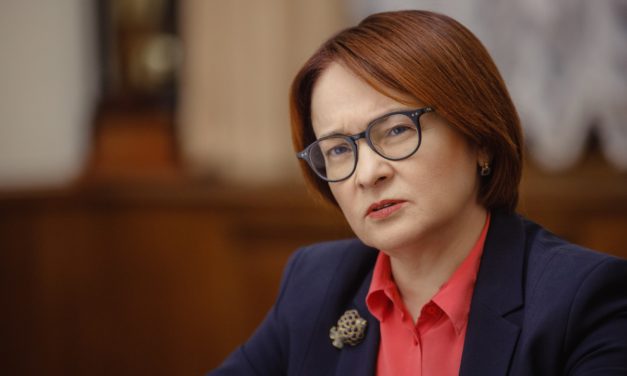
On Feb. 18, the Russian Ministry of Finance kicked off public consultations on the rules of cryptocurrency issuance and transactions. While a welcome development, it is less than the country’s crypto space had expected to get. Earlier in the week, the government announced that by Feb. 18, a bill containing the finance ministry and central bank’s consolidated position on crypto regulation would be drafted. Updated estimates suggest that it will take at least another month for draft legislation to see the light. The main reason for the delay appears to be the central bank’s renewed resistance, which just several days ago seemed to have been overcome. Here is a roundup of the latest twists in this rocky ride.Round 1: Central bank’s ban proposal On Jan. 20, the Central Bank of Russia (CBR) issued a report summarizing its position on digital assets. Using a variety of the usual anti-crypto arguments, such as comparing digital assets to a Ponzi scheme, the regulator called for a complete domestic ban on using traditional financial infrastructure for crypto trading, as well as for curbing crypto mining in the country.The proposal was a little less scary than it sounds: The CBR didn’t intend to outlaw individual possession of crypto or the use of international platforms for trading. But the measure was clearly aimed at big players — Russian private banks and institutional investors — discouraging them from any involvement in digital assets.CBR Governor Elvira Nabiullina. Source: Bank of RussiaMoreover, the report immediately drew harsh criticism from the widest possible range of stakeholders, from local industry players to political activists and influencers such as Telegram’s Pavel Durov. But more importantly, the denunciation from several other important offices of the Russian government immediately followed.On Jan. 25, Ivan Chebeskov, head of the Finance Ministry’s Department of Financial Policy, stated that the ministry’s position on digital assets is one of regulation, not prohibition, and asserted that it had already been working on its own regulatory document.Round 2: Finance Ministry’s proposed frameworkOn Feb. 8, the Russian government approved the “Framework for regulating the mechanisms of digital currencies circulation” — a document that had been published earlierby the Finance Ministry. This was an unexpected, yet favorable, turn of events: The document proposes a regulatory regime that would largely view digital assets as regular currencies. It was also implied that the government’s approval meant that the CBR’s concerns were settled. Feb. 18 was announced as the date by which the bill, reflecting the two bodies’ reconciled position, would be ready.The framework opens by brushing off the idea of a blanket ban. According to the ministry, the ban wouldn’t be feasible or practical in a country with more than 12 million crypto wallets — and more than $26 billion worth of digital assets held in them — and the world’s third-biggest crypto mining capacity: “A total lack of regulation, as well as a ban, would lead to the growth of a dark economy, fraud, and the overall destabilization of the sector. […] Proposed legislative changes are aimed at creating a legal market for cryptocurrencies with circulation rules in place and the range of participants defined, along with the requirements that they are subject to.” The proposed rules define cryptocurrencies as a “close analog” to foreign currencies, not as a digital financial asset regulated by a separate law. According to the proposal, it would be perfectly legal to own and exchange crypto, but only via licensed banks or peer-to-peer exchanges with a Russian license. Customers would be subject to full identification processes according to bank standards and Anti-Money Laundering and Counter-Terrorist Financing requirements. All operational data should travel via a government-owned “transparent blockchain” system.The framework also stipulates that failing to declare crypto transactions above a certain size would be criminal and treats the use of cryptocurrencies as an aggravating factor in certain criminal offenses.Round 3: The CBR’s about-faceRejoicing over the two key regulatory players’ compromise, however, might have been premature. On Feb. 15, CBR Governor Elvira Nabiullina doubled down on the regulator’s opposition to the proposed legalization of crypto trading. The statement came simultaneously with the report on the progress the CBR had been making on its central bank digital currency.Nabiullina also sent a letter to Finance Minister Anton Siluanov in which she reiterated her “crypto is a Ponzi scheme” concerns. She maintained that institutional support of crypto circulation would create “an illusion of state protection” among investors, who would seek help from the government should the crypto market collapse. Basically, the letter repeats the arguments and propositions of the CBR’s January report. At this point, the arrival of a “reconciled” regulatory framework by the end of the week clearly came into question.What’s next?Olga Goncharova, government relationship director in the CIS at cryptocurrency exchange Binance, said that the company supports the finance ministry’s position, adding that “Regulation will contribute to the ‘deshadowing’ of the market,” while a complete ban would have the opposite effect.Related: Binance exec to lead crypto expert center by Russian bank associationAleksandr Podobnykh, chief information security officer of digital asset firm Security Intelligence Cryptocurrencies Platform (SICP), doesn’t believe there is a severe conflict between the finance ministry and the CBR as the media portrays. “They get along fine, just like everywhere else,” he said, adding:”It’s just that the Ministry of Finance represents a more local but progressive group of people and entrepreneurs, and the central bank represents those who are more conservative and more global.”SICP applied to participate in the work on legislative initiatives around crypto last year, but Podobnykh said that the company didn’t get a response from the CBR. He believes that the central bank’s conservative attitude toward crypto stems from its mission to launch a digital ruble. George Bryanov, expert at the faculty of finance and banking at The Russian Presidential Academy of National Economy and Public Administration (RANEPA), believes that the Finance Ministry and CBR’s competing stances can be explained by the differences in these organizations’ core missions. While the Central Bank’s mandate is to preserve the stability of the ruble, the Ministry of Finance is primarily interested in pumping up the state budget. Bryanov added:”As we know, the CBR has just launched a digital ruble trial, so it tries to gain full control over both fiat and digital currencies.”Severe conflict or not, it appears that Russian cryptocurrency users will have to wait at least another month before the government comes up with a clear, consolidated stance on the way digital assets should be regulated.

Čítaj viac


U.S. inflation breaks 40-year record: Can Bitcoin serve as a hedge asset?

On Feb. 9, the United States Bureau of Labor Statistics reported that the Consumer Price Index, a key measure capturing the change in how much Americans pay for goods and services, has increased by 7.5% compared to the same time last year, marking the greatest year-on-year rise since 1982. In 2019, before the global COVID-19 pandemic broke out, the indicator stood at 1.8%. Such a sharp rise in inflation makes more and more people consider the old question: Could Bitcoin, the world’s largest cryptocurrency, become a hedge asset for high-inflation times?What’s up with the inflation spike? Ironically, the fundamental reason behind the unprecedented inflation spike is the U.S. economy’s strong health. Immediately after the COVID-19 crisis, when 22 million jobs were slashed and national economic output saw a massive decrease, the American economy kickstarted a massive recovery on the heels of the relative success of the vaccination campaign. However, supply chains appeared to be unprepared for such a rapid return of business activity and consumer demand. The rebound was fueled by the Biden administration’s grandiose $1.9 trillion COVID-19 relief package, with the majority of American households receiving thousands of dollars in direct support by the federal government. Tom Siomades, chief investment officer at AE Wealth Management, believes that the stimulus was excessive, given the overall financial conditions of U.S. households. Speaking to Cointelegraph, he remarked: “The $1.9 trillion CARES act in March, when Americans were already saving at a 20% rate, put more money into the economy than it could bear. That money allowed people who would otherwise have returned to work to rethink their options. This created a worker shortage, which in turn led to demand for higher wages, which meant higher costs and prices.” Some economists point out a more subtle factor: an alarming exercise of corporate pricing power by U.S. businesses. “Now producers know people can pay more, and will be unwilling to accept lower prices for their products,” Siomades explains.Now that inflation has become a major political problem for the Democratic Party, all eyes are on the Federal Reserve’s efforts to solve it. The inflation wave is likely to gradually fade, if not to pre-pandemic levels, then to at least more moderate levels by the end of the year. Nevertheless, as rising prices are becoming a matter of increasing public concern, private citizens and investment professionals alike begin to look around searching for a safe haven for their funds — and here’s where Bitcoin comes in.Bitcoin as the “new gold”With every year that Bitcoin and the cryptocurrency sector become more mainstream, the frequency of comparisons with gold in terms of reserve-asset potential multiplies. Many observers suggest that Bitcoin could even be more attractive than the precious metal in this regard. In November 2021, the preeminent cryptocurrency was up by 133% year-on-year against gold’s mere 4%. As Todd Ault of investment company Ault Global Holdings observed, in the last 13 years, Bitcoin has massively outdone U.S. inflation thanks in no small part to the asset’s deflationary properties. He commented to Cointelegraph:“What makes it a great store of value and inflation hedge is: there’s a cost associated with mining it; there will only be $21 million Bitcoin. Meaning, there is a finite amount of Bitcoin to be mined […] Really, it’s still a standard hedge people traditionally think about; there’s limited supply, and even in the current financial climate, it will continue to be in demand.”Unlike gold, Bitcoin lacks the key features of a predictable, low-volatility asset. Maybe this doesn’t pose as much of a problem for a faithful, diamond-hands hodler who believes in Bitcoin’s ultimate monetary dominance, but for someone who has invested a significant share of their personal savings as a shield from inflation, the unpredictability could be unnerving. In some sense, Bitcoin’s price swings strongly contrast the relative stability of gold, which serves not as a wealth multiplier, but as a preserver of purchasing power. “In theory, Bitcoin should make for a good inflation hedge because there’s a limited supply of tokens that can be mined. That creates a form of scarcity, which could help it hold its value over time compared to fiat currencies,” as Katie Brockman, analyst at investment advising firm The Motley Fool, explained to Cointelegraph. However, Bitcoin can only be a store of value if a significant number of people find it valuable. Brockman added:“It doesn’t appear that Bitcoin has reached that stage. While inflation has soared, the price of Bitcoin has plummeted in recent months. It has also fallen at roughly the same rate as meme tokens like Dogecoin, suggesting that many investors perceive Bitcoin as simply another cryptocurrency rather than a store of value.” However, just because Bitcoin is an imperfect hedge against inflation right now doesn’t necessarily mean it will never be a dominant store of value. But if the currency is to become inflation-proof, it will need to gain both widespread acceptance and a robust mainstream reputation.Hedge over timeBitcoin’s status will also depend on how investors choose to use it. If people are holding their BTC bags as a hedge against inflation, it may not be subject to the same volatility cycles as equity markets. But if most investors are trading Bitcoin like they would stocks, the asset’s price could be more correlated with the market’s fluctuations.The future looks bright for the top cryptocurrency, although the timeline is less clear. Ault believes the volatility may stop at the price of about $2 million per BTC. He added: “In the process, Bitcoin is expected to become a multi-trillion-dollar asset class. That doesn’t make it a direct hedge, but rather a hedge over time.” One problem that could become more pronounced in the future is uneven distribution of crypto wealth. As the interest in BTC grows in waves and the entry cost for investment grows rapidly, it is inevitable that large chunks of its monetary stock will concentrate among a limited number of wallets.That brings us to Bitcoin’s paradox. It seems that to become the “new gold” in terms of conservative inflation hedging, the original cryptocurrency needs to outgrow its speculative attractiveness and become a broadly (and, perhaps, more evenly) dispersed mass of money. A sound regulatory framework for crypto is one thing that could definitely help the asset class achieve these goals.

Čítaj viac

Laundering via digital pictures? A new twist in the regulatory discussion around NFTs

On Feb. 6, the United States Department of the Treasury released a report under the headline “Study of the facilitation of money laundering and terror finance through the trade in works of art.” In fact, only a tiny fraction of the 40-page document is dedicated to the “Emerging Digital Art Market,” by which the department understands the market for nonfungible tokens, or NFTs. Still, even a brief mention of the emerging NFT space in this context can have major implications for the tone of the nascent regulatory debate with regard to the asset class. What the report saidThe overall tone of the report is hardly alarming for the NFT space: The document casually mentions the growing interest in the digital art market both from private investors and legacy institutional players such as auction houses and galleries. Nevertheless, several key points illuminate potential areas of regulatory anxiety with regard to this exploding sector of the digital asset industry, which, according to the Treasury’s estimates, generated $1.5 billion in trading volume in the first three months of 2021. First of all, NFTs still lack a definitive financial classification. Given their unique nature, nonfungible tokens could be categorized as collectibles rather than as payment or investment instruments. But, in certain scenarios, they could also qualify for the status of “virtual assets” under the Financial Action Task Force (FATF) definition. Platforms that facilitate NFT trading would then become “virtual assets service providers,” making them subject to Financial Crimes Enforcement Network (FinCEN) regulations. That means, in the first place, it would be necessary to fall under the Anti-Money Laundering/Combating the Financing of Terrorism (AML/CFT) reporting requirements. There is a chance that the question of classification ends up not being key to NFT’s regulatory future, should the FATF stand by its position that wasvoiced earlier in October 2021 that nonfungible tokens are not to be viewed as “virtual assets,” but rather “would be covered by the FATF standards as that type of financial asset.” The FATF guidance, however, left all kinds of doors open by stating that “countries should […] consider the application of the FATF standards to NFTs on a case-by-case basis.” Tatiana Revoredo, a founding member at Oxford Blockchain Foundation, noted that the FATF does not recommend direct regulation of peer-to-peer (P2P) transfers. It seems that “the U.S. Treasury report goes a bit further,” potentially laying the groundwork for regulation that goes beyond the international task force’s guidelines.Another major NFT-related focus of the Treasury’s report is the money laundering potential of the asset class. The authors argue that NFTs’ main advantage for money launderers is the lack of the need to move digital art objects physically, meaning that there are no “financial, regulatory, or investigative costs of physical shipment.” The connection between the ability to avoid physical shipment of an object and its money-laundering vulnerability is not exactly convincing, though. Ryan Fayhee, partner at law firm Hughes Hubbard noted to Cointelegraph: This risk is not unique to NFTs — there are AML risks that arise from the sale of any other easily transferable luxury goods such as an expensive bottle of wine, a diamond or a small physical work of art.Lastly, the report briefly discusses NTFs’ vulnerability to hyperspeculation. Unlike the traditional art market that has relatively slow commercial cycles (for example, the painting should be properly and repeatedly identified, evaluated, auctioned, e.t.c.), the properties of digital art “can create an incentive to shape a marketplace where the work is traded repeatedly in a short period” and produce a “situation where it is not possible to conduct due diligence if transactions are conducted in rapid succession.” These properties, the report maintains, can also generate an environment favorable for money laundering repercussions operations. How real are the risks? Blockchain analytics firm Chainalysis estimates that more than $1 million worth of crypto was transacted to NFT marketplaces from known illicit addresses (those associated with scam activity) in Q3 2021 and a little under $1.4 million in Q4. The numbers are also on the rise for stolen funds and the money sent to NFT marketplaces from addresses with sanction risks, for example, from Latvia-based platform Chatex that made headlines last year with the Treasury Department’s allegations of facilitating nefarious transactions. As Chainanalysis notes, it is still “a drop in the bucket” compared to the $8.6 billion worth ofcryptocurrency-based money laundering tracked by the analysts in 2021. It’s also worth noting that NFTs are far behind the traditional art market in terms of attracting shaft funds. Yet, it is likely not going to always be like that. In his recent Cointelegraph op-ed, Joseph Weinberg, who serves as an adviser to the Organization for Economic Co-operation and Development (OECD) and Financial Stability Board, observed:It makes sense that development in NFTs, which has already been moving forward at a rapid speed, would grow to include technology that creates solutions for regulation. The same has happened for crypto at large and most industries that grow from something small to something massive.Speaking to Cointelegraph, Thibault Verbiest, who heads the fintech and cryptofinance department at Metalaw, agreed that as the sector grows, some regulatory clearance is necessary and even Know Your Customer (KYC) procedures should not be seen as too big of a problem: With KYC measures implemented, NFTs’ main advantage would be to offer a better way to transfer ownership of assets […] although the advantages in terms of privacy and censorship resistance could be lessened. This is probably the path of the middle and a good compromise as the NFT sector grows and professionalizes itself and the technology is democratized.Nick Donarski, founder and chief technology officer at HFT company Ore System, agrees that a clear will only help bolster the sector and reduce the impact of “fake news” and misinformation: Blockchain technology and NFTs specifically are just digital pictures. That’s it. As unsexy as that sounds, they are just a hash and blob of data. The application of them is what defines the controls that need to be in place. The internet was going through these same types of growing pains 20 years ago and now, people couldn’t live without it […] Regulation of monetized investment and legitimacy will only signal further growth.The future of the digital art marketNone of the experts who spoke to Cointelegraph on the matter were convinced with the “NFT as a money laundering tool” narrative of the Treasury’s report. Fayhee believes that the digital nature of NFTs arguably makes them less susceptible to money laundering than other forms of art, given their capacity to provide a permanent chain of ownership that does not exist in the traditional art market where “it is more challenging for individuals to access and inspect ownership history.”It’s also important to remember that the NFT market didn’t exist even two years ago, and there is a whole process of maturation and consolidation that lies ahead. Donarski argued that “Just like we have shows, galleries, media, etc., the same thing will occur in the digital space.”Vergiest expects to see the digital art market to establish its own reputation in the future. It doesn’t mean, however, that there is nothing to be done for the industry to address regulators’ anxieties proactively. Apart from creating the tools and mechanisms vital for the new market — such as royalties payment schemes, art authentications mechanisms and renting mechanisms for digital galleries — it is important to spread the word to the public. Vergiest noted: Education is also needed to inform the public and regulators on blockchain risks, financial risks and legal risks so that the NFT market accelerates its natural growing process of becoming the democratized and digitized version of the traditional art market.Ultimately, as Revoredo observed, the matter at hand “involves a technology still under construction,” and today, it seems impossible to have legislation that would adequately address all possible scenarios. In this situation, being proactive in shaping social value and regulatory narratives is indeed crucial for the emerging industry.

Čítaj viac

Living on a volcano: The outlook of El Salvador’s crypto mining industry

El Salvador, the first nation to adopt Bitcoin (BTC) as legal tender, has recently announced the relaunch of its wallet app Chivo, which is supposed to patch the previous version’s stability and scalability issues. The update is welcomed news for the Central American country’s crypto experiment, which faced some hurdles and harsh criticism over the last few months. While much of the observers’ attention has been focused on aspects such as retail adoption of crypto and geopolitical implications of Bitcoin’s legal status in El Salvador, the progress of the nation’s mining industry toward achieving President Bukele’s moonshot vision has been less discussed lately. Here’s what the current prospects of El Salvador’s mining industry look like.“Endless” possibilitiesIn October 2021, when El Salvador had already become the world’s first country to adopt Bitcoin, one of its main energy sector officials shared his optimistic view on the prospects of crypto mining in the country. President of the state-run Lempa River Hydroelectric Executive Commission Daniel Alvarez told journalists about the “endless possibilities” to produce energy via hydroelectric, solar, wind and tidal power plants with “willpower” being the only component needed to succeed. “We don’t spend resources that contaminate the environment, we don’t depend on oil, we don’t depend on natural gas, on any resource that isn’t renewable,” he also remarked. El Salvador’s current energy capacity, however, is rather modest. Reportedly, it has only two geothermal power plants — one at the base of the Tecapa volcano and one in Ahuachapan — that already contribute to Bitcoin mining. Together, they generate slightly under 200 megawatts of electric power and only one of them allocates 1.5 megawatts — the only known figure to date — to Bitcoin mining. Hence, the El Salvador leadership’s ambitions would clearly demand massive developments of new facilities. It looks like they definitely have some ideas in that department. The Bitcoin city megaproject In November 2021, El Salvador’s President Nayib Bukele announced his plans to build a new Bitcoin city. The settlement is to be constructed in a ‘“coin shape” at the base of the Conchagua volcano whose geothermal energy would be used to mine Bitcoin. In Bukele’s vision, it should become a perfect combination of glittering neon lights and near absence of taxation: “Residential areas, commercial areas, services, museums, entertainment, bars, restaurants, airport, port, rail — everything devoted to Bitcoin.” Keeping up with the regional traditions, this ambitious construction project is to be backed by a bold financial scheme — $1 billion in bonds — half of which would go directly to city construction and the other one would be invested in Bitcoin. The bonds are supposed to last 10 years and pay 6.5% annual interest to their holders. Any investor with a bond share upwards of $100,000 ould qualify for Salvadoran citizenship. The scheme is backed up by major crypto industry players. Canada-based blockchain technology enterprise Blockstream is responsible for issuing the bonds in the form of tokenized securities on Liquid blockchain while Bitfinex would host them on its platform. According to Samson Mow, chief strategic officer of Blockstram, by the end of the bond’s 10th year, its annual percentage yield will sit at 146% level, as, according to his forecast, BTC price would reach the $1 million mark within five years. That would make El Salvador “the financial center of the world” and “the Singapore of Latin America.” The many challengesThere is a host of issues accompanying the Salvadoran Bitcoin turn: political backlash against President Bukele and his initiatives, pressure from the IMF and other international actors and the early troubles of the Chivo app. When it comes to plans of massively beefing up the country’s mining infrastructure, there is a number of stumbling blocks as well. The Bitcoin city announcement saw the existing fiat-denominated El Salvador bonds plummet and raised a number of questions from investment experts, the main one being, “Why buy Bitcoin-backed Salvadoran bonds if you could just buy Bitcoin?” Some pointed out that the country already has a record of failed charter city plans, as well as the fact that the Conchagua volcano, which is supposed to power the city and its BTC mining operations, has recently shown some noticeable seismic activity. Worse, still, some critics argue that El Salvador’s overall energy profile does not offer great crypto mining potential. One concern is that the country still has to import around 20% of its energy mainly from Honduras and Guatemala. According to some estimates, current industrial energy rates in El Salvador range from $.13 to $.15 per kilowatt-hour while the global average price of Bitcoin mining is around $.05 per kilowatt-hour.The data from the recent study by DEKIS Research group at the University of Avila ranks El Salvador as number 73 in the global crypto mining potential ranking — while 35% of energy comes from renewable sources. For example, in the United States, this proportion stands at around 7.5%. The levels of national R&D expenditure, human capital index and energy prices put El Salvador closer to the least sustainable countries for mining operations. Pivoting to renewablesDespite some obvious limitations, the notion of El Salvador’s “endless possibilities” when it comes to mining is not a mere bravado. Like many other Latin American nations, El Salvador possesses a hefty, if yet unrealized, the potential for renewable energy. Talking to Cointelegraph, Philip Ng, vice president of corporate development at green data centers provider Soluna Computing, emphasized the global trend in the direction of making renewable energy more accessible, also noting that it should benefit countries like El Salvador: Renewable energy is now astonishingly affordable, with the cost to build wind falling 72% since 2009 and solar falling 90% over the same period […] Renewable technologies offer a profound opportunity for South American power markets. Renewable energy assets can be built at a significantly smaller scale when compared with conventional energy. The result is that grids no longer face large transmission and infrastructure buildout costs when trying to add cheap and clean power.Ng offered the example of Chile, whose recent investments in renewable energy have allowed the country to transition from a net importer of carbon fuels to an exporter of renewable energy. A crucial step in triggering such transition is demand, which is not an easy thing to grow in countries with relatively small populations.One solution could be to establish a “consumer of last resort,” or a layer of users that would ensure that power producers have a diversified revenue stream and don’t have to rely solely on the utilities. Bitcoin miners could become such a class of consumers. Establishing such an arrangement would also mean that power producers never have to curtail their excess production. A case in point is Kenya, where hydroelectric plants share excess renewable energy with crypto mining facilities.Responding to Cointelegraph’s request, a Blockstream spokesperson said that an announcement regarding the status of El Salvador’s Bitcoin bonds project will follow at some point in Q1 2022. It is yet to be seen if Nayib Bukele’s exotic aspiration to build a coin-shaped city at the foot of a volcano will materialize in a pragmatic strategy that attracts foreign investments. But, even today it is clear that getting ahead in the renewable energy race will be vital for the success of El Salvador’s massive crypto mining projects.

Čítaj viac

The virus killer: How blockchain contributes to the fight against COVID-19

On Jan. 30, the South China Morning Post reported that one of the largest Asian pharmaceutical companies, Zuellig, had launched a blockchain-based system to track the quality of COVID-19 vaccines. Called “eZTracker,” it allows any user to “instantly verify the provenance and authenticity” of vaccines by scanning the QR code on the package. Somewhat surprisingly, throughout the pandemic, there have not been many reports of blockchain-based products adopted by big pharma or global healthcare organizations to bolster the anti-COVID effort. Here is a rundown of the major cases of such adoption, along with possible reasons for the limited interest in blockchain among healthcare officials. South Korea: Blockchain vaccine passports In April 2021, the South Korean government became the first to introduce blockchain-based vaccine passports amid the COVID-19 crisis. Putting proof of vaccination on a distributed ledger ensures the authenticity of the document as many people around the world tend to counterfeit such “Green Passes,” which sometimes can secure access to restaurants, public spaces and travel. The app, which goes by the name COOV, was developed by London-based Blockchain Labs and is available on the App Store and Google Play Store. It generates a QR-code for each user and ensures that all personal data is stored on the user’s device, exchanging it with the app host through blockchain only. Brazil: The National Health Data Network The blockchain-based National Health Data Network is not being built specifically to fight the coronavirus — it constitutes a vital part of the ambitious plan to digitize Brazil’s entire healthcare system. Yet, the system has been used to respond to coronavirus-related challenges since late 2020. The main use of the Brazilian network, like that in South Korea, is vaccination tracking. The system registers every jab immediately, creating a database that allows for a “continuity of care in the public and private sectors.” The national healthcare digitization project is expected to be completed by 2023. Mexico: COVID-19 test certificates In October 2021, private healthcare provider MDS Mexico launched a rapid COVID-19 testing service, backed by blockchain. The digital platform allows patients to get their test results in real-time via a QR code and to safely store their vaccination history. Once again, the company cited the fight against counterfeit vaccinations as the key mission of the platform: To avoid the falsification of negative results, we began to certify the SARS-CoV-2 detection tests with blockchain technology and cryptographic signature, which protects the information in a unique, immutable and unalterable QR Code that can be verified worldwide.The private initiative followed the earlier announcement of Mexico’s National Chamber of Commerce that it plans to digitize vaccine passports with the use of blockchain technology. Other ideas These examples represent only a small fraction of all blockchain-related projects that are being developed to combat public health threats. Distributed ledgers can help to manage supply chains, ensure the quality of drugs, hold medical records, process insurance claims and increase the efficiency of systems performing a range of other tasks. Besides safe data management and vaccine tracking, healthcare researchers see opportunities to use blockchains in an even greater variety of areas. A group of American medical scholars proposes a blockchain-based movement pass that relies on smart contracts and tokens to facilitate social distancing. A Scottish research group came up with a project of a blockchain platform, synchronized with the Internet of Things (IoT), that can trace contacts without compromising user identities. Promoting cross-border compatibilityEnabling cross-border data sharing that could preserve patients’ privacy is a humongous task. To solve it, two scientists from the National Institute of Technology Raipur (India) designed a consortium blockchain to identify and validate COVID-19-related reports through the comparison of the perceptual hash of each report with existing on-chain perceptual hashes. Reporting COVID-related data to healthcare authorities can get problematic in a pandemic. Jim Nasr, CEO of Acoer — the company that launched the first decentralized COVID-19 tracker back in 2020 — shared his U.S. experience with Cointelegraph: Every state has its own requirements and mechanism for collection of state-level COVID data. In turn, the states have mandatory infectious disease reporting obligations to federal government entities that largely fund them. The quality and timeliness of data reporting is at best inconsistent, inefficient and publicly non-transparent.The problems that remain Currently, the vast majority of COVID-19-related projects still live only on paper. As the most acute phase of the pandemic is arguably over, healthcare innovators seem to be less inclined to focus specifically on the coronavirus. Meanwhile, the number of medical blockchain startups remains on the rise in a variety of more general areas, such as patient consent, clinical trial recruitment, IoT device management, clinical goods supply, finished goods traceability and many others.Nevertheless, the larger problem of the relationship between blockchain innovation and healthcare officials persists. As Nasr notes, ​​many traditional public health institutions are not ready to embrace blockchain-powered innovation: In my experience, many of their KOLs (Key Opinion Leaders) are under-informed about DLTs and largely [concerned] about the noise in the space (e.g. scamming, cryptocurrency volatility, dealing with keys & wallets, etc).It is not solely the lack of information that affects adoption. At the end of the day, both public and private healthcare sectors could lack the incentives to innovate in the direction of transparency. Nasr believes that some current problematic aspects of the healthcare industry — “particularly siloed data and opacity of pricing and process” — maintain its profitability and support a thick layer of intermediaries who all benefit along the way. The missing component here is patient pushback that could arise from a better understanding of their rights of data transparency and privacy.

Čítaj viac

Získaj BONUS 8 € v Bitcoinoch

nakup bitcoin z karty

Registrácia Binance

Burza Binance

Aktuálne kurzy