Autor Cointelegraph By David Attlee

Law Decoded, June 13–20: Celsius exodus and liquidity crisis

Last week, the Celsius Network wrote its name in the alarming recent history of the crypto market failures alongside Terra. The American platform has unstaked $247 million worth of Wrapped Bitcoin (wBTC) from the Aave protocol and sent it to crypto exchange FTX while putting the withdrawal option for users on a stop. Immediately after that, United States securities regulators from five states — Alabama, Kentucky, New Jersey, Texas and Washington — opened an investigation into Celsius. This isn’t the first time the platform is facing suspicions from law enforcement. In September 2021, The Texas State Securities Board scheduled a hearing related to allegations that the network had offered and sold securities in the state that were not registered or permitted. What is worrying, though, is that Celsius might not appear as a single case of poor management but the first victim in a row amid the ongoing liquidity crisis in crypto. By the end of the week, Hong Kong-based asset manager Babel Finance announced the temporary suspension of redemptions and withdrawals from its products, citing “unusual liquidity pressures.”Gary Gensler attacks a Lummis-Gillibrand bill United States Securities and Exchange Commission (SEC) Chair Gary Gensler admitted that he’s worried, and the object of his anxiety is the recently published “Responsible Financial Innovation Act,” co-sponsored by Senators Cynthia Lummis and Kirsten Gillibrand. Speaking at The Wall Street Journal’s CFO Network Summit, Gensler implied the bill has the potential to “undermine the protections we have in a $100 trillion capital market.”Continue readingLast-minute veto in PanamaSometimes months or even years of optimistic development can just stop at one moment. It happened in Panama, as the country’s president Laurentino Cortizo has partially vetoed Bill No. 697. A “crypto bill” passed the National Assembly voting in April 2022, but Cortizo was pretty clear even at that point, threatening to veto the document unless it included additional Anti-Money Laundering (AML) rules. Should the bill finally receive the president’s signature, it would make Panama the second Central American country to regulate the spending of cryptocurrencies. Continue reading A Dogecoin lawsuit for Elon MuskBillionaire Elon Musk has been used for $258 billion on the allegations of being “engaged in a crypto pyramid scheme” involving Dogecoin (DOGE): a number that might be a bit audacious, as it exceeds Dogecoin’s all-time high market cap by three times. In the filing, one of the plaintiffs states that Musk and his corporations were “unjustly enriched” by $86 billion as a result of wire fraud, gambling enterprise, false advertising, deceptive practices and other unlawful conduct. The case could certainly color up the media space. Continue reading

Čítaj viac


BIS report warns about front-running threat in crypto mining

Since 2020, miners on the Ethereum blockchain have extracted around $600 million from other investors by miners, according to a new report by the Bank for International Settlements (BIS) focusing on common malpractice in the crypto mining industry. The June 16 bulletin, “Miners as intermediaries: extractable value and market manipulation in crypto and DeFi,”  suggests three key takeaways from the BIS’ research on the functioning of the Ethereum protocol. The first is hardly surprising, which observed that Ether (ETH) and decentralized finance (DeFi) protocols built on it “rely on validators or ‘miners’ as intermediaries to verify transactions and update the ledger.” The main thesis of the report is formulated around the abuses these intermediaries can make of their role in the form of “miner extractable value” (MEV):“Since these intermediaries can choose which transactions they add to the ledger and in which order, they can engage in activities that would be illegal in traditional markets such as front-running and sandwich trades.”A more precise definition in the report qualifies MEV as “the profit that miners can take from other investors by manipulating the choice and sequencing of transactions added to the blockchain.” Authors estimate that one out of 30 transactions in the Ethereum blockchain is added by miners for artificial profiteering. Related: What is front-running in crypto and NFT trading?According to the report, MEV resembles front-running by brokers in traditional markets but, unlike that practice, isn’t illegal itself:“If a miner observes a large pending transaction in the mempool that will substantially move market prices, it can add a corresponding buy or sell transaction just before this large transaction, thereby profiting from the price change.”The third key takeaway is that MEV is an intrinsic shortcoming of pseudo-anonymous blockchains, and thus there is no simple way to get rid of it. per the BIS, it poses a threat to a range of new DeFi applications and could intensify in the future, making it inevitable. Nevertheless, the report does recommend an approach to tackle MEV in the form of permissioned distributed ledger technology based on a network of trusted intermediaries whose identities are public. This means giving up blockchain’s core value of anonymity. 

Čítaj viac

Kazakhstan to let crypto exchanges open bank accounts

In addition to its swift advances toward regulating crypto mining, Kazakhstan will launch a pilot project for crypto exchanges in the special economic zone of Astana International Finance Centre. The Ministry of Digital Development, Innovations and Aerospace Industry of Kazakhstan Republic announced on Thursday a pilot project of cooperation between the crypto exchanges and some of the local banks. The working group formulated the guidelines for that cooperation, consisting of the representatives of the Ministry of Digital Development, the National Bank, the Financial Monitoring Agency, the Association of Financiers, Astana International Finance Centre and the finance and crypto market stakeholders. The pilot project will be functioning until the end of 2022 and include the exchanges that have gained a license from the freshly-formed Astana Financial Service Authority (AFSA). It will make a blueprint for the subsequent development of Kazakhstan as a regional crypto hub. Close guidelines should soon be published on the AIFC webpage. Head of AFSA Nurhat Kushimov declared that the mission of his committee is to create an environment for reliable and sustainable companies to operate:“The Astana Financial Service Authority is the only entity responsible for regulating the fintech companies’ activities in Kazakhstan. Before handing out the license to a fintech company, we conduct a deep and thorough background check, and after that maintain its constant supervision.”Bagdat Musin, the minister of digital development, voiced Kazakhstan’s aim to profit off crypto exchanges:“It is necessary to create a complete ecosystem, so the digital assets, that have been mined using Kazakhstan’s electric energy, would be traded at the local exchanges to the maximum extent and the profit would stay in the country”.On May 25, the Kazakh parliament passed in the first reading the amendments to the national tax code to impose a crypto mining tax tied to the electricity prices consumed by mining entities.Related: Bitcoin miners’ resilience to geopolitics: A healthy sign for the network On the same day, the largest crypto exchange Binance signed a memorandum of understanding with the Ministry of Digital Development and revealed an intention to advise on developing the legislative framework and regulatory policy for crypto-assets in the republic.

Čítaj viac

Bill to ban digital assets as payment passed the first reading in the Russian parliament

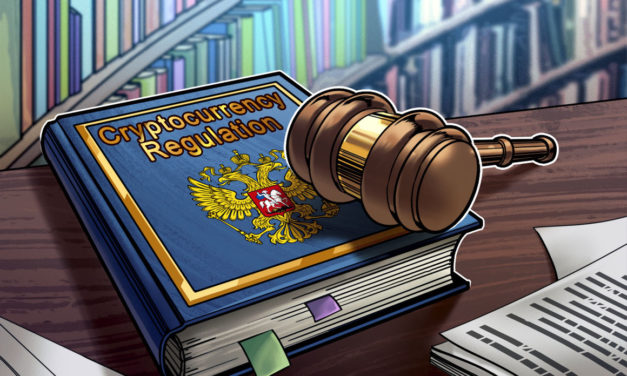
A bill that had been introduced a week ago to the State Duma, the lower chamber of Russian Parliament, made a swift passing through first reading. Should it become a law, it would prohibit using “digital financial actives” (DFA) to pay for goods or services. As reported by local media on Tuesday, the bill, sponsored by the head of the Financial Markets Committee of the State Duma Anatoly Aksakov, passed with a reservation. Albeit the document suggests an obligation for DFA exchange managers to withhold any deals implicating the usage of tokens as a monetary surrogate, the prohibition could be ceased in cases “prescribed by federal laws.”Earlier legal professionals have criticized the bill for tightening the regulation of digital rights and tokenized assets. One of the main conceptual problems is that the bill treats the DFAs, known as tokens and not cryptocurrencies, as a payment method while they are generally being used as security tokens. Another lacuna is the term “monetary surrogate” — while the bill intends to prohibit to use DFAs as a monetary surrogate, there is no clear definition of the latter in Russian laws. Related: Utility tokens vs. equity tokens: Key differences explainedThe bill also introduces the concept of an “electronic platform,” which is loosely defined as a financial platform, investment platform or information system in which digital financial assets are issued. Electronic platforms would be recognized as the subjects of the national payments system and obliged to submit to the central bank’s registry. Every major operation with DFAs — their emission, circulation, exchange and trade — would get its own registry.The existing law on Digital Financial Actives came into force in 2021. In May 2022, the tax amendments on DFAs passed the first reading in the State Duma. In a separate development, two other important bills are continuing their journey through the legislative process. A bill “On Digital Currency” would define the regulatory framework for crypto in general, while a bill “On Mining in the Russian Federation” should set the guidelines for miners.

Čítaj viac

El Salvador 'has not had any losses' due to Bitcoin price dive, finance minister says

Alejandro Zelaya, the minister of finance of El Salvador, reacted to the recent media attacks on the nation’s strategy of investing in Bitcoin (BTC) by calling the allegations of fiscal risks “extremely superficial.”During a press conference held on Monday, Zelaya responded to a journalist’s question about the government’s reaction to Bitcoin’s sharp dip in an emotional manner: “There is a clear criticism of Bitcoin as such, not of El Salvador’s strategy. El Salvador is what interests them the least, they [the media outlet] are not interested in what happens to our economy, they are not interested in what happens with our people, what happens with inflation.”The official underscored the impropriety of allegations that around $40 million had been lost by the country’s budget because of the cryptocurrency rate drop since the highest point at which El Salvador has purchased its first potion for $60,300 per BTC in October 2021. Zelaya pointed to the hypothetical possibility of a BTC rebound:“I have said it repeatedly: A supposed loss of 40 million dollars has not occurred because we have not sold the coins.” Zelaya also rebuffed the assumptions about high fiscal risk as laughable and ignorant, while calling the risk “extremely minimal.”Related: Falling Bitcoin price doesn’t affect El Salvador: ‘Now it’s time to buy more,’ reveals Deputy Dania GonzalezAt the moment, El Salvador holds 2,301 Bitcoin, which amounts to around $50 million by press time. In fiat equivalent, that is less than half of the money the nation has invested in Bitcoin through its purchases in October 2021 and May 2022, when BTC was worth $30,700. Like the whole crypto market at large, BTC has been declining since its all-time high in November 2021 (around $69,000) with the downtrend accelerating for the last month and a half following a series of the shake-ups such as the failure of Terra and the fiasco of a major DeFi lender, Celsius, as well as the global inflation rise.

Čítaj viac

Získaj BONUS 8 € v Bitcoinoch

nakup bitcoin z karty

Registrácia Binance

Burza Binance

Aktuálne kurzy