Autor Cointelegraph By David Attlee

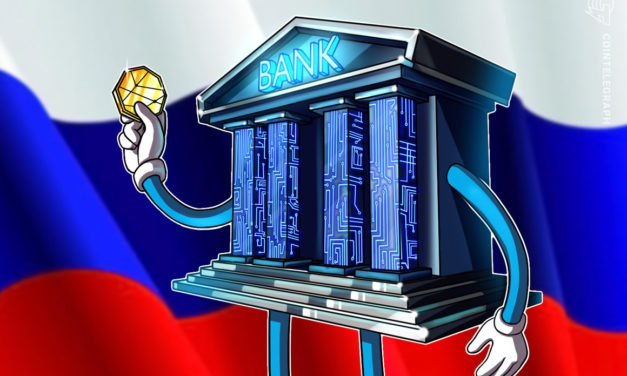
VTB sealed the first deal with digital financial assets in Russia

VTB Factoring, a subsidiary of Russia’s state-owned bank, reported the first major deal with digital finance assets. As part of the deal, the bank subsidiary acquired a tokenized debt pool of the engineering company Metrowagonmash, issued via the fintech platform Lighthouse.On Wednesday, June 29, VTB reported the deal on its webpage, claiming it to be the first issuance and placement of digital financial assets secured by cash in the Russian Federation. In the announcement, the bank compares it with the issue of short-term commercial bonds. Anton Musatov, CEO at VTB Factoring, emphasized the new technology’s potential regarding the access of Russian businesses to the funds necessary for operational activities:“Apart from the standard factoring procedure, [here] a client shouldn’t necessarily sign a service contract to sell its debt pool. The issuer’s readiness to tokenize it and the factoring bank’s decision to acquire it.”In June 2022 the largest Russian bank Sber announced its first operation with the digital financial assets (DFA) to take place in Mid-July, after finally obtaining a license from the country’s central bank. While current legislation on the DFA was put in force in 2020, in June 2022 the head of the Financial Markets Committee of the Russian parliament’s lower chamber introduced a bill that would prohibit the use of DFA as a “monetary surrogate”. Related: Russia to include crypto into its tax code: Here is what the rules might look likeIn February 2022 VTB conducted the first successful testing of the operation with “digital rubbles”, a central bank digital currency (CBDC) project of the Bank of Russia. Later, the bank announced its first purchase of DFAs in exchange for the digital ruble. By the press time, there is no information on whether the aforementioned deal was made via CBDC.

Čítaj viac


Anchorage launches Ethereum staking for institutional investors

Anchorage Digital, a San-Francisco-based digital platform that owns the first federally chartered crypto bank, will open an option to stake the Ethereum (ETH) for institutions. This move comes in anticipation of the Ethereum network’s long-promised shift from proof-of-work (PoW) to proof-of-stake (PoS) protocol. Anchorage announced on Tuesday its intention to introduce ETH staking — a practice of earning rewards for serving as a transaction validator in the Ethereum blockchain — for institutions. Diogo Mónica, co-founder and president of Anchorage Digital, called staking a win-win for institutional investors and the ecosystem:“By paving the way for institutions to stake their Ethereum, we’re providing heightened legitimacy to market-tested assets–and in the process, eliminating any hot wallet risks for institutions looking to generate new earnings from crypto.”The announcement emphasizes Anchorage’s high expectations from the upcoming upgrade of the Ethereum network that will connect its mainnet with the PoS system, coordinated by the Beacon Chain. This feature should allow investors to collect rewards on their ETH in custody by staking with an Anchorage validator. After the Merge, validators would earn not only the block rewards but also the transaction priority fees that were previously going to miners.Related: Ethereum’s Merge FOMO isn’t priced in, making a spike to $2.6K a possibilityThe Beacon Chain was launched as a part of Ethereum’s transitory roadmap in December 2020. In June 2022, Ethereum opened the Sepolia testnet, which would begin reaching consensus using PoS rather than PoW. The official merge date on the Ethereum mainnet has been pushed back several times. It is now slated for completion by August 2022, but that date could be delayed further due to a separate delay in the difficulty bomb. Last month, Anchorage formed an exchange custody network with five digital asset trading platforms — Binance.US, CoinList, Blockchain.com, Strix Leviathan and Wintermute — to segregate institutional client funds from exchanges into regulated asset vaults. Back in December 2021, a company secured $350 million in a funding round led by investment bigwig KKR.

Čítaj viac

Not the best week for crypto lending: Law Decoded, June 20-27

Due to Celsius Network’s withdrawal suspension in mid-June, the very topic of crypto lending made its entryway to the acute issues list for the regulators. Last week, lawmakers and officials continued to raise the question of necessary action, with significant utterance belonging to one of the key European crypto skeptics, Christine Lagard. European Central Bank president got so impressed with the Celsius crisis that she coined the term “MiCa II,” referring to the main regulatory package for crypto in the European Union. Lagarde believes the new MiCa should include separate crypto-asset staking and lending guidelines. It’s not necessary to be a civil servant to discern the flaws of the current lending model, though. A hardcore Bitcoin (BTC) maximalist and Swan Bitcoin CEO Cory Klippsten is afraid that the liquidity crisis involving Celsius may be just the beginning of a broader collapse in the crypto lending space. “Their loan books are opaque. Their activities are opaque. You’re being way under-compensated for the risk,” he explained in an interview with Cointelegraph. 90% of Central Banks are researching the utility of CBDCsIf you pick any central bank in the world, there is a 90% probability that it has been researching or testing its own digital currency project for some time. At least, that is what the new annual economic report published by the Bank of International Settlements (BIS), says. However, the numbers are way more modest when it comes to currently functioning CBDCs — there are currently only three live retail digital currencies and 28 pilots. Continue readingDisclosures should be read, not just filedThe headline above, summed up in the words of Georgetown University law professor Christopher Brummer, could be read as a motto for last week’s hearing on digital asset regulation at the United States House of Representatives. Although it should have focused on gaps in the oversight and regulation of derivatives and underlying spot markets, the discussion ranged widely. Brummer pointed out that disclosure law assumes issuers have access to information consumers do not have, while blockchain is transparent but hard to understand. Continue reading SEC and CFTC will try to understand each otherU.S. Securities and Exchange Commission (SEC) chair Gary Gensler revealed his negotiations with his colleagues from Commodity Futures Trading Commission (CFTC). Two major regulatory bodies in the U.S. are working on a “memorandum of understanding” on the regulation of digital assets. “I’m talking about one rule book on the exchange that protects all trading regardless of the pair — [be it] a security token versus security token, security token versus commodity token, commodity token versus commodity token,” Gensler explained. Continue reading

Čítaj viac

Uzbekistan warms up to Bitcoin mining, but there’s a catch

The National Agency of Prospective Projects (NAPP) in Uzbekistan announced its demands toward crypto mining operators. It would only allow the companies that use solar energy to mine Bitcoin (BTC) or other cryptocurrencies. The normative act on the government page, dated June 24, describes the confirmation of “Guidelines on the registration of the crypto assets mining,” and sets the finalization date on July 9. The second article of the document offers an uncompromising wording:“Mining is being carried out only by the legal entity with the use of electric energy, provided by a solar photovoltaic power plant.”As a further complication, the miners should own the solar photovoltaic power plant that they will use for energy. The executive order also obliges any mining operator to obtain a certificate and register in the national registry of crypto mining companies. This procedure demands a brief list of documents, and should take no more than 20 days from submitting to the final decision to the licensing body. The certificates would be valid for one year after the registration. Related: Go green or die? Bitcoin miners aim for carbon neutrality by mining near data centersAll the currency generated from mining activities would be spared taxation, though the mining farms would face the special tariffs on the consumed energy set by the Uzbekistan government. But, the trade operations with mined assets would have to be conducted only on the exchange platforms that are registered in Uzbekistan. The mining of anonymous cryptocurrencies would be prohibited. In April 2022, the freshly-restructured NAPP became Uzbekistan’s exclusive crypto regulator with the mission to adopt a special crypto regulation regime in the country. This move came in a row of initiatives launched by the Uzbekistan President Shavkat Mirziyoyev to provide the regulatory framework for crypto. In September 2018, Mirziyoyev signed a law prohibiting local firms from launching their crypto exchanges in Uzbekistan. The law only offered legal status to crypto exchanges established by foreign legal entities.

Čítaj viac

How blockchain can open up energy markets: EU DLT expert explains

Aside from the buzzing neologism of Web3, there is a bit less catchy but hardly less important concept of Industry 4.0, which includes the new and revolutionary drivers of the next generation’s industrial landscape. And, especially when it comes to the energy sector, blockchain lies at the heart of these technologies. The authors of a recently published EUBlockchain Observatory report “Blockchain Applications in the Energy Sector” are convinced that distributed ledger technology (DLT) could become a key enabler technology and has a very high potential to influence or even disrupt the energy sector. This comes as a no surprise, given the five D’s of the Digital Green Shift: deregulation, decarbonization, decentralization, digitization and democratization. The report highlights the major directions for blockchain in the sector and supplements them with the actual case studies and insights from energy market stakeholders such as Volkswagen, Elia Group, Energy Web Foundation and others. Cointelegraph spoke to one of the report’s co-authors, commercial director of Europe, the Middle East and Africa (EMEA) region at Energy Web and a member of EU Blockchain Observatory and Forum, Ioannis Vlachos. Vlachos elaborated on the most intriguing parts and concepts of the document, such as the granularity criterium, the importance of self-sovereign identity and the possible role of DLT in developing the non-electric energy sources consumption. Cointelegraph: The report notes that, to this day, no blockchain/DLT solution has been widely adopted by energy system stakeholders. Why do you think this is? Could you try to answer it?Ioannis Vlachos: The main barrier to the wide adoption of blockchain solutions by the energy system stakeholders is related to the way that energy markets are currently structured. The regulatory requirement, in most countries worldwide, for small-scale flexibility assets such as residential batteries, electric vehicles, heat pumps and others makes it possible to participate in energy markets only via their representation by an aggregator.Considering a more direct market design where flexible assets, irrespectively of their capacity, can directly bid into an energy market will minimize their marginal costs and will promote and foster the participation of small-scale distributed energy resources (DERs) in energy markets. This need for the direct participation of assets in markets was identified and considered to be an overarching principle in the joint report “Roadmap on the Evolution of the Regulatory Framework for Distributed Flexibility” by Entso-E and the European Associations representing distribution system operators published in June 2021, where “access to all markets for all assets either directly or aggregated” is recommended.Blockchain technology, via the concept of decentralized identifiers (DIDs) and verifiable credentials (VCs), provides the necessary tools to allow this direct access of small-scale DERs into energy markets.CT: How could blockchain be used to track the non-electric energy sources, such as biofuels?IV: Blockchain technology provides the means to create a trusted ecosystem of actors, where all information exchanged between assets, systems and actors can be independently verified by means of DIDs and VCs. This is extremely important to provide the required audit trails in non-electric energy supply chains such as natural gas, green hydrogen and others.Recently, Shell, together with Accenture, American Express Global Business Travel with the support of Energy Web as the blockchain solution provider, announced Avelia, one of the world’s first blockchain-powered digital book-and-claim solutions for scaling sustainable aviation fuel (SAF).Recent: Lummis-Gillibrand crypto bill comprehensive but still creates divisionThe report claims that the application of blockchain in the energy sector is likely to be further explored and advanced. What are the premises for such an optimistic conclusion? This conclusion is mainly drawn on the premise that despite the highly regulated energy environment, we have recently seen a large number of projects in the broader energy sector that use blockchain technology. They do this by either implementing use cases outside of the existing regulatory framework such as Shell’s SAF project or with the support of the national regulators and market operators such as projects EDGE and Symphony in Australia. The EDGE and Symphony projects are supported by state government agencies, the Australia Energy Market Operato and the Australian Renewable Energy Agency, and implement an innovative approach to the integration of consumer-owned DERs to enable their participation in a future energy market based on a decentralized approach. In both projects, Energy Web’s decentralized blockchain-based digital infrastructure is used by assigning digital identities to participants and thus facilitating the secure and efficient exchange and validation of market participant data.Recent: Celsius’ crisis exposes problems of low liquidity in bear marketsMoreover, we cannot neglect the fact that blockchain technologies are referenced within the European Union action plan for digitalizing the energy sector, focusing on enhancing the uptake of digital technologies.IV: The concept of granularity refers to the need to increase the frequency of data that will allow the traceability of energy commodities. Especially in the case of electricity, moving from a monthly or annual matching of energy consumption with renewable electricity being produced in a specific location to a more granular (e.g., hourly) is considered to be the best practice since it minimizes energy greenwashing. In this respect, Energy Web, with the collaboration of Elia, SP Group, and Shell, developed and released an open-source toolkit for simplifying 24/7 clean energy procurement.CT: Could you explain the concept of granularity, which sets the demand for blockchain in the energy sector?CT: The report mentions a self-sovereign identity, defining it as “a growing paradigm that promotes individual control over identity data rather than relying on external authorities.” It’s easy to imagine this kind of paradigm with personal data online, but what importance does it have for energy production and consumption?IV: The importance of self-sovereign identities (SSI) for energy production and consumption stems from the fact that prosumer’s energy data can be considered as private data [Prosumer is a term combining consumer and producer roles by one individual or entity.] Especially in the setting of the European Union and under the light of the General Data Protection Regulation, the granularity (sampling frequency) of smart metering data can be highly associated with the privacy of data. Moreover, given the fact that new business models are emerging that utilize prosumer energy data to facilitate the provision of energy efficiency and management services, empowering the prosumer via the concept of SSI to consent for the distribution, processing and storage of their energy data is more of a necessity rather than a luxury.

Čítaj viac

Získaj BONUS 8 € v Bitcoinoch

nakup bitcoin z karty

Registrácia Binance

Burza Binance

Aktuálne kurzy