Autor Cointelegraph By David Attlee

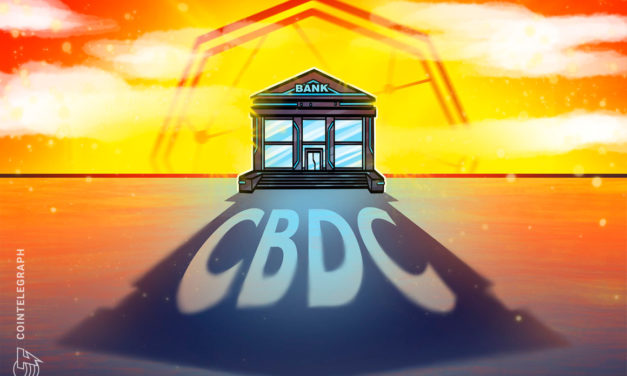
Credit unions warn about the cost of developing a CBDC

A United States-based lobbying group has raised a voice against developing a central bank digital currency (CBDC) in the United States. The National Association of Federally-Insured Credit Unions (NAFCU) believes the project’s cost outweighs the “hypothesized benefits.”In a public letter to the U.S. Commerce Department, dated Tuesday, Andrew Morris, the senior counsel for research and policy at NAFCU, claimed that the costs would outweigh the benefits and that there are superior alternatives for accomplishing the same objectives. The letter came in response to the Department’s request for comment (RFC) on digital assets. While the full text of the letter is currently unavailable, according to the NAFCU release, it drew attention to private and public sector payments initiatives to illustrate the availability of less disruptive alternatives for achieving payments improvement and highlighted the role credit unions already play in terms of reaching underserved populations.It is hardly surprising that the main alternative to CBDC in the lobby group’s view is to support credit union engagement. The letter also offers several suggestions that should help the Commerce Department to raise the global competitiveness of the U.S, such as “support for responsible innovation” within the credit union industry and the application of consumer protection laws to entities facilitating consumer engagement with digital assets. Related: CBDC may threaten stablecoins, not Bitcoin: Ark36 execNAFCU sent the very same response to the Federal Reserve in May, stating that the administration of a CBDC “will distract from the Federal Reserve’s dual mandate of achieving both stable prices and maximum sustainable employment.”A majority of experts who’ve participated in the United States Federal Reserve conference on the “International Roles of the U.S. dollar” believe a U.S. dollar CBDC would not drastically change the global currency ecosystem.

Čítaj viac


British investment managers call for the blockchain-traded funds' approval

The Investment Association, a trade body representing British investment managers, is speeding up the local government and financial regulators to approve blockchain-traded funds with digital tokens substituting traditional shares. As the Financial Times reported on Thursday, the trade body is pushing the government to establish a new class of funds employing blockchain technology and create a new task force to examine how distributed ledger technology could accelerate the creation of new products and services.The reasons behind such a push, according to the Investment Association, are the possible significant cost savings for end investors and the simplification of the existing procedures of buying and selling mutual funds. Investment Association chief executive Chris Cummings urged to boost the competitiveness of the national financial services: “Greater innovation will boost the overall competitiveness of the UK funds industry and improve the cost, efficiency and quality of the investment experience.”According to FT, blockchain-traded funds could become available by the end of the second quarter of 2023 if the Financial Conduct Authority (FCA) would give its regulatory approval. As the newspaper adds, a financial technology group FundAdminChain is currently collaborating with the London Stock Exchange and four global asset managers to develop live tokenized funds for the British market.Related: Majority of British crypto owners revealed to be hodlersBrian McNulty, CEO at FundAdminChain, revealed that asset managers have realized the potential to generate market-beating returns via tokenization of funds:“Tokenised funds can deliver more transparency, instant settlement, improvements in data and analytics which will contribute to a more efficient system for investors but we need regulatory support to ensure that the UK remains competitive with other jurisdictions.”The Investment Association also lobbies the FCA to regard the possibility of allowing traditional mutual funds to own cryptocurrencies and other digital assets. But should the FCA get interested in this proposition, it would still require a full consultation to push it through the regulation process.The first United States-based on-chain mutual fund was launched in April 2021 by Franklin Templeton to process transactions and record share ownership.

Čítaj viac

Majority of British crypto owners revealed to be hodlers: Survey

An average crypto asset holder in Great Britain would be young, male and hodler. And they would consider crypto to be a ‘fun investment.’ Such are the findings from the fresh research, conducted by Her Majesty Revenue and Customs (HMRC) with the help of research agency Kantar UK and published on Tuesday. Taking a quantitative approach, the research sought to establish the prevalence of owning crypto assets, the types and amounts held, and the platforms individuals use to buy crypto assets. It consisted of a survey with a representative sample of 5,916 United Kingdom adults, including 713 crypto asset owners. The report revealed that 10% of the U.K. citizens hold or have held crypto, with 55% never having sold any (equivalent to 5% of the adult population). Only 7% are currently holding more than £5,000 (almost $6000 by press time) in value, while 52% of current owners have holdings of up to £1,000 ($1200). Related: UK government seeks public input on DeFi taxationOther significant findings come as no surprise — crypto owners tend to be younger than the general population with 76% of them 45 years, and mostly they are male (69%). A vast majority of them hold cryptocurrencies (79%), while the second most popular type of asset is utility tokens (20%). An important takeaway refers to the common trading pattern — 68% of owners most frequently acquire crypto from “centralized exchanges” and 81% use these exchanges to sell or exchange their assets. The majority of owners reported making a profit (63%) over the past year when disposing of cryptoassets, 14% claim they made a loss and, similarly, 14% revealed they broke even. As the survey was conducted between February 2021 and June 2021, this data should be attributed to 2020. On July 5, HMRC made a call for an evidence paper, describing its intention to study whether administrative hassles and costs may be reduced for taxpayers who participate in the crypto industry.

Čítaj viac

MiCa, AMLA and EU’s 'wild west' problem: Law Decoded, June 27-July 4

According to the European parliament member and rapporteur for the Markets in Crypto-Assets (MiCA) regulation Stefan Berger, the deal on landmark pan-European Union regulation had been finally struck amid the Tripartite negotiations. It “will put an end to the crypto wild west,” as French Minister for the Economy Bruno Le Maire hopes. Still, while raising a modest optimism among some stakeholders, MiCa’s final draft will surely make life harder for others. A prime example here is the case with stablecoins, which would get a daily transaction cap of 200 million euros under the new regulation. With Tether (USDT) and USD Coin’s (USDC) 24-hour daily volumes standing at 48.13 billion euros and 5.40 billion euros, respectively, the new guidelines could be interpreted as a sort of indirect ban on stablecoins. The provisional agreement will also see crypto asset providers (CASPs) needing authorization in order to operate in the EU, with the largest CASPS to be monitored by the European Securities and Markets Authority (ESMA). European lawmakers clearly don’t like a “wild west” — to the point when they’re attaching the variations of this metaphor to almost anything they deem to need a fix. The same last week, European Parliament member Ernest Urtasun claimed to put an end to the “wild west of unregulated crypto” with a European Council agreement to form an Anti-Money Laundering (AML) body that will have the authority to supervise certain CASPs. The new regulator would probably get an obvious name of AMLA. Surprise twist in IowaTwo weeks between being fined for selling the unregistered securities and getting the very license it lacked — that’s what happened with a crypto lending platform BlockFi in the state of Iowa. The new license is a glimmer of good news for BlockFi, which was among the lending firms forced to liquidate some of the positions from venture firm Three Arrow Capital (3AC), with the latter unable to meet a margin call on its Bitcoin borrowings. Continue reading Grayscale goes to courtGrayscale Investments has launched a legal challenge against the United States Securities and Exchange Commission (SEC) after being denied its application to convert its Grayscale Bitcoin Trust (GBTC) into a spot-based Bitcoin exchange-traded fund (ETF). While the lawsuit has been filed to the United States Court of Appeals for the District of Columbia Circuit, a court ruling on the matter is not expected until Q3 2023 to Q1 2024, meaning that we may not see the GBTC going forward any time soon. Continue reading How much income does regulation bring?Surprising as it may sound, large regulatory landmarks do correlate with the crypto market leaps. At least according to financial services company New York Digital Investment Group (NYDIG), which studied Bitcoin (BTC) prices at regular intervals following regulatory events affecting digital asset taxation, accounting and payments, as well as decisions on the legality of service providers and the digital assets themselves. The results are somehow impressive: in the Americas, Bitcoin prices rose 160.4% in absolute terms 365 days after regulatory events and 32.3% in relative terms; in Europe, at 180.1% and 52.0%, respectively. Continue reading

Čítaj viac

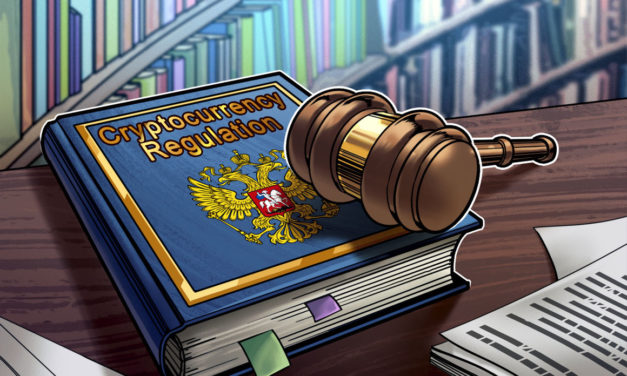
Russian central bank exec is OK with crypto mining under one condition

Kirill Pronin, head of Russian Central Bank (CBR)’s Department of financial technologies, acknowledged the possibility of crypto mining legalization under certain conditions. A public acknowledgment like this makes a rare case, as the CBR continues to lead the battle against the efforts to legalize crypto in the country. The executive expressed his views on mining at the Saint-Petersburg International Legal Forum on Wednesday, June 29. During the session, dedicated to cryptocurrencies, Pronin revealed, that CBR doesn’t take the same kind of hardline position on mining, as in the case with the general crypto legalization:”Despite the fact that we are speaking up consistently for the prohibition of cryptocurrencies’ turnover […] the discussion regarding mining’ legalization is possible.”However, Pronin named several conditions, which, according to him, make this discussion possible. He insisted that the mined assets should be sold strictly abroad and in exchange for fiat money:”Ultimately, we must say that there should be an export of these mining services, and the mining business shouldn’t lead to accumulation of cryptocurrency in the country, so there won’t be a motivation for a further usage in the internal payments.”In a kind of personal reenactment of the ongoing battle for crypto between the CBR and the Ministry of Finance, the latter’s head of the Department of financial policy Ivan Chebeskov vocally disagreed with Pronin and reminded him that there are notable challenges for Russian miners to sell their crypto abroad these days. Related: Russian government fails to forge a consolidated stance on crypto regulationResponding to that, Pronin stated that there are no problems with accumulating the mined wealth on the public blockchains and selling it with their help. In May 2022 the fresh draft of the law “On mining in the Russian Federation” appeared in the database of the lower chamber of the Russian parliament. The latest version spares the mining operators from the obligation to register in a special registry, and sweeps away the earlier proposed one-year tax amnesty.

Čítaj viac

Získaj BONUS 8 € v Bitcoinoch

nakup bitcoin z karty

Registrácia Binance

Burza Binance

Aktuálne kurzy