
Autor Cointelegraph By David Attlee

Trust Wallet launches browser extension, integrates with Binance Pay

Following the collapse of FTX and the bank run on crypto exchanges in general, self-custody Trust Wallet is gaining momentum. In one week, the company launched the long-anticipated browser extension and collaborated with Binance, whose users can now transfer their funds directly to a Trust Wallet account. On Nov. 14, Trust Wallet launched its browser extension, now available in Google Chrome and Opera browsers. The extension lets users store, send and receive crypto across all EVM chains and Solana. A network auto-detect function provides users with a seamless dApp experience without the need to manually add networks. The extension also includes multi-wallet support, NFT support, fiat on-ramp providers, and non-EVM blockchain integrations, as well as hardware wallet support. On Nov. 16, the world’s biggest crypto exchange, Binance, reported the launch of Binance Pay’s Trust Wallet integration. Now, Binance users won’t have to scan or input a wallet address, having their Trust Wallet among the direct withdrawal options. And it won’t cost anything above the blockchain gas fees. By press time, the function is supported solely on Trust Wallet App’s Android version, but Binance announces the iOS version “soon.” Related: 3 barriers preventing Web3 mass adoption — Trust Wallet CEOEarlier, Binance CEO Changpeng Zhao publicly endorsed Trust Wallet, stating that “self-custody is a fundamental human right.” The move comes as no surprise, given that Binance owns the U.S.-founded wallet provider since 2018. By Nov. 15, Trust Wallet Token (TWT) has surged by nearly 150% in six days, bucking the downturn in the cryptocurrency market, whose net capitalization has crashed by almost $100 billion in the same period. Meanwhile, the token’s trading volume has soared from 279 million TWT to 593.25 TWT in the same period, showcasing the market’s conviction in its uptrend.

Čítaj viac
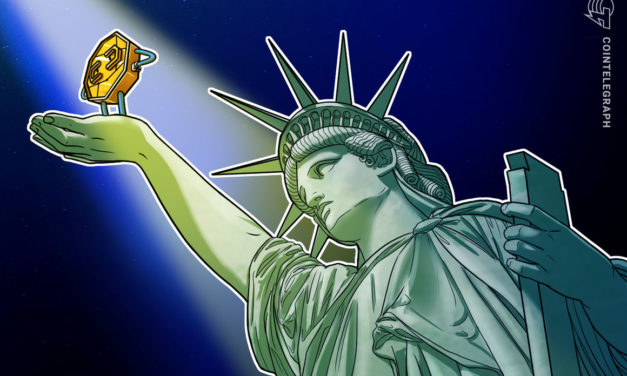

US national crypto laws should look like New York's, says state regulator

The superintendent of the New York Department of Financial Services (DFS) joined a nationwide regulatory discussion in the aftermath of the FTX collapse with a fresh take. Adrienne Harris believes that any federal crypto legislation to come should not override state regulatory regimes. During her speech under the headline “Digital asset regulation: The state perspective”, Harris proposed that lawmakers in Washington take a closer look at the New York state regulatory regime: “We would like for there to be a framework nationally that looks like what New York has, because I think it is proving itself to be a very robust and sustainable regime.”There is a need for more, not less regulation though, Harris added. She highlighted the extensive registration process in New York, which includes the assessment of the company’s organizational structure, the fitness of its executives, financial statements, and Anti-Money Laundering and Know Your Customer regimes as the guarantor of investors’ financial safety. Related: New York Fed collaborates with Singapore MAS to explore CBDCsDuring the same panel, Harris’s colleague, NYDFS virtual currency chief Peter Marton, reminded the public that FTX has never been granted a BitLicense to operate in the state. Introduced in 2015, the New York state BitLicense is notoriously difficult to obtain and drew harsh criticism even from New York City Mayor Eric Adams, who has been planning to make NYC the “center of the cryptocurrency industry” for a while. In June 2022, the DFS released regulatory guidance for U.S. dollar-backed stablecoins. Per the framework, a stablecoin must be fully backed by reserves as of the end of every business day and the issuer must have a redemption policy approved in advance by the DFS that gives the holder the right to redeem the stablecoin for U.S. dollars.

Čítaj viac

Ukraine pro-crypto groups announce Web3 roadmap

A group of pro-crypto Ukrainian lawmakers, Blockchain4Ukraine, and the citizen group Virtual Assets of Ukraine (VAU) revealed a joint roadmap for promoting and developing Web3 in the country. The document was signed by its co-authors on Nov. 14, according to regional media. The roadmap proposes a set of measures for promoting Web3, such as the launch of a regulatory sandbox for blockchain and Web3 projects, the creation of a national blockchain-backed land and realty register, the preparation of a “blockchain plan” to rebuild the country after the war and integration of Ukraine into the European blockchain community. VAU and Blockchain4Ukraine also intend to work on a self-sovereign identity pilot project and to seek ways of implementing blockchain into Ukraine’s healthcare and education systems. The list of potential partners of the roadmap includes civil society, non-government organizations, as well as business and scientific communities. The group working on the roadmap will prepare a set of bills to promote its initiatives on the legal level. Related: Ukrainian art museum to preserve art and cultural heritage through NFT auctionIn June, Ukraine became the third country outside the European Union to join the European Blockchain Partnership, an initiative derived by the 27 member states to deliver cross-border public services. Back then, VAU CEO Konstantin Ermolenko revealed Ukraine’s interest in running test-node of the EBSI and pilot use cases of the cross-border public services based on blockchain technology. In March 2022,President Volodymyr Zelensky signed the first major Ukrainian cryptocurrency-related legislation known as the bill “On Virtual Assets.” The bill establishes the National Securities and Stock Market Commission of Ukraine and the National Bank of Ukraine as two major regulators on the crypto market. Since the beginning of the Russian invasion in February 2022, Ukraine has managed to gather over $100 million in cryptocurrency donations through its government-curated Crypto Fund of Ukraine.

Čítaj viac

Law Decoded, Nov. 7–14: How regulators reacted to the FTX crash

Last week was tough — the alarming series of crypto meltdowns continued with the failure of FTX, one of the biggest exchanges on the market. The crypto industry’s very own “Lehman Brothers moment” pushed regulators to react. United States Senator Cynthia Lummis, famous for her openly pro-crypto position, promised deliberate with her colleagues on whether there was market manipulation, while Maxine Waters, chair of the United States House of Representatives Financial Services Committee, pushed for additional federal oversight of crypto trading platforms and consumer protection. European Parliament economics committee member Stefan Berger has compared the current situation with FTX to the 2008 financial crisis and said that the Market in Crypto Assets (MiCA) framework should prevent such crises in Europe. United States senators Debbie Stabenow and John Boozman have doubled down on their commitment to publishing a final version of the Digital Commodities Consumer Protection Act 2022.Tom Emmer, the recently reelected Republican representative representing Minnesota’s 6th district in the United States House of Representatives, shocked the public with allegations that the Securities Exchange Commission (SEC) helped the FTX to obtain a “monopoly” in the U.S. Specifically, Emmer believes the SEC Chair Gary Gensler to be the one who was helping Sam Bankman-Fried and FTX “work on legal loopholes.” However, the lawmaker did not provide any evidence, claiming that his office is working on it. The pro- and anti-crypto winners and losers from the U.S. midtermsResults from many election races for seats in the United States Senate and House of Representatives are still coming in, but a number of candidates who have expressed staunch views on digital asset regulation won on Nov. 8. Pro-crypto House incumbents including Minnesota Representative Tom Emmer and North Carolina Representative Patrick McHenry won re-election, as did crypto skeptic Brad Sherman in California. Democrat Tim Ryan lost on Nov. 8 to Republican J.D. Vance, who got more than 53% of the vote. Vance previously disclosed he held up to $250,000 in Bitcoin, while Ryan supported legislation aimed at simplifying digital asset tax reporting requirements.Continue readingMiddle East, Asia and Africa blockchain association launches in Abu DhabiA new blockchain and cryptocurrency-focused association has been launched within Abu Dhabi’s free economic zone to further the development of blockchain and crypto ecosystems across the Middle Eastern, North Africa and Asia regions. The Middle East, Africa & Asia Crypto & Blockchain Association will aim to facilitate regulatory solutions, create commercial opportunities and invest in education to support industry growth. The association will be spearheaded by board chairman Jehanzeb Awan, founder of an international risk and compliance consulting firm headquartered in Dubai.Continue readingThe Clearing House opposes CBDC in comments for U.S. TreasuryThe Clearing House claims a central bank digital currency (CBDC) is “not in the national interest” of the U.S because the risks of the possible issuance outweigh the benefits. As the company, owned by 23 banks and payment companies, has written in its letter to a Treasury Department, “the foundational requirements in place to prevent criminal and illicit use of commercial bank money must be applied to a U.S. CBDC” should it become a reality. The Clearing House also called for a federal prudential framework with standards for digital assets service providers that are equivalent to those for depository financial institutions engaged in functionally similar activities.Continue reading

Čítaj viac

New York Fed collaborates with Singapore MAS to explore CBDCs

The Federal Reserve Bank of New York’s New York Innovation Center (NYIC) and the Monetary Authority of Singapore (MAS) will launch a joint experiment with wholesale central bank digital currencies (wCBDCs). Regulators are keen to test the wCBDCs potential for cross-border wholesale payments. On Nov. 11, the MAS announced the launch of Project Cedar Phase II x Ubin+. In its framework, NYIC and MAS will leverage wCBDCs as a settlement asset in cross-border cross-currency transactions. The aim is to assess the possible ability of wCBDC to reduce settlement risk. Leong Sing Chiong, Deputy Managing Director at MAS, highlighted the concept of “interoperability,” which lies at the core of the experiment: “The project takes a practical approach and designs for any future wholesale CBDC to be interoperable across networks, while maintaining each network’s autonomy.”As the statement goes, Project Cedar Phase II x Ubin+ will not advance any specific policy outcome, nor does it signals any imminent decisions on issuing a CBDC by the Federal Reserve. A report with the project’s findings should be released in 2023. On Nov. 4, NYIC released a report on the first phase of Project Cedar. During the first phase, spot transactions were carried out between different currencies on different ledgers through a permissioned blockchain network with an unspent transaction data output model.Related: The Clearing House stands up for bank rights, opposes CBDC in comments for US TreasuryProject Cedar complements the Boston Fed’s work on a retail CBDC in Project Hamilton, being conducted in conjunction with the Massachusetts Institute of Technology’s Digital Currency Initiative. Ubin+ is MAS’ international initiative to improve efficiency and reduce the risks of cross-border foreign exchange settlement by advancing cross-border connectivity and interoperability of wholesale digital currencies.The Fed still has no plans to issue a CBDC, NY Fed Executive Vice President and Head of Markets Michelle Neal said at a presentation in Singapore, but it has investigated foreign exchange spot settlement “from the perspective of the Federal Reserve.”

Čítaj viac

Získaj BONUS 8 € v Bitcoinoch

nakup bitcoin z karty

Registrácia Binance

Burza Binance

Aktuálne kurzy