Blockchain messaging is going to replace Telegram and Discord
Your crypto wallet will become your mailbox and offer functionalities that Web2 messaging platforms like Discord and Telegram can only dream about.
Čítaj viac

Your crypto wallet will become your mailbox and offer functionalities that Web2 messaging platforms like Discord and Telegram can only dream about.
Čítaj viac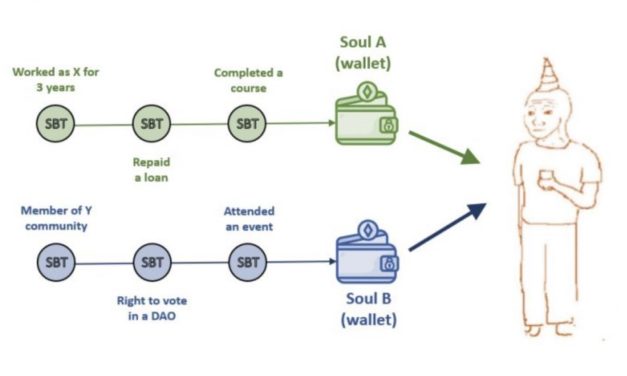
The function of crypto wallets has changed significantly over the last few years. They initially secured token holdings or served as art galleries with nonfungible tokens (NFTs). Today, they’ve become like bank accounts for many, and soon, they will offer even more functionality by enabling digital curriculum vitae (CVs).In a May 2022 paper, Ethereum co-founder Vitalik Buterin and others introduced the concept of “Soulbound tokens” (SBTs). Buterin and his co-authors argued that credentials on a blockchain offer many advantages to establishing provenance and reputation.Nonfungible tokens will serve as essential building blocksRelated: Facebook and Twitter will soon be obsolete thanks to blockchain technologySBTs are like PoAPs, but they are non-transferable and, therefore, bound to a wallet. That’s because people should not be able to buy credentials that do not represent their own accomplishments. Thus, those tokens should not have a direct monetary value. Binance announced in September that it would introduce the Binance Account Bound (BAB) token as proof of identity for Binance users. Increasing the utility of DeFi lendingAnother interesting project is the Lens Protocol, which was built by the Aave team. Lens is a composable and decentralized social graph that allows the hosting of various social media applications. Users receive a Lens handle in the form of an NFT, which is their user account for all decentralized applications (DApps). Every interaction with the Lens account is saved and linked to the handle.Soulbound Tokens. Source: @Leo_GlisicOne might wonder why a decentralized finance (DeFi) giant like Aave is suddenly starting a social media platform, but it makes sense. Aave, like all DeFi lending and borrowing platforms, only allows overcollateralized loans. The reason for this is that there is a lack of information from the users compared to loans in traditional finance (TradFi), which do not have to be overcollateralized because banks have more information about their clients.By creating Lens and a trusted reputation mechanism for user wallets, Aave can start offering uncollateralized loans as in TradFi once reputations have been established. This is just one of the many benefits of on-chain reputations. The gig economy will drive adoptionWhile many are skeptical that this usage will become popular, it makes perfect sense. The number of people who work in the so-called gig economy, such as freelance coders, designers and bloggers, is constantly growing. Projects have to pick the right talents for their needs.Establishing a culture of confirming credentials on-chain and holding them in a wallet will help such people build up a reputation faster and allow employees to check on the CV, as trustworthiness can easily be verified. For this, the concept of SBTs makes much sense, as those NFTs should not be tradable.Related: Mass adoption will be terrible for cryptoMany Web3 projects have small teams without a professional HR department to check candidates’ credibility. But with digital CVs, it will become much easier to verify credentials. One could even imagine automatic employment becoming feasible if a candidate’s wallet holds the required credentials.It’s unclear if Web3 CVs will win mainstream adoption, as that also depends on the general adoption of crypto-related infrastructure and improvements in UI and UX. But we can predict with great confidence that, at least within crypto, they will become the norm.Darius Moukhtarzadeh is a cryptocurrency entrepreneur focused on decentralized social media applications. He previously worked as a researcher for Sygnum, a digital asset bank. He also worked for Ernst & Young in blockchain consultancy and for several startups in the Swiss Crypto Valley.This article is for general information purposes and is not intended to be and should not be taken as legal or investment advice. The views, thoughts, and opinions expressed here are the author’s alone and do not necessarily reflect or represent the views and opinions of Cointelegraph.
Čítaj viac
Today’s social media landscape is dominated by Web2 corporations — mostly Meta (Facebook) and Twitter. The companies collect data from billions of users and collect billions of dollars in revenue from user-generated content. While it’s great for the corporations and their shareholders, it comes at a cost for average users and professional content creators.But in the near future, decentralized social media — or Web3 — is likely to end that old model by giving power back to users.No more evicting unruly usersBecause platforms such as Facebook, Instagram and Twitter are centralized, users are at the mercy of company bosses, who demand compliance with their platform policies. If users fail to comply, they can lose content and followers they spent years building up in just a matter of seconds.A famous example is Twitter’s ban on former President Donald Trump. While you may debate Trump’s views, the decision by Twitter management did not include millions of Twitter users who make the platform so valuable. It showed how little control Web2 users hold over Twitter’s decisions related to their content, even though they are the ones creating value for the company.The beauty of Web3? Corporate bosses will no longer be able to dictate who is allowed to use their platforms.Another problem with Web2 social networks? Walled gardensAnother problem with Web2 social media is that it has been characterized by “walled gardens.” If you have 1 million followers on Instagram and want to start an account on YouTube, you need to start with zero followers. There is no way to move your audience over because they are connected to the individual platforms, not to you. That applies even to platforms owned by the same company — such as Facebook and Instagram. Related: Decentralized social media: The next big thing in crypto?Web3 introduces solutions to reduce the number of intermediaries, create an open ecosystem, enable new forms of monetization, and give individuals more power not only over their content but also over their followers. New blockchains on the horizonMultiple platforms have launched what may supplant the social media industry on Web2. They include the Aave team’s Lens Protocol and the Andreessen Horowitz-backed DeSo. Both are built to host decentralized social media apps. They already have numerous live applications, including Lenster, Phaver, Iris (decentralized Twitter) and LensTube (decentralized YouTube).How do they work? With Lens, for example, users can utilize a nonfungible token (NFT) to link their content and followers directly to a cryptocurrency wallet. That means zero dependencies on the individual platform because they hold cross-platform access to their followers.If a user posts something, it’s automatically shared across all platforms they use. And because their followers are linked across platforms, they have the same number of followers on every platform. If a new platform emerges, users do not have to build their audience all over again. In Web2 terms, it’s like having an account linked directly to the internet instead of one linked to Facebook’s closed ecosystem.Direct user monetization instead of advertisementsAnother feature of Web3 social media is that rather than generating revenue from advertising, users have the ability to monetize their work directly. The model incentivizes users to publish much better content. It’s simplified by allowing creators to set a fee for “collecting” their posts — or to set a fee for following them. The revenue then flows directly to the creator, not to the platform.Influencers will accelerate adoptionSome critics argue that Web2 social media has such a head start that it will be impossible for Web3 social to catch up. But the reality is that the benefits of decentralized social media are so substantial that big content creators will transition, bringing their audiences with them.Related: The metaverse will change the paradigm of content creationThere are already many examples of prominent influencers who have their own social media platforms because the corporate platforms would not allow them to share their content anymore. Web3 offers an obvious solution for the growing number of those who have been banned from Web2.Providing ownership over their own content and followers? Easy ways to generate revenue from their work? Connecting it all with easy-to-use NFTs? What is there to complain about? Blockchain technology is bringing us a social-media space that rewards users — not platforms — and is better than any we’ve dreamed of in the past.Darius Moukhtarzadeh is a cryptocurrency entrepreneur focused on decentralized social- media applications. He previously worked as a researcher for Sygnum, the world’s first digital asset bank. He also worked for Ernst & Young in blockchain consultancy and for several startups in the Swiss Crypto Valley.The views, thoughts, and opinions expressed here are the author’s alone and do not necessarily reflect or represent the views and opinions of Cointelegraph.
Čítaj viac
