

Autor Cointelegraph By Cointelegraph

Autumn bulls vs. winter bears — Will October be bullish or bearish for Bitcoin? Watch Market Talks

In this week’s episode of Market Talks, we welcome Rekt Capital, a cryptocurrency analyst who shares macro research, commentary and technical analysis related to crypto markets. He publishes a popular newsletter and provides courses that help educate traders on how to make informed decisions when buying and selling cryptocurrencies. He has more than 328,000 followers across his various social media platforms, many of whom are prominent individuals, including big names like Binance CEO Changpeng Zhao.First things first, we have officially entered Q4 2022 and, more importantly, October, which has historically been a bullish month for cryptocurrencies. We ask Rekt Capital if he thinks this trend is likely to continue or if we are headed toward more downside for Bitcoin (BTC). Will we stay above the $20,000 level or head toward $17,000? We take a look at where the Bitcoin bottom might lie by looking at historical data and analysis to try and figure out one of the main questions on everyone’s minds. We also discuss if Bitcoin needs a significant catalyst to finally break out of this bear market and what that could be.There has been an increasing correlation between Bitcoin and the S&P 500, but how long will this go on, and is there a decoupling on the horizon? We’ve just witnessed a historic moment in crypto with the Ethereum Merge moving from a proof-of-work to a proof-of-stake consensus. Many hoped this would be a shift in the current market trend, but it was a pretty uneventful transition, even price-wise. We get Rekt’s thoughts on this and also what he sees in the future for Ether (ETH).Many are fearful of the current market conditions, with the Bitcoin Fear and Greed Index being the lowest it’s ever been, but some might consider this a buying opportunity, especially considering that the United States Federal Reserve will have to pivot at some point and start easing the interest rates, which could potentially be bullish news for Bitcoin. Should you use this time to stack sats or stay on the sidelines? We’ve got the experts to break it down for you.Other topics up for discussion are what altcoins to keep an eye on moving forward and what is the best strategy to use right now. So, make sure you’re tuned in to keep yourself informed and upto-date with the latest information. Tune in to have your voice heard. We’ll be taking your questions and comments throughout the show, so be sure to have them ready to go.Market Talks streams live every Thursday at 12:00 pm ET (4:00 pm UTC). Each week, we feature interviews with some of the most influential and inspiring people from the crypto and blockchain industry. So, be sure to head on over to Cointelegraph’s YouTube page and smash those Like and Subscribe buttons for all our future videos and updates.

Čítaj viac

If Credit Suisse collapses, will it bring more volatility to the crypto market? Watch The Market Report

On this week’s The Market Report show, Cointelegraph’s resident experts discuss if the potential collapse of the Credit Suisse bank could bring more volatility in the crypto market.To kick things off, we break down the latest news in the markets this week:BTC price still not at ‘max pain’Bitcoin (BTC) starts a new week in a precarious place as global macro instability dictates the mood. After sealing a weekly close just inches above $19,000, the largest cryptocurrency still lacks direction as nerves heighten over the resilience of the global financial system. Europe still seems to be at the top of everyone’s minds as the latest news about the potential collapse of major global banks, particularly Credit Suisse and Deutsche Bank, looms overhead. What impact would this have on the cryptocurrency market, and could this give Bitcoin its time to shine, or will this and other macro factors force the price lower than we’ve previously seen? With everything going on in the financial world at the moment, it seems like this bear market is shaping up to be unlike any other.Robert Kiyosaki calls Bitcoin a ‘buying opportunity’ as US dollar surgesRobert Kiyosaki, businessman and best-selling author of Rich Dad Poor Dad, has called BTC, silver and gold a “buying opportunity” amid the strengthening United States dollar and continued interest rate hikes. He suggests the U.S. Federal Reserve could start to pivot and drop interest rates as soon as January 2023, which could lead to Bitcoin and other commodity price reversals. Could this be a huge buying opportunity? Our experts analyze the situation.Our experts cover these and other developing stories, so make sure you tune in to stay up-to-date on the latest in the world of crypto.Next up is a segment called “Quick Crypto Tips,” which aims to give newcomers to the crypto industry quick and easy tips to get the most out of their experience. This week’s tip: trickle investment buying.Market expert Marcel Pechman then carefully examines the Bitcoin and Ether (ETH) markets. Are the current market conditions bullish or bearish? What is the outlook for the next few months? Pechman is here to break it down. The experts also go over some market news to bring you up-to-date on the latest regarding the top two cryptocurrencies.Lastly, we’ve got insights from Cointelegraph Markets Pro, a platform for crypto traders who want to stay one step ahead of the market. Our analysts use Cointelegraph Markets Pro to identify two altcoins that stood out this week: Stay tuned to find out which ones.Do you have a question about a coin or topic not covered here? Don’t worry. Join the YouTube chat room and write your questions there. The person with the most interesting comment or question will be given a $50 gift voucher to the Cointelegraph swag store.The Market Report streams live every Tuesday at 12:00 pm ET (4:00 pm UTC), so be sure to head on over to Cointelegraph’s YouTube page and smash those Like and Subscribe buttons for all our future videos and updates.

Čítaj viac
So what if Bitcoin price keeps falling! Here is why it’s time to start paying attention

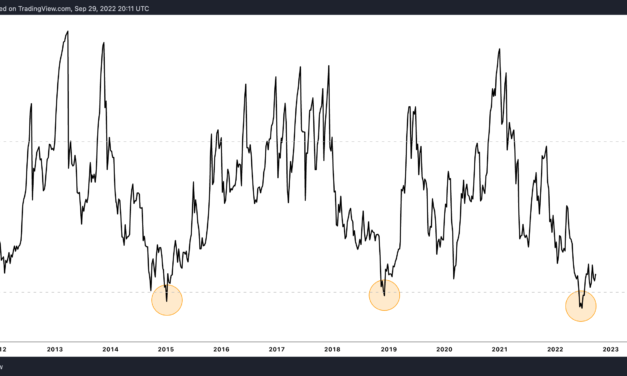
For bulls, Bitcoin’s (BTC) daily price action leaves a lot to be desired, and at the moment, there are few signs of an imminent turnaround. Following the trend of the past six or more months, the current factors continue to place pressure on BTC price: Persistent concerns of potential stringent crypto regulation. United States Federal Reserve policy, interest rate hikes and quantitative tightening.Geopolitical concerns related to Russia, Ukraine and the weaponization of high-demand natural resources imported by the European Union. Strong risk-off sentiment due to the possibility of a U.S. and global recession.When combined, these challenges have made high volatility assets less than interesting to institutional investors, and the euphoria seen during the 2021 bull market has largely dissipated. So, day-to-day price action is not encouraging, but looking at longer duration metrics that gauge Bitcoin’s price, investor sentiment and perceptions of valuation do present some interesting data points. The market still flirts with oversold conditionsOn the daily and weekly timeframe, BTC’s price is pressing against a long-term descending trendline. At the same time, the Bollinger Bands, a simple momentum indicator that reflects two standard deviations above and below a simple moving average, are beginning to constrict. Tightening in the bands usually occurs before a directional move, and price trading at long-term resistance is also typically indicative of a strong directional move. Bitcoin’s sell-off from March 28 to June 13 sent its relative strength index (RSI) to a multi-year record low, and a quick glance at the indicator compared against BTC’s longer-term price action shows that buying when the RSI is deeply oversold is a profitable strategy. BTC/USD weekly chart relative strength index. Source: TradingViewWhile the short-term situation is dire, a price agnostic view of Bitcoin and its market structure would suggest that now is an opportune moment to accumulate. Now, let’s contrast Bitcoin’s multi-year price action over the RSI to see if any interesting dynamics emerge. BTC/USD weekly chart. Source. TradingViewIn my opinion, the chart speaks for itself. Of course, further downside could occur, and various technical and on-chain analysis indicators have yet to confirm a market bottom. Some analysts have forecast a drop to the $15,000–$10,000 range, and it’s possible that the buy wall at $18,000 is absorbed and turns into a bull trap. Aside from that event, increasing position size at the occurrence of an oversold weekly RSI has yielded positive results for those brave enough to take a swing. Another interesting metric to view in the longer timeframe is the moving average convergence divergence (MACD) oscillator. Like the RSI, the MACD became deeply oversold as Bitcoin’s price collapsed to $17,600, and while the MACD (blue) has crossed above the signal line (orange), we can see that it still lingers in previously untested territory. BTC weekly MACD. Source: TradingViewThe histogram has turned positive, which some traders interpret as an early trend reversal sign, but given all the macro challenges facing crypto, it should not be heavily relied upon in this instance. What I find interesting is that while Bitcoin’s price is painting lower highs and lower lows on the weekly chart, the RSI and MACD are moving in the opposite direction. This is known as a bullish divergence. BTC/USD weekly chart reflecting bullish divergences. Source: TradingViewFrom the vantage point of technical analysis, the confluence of multiple indicators suggests that Bitcoin is undervalued. Now, with that said, the bottom does not appear to be in, given that a bevy of non-crypto-specific issues continues to inject weakness into BTC’s price and the wider market. A drop to $10,000 is another 48% slide from BTC’s current valuation near $20,000. Let’s take a look at what the on-chain data is showing at the moment. MVRV Z-ScoreThe MVRV Z-Score is an on-chain metric that reflects a ratio of BTC’s market capitalization against its realized capitalization (the amount people paid for BTC compared to its value today). According to co-creator David Puell: “This metric clearly displays the peaks and busts of the price cycle, emphasizing the oscillation between fear and greed. The brilliance of realized value is that it subdues ‘the emotions of the crowds’ by a significant degree.”Basically, if Bitcoin’s market value is measurably higher than its realized value, the metric enters the red area, indicating a possible market top. When the metric enters the green zone, it signals that Bitcoin’s current value is below its realized price and that the market could be nearing a bottom. Bitcoin MVRV Z-Score. Source: GlassnodeLooking at the chart, when compared against Bitcoin’s price, the current 0.127 MVRV Z-Score is in the same range as previous multi-year lows and cycle bottoms. Comparing the on-chain data against the technical analysis indicators mentioned earlier again suggests that BTC is undervalued and in an optimal zone for building a long position. Related: Bitcoin price slips under $19K as official data confirms US recessionReserve RiskAnother on-chain data point showing interesting data is the Reserve Risk metric. Created by Hans Hauge, the chart provides a visual of how “confident” Bitcoin investors are contrasted against the spot price of BTC. As shown on the chart below, when investor confidence is high, but BTC price is low, the risk to reward or Bitcoin attractiveness versus the risk of buying and holding BTC enters the green area. During times when investor confidence is low, but the price is high, Reserve Risk moves into the red area. According to historical data, building a Bitcoin position when Reserve Risk enters the green zone has been a good time to establish a position. Bitcoin reserve risk. Source: LookIntoBitcoinAs of Sept. 30, data from LookIntoBitcoin and Glassnode both show Reserve Risk trading at its lowest measurement ever and outside the boundaries of the green zone.This newsletter was written by Big Smokey, the author of The Humble Pontificator Substack and resident newsletter author at Cointelegraph. Each Friday, Big Smokey will write market insights, trending how-tos, analyses and early-bird research on potential emerging trends within the crypto market. The views and opinions expressed here are solely those of the author and do not necessarily reflect the views of Cointelegraph.com. Every investment and trading move involves risk, you should conduct your own research when making a decision.

Čítaj viac

The British pound collapse and its impact on cryptocurrency: Watch the Market Report

On this week’s The Market Report show, Cointelegraph’s resident experts discuss why the British pound is at its all-time low and how that might impact the cryptocurrency market.To kick things off, we break down the latest news in the markets this week:Bitcoin gains 5% to reclaim $20K, eyes first ‘green’ September since 2016A classic snap of sideways trading action sees Bitcoin’s (BTC) price aim higher, but concerns remain over what happens next. Data from Cointelegraph Markets Pro and TradingView followed BTC/USD as it added over 7% after the Sept. 26 close. Local highs of $20,344 appeared on Bitstamp before the pair began consolidating at around $20,200. Can Bitcoin achieve a green monthly close, and will the bulls be able to beat “Septembear?”Is it Bitcoin’s time to shine? British pound drops to all-time low against the dollarOn Sept. 26, the British pound hit a record low against the United States dollar following the announcement of tax cuts and further debt increases to curb the impact of a possible economic recession. But could the British pound’s weakness be a positive for Bitcoin? Is it possible for the general population to move to cryptocurrencies once it realizes that people’s savings and investments are being devalued more aggressively?Charles Hoskinson and Ethereum dev get into a war of words post-Vasil upgradeCharles Hoskinson, founder of Cardano and co-founder of Ethereum, got into a war of words with Ethereum developers on the implementation of the proof-of-stake consensus via the Ethereum Merge. Hoskinson is known for his hot takes on his former project, and the bad blood between the two communities is nothing new. However, with both blockchains undergoing key upgrades on their networks, the recent exchange between the two sides highlights the disconnect between blockchain communities.Next up is a segment called “Quick Crypto Tips,” which aims to give newcomers to the crypto industry quick and easy tips to get the most out of their experience. This week’s tip: Choosing a long-term coin.Market expert Marcel Pechman then carefully examines the Bitcoin and Ether (ETH) markets. Are the current market conditions bullish or bearish? What is the outlook for the next few months? Pechman is here to break it down. The experts also go over some market news to bring you up to date on the latest regarding the top two cryptocurrencies.Lastly, we’ve got insights from Cointelegraph Markets Pro, a platform for crypto traders who want to stay one step ahead of the market. Our analysts use Cointelegraph Markets Pro to identify two altcoins that stood out this week: XRP and Digg.Do you have a question about a coin or topic not covered here? Don’t worry. Join the YouTube chat room and write your questions there. The person with the most interesting comment or question will be given a one-month subscription to Markets Pro, worth $100.The Market Report streams live every Tuesday at 12:00 pm ET (4:00 pm UTC), so be sure to head on over to Cointelegraph’s YouTube page and smash those Like and Subscribe buttons for all our future videos and updates.

Čítaj viac

Why is the crypto market down today?

Crypto prices keep falling, but why? This year’s market crash has turned most winning portfolios into net losers, and new investors are probably losing hope in Bitcoin (BTC).Investors know that cryptocurrencies exhibit higher than average volatility, but this year’s drawdown has been extreme. After hitting a stratospheric all-time high at $69,400, Bitcoin price crumbled over the next 11 months to an unexpected yearly low at $17,600. That’s a nearly 75% drawdown in value. Ether (ETH), the largest altcoin by market capitalization, also saw an 82% correction as its price tumbled from $4,800 to $900 in seven months. Years of historical data show that drawdowns in the 55%–85% range are the norm after parabolic bull market rallies, but the factors weighing on crypto prices today differ from those that triggered sell-offs in the past.At the moment, investor sentiment remains soft as investors avoid risk and wait to see whether the Federal Reserve’s current monetary policy will alleviate persistently high inflation in the United States. On Sept. 21, Fed Chair Jerome Powell announced a 0.75% interest rate hike and hinted that similar-size hikes would occur until inflation drops closer to the central bank’s 2% target. Let’s take a deeper look at three reasons why crypto prices keep falling in 2022. Federal Reserve interest rate hikes Raising interest rates increases the cost of borrowing money for consumers and businesses. This has the knock-on effect of raising business operational costs, the costs of goods and services, production costs, wages, and eventually, the cost of nearly everything. High, unsupressable inflation is the primary reason the United States Federal Reserve is raising interest rates. And since rate hikes began in March 2022, Bitcoin and the broader crypto market have been in a correction.When monetary policy or metrics that measure the strength of the economy shift, risk assets tend to signal, or move, earlier than equities. In 2021, the Fed started signaling its plans to raise interest rates eventually, and data shows Bitcoin price sharply correcting by December 2021. In a way, Bitcoin and Ethereum were the canaries in the coal mine that signaled what lay ahead for equities markets.If inflation begins to taper, the health of the economy improves, or the Fed begins to signal a pivot in its current monetary policy, risk assets like Bitcoin and altcoins could again be the “canaries in the coal mine” by reflecting the return of risk-on sentiment from investors.The persistent threat of regulation The cryptocurrency industry and regulators have a long history of not getting along either due to various misconceptions or mistrust over the actual use case of digital assets. Without a working framework for crypto sector regulation, different countries and states have a plethora of conflicting policies on how cryptocurrencies are classified as assets and precisely what constitutes a legal payment system.The lack of clarity on this matter weighs on growth and innovation within the sector, and many analysts believe that the mainstreaming of cryptocurrencies cannot happen until a more universally agreed upon and understood set of laws is enacted.Risk assets are heavily impacted by investor sentiment, and this trend extends to Bitcoin and altcoins. To date, the threat of unfriendly cryptocurrency regulations or, in the worst case, an outright ban continues to impact crypto prices on a nearly monthly basis.Scams and Ponzis triggered liquidations and repeat blows to investor confidenceScams, Ponzi schemes and sharp market volatility have also played a significant role in crypto prices crashing throughout 2022. Bad news and events that compromise market liquidity tend to cause catastrophic outcomes due to the lack of regulation, the youth of the cryptocurrency industry and the market being relatively small compared with equities markets.The implosion of Terra’s LUNA and Celsius Network as well as misuse of leverage and client funds by Three Arrows Capital (3AC) were each responsible for successive blows to asset prices within the crypto market. Bitcoin is currently the largest asset by market capitalization in the sector, and historically, altcoin prices tend to follow whichever direction BTC price goes.As the Terra and LUNA ecosystem collapsed on itself, Bitcoin price corrected sharply due to multiple liquidations occurring within Terra — and investor sentiment tanked.The same happened with even greater magnitude when Voyager, 3AC and Celsius collapsed, erasing tens of billions in investor and protocol funds.Related: Wen moon? Probably not soon: Why Bitcoin traders should make friends with the trendWhat to expect for the rest of 2022 through 2023The factors impacting falling prices within the crypto market are driven by Federal Reserve policy, meaning the Fed’s power to raise, pause or lower rates will continue to have a direct impact on Bitcoin price, ETH price and altcoin prices.In the meantime, investors’ appetite for risk is likely to remain muted, and potential crypto traders might consider waiting for signs that U.S. inflation has peaked and for the Federal Reserve to begin using language that is indicative of a policy pivot.Disclaimer. Cointelegraph does not endorse any content of product on this page. While we aim at providing you all important information that we could obtain, readers should do their own research before taking any actions related to the company and carry full responsibility for their decisions, nor this article can be considered as an investment advice.

Čítaj viac

Získaj BONUS 8 € v Bitcoinoch

nakup bitcoin z karty

Registrácia Binance

Burza Binance

Aktuálne kurzy