Autor Cointelegraph By Cointelegraph

What is PAX Gold (PAXG) and how does it work?

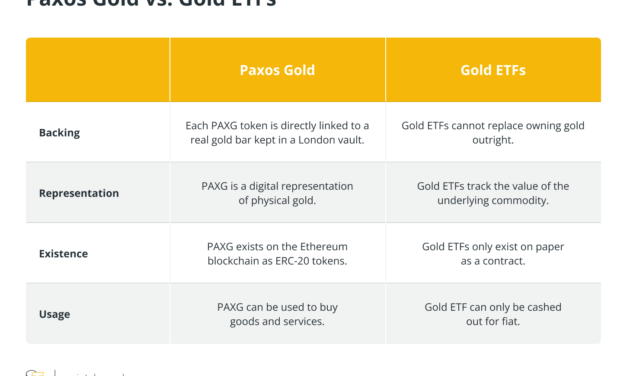
In recent years, nonfungible tokens (NFTs), cryptocurrencies and other modern investment options have become trendy. However, physical commodities such as gold are still in high demand. In 2021, the global market capitalization for cryptocurrency surpassed $2 trillion. Now, investors must ask themselves: which option should I choose — crypto or gold?Gold is a commodity that dates back thousands of years as a store of value and as a means of exchange and is still successful today. Even with the invention of decentralized digital cryptocurrency, gold has remained just as prominent. Although, for most individual investors, owning gold can be difficult and out of reach. There is one crypto company, PAX Gold (PAXG), whose goal is to make gold ownership more democratic and available to everyday investors by allowing them to trade it like any other cryptocurrency.PAX Gold has discovered a method to combine cryptocurrency with physical gold assets, making it attractive to investors accustomed to conventional alternatives. This article will discuss PAX Gold (PAXG) and analyze how the cryptocurrency works.What Is PAX Gold?Paxos Gold is a cryptocurrency that is backed by real gold reserves held by Paxos, a for-profit company in New York. Each PAXG token is linked to a 1:1 ratio to one troy ounce (t oz) of a 400-ounce London Good Delivery gold bar stored at Brinks Security vaults in London. The Paxos-backed cryptocurrency, PAXG, is backed by the London Bullion Market Association (LBMA) certified gold bars and may be redeemed for actual bullion.Related: What is a gold-backed token and how does it work?PAX Gold investors are spared the trouble of storing and securing physical gold, as well as transporting it. Also, shares can be bought fractionally, which makes it more accessible for retail investors who otherwise would be hindered by the high cost of gold. PAX Gold boasts a combination of qualities from both physical gold ownership and cryptocurrency that provide solutions to many modern-day challenges in the gold market such as high costs, storage concerns and the lack of liquidity.Who Is Behind PAX Gold?The Paxos Trust Company, a financial institution and tech company based in New York City that specializes in blockchain technology, created PAX Gold. Charles Cascarilla and Richard Teo, both former analysts at different firms (Cascarilla at Goldman Sachs and Teo at Cedar Hill Capital Partners), founded Paxos in 2012.PAX Gold is not the only crypto project that Paxos has undertaken. In addition to PAX Gold, they have also created PAX Dollar (USDP), a digital United States dollar and stablecoin. They have received strong institutional support and have raised over $500 million in total funding from investors like OakHC/FT, Mithril Partners and PayPal Ventures.How does PAXG work?The PAX Gold token is built on the Ethereum blockchain, which gives it portability among wallets, exchanges, decentralized finance (DeFi) platforms, and other apps that use Ethereum. PAX Gold allows users to trade, stake or redeem their tokens for high-quality gold bars. These gold bars are accredited by the London Bullion Market Association and stored in secure vaults around the world. Even with these top-notch security measures and high-quality gold, PAX Gold doesn’t charge any custodial or storage fees — only a 0.02% transaction fee.Is Pax Gold safe? PAX Gold is not only accredited with a gold standard, but it also functions dependably and transparently. Both PAX Gold and its holding company, Paxos Trust, are under the legal jurisdiction of the New York Department of Financial Services (NYDFS). Furthermore, PAX Gold protects the consumer and the company’s assets independently, ensuring that the consumer is secure in the event of bankruptcy.PAXG undergoes monthly audits from a third-party auditing firm to ensure that its gold reserves match the supply of PAXG tokens. The reports from these attestations are released on Paxos’ official website. In addition, PAXG’s developers run regular smart contract audits to search for any potential bugs or vulnerabilities in the network.Is Pax Gold real gold?As mentioned earlier, Pax gold is tokenized gold that operates on a blockchain network. Tokenization is the digital transformation of both physical and intangible assets into cryptocurrency. The PAXG token specifically represents physical gold from the Paxos trust company. Gold is a good store of value because it keeps its value over time. As such, it is often used as a hedge against inflation. When the USD loses value, gold becomes more expensive in USD and vice versa. This makes gold a popular choice for investors looking to protect their wealth from inflation. The PAXG tokens have serial numbers that match those of individual gold bars. The serial number, value and other characteristics of a holder’s physical gold may be discovered by inputting an individual’s Ethereum wallet address on the PAXG lookup tool. They also have the option to convert their PAXG into fiat money, another cryptocurrency or allocated and unallocated gold bullion bars at the current market price of gold.What’s the difference between PAXG and gold ETFs?The main difference between a gold ETF and Pax Gold is that an ETF purchases a contract that mimics the price of gold, but the user does not own the underlying asset. Each PAXG token is directly linked to a real gold bar kept in a London vault, with each PAXG token being equivalent to one.Gold exchange-traded funds (ETFs) track the value of the underlying commodity. They just give investors access to the price of gold, but not ownership. An investor who owns a gold ETF is a party in an agreement that gives him or her a specific fraction of the pooled gold. Gold ETFs can’t compare to full ownership of the metal. For example, by the time settlement occurs, the contract value may be lower than what you would get if you simply owned the gold outright.In contrast, a PAXG is a digital representation of physical gold. Each PAXG token represents one troy ounce of gold in London vaults that can be identified by sequential numbers. Trading PAXG does not take days to settle as physical gold bar trading might do because it is handled on Ethereum as an ERC-20 token.PAX Gold is the perfect investment for both traditional and modern investors who want to stay on trend without compromising their personal goals. With actual gold assets reflected in crypto tokens, you can invest in both physical and digital resources with a single investment, taking advantage of the best aspects of each.How does PAX gold make money?PAX Gold will earn revenue in two ways: a small premium on the gold and a tokenization fee at the time of initial purchase. The percentage for the tokenization fee depends on the amount purchased initially; it is 1% for purchases of one ounce or less but significantly lower for larger purchases. Paxos will not charge custody fees, but it will charge a fee of 0.02% whenever a customer wants to buy or sell a token on a blockchain network.Related: What is tokenized real estate? A beginner’s guide to digital real estate ownershipCan you stake PAXG? You can earn interest on your PAXG by lending it to a custodian, but rates will differ depending on the lender. Staking your PAXG also allows you to earn interest, but you must lock up your tokens for a specific period of time. How to buy PAXG? The token is available for purchase on several exchanges, including Binance, Kraken, KuCoin and Coinbase. Here are the steps to buy PAXG tokens on the Coinbase crypto exchange: Download a self-custody wallet that supports PAXG like the Coinbase wallet.Securely store your recovery phrase.Understand and prepare for Ethereum network fees.Buy and transfer Ether (ETH) to your self-custody wallet.In the trade section, use the ETH to purchase PAX Gold.The future of asset-backed tokensAsset-backed tokens are digital representations of physical assets that can be redeemed for the underlying asset. That asset could be gold, oil, real estate, equity, soybeans or just about any other commodity.Asset-backed tokens are cracking open markets that were once inaccessible and costly by making transactions that don’t need a central figure. By doing this, we’re ensuring both security and transparency in business relationships. This is changing the way we do business for the future and how we think about ownership and wealth creation.Asset-backed tokens may also help to address issues caused by inflated or depreciated currencies, as well as the unpredictable stock market. Individuals have a viable new financial choice that combines digital liquidity with real asset values when needed, thanks to asset-backed tokens’ potential. We’ve already seen how asset-backed tokens are being used in numerous applications.The future of asset tokenization is only as limited as the imagination. With new use cases being discovered every day, it’s exciting to think about all the possibilities for how asset-backed tokens can help people and businesses around the globe.Purchase a licence for this article. Powered by SharpShark.

Čítaj viac

3 reasons why Bitcoin traders should be bullish on BTC

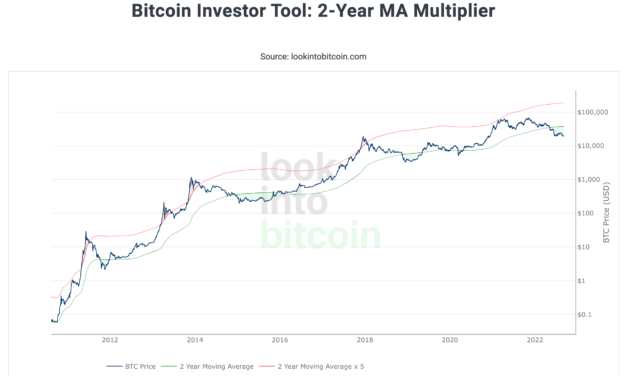
Bitcoin (BTC) has been in a rut, and BTC’s price is likely to stay in its current downtrend. But like I mentioned last week, when nobody is talking about Bitcoin, that’s usually the best time to be buying Bitcoin. In the last week, the price took another tumble, dropping below $19,000 on Sept. 6 and currently, BTC bulls are struggling to flip $19,000–$20,000 back to support. Just this week, Federal Reserve Chairman Jerome Powell reiterated the Fed’s dedication to doing literally whatever it takes to combat inflation “until the job is done,” and market analysts have increased their interest rate hike predictions from 0.50 basis points to 0.75. Basically, interest rate hikes and quantitative tightening are meant to crush consumer demand, which in turn, eventually leads to a decrease in the cost of goods and services, but we’re not there yet. Additional rate hikes plus QT are likely to push equities markets lower and given their high correlation to Bitcoin price, a further downside for BTC is the most likely outcome. So, yeah, there’s not a strong investment thesis for Bitcoin right now from the perspective of price action and short-term gains. But what about those who have a longer investment horizon? Let’s quickly review 3 charts that suggest investors should be buying Bitcoin. Bitcoin investor tool: 2-year MA multiplierBitcoin’s price is currently 72% down from its all-time high at $69,000. In the previous bear markets, BTC’s price saw a 55% correction (July 21), a 71% drop by March 2020 and an 84% correction in December 2018. While brutal to endure, the current 72% correction is not outside of the norm when compared to previous drawdowns from all-time highs. Bitcoin 2-year moving average multiplier. Source: LookIntoBitcoinComparing this drawdown data against the 2-year MA multiplier, one will notice that the price dropped below the 2-year moving average, carved out a trough and then consolidated for multiple months before resuming the 12-year-long uptrend. These areas are the “shaded” zones below the green two-year moving average. Zooming in on the right side of the chart, we can see that price is again below the 2-year moving average, and while there is no sign of a “trough” being dug, if historicals are to be relied upon, the price is currently in what could be described as a consolidation zone. The golden ratio multiplierAnother interesting moving average and Fibonacci sequence-based indicator that suggests Bitcoin’s price is undervalued is the golden ratio multiplier. According to LookIntoBitcoin creator Philip Swift:“The chart explores Bitcoin’s adoption curve and market cycles to understand how price may behave on medium to long term time frames. To do this, it uses multiples of the 350 day moving average (350DMA) of Bitcoin’s price to identify areas of potential resistance to price movements.” Swift further explained that “specific multiplications of the 350DMA have been very effective over time at picking out intracycle highs for Bitcoin price and also the major market cycle highs.” Essentially, the indicator is: “An effective tool because it is able to demonstrate when the market is likely overstretched within the context of Bitcoin’s adoption curve growth and market cycles.”Bitcoin golden ratio multiplier. Source: LookIntoBitcoinCurrently, BTC’s price is below the 350DMA and similar to the 2-year MA multiplier. Dollar-cost-averaging into extreme lows has proven to be a wise method for building a Bitcoin position. BTC/USDT 1 week chart. Source: TradingViewTaking a look at Bitcoin’s one-week relative strength index (RSI) also shows that the asset is nearly oversold. When comparing the weekly RSI to BTC’s candlestick chart, it’s clear that accumulation during oversold periods is also a profitable tactic. Related: A bullish Bitcoin trend reversal is a far-fetched idea, but this metric is screaming ‘buy’Bitcoin’s MVRV Z-scoreAn on-chain indicator called the MVRV recently hit its lowest score since 2015. The metric is essentially a ratio of BTC’s market capitalization against its realized capitalization, or in simpler terms, the amount people paid for BTC compared to the asset’s value now.According to Jarvis Labs analyst “JJ,” Bitcoin’s MVRV (market capitalization versus realized capitalization) indicator is printing a reading that is extremely low, and the analyst elaborated: Bitcoin price versus MVRV difference. Source: Jarvis LabsThe MVRV Z-score provides insight into when Bitcoin is undervalued and overvalued relative to its fair price. According to analytics firm Glassnode, “when market value is significantly higher than realized value, it has historically indicated a market top (red zone), while the opposite has indicated market bottoms (green zone).” Bitcoin MVRV Z-Score. Source: GlassnodeLooking at the chart, compared against BTC’s price, the current -0.16 MVRV score is in the same range as previous multi-year and cycle bottoms for Bitcoin’s price. A pure interpretation of the data would suggest that Bitcoin is in the midst of a bottoming process and possibly entering the early stages of accumulation.Of course, its price could drop much further, and the bearish factors that are battering equities markets will likely also continue to impact crypto prices, so none of the indicators mentioned above should be relied on as the solitary rationale for investing. The crypto market is in bad shape, and that seems unlikely to change in the short term, but timing market bottoms is also impossible for most traders. So, what investors should look for is confluence among a variety of metrics and indicators that align with one’s thesis. At the moment, most of Bitcoin’s on-chain metrics and technical analysis indicators suggest sensible dollar-cost-averaging into a manageable position. The key is risk management. Don’t invest more than you can afford to lose, and you won’t have to worry about losing your shirt.This newsletter was written by Big Smokey, the author of The Humble Pontificator substack and resident newsletter author at Cointelegraph. Each Friday, Big Smokey will write market insights, trending how-tos, analyses and early-bird research on potential emerging trends within the crypto market.Disclaimer. Cointelegraph does not endorse any content of product on this page. While we aim at providing you all important information that we could obtain, readers should do their own research before taking any actions related to the company and carry full responsibility for their decisions, nor this article can be considered as an investment advice.

Čítaj viac

Is Bitcoin heading to $15K? Why are the markets suddenly pulling back?

In this week’s episode of Market Talks, we welcome Ray Salmond, head of markets at Cointelegraph.The main topic of discussion with Ray will be the recent crypto market pullback and whether there is a possibility of the price of Bitcoin going all the way down to $15K. We take a look at the charts to analyse  the price movements and figure out important price levels to keep an eye on.Some might see the falling crypto prices and see an opportunity, we ask Ray how this market could be a potential opportunity for some. We also get his take on why the price of Bitcoin keeps dropping so consistently. Miners are an integral part of the Bitcoin ecosystem, but what happens when mining Bitcoin is no longer profitable and miners start to go into huge losses? Will we see a capitulation event? What will that do to the price of Bitcoin and the whole crypto market? We try to get a sense of the Bitcoin miners sentiment.The Ethereum (ETH) merge is all over the news recently, we can Ray’s insights about the matter and whether his outlook is bearish or bullish. Also, what’s his strategy for trading the merge? The markets are getting increasingly volatile at the moment and you might be wondering what is the best strategy right now, buy, sell, hodl or trade? Make sure you stay till the end of the show to find out.Tune in to have your voice heard. We’ll be taking your questions and comments throughout the show, so be sure to have them ready to go.Market Talks with Coffee ‘N’ Crypto’s Tim Warren streams live every Thursday at 12 pm ET (4:00 pm UTC). Each week, we feature interviews with some of the most influential and inspiring people from the crypto and blockchain industry. So, be sure to head on over to Cointelegraph’s YouTube page and smash those like and subscribe buttons for all our future videos and updates.

Čítaj viac

Will the Ethereum Merge crash or revive the crypto market? | Find out now on The Market Report

On this week’s “The Market Report” show, Cointelegraph’s resident experts discuss the Ethereum merge and how it might impact the crypto marketTo kick things off, we broke down the latest news in the markets this weekSurge or purge? Why the Merge may not save Ether price from ‘Septembear’. Options data, macroeconomic catalysts and technical signals suggest a decline in Ether price is on the table despite the Merge. Ethereum’s native token, Ether (ETH), is not immune to downside risk in September after rallying approximately 90% from its bottom of around $880 in June. Can Ethereum prove analysts wrong and break out in price following the merge or has the price already been factored in and we’ve already seen the price spike for the end of this year?ETH Merge: CoinGecko co-founder shares strategy for forked tokens. Many believe that after Ethereum transitions to proof-of-stake (PoS), a faction of Ether (ETH) miners will be creating a proof-of-work (PoW) fork of the network so that they can still keep mining. An executive believes that there are ways for ETH holders to take advantage of this upcoming event. Different people are expecting to trade the merge very differently to take advantage, our experts highlight some of their plans, let us know how you will be doing things in the comments sections.Ethereum gone wrong? Here are 3 signs to keep an eye on during the Merge. The assumption that Ethereum will just transition to a fully functional proof-of-stake (PoS) network after the Merge somewhat ignores the risk and effort necessary to move an asset that has a $193 billion market capitalization and 400 decentralized applications (DApps). That is precisely why monitoring vital network conditions is essential for anyone willing to trade the event. Our very own Marcel Pechman lays down 3 things to keep an eye on during the merge.Next up is a new segment called “Quick Crypto Tips,” which aims to give newcomers to the crypto industry quick and easy tips to get the most out of their experience. This week’s tip: Learn when to step aside.Market expert Marcel Pechman then carefully examines the Bitcoin and Ether (ETH) markets. Are the current market conditions bullish or bearish? What is the outlook for the next few months? Pechman is here to break it down. The experts also go over some markets news to bring you up to date on the latest regarding the top two cryptocurrencies.Lastly, we’ve got insights from Cointelegraph Markets Pro, a platform for crypto traders who want to stay one step ahead of the market. The analysts use Cointelegraph Markets Pro to identify two altcoins that stood out this week: Lido DAO Token’s LDO and Firo’s FIRO.Do you have a question about a coin or topic not covered here? Don’t worry. Join the YouTube chat room, and write your questions there. The person with the most interesting comment or question will be given a one-month subscription to Markets Pro worth $100.The Market Report streams live every Tuesday at 12:00 pm ET (4:00 pm UTC), so be sure to head on over to Cointelegraph’s YouTube page and smash those like and subscribe buttons for all our future videos and updates.

Čítaj viac

3 ways to trade Bitcoin and altcoins during a bear market

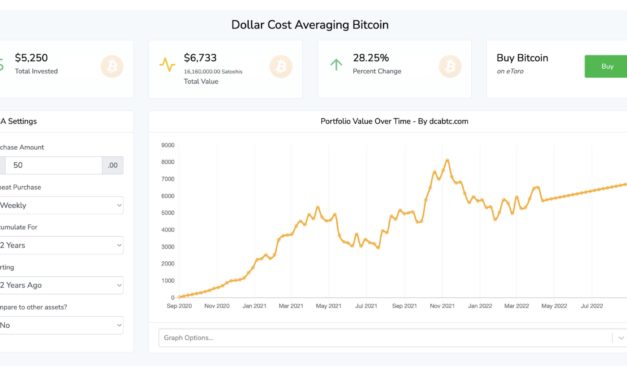
Markets are scary right now, and while the situation is likely to worsen, it doesn’t mean investors need to sit out and watch from the sidelines. In fact, history has proven that one of the best times to buy Bitcoin (BTC) is when no one is talking about Bitcoin.Remember the 2018–2020 crypto winter? I do. Hardly anyone, including mainstream media, was talking about crypto in a positive or negative way. It was during this time of prolonged downtrend and lengthy sideways chop that smart investors were accumulating in preparation for the next bull trend. Of course, nobody knew “when” this parabolic advance would take place, but the example is purely meant to illustrate that crypto might be in a crab market, but there are still great strategies for investing in Bitcoin. Let’s take a look at three. Accumulation via dollar-cost averagingIt’s helpful to be price agnostic when it comes to investing in assets over the long term. A price agnostic investor is immune to fluctuations in value and will identify a few assets that they believe in and continue to add to the positions. If the project has good fundamentals, a strong, active use case and a healthy network, it makes more sense to just dollar-cost average (DCA) into a position.Take, for example, this chart from DCA.BTC. Results of weekly dollar cost averaging into Bitcoin. Source: DCA.BTCInvestors who auto-purchased $50 in BTC weekly over a two-year span are still in profit today, and by DCA, there is no need to make trades, watch charts, or subject oneself to the emotional stress that is associated with trading. Trade the trend and go long off extreme lowsAside from steady, reasonably sized dollar-cost averaging, investors should be building a war chest of dry powder and just sitting on their hands waiting for generational buying opportunities. Entering the market when it’s deeply oversold and all metrics are in extreme is typically a good place to open spot longs but with less than 20% of one’s dry powder. When assets and price indicators are two or more standard deviations away from the norm, it’s time to start looking around. Some traders zoom out to a three-day or weekly time frame to see when assets correct to higher time frame support levels or previous all-time highs as a sign to invest. 200-week moving average heatmap for Bitcoin. Source: LookIntoBitcoinOthers look for price to flip key moving averages like the 118 DMA, 200 WMA and 200 DMA back to support. On-chain fanatics typically follow the Puell Multiple, MVRV Score, Bitcoin Pi indicator or Realized Price indicator to see when extreme multi-year lows are hit as a sign of when to buy. Either way, opening spot longs during extreme sell-offs usually turns out to be a good swing trade or even entry point for a multi-year-long position. Related: Wen moon? Probably not soon: Why Bitcoin traders should make friends with the trendDo nothing, until the trend changesTrading during a bear market is hard, and capital and portfolio preservation are the top priorities. For this reason, it’s best for some investors to just wait for confirmation of a trend change. As the saying goes, “the trend is your friend.” Everyone is a genius and a superb trader during a bull market, so if that was you, then wait for the next bull trend to roll around and go be a happy-go-lucky genius then. Downtrends, consolidation and bear markets are notorious for chopping up traders and reducing one’s portfolio size, so it’s unwise to trade against the trend unless one has a PNL positive method for trading during bear trends and some skill at shorting. For crypto investors, it’s important not to live in a vacuum and keep an eye on the equities markets. Crypto traders have a tendency to only focus on crypto markets, and this is a mistake because equities markets and BTC and Ether (ETH) prices have shown a strong correlation in the past two years. In one’s charting suite of choice, it would be wise to keep the S&P 500, Dow Jones or Nasdaq charts up alongside BTC’s or ETH’s daily chart. Bitcoin correlation to equities markets. Source: TheBlockIn the most recent trend reversal, BTC’s price action was the canary in the coal mine that began to chirp louder and louder as the United States Federal Reserve amplified its intent to raise interest rates. It is easy to be misled by the minuscule moves that occur in Bitcoin’s four-hour and daily price charts, and one could easily be lured into some hefty positions based on the belief that BTC is on the verge of a reversal. Keeping an eye on the market structure and price action of the largest equities indexes will provide crucial insight into the strength and duration of any bullish or bearish trend that Bitcoin might exhibit. This newsletter was written by Big Smokey, the author of The Humble Pontificator Substack and resident newsletter author at Cointelegraph. Each Friday, Big Smokey will write market insights, trending how-tos, analyses and early-bird research on potential emerging trends within the crypto market.Disclaimer. Cointelegraph does not endorse any content of product on this page. While we aim at providing you all important information that we could obtain, readers should do their own research before taking any actions related to the company and carry full responsibility for their decisions, nor this article can be considered as an investment advice.

Čítaj viac

Získaj BONUS 8 € v Bitcoinoch

nakup bitcoin z karty

Registrácia Binance

Burza Binance

Aktuálne kurzy