
Autor Cointelegraph By Cointelegraph Research

How will GameFi and P2E blockchain gaming evolve in 2022? Report

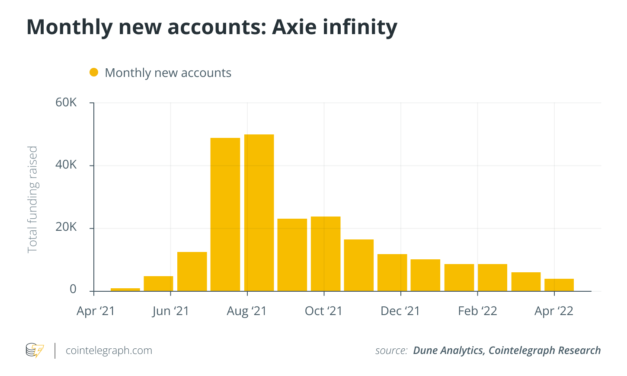
Crypto gaming has grown in popularity as more players collect and trade digital assets, generating a dependable income for game developers and creating value for players. In a recently published report, Cointelegraph Research shows how Axie Infinity gamers in the Philippines were able to earn their regular monthly salary in 2020 simply by playing the game, at a time when measures to prevent the spread of the COVID-19 pandemic brought economic hardship to the country.Axie Infinity is a powerhouse of play-to-earn (P2E) blockchain gaming, not unlike Bitcoin’s (BTC) status as the powerhouse of cryptocurrencies. Like Bitcoin, it has the eyes of the mainstream public, is a target for competitors, and is not a stranger to controversy, with the Ethereum sidechain developed for the game recently hacked for 173,600 Ether (ETH) and 25.5 million USD Coin (USDC), worth more than $612 million at the time. As bears take hold of the crypto market and nonfungible token (NFT) floor prices decline, game finance, or GameFi, shows signs of resilience and maturity despite the overall negative market sentiment. Gameplay is important for future growthCointelegraph Research assessed five of the most popular P2E games — Axie Infinity, Splinterlands, Bomb Crypto, Alien Worlds and DeFi Kingdoms — in a 30-plus page report published in May titled “GameFi: Can blockchain-based gaming redefine the industry?” The gameplay in each game will not blow a veteran console gamer away. They are very different experiences than, say, Call of Duty. Download the full report here, complete with charts and infographics But players can still have a thoroughly enjoyable experience playing blockchain games, as is clearly shown by the number of users. GameFi development is still in its early days, and games will evolve to be more visually attractive and dynamic in the future. Like all downturns, the current bear market can be a conduit for innovation and development. GameFi is poised to take advantage of this, and recent events show confidence in the future of blockchain gaming, with Immutable X raising $200 million for game development in a recent fundraising round. Nevertheless, blockchain game developers will continue to face the challenge of adding new users. Despite Axie Infinity’s explosive 2021, the current year paints a much more modest picture, with a steady decline in monthly new accounts added.The five titles assessed in the GameFi report do a great job making crypto and NFT investing fun, and Cointelegraph Research’s report looks at their entry cost, playing modes, overall strategic difficulty and in-game mechanics to arrive at a gameplay score for each title.With Axie Infinity almost entirely dependent on new players putting fresh money into the game, diminishing new player growth could send the project’s whole economy into a recession. Keeping a focus on gameplay development will assist the GameFi sector in reaching a larger audience.High-quality games that incorporate blockchain-powered economiesThere are examples of successful non-blockchain game economies, but few of them have achieved the growth and scale of Axie Infinity and Splinterlands. Before the emergence of GameFi, in-game virtual assets were often viewed as inherently worthless, outside of brief periods of popularity among users. GameFi differentiates itself from non-blockchain gaming with a key feature: property rights.Blockchains and their underlying technologies enable game developers to offer users a secure way to prove ownership and transact with one another. Blockchain technology also allows for freedom of pricing and exchange, including of the game’s materials and currency.Ultimately, great gameplay and strong in-game economies with a high degree of economic freedom can help GameFi weather the difficult market conditions of 2022 and continue to attract new users. The marriage between gaming and decentralized finance opens a world of previously unheard-of possibilities for many gamers, allowing them to earn a living playing high-quality, enjoyable games.This article is for information purposes only and represents neither investment advice nor an investment analysis or an invitation to buy or sell financial instruments. Specifically, the document does not serve as a substitute for individual investment or other advice.

Čítaj viac
Cointelegraph Research launches venture capital database

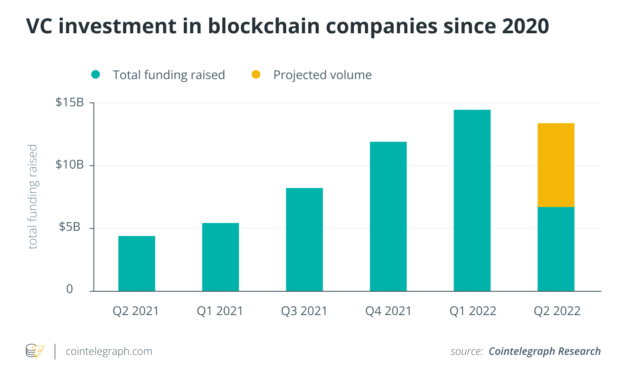
Despite the generally negative price action across the crypto industry, continued venture capital investments in the space indicate that the industry is healthy and continues to evolve. Cointelegraph Research’s new venture capital database tracks the activity of VC firms and gives users access to the most important bellwether of innovation and early-stage activity.Macroeconomic factors have been strangling the crypto economy over the past few weeks and are stoking fears of a prolonged downturn. After the United States Federal Reserve announced it would hike interest rates by 50 basis points, crypto prices went into freefall. Then on May 9, a black swan event affected the Terra ecosystem and wider space when the algorithmic stablecoin TerraUSD (UST) lost its one-to-one peg to the U.S. dollar.Nonetheless, VC investment in the industry appears to continue undisturbed. So far, Q2 2022 has seen $6.8 billion in venture capital investment. This number may remain on track to match the uptick seen in the previous quarter.Yet, this should not be taken as an indicator of imminent recovery across the crypto market. VC investments and returns have historically shown extraordinarily weak correlations with both crypto and traditional assets. Depending on the funding stage, it can take years for companies receiving investments to break even, despite the outsized annualized returns that blockchain venture capitalists have achieved recently.VC investors are in it for the long term when funding a project, and private equity investment does not strongly affect the price movements of publicly traded assets. Instead, activity by VC actors should be taken as a long-term indicator of the level of innovation in the space. Continued investment in startups working on Web3, decentralized finance (DeFi), infrastructure and nonfungible tokens (NFTs) proves that the blockchain industry is still a young, dynamic space — one that is rapidly evolving to adapt to technical challenges.Cointelegraph Research has put together an industry-leading database that documents this development. It keeps track of all publicly announced VC funding rounds and contains over 5,000 records of venture capital deals in blockchain made over the past 10 years.Purchase the VC database on the Cointelegraph Research TerminalNot only does this data provide valuable insight into the level of innovation and future potential of the space, but it also gives early cues regarding potential projects to invest in. VC investors have a nose for promising technologies and are known for spotting auspicious projects long before their coin pumps and hits the mainstream news.Occasional triple-digit annualized returns are solid evidence of this. To start exploring the darlings of private equity and take advantage of our extensive database of deals, visit the Cointelegraph Research Terminal. The VC database is available for preview and purchase alongside cutting-edge industry reports on DeFi, NFTs, GameFi, mining and more.Some of the notable VC deals that have already taken place this quarter include Indian crypto trading platform CoinDCX raising $135 million in a Series D funding round, with significant contributions from Pantera Capital and Steadview. Stablecoin issuer Circle, which backs USD Coin (USDC), closed a round for $400 million after partnering with big names from traditional finance. In late April, Near Protocol — an up-and-coming carbon-neutral smart contract blockchain that integrates with Ethereum, Polkadot and Cosmos — raised $350 million for its ecosystem. There are no strong signs that VC activity is slowing, which indicates that despite the current price uncertainty, the crypto space may not face an innovation winter.This article is for information purposes only and represents neither investment advice nor an investment analysis or an invitation to buy or sell financial instruments. Specifically, the document does not serve as a substitute for individual investment or other advice.

Čítaj viac
Cointelegraph Research Terminal launches, home to critical crypto data reports

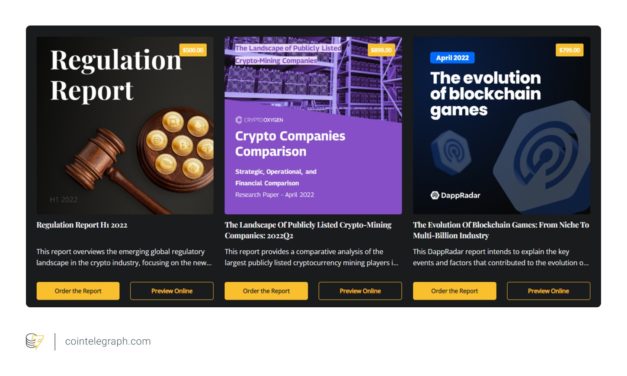
Cointelegraph — one of the oldest crypto media companies, founded in 2013 — has launched the Cointelegraph Research Terminal. The Research Terminal will be a convenient one-stop location to find past industry analysis, premium research reports and access to exclusive databases. The website is live, and subscriptions to the premium features are active.Cointelegraph Research has produced some of the best in-depth analyses on the blockchain and crypto industry, hitting on trends before they land in the mainstream. One of the Cointelegraph Research Terminal’s most recent public reports is on game finance, asking: “GameFi: Can blockchain-based gaming redefine the industry?” Being ahead of the curve in the dynamically evolving crypto space can be tough, but Cointelegraph Research has found a solution to help alleviate this problem: the Cointelegraph Research Terminal. The Research Terminal Cointelegraph aims to unite the hard-won experience of cryptocurrency expertise with talent from across the fields of finance, economics and technology to bring to the market the premier source for industry reports and insightful analysis. The Cointelegraph Research Terminal will be a one-stop-shop that will begin by focusing on three major areas but has plans for more as time goes on. The three areas of initial focus will be to provide collections of previous research reports, access to current premium reports, and permissions to databases with up-to-date information on all areas of the crypto space. Public reports Cointelegraph Research has been producing reports since 2020 on a myriad of topics that can provide insights for the discerning investor. The Research Terminal will make all of these previously created reports available to subscribers. Reports such as “Security Token Report,” “Polkadot: The Bedrock of the New Web,” “Does the Future of Decentralized Finance Still Belong to Ethereum?” and “Nonfungible Tokens: A New Frontier” are just a few examples of the variety of subjects that will be available in the Cointelegraph Research Terminal. The overwhelming feedback from clients was that they wanted even more, which was part of the impetus to create the new services found in the Cointelegraph Research Terminal, such as premium reports.Premium reports In addition to past publications, the Cointelegraph Research Terminal will provide access to premium reports found nowhere else. A great example of such is “Landscape of Publically Listed Crypto-Mining Companies,” which covers 12 of the largest publicly traded crypto mining companies from Q1 2022 and provides unparalleled insights. Another example is the “Regulations Report,” which covers what happened to the crypto industry globally in the first half of 2022, along with expert insights into how the crypto landscape will be impacted. These premium reports stay ahead of trends and are written by a staff of educated, knowledgeable individuals who can provide industry insights in practical ways. Expansive database Each quarter, the Cointelegraph Research Terminal publishes a public Venture Capital Report, providing a high-level overview of the activities going on behind the scenes in the crypto industry. However, in between publications of this and other reports, there is a lag time. It is the nature of any news source or reporting. But what if someone wants the data before the next report is produced? The Research Terminal has that covered with access to the databases. This will allow interested parties to look up information across the crypto space, including merger and acquisition deals, which investors made which deal, what investors have in their portfolio, what sectors are trending, what protocols are receiving the most backing, historical price action of different blockchains and so much more. The subscriber may dive as deeply into the data as they want at any time. There is also a Regulatory Database that is designed to show the actions of regulators and law enforcement agencies on companies and individuals that operate within the digital assets market. These databases are important for institutions, offices, funds and firms to stay on top of. Why Cointelegraph’s Research Terminal?One of the most valuable assets a person has is time. The Cointelegraph Research Terminal allows the reader to save that precious time by coming to a singular location and having the entire crypto and blockchain space at their fingertips. Cointelegraph is properly positioned to bring clients the best-in-class research to keep informed and with a competitive advantage in the ever-changing crypto landscape. The Cointelegraph Research Terminal aims to provide the best quality information and research available to subscribers in a convenient package that saves them time while providing valuable market insights. Historical and current premium reports, along with relevant databases, make the Cointelegraph Research Terminal a must-read website for serious crypto participants. Check out the website here and follow Cointelegraph Research on Twitter, LinkedIn and Telegram to receive the latest updates to the Cointelegraph Research Terminal.This article is for information purposes only and represents neither investment advice nor an investment analysis nor an invitation to buy or sell financial instruments. Specifically, the document does not serve as a substitute for individual investment or other advice.

Čítaj viac
Crypto needs regulation but should be done right: Report and database

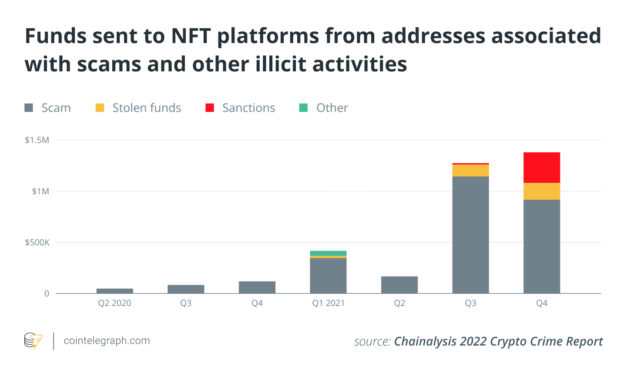
Regulatory attitudes toward crypto are constantly evolving, often at a slower pace than the crypto industry itself. Institutions and the broader public will not seriously consider working with cryptocurrencies without clear and comprehensive regulation. Furthermore, the industry suffers from widespread scams, phishing and hacks that very often have no legal repercussions. This bolsters the audacity of wrongdoers and augments the image of crypto as an arena for shady characters.Download the full report here, complete with charts and infographicsIn a new report, Cointelegraph Research provides an assessment of regulations around stablecoins, nonfungible tokens (NFT) and a general overview of developments since the close of 2021. A new database of regulations, updated on a weekly basis, covers all updates in the industry. NFTs and stablecoins catch policymakers sleepingThe NFT boom of 2021 jolted governments and international organizations into action. With over $9 billion in NFT sales on Ethereum, the emergence of a well-defined regulatory landscape for NFTs is crucial for the market’s sustainable development in the future. The NFT market accounted for $1.5 million in illicit activities in the last quarter of 2021 alone. Although this is minuscule compared to the scale of money laundering happening elsewhere, it marks a detrimental trend that may continue into 2022.In both the United States and the United Kingdom, authorities have failed to introduce clear guidelines on NFTs, with some uncertainty on how to classify the asset class, although NFT issuers and marketplaces may be required to comply with Anti-Money Laundering and Know Your Customer practices.Cointelegraph Research records all the regulatory events worldwide on a weekly basis in its Regulations Database. Access the Cointelegraph Research Regulation Database hereStablecoins, similarly to NFTs, caught policymakers off guard. Stablecoin supply increased fivefold from $26 billion at the start of 2021 to $164 billion at the end of 2021. The growth continues into 2022, with the aggregate supply expanding by 6.8% in the first six weeks of the year. The Financial Stability Board, an international body that coordinates the efforts of financial regulators on a global scale, has called for action on stablecoins in its 2020 and 2021 reports and has set July 2022 as a preliminary deadline for establishing regulatory frameworks in national jurisdictions. Stablecoin regulation is further complicated by the emergence of decentralized U.S. dollar-pegged stablecoins that are uncollateralized such as TerraUSD (UST), with no “one size fits all” solution for regulators.Governments are playing catch-upThe report also dives deep into developments throughout H1 2022. Another sector covered is central bank digital currencies. With progress on CBDCs in no less than 91 countries around the world, governments are awakening to the potential of digital currencies. The future marches on, and lawmakers have significant work to do to bring regulations to the floor that foster innovation but allow the mainstream adoption of digital assets. CBDCs could result in enhanced tax compliance and better tracking of financial transactions but could severely hinder cryptocurrency adoption and even replace some decentralized digital currencies outright because they profit from the stability and trust government bodies inspire in many consumers. Anyone interested in crypto, blockchain, and the industry’s future is welcome to read this report and access the regulation database that tracks the latest developments. Crypto needs regulation, but it has to be the right kind. With forward-looking regulation that makes sure progress can happen, and governments foster innovation, cryptocurrencies can truly fulfil their promise of a more equitable future and a renewal of the financial system.This article is for information purposes only and represents neither investment advice nor an investment analysis or an invitation to buy or sell financial instruments. Specifically, the document does not serve as a substitute for individual investment or other advice.

Čítaj viac

Over 20 investment funds hold Dash, and 40 more plan to add it: Report

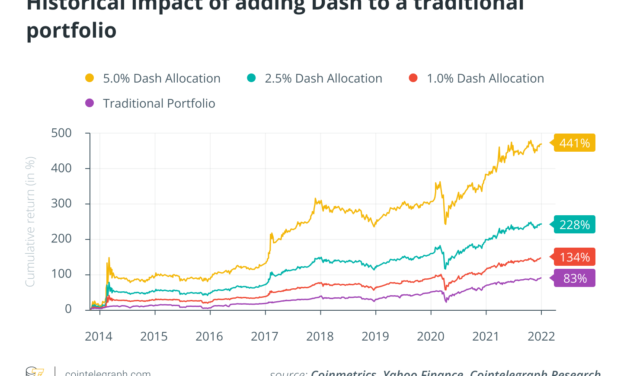
Cointelegraph Research conducted a first-of-its-kind survey querying over 2,000 global crypto funds and certificates to gain an insight into their investment allocations during 2021. The survey was conducted via email between March 2021 and December 2021. The 200 funds that responded collectively managed approximately $1.2 billion in cryptocurrency and blockchain investments.Interestingly, the study found that 20 surveyed asset allocators already have exposure to Dash in their portfolio, including Valkyrie, Parallax Digital, Block Ventures, INDX Capital and others. An additional 40 funds reported that they wanted to invest in Dash during the next 12 months, and 70% of respondents requested to receive the final results of Cointelegraph’s Dash investment thesis report.Download the full report, complete with charts and infographicsDash aims to solve the blockchain scaling problem while remaining decentralized by combining the proof-of-work and proof-of-stake consensus mechanisms. According to Cointelegraph Research, Dash’s average transaction fee in 2021 was $0.005, compared with Ethereum’s $21.90 and Bitcoin’s $10.30. Users can benefit from Dash’s instant transactions when paying at merchants in several countries, and its staking rewards and historical financial performance compared with other assets have been impressive. 2022 marks an important milestone in Dash’s evolution, as the mainnet launch of Dash Platform will enable developers and users to embrace the benefits of decentralized applications. Cointelegraph Research’s new report analyzes Dash and its main functionalities and developments in recent years. The cryptocurrency has been used for everyday payments since its launch in 2014, utilizing technological advancements to provide users with secure transactions and store-of-value features. The report provides information for investors and potential users who wish to learn more about Dash. In addition to covering Dash’s vision and general features, the report includes a deep dive into its tokenomics along with its price performance and regulation. The report also discusses how Dash continues to innovate, having evolved from a scalable payment solution to a Web3 ecosystem.With its launch, Dash wanted to offer digital payment solutions to clients across the globe. It attempts to set itself apart from other cryptocurrencies with easy, secure, fast payment technology. Together with retail partners on several continents, Dash now offers easy access to digital cash for payment purposes.Highlights of Cointelegraph’s Dash reportCointelegraph Research’s 80-plus-page report explores Dash’s unique features as a payment solution in addition to its role as an investment asset. Together with Allnodes, Staking Rewards, CryptoRefills, CoinRoutes, IntoTheBlock, Bitwise, Santiment and Rekt Capital, Cointelegraph Research presents the facts and figures regarding all aspects of Dash, including the ways to invest in it. The report describes how Dash’s masternode solution has helped improve the network’s scalability and also sheds some light on the regulatory environment for it and other cryptocurrencies in the world’s largest jurisdictions. Exclusive interviews with Fred Pye, Leah Wald, Michael Holstein and others highlight Dash’s recent partnerships and present further insights on how it can continue to be a promising technology in the world of cryptocurrencies.In the report, Mark Mason, Dash’s marketing and business development manager, tells Cointelegraph Research that “Dash makes everyday payments simple by removing dependency on banks or third parties. You can send any amount of Dash to anyone, anytime, anywhere directly to the recipient instantly without relying on a centralized authority.”Additionally, Cointelegraph Research’s new study shows that any amount of Dash can improve a traditional equity and bond portfolio, considering not only cumulative return but also the Sharpe ratio. Low correlation to traditional asset classes such as equities and gold can also offer benefits for investors’ risk management.Institutional interest in Dash?In 2021, Valkyrie launched the first regulated financial vehicle aimed at institutional investors interested in Dash. The Valkyrie Dash Trust enables investors to gain exposure to the cryptocurrency without having to worry about custody and security. Other providers, such as 3iQ Corp — Canada’s largest digital asset investment fund manager, with more than 2.5 billion CAD ($1.9 billion) in assets under management — may also be interested in launching similar products.Fred Paye, chairman and CEO of 3iQ Corp, commented on Dash in an exclusive interview for the report: “Dash is extremely innovative, as it combines battle-tested historical security with some important evolutions in privacy, technical efficiency and incentive mechanics of the traditional Bitcoin model.”This article is for information purposes only and represents neither investment advice, investment analysis nor an invitation to buy or sell financial instruments. Specifically, the document does not serve as a substitute for individual investment or other advice.

Čítaj viac

Získaj BONUS 8 € v Bitcoinoch

nakup bitcoin z karty

Registrácia Binance

Burza Binance

Aktuálne kurzy