
Autor Cointelegraph By Cointelegraph Consulting

Algorithmic, fiat-backed or crypto-backed: What’s the best stablecoin type?

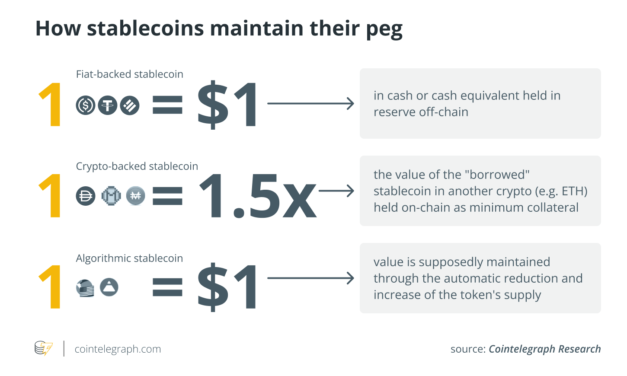
TerraUSD (UST) flipping BinanceUSD (BUSD) for the third spot in the market capitalization list didn’t last long. The once-mighty stablecoin that powers the entire Terra ecosystem finds itself reduced to “Terra is more than UST” tweets. While no one knows for sure if LUNA can stage a comeback, UST will certainly go down as one of the algorithmic stablecoins that went kaput in the same fashion as Basis Cash — which Terra creator Do Kwon was allegedly a part of — and Mark Cuban-backed Iron Finance.UST’s failure begs the question if algorithmic stablecoins are truly just doomed to fail? And, is fiat-backed or crypto-backed stablecoin the only way investors can find the most “stable” way to shield themselves from the crypto market’s volatility?Pros and cons of different stablecoinsBy now, most are aware of the types of stablecoins such as fiat-backed stablecoins, crypto-collateralized stablecoins and algorithmic stablecoins. There are also other types of stablecoins like commodity-backed and seigniorage, but the three mentioned above are the most popular. Users have their reasons for preferring one kind of stablecoin over another. For instance, some prefer to use algo stablecoins because of their decentralized narrative. Others would go for fiat-backed cryptocurrencies like Tether (USDT) and USD Coin (USDC), even though they are centralized due to the private firms that maintain the equivalent fiat reserves of each issued token. Still, an advantage of fiat-backed coins is there is an actual asset backing the coin. The stability of its peg will remain as long as there are verifiable holdings of such fiat reserves. Still, the most obvious risk here is a bank run scenario, which for Tether might be troublesome considering how it is largely exposed to commercial paper. Commercial papers are issued by large corporations and are a type of unsecured debt that can have a maturity of more than 270 days. A large number of redemption can render Tether insolvent, which is why it has slashed its commercial paper holdings over the last six months.Crypto-collateralized stablecoins like Dai (DAI), on the other hand, are backed by an excess supply of another cryptocurrency, in this case, Ether (ETH). DAI requires a minimum 150% collateralization ratio, meaning that the dollar value of ETH deposited in a smart contract must at least be worth 1.5 more than the DAI being borrowed. For example, for a user to borrow $1,000 worth of DAI, they have to lock in $1,500 of Ether. If the market price of Ether drops to the point where the minimum collateralization ratio is no longer met, the collateral is automatically paid back into the smart contract to liquidate the position.The case of USTStablecoins are, of course, meant to retain their value to their peg. However, what happened to UST was remarkably unprecedented and even threatened the collapse of the entire market. UST is a hybrid between an algo stablecoin and a crypto-collateralized stablecoin. When the price of UST moves above its dollar peg, users are incentivized to burn $1 worth of LUNA for UST to sell at a profit. When UST falls below the peg, users can burn UST in exchange for a discounted LUNA. It became crypto-backed since the Luna Foundation Guard acquired great amounts of Bitcoin (BTC) collateral as a contingency plan. This, as it turned out, was ineffective, and the last few holdings of BTC and other assets were allocated to smallholders as compensation.Terra’s collapse started with the large withdrawals on Anchor Protocol on May 8. Millions of UST were pulled out from the protocol and quickly sold, causing a downward spiral. What ensued was more panic. The algorithm eventually couldn’t respond quickly enough — by burning LUNA — to the rapid decline of UST’s value. In hindsight, the evidence was apparent since the primary demand for UST was only derived from the demand in Terra’s Anchor Protocol. The low trading volume of UST suggests that users are more interested in keeping it in the protocol than actually utilizing it for trading.DAI holding steadyAmid the panic, with Tether even briefly losing its peg to the United States dollar, DAI had actually remained relatively stable. At one point, USDT dropped to about $0.994 on May 9, while DAI rose to $1.001. DAI has even been hailed recently as “the” true decentralized stablecoin.Having existed since 2017, DAI has survived many extreme conditions in the market, which no algo stablecoin has ever managed to do. Yet, there can never be a shortage of risk, especially in the crypto market.Cointelegraph’s Market Insights Newsletter shares our knowledge on the fundamentals that move the digital asset market. The newsletter dives into the latest data on social media sentiment, on-chain metrics and derivatives.We also review the industry’s most important news, including mergers and acquisitions, changes in the regulatory landscape, and enterprise blockchain integrations. Sign up now to be the first to receive these insights. All past editions of Market Insights are also available on Cointelegraph.com.

Čítaj viac
Is Bitcoin price optimism fading after the crypto market’s rocky April?

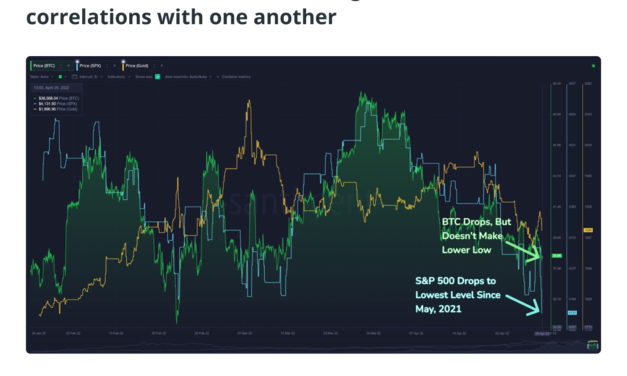
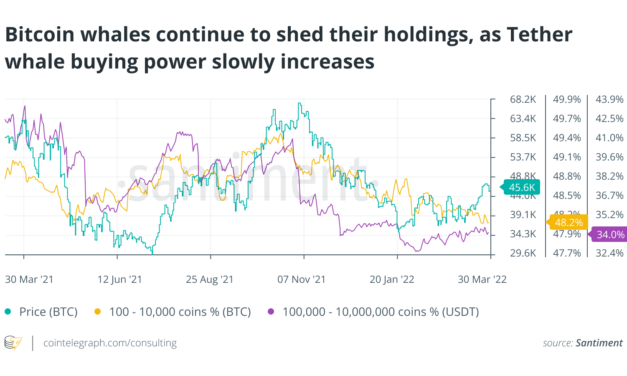
Bitcoin (BTC) topped out at around $46,000 on April 4 before freefalling back to $38,000, causing much frustration among crypto traders who have been so used to the market’s unreal returns in the past two years after the March 2020 crash. February and March showed signs of recovery, especially after the steep declines in December and January. But, the question is, why has the bullish momentum suddenly come to a halt?Continued S&P 500 correlationThe correlation between crypto and equities, particularly Bitcoin and the S&P 500, continues to exist and is expected to last until mid-May when Jerome Powell and the United States Federal Reserve announce a likely 0.5% rate hike to combat inflation.However, this doesn’t necessarily mean that Bitcoin will exhibit further declines. Suppose cryptocurrencies continue to mimic equity price movement and not the other way around. In that case, many speculate that although the S&P 500 has been dropping lately, rate hike fears would likely have been baked in ahead of the Fed’s scheduled meeting.Bitcoin whales purge, Tether whales surgeThere are two go-to whale tiers crypto data platform Santiment consistently looks at to analyze full-market future price movement: Supply held by addresses with 100 to 10,000 BTC and supply held by addresses with 100,000 to 10,000,000 Tether (USDT).Over the past two months, BTC whales from this key group have dropped 0.6% of their holdings. Meanwhile, the key USDT group has actually added 1.8% of the top stablecoin’s supply.Although large whale addresses have dumped their BTC supply, evidence shows that prices generally rise when more addresses exist that hold 10 to 100,000 BTC. Addresses holding approximately $3.8 million in total have been created or returned to the BTC network since the Russian-Ukrainian war broke out in late February.Traders fooled on dip buy opportunitySantiment has found a reliable trend of the mainstream crowd being incorrect the vast majority of the time when they believe in a price event happening too uniformly. Even with the “buy the dip” narrative in full tilt, the chart below shows that prices didn’t bounce as traders hoped. Ironically, it is often when the crowd abandons any inclination to spot the bottom that prices do begin to recover.Ether whales beginning to show interestSantiment’s Ether (ETH) whale transaction count metric indicates that levels had begun to rise to the same rate of over 1,400 per day that was seen last week when the dip was quickly scooped up. High-value transactions of over $100,000 would likely indicate that top key stakeholders are beginning to circulate their coins at bullish levels.Traders are short heading into MayExchange funding rates are another price direction indicator. When there are excessive longs (bets in favor of prices rising) like what was seen just after the November all-time high, prices tend to correct. However, the opposite trend appears to be taking place right now.Significant short funding rates are evident across multiple exchanges, indicating FUD surrounding the crypto markets is apparent. Generally, when BTC and altcoins are shorted in tandem to this degree, there is a notably higher likelihood of prices rising to force liquidations against those betting against crypto prices rising.It is important to look for capitulation signs as an indicator that a price bottom may finally be in. Currently, there’s no overwhelming evidence of trader fear, but negative funding rates and a few other signals are certainly useful signs.To an extent, a fundamental event like a Fed rate hike may muddle data for a little while longer. But, signs at least appear to be pointing toward the most bullish divergences not seen since a month ago.Cointelegraph’s Market Insights Newsletter shares our knowledge on the fundamentals that move the digital asset market. This analysis was prepared by leading analytics provider Santiment, a market intelligence platform that provides on-chain, social media and development information on 2,000+ cryptocurrencies.Santiment develops hundreds of tools, strategies and indicators to help users better understand cryptocurrency market behavior and identify data-driven investment opportunities.

Čítaj viac

Move-to-earn: An active play-to-earn offshoot

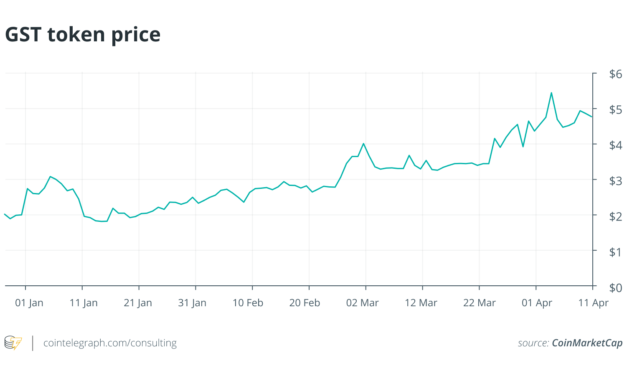
Play-to-earn (P2E) games continue to dominate the crypto industry as more than half of the active wallets tracked by Dappradar have connected to blockchain-based games in the first quarter of 2022. Games like Axie Infinity — even with last month’s catastrophic Ronin bridge hack — Pegaxy, Alien Worlds and others continue to put up millions of dollars in trading volume in the previous 30 days. Despite this, the unsustainability of some P2E games grows more evident in the performance of their tokens. An example is Axie Infinity, whose Smooth Love Potion (SLP) is still at depressing levels, causing further declines in unique wallet addresses that interact with the game for a third straight month. Now, an offshoot of the P2E model called move-to-earn (M2E) has been captivating crypto fans lately. The industry’s new buzzword follows the play-to-earn model but centers on health and fitness, where users are rewarded for their physical activity. Genopets and Dustland Runner are just some projects utilizing the M2E model, but STEPN seems to be attracting the most users at present. STEPN is a Solana-based game that lets users purchase nonfungible token (NFT) sneakers to start playing. When users play the game, the app tracks their movement through the GPS on their mobile phones and rewards them with in-app tokens called Green Satoshi Token (GST). These tokens can later be traded for USD Coin (USDC) or Solana (SOL), allowing users to realize their earnings.What’s the hype all about?The interest around STEPN is due to its governance token Green Metaverse Token (GMT) going parabolic, appreciating 24,500% since its token sale on Binance on March 9. Venture capital firm Sequoia Capital and other Web3 investors have also invested in STEPN, purchasing $5 million worth of GMT in a seed funding round back in January. GMT’s rise can be attributed to its rapid user growth as the larger crypto crowd caught on. For instance, STEPN’s Twitter followers had hit 250,000 when it was just under 50,000 a month ago.Another Axie Infinity in the making?The common criticism of the P2E model is that it exhibits pyramid scheme elements where only the earliest players benefit immensely — and, of course, the game company. This is because newer players buy game assets from earlier players. Then, these newer players sell to even newer players, thus creating an economy where everyone’s profitability hinges largely on incoming players. As a result, token and asset prices decline as the market is overcrowded with sellers.STEPN tries to address these issues via “strong” token sinks. GST is burned whenever a new sneaker is leveled up, minted, or repaired. The repair cost alone is mandatory to prevent a decline in user earnings. It also tries to attach as much intangible value to in game-items such as the social benefits it offers through encouraging physical activity. Another is the aesthetic feel its NFT sneakers provide. STEPN recently partnered with Japanese sportswear brand Asics and launched limited-edition sneakers. Currently, GST trades at $4.41, which is actually a 65% increase from its price at the start of March.Not a cheap game to playHowever, for the average Axie Infinity player, STEPN is not a cheap game to play. Sure, the cost of one Axie perhaps was a couple of hundred United States dollars in 2020, which translates to roughly $600 to build a team and start playing. But, now, the bottom price for an Axie is less than $20. With STEPN, on the other hand, the average floor price of a sneaker, according to Solana NFT marketplace Magic Eden, is 13.67 SOL, or roughly $1,400 at the time of writing. Other popular P2E games also don’t cost as much to start playing compared to STEPN.Free to roamSTEPN is not alone in this new gaming subsector. Genopets is another Solana-based game that is still in its beta phase. It is similar to STEPN but is more of a role-playing game, letting users use physical movement and cognitive exertion to progress in the game and level up their Genopet NFT. Tezos-based Dustland Runner lets users earn DOSE tokens by completing missions through their workouts. However, when it comes to STEPN, the big question is, can it — or the entire M2E space in general — truly avoid the same pitfalls of Axie Infinity and make playing the game more interesting than playing it for cash? In other words, is sustainability in the long run on its side, or is what’s happening now just the initial phases of its hype train?Cointelegraph’s Market Insights Newsletter shares our knowledge on the fundamentals that move the digital asset market. The newsletter dives into the latest data on social media sentiment, on-chain metrics and derivatives.We also review the industry’s most important news, including mergers and acquisitions, changes in the regulatory landscape, and enterprise blockchain integrations. Sign up now to be the first to receive these insights. All past editions of Market Insights are also available on Cointelegraph.com.

Čítaj viac
Crypto prices enjoy a solid March relief rally. But, how and why?

After a rocky start to the new year, March may finally have set the crypto markets back on an upward trajectory. Back in February, news of the war between Russia and Ukraine created significant opportunities for traders to reenter the market at diminished prices. This did not last long, however.The market soon began to recover, and traders who hoped to see Bitcoin (BTC) fall below $40,000 once more were left on the sidelines.Whales remain cautiousOn March 28, Bitcoin rose back above $48,000 after nearly three months of consolidation. But, surprisingly, key stakeholders with 100 to 10,000 BTC held in their wallets have continued to quietly take profit.Whales dumped 178,150 BTC over the course of five months, equating to $8.39 billion at current price levels.Yet, shark and whale Tether (USDT) holders have also dumped $816.4 million in Tether in just three weeks, which compounds the concern further. A bullish scenario would typically need these high-tier traders to hold more USDT as it implies more buying power. Dormant investments on the moveOne of Santiment’s primary metrics confirming that a flat or bearish market may be ending is Mean Dollar Invested Age, and it measures the average age of investments in Bitcoin.In short, a flattening or lowered period indicates that previously dormant tokens have been moving and reveals a greater chance of long-term bullish price movement.An extended tapering-off period can be seen for the first time in 2022, outside of a few one-day dips in BTC’s Mean Dollar Invested Age line. In most cases, this line tapering off generally foreshadows good long-term prospects for an asset’s price.Market woes have diminished in MarchBut, what propelled prices upwards in March so rapidly? For starters, the topic of the war, COVID-19 cases and higher inflation are being less talked about in crypto forums, indicating that the community may believe these market stresses are already past their worst points.Large Bitcoin transactions show upWhales become active when prices have had a sustained pattern of moving up or moving down. When markets are flatter, there is less activity. As March brought great returns right and left, it was only a matter of time until whales made their moves. The number of transactions exceeding a value of $100,000 or more spiked to 3,266 separate transactions just before March 28.Unsurprisingly, this major spike on March 28 and the day before indicated that whales were taking profits, which preceded a price correction for Bitcoin and the rest of the markets and foreshadowed where traders could and should take profits optimally.Transactions in profit leaped as whale transactions spikedSantiment has a separate metric known as the Ratio of Transactions in Profit vs. Loss, which weighs up profitability against the number of transactions. A higher ratio indicates that more transactions result in a profit, which could eventually signal a top if the ratio gets too high and vice versa. Both Bitcoin and Ether (ETH) saw the most significant spikes in four months on March 28, meaning that both coins had more than three times the amount of transactions made while coins were in profit, compared to the loss.Is the market ready to shift gears?Eventually, crypto traders proved to be correct as there has been a correction down to $44,000. However, Santiment recorded a continued pattern of negative commentary exceeding positive commentary across several social media platforms. Generally, when the crowd believes prices will go down, prices may actually bounce. And, vice versa, prices tend to plummet when the crowd gets overly euphoric and excited.March was full of negative sentiment and had stayed that way ever since the news of conflict in Eastern Europe broke out in the last week of February. Now that a mid-sized price retrace has happened, which was a rare occurrence in March, the markets should shift into speculation mode of whether this is dip buy time.Cointelegraph’s Market Insights Newsletter shares our knowledge on the fundamentals that move the digital asset market. This analysis was prepared by leading analytics provider Santiment, a market intelligence platform that provides on-chain, social media and development information on 2,000+ cryptocurrencies.Santiment develops hundreds of tools, strategies and indicators to help users better understand cryptocurrency market behavior and identify data-driven investment opportunities.

Čítaj viac

RUNE rally: A closer look at THORChain’s new synthetic assets

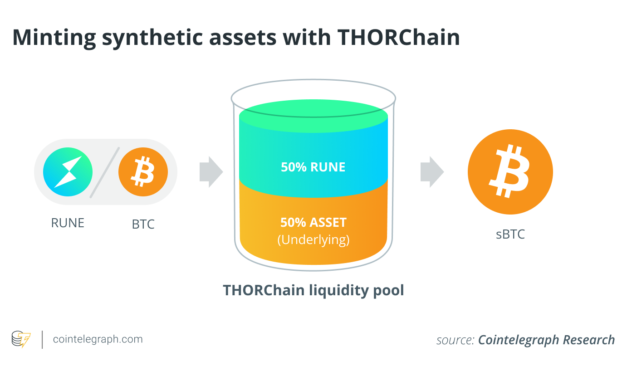
THORChain (RUNE) has appreciated nearly 41% in the past seven days, according to the data from Cointelegraph Markets Pro, and its recent price action is even leading the entire crypto market in the first quarter of 2021. Its mainnet launch, which was originally slated last year, is one of the main factors that led to its recent price surge. But, the other factor that provided added momentum is the integration of synthetic assets to its network. Why was this such a huge deal, and what are its implications for THORChain going forward?THORChain is often compared to Uniswap since it provides users a way for traders to swap different tokens. The only difference is THORChain lets users trade layer-1 coins in a decentralized manner, whereas Uniswap is limited to only the tokens that are of the ERC-20 standard. Users can essentially swap their Bitcoin (BTC) for Ether (ETH) on THORChain without using a centralized exchange, and it claims to have processed more than 1.64 million transactions since inception.The addition of synthetic assets to THORChain is expected to grow the network usage. Synthetic assets are, of course, virtually tokenized derivatives wherein it mimics the value of another asset. Synthetic assets, or synths, track real-world assets like stocks, commodities or even cryptocurrencies and traders use them for various reasons such as taking advantage of lower fees, performing faster transactions and access to 24/7 trading, among others.THORChain synths under the hoodTHORChain allows users to mint synthetic versions of cryptocurrencies ranging from BTC to Aave (AAVE). To do this, users add either RUNE or the actual crypto asset to a THORChain liquidity pool. THORChain’s synths are pretty different from other synthetic assets, as synths from THORChain are not backed solely by the underlying asset and don’t require a high collateralization ratio. For instance, Terra (LUNA) Mirror protocol, another platform for minting synths, has a 150% collateralization ratio. A THORChain synth, on the other hand, is backed by a liquidity pool that contains 50% of RUNE and 50% of the underlying asset. This is done through collateralization via pool ownership.No impermanent lossOne of the main advantages boasted by THORChain is it removes impermanent loss, achieved by its protocol structure. THORChain maintains a reserve pool of RUNE tokens that it extracts from to pay block rewards for node operators and liquidity providers. It is also the same pool from which the system draws out the tokens needed to offset any difference in the synthetic asset’s exact value to that of the actual asset upon redemption, preventing impermanent loss.Liquidity providers will have linear impermanent loss protection for 100 days, meaning that it incurs 1% protection daily until it reaches a full 100% coverage. At the time of writing, the reserve holds nearly $1 billion worth of RUNE, though it was actually past the billion-dollar mark a few months ago. The reserve is depleted from such token outflows but is replenished by network fees such as transfer fees and outbound fees (the gas cost of each chain multiplied by three).How synths benefit usersAside from the trading advantages mentioned earlier, THORChain synths are also cheaper to exchange than layer-1 assets while having a 50% reduction in swap fees when swapping asset to synth, synth to asset or synth to synth. But, perhaps its main selling point on offer is an uncomplicated and more lucrative way to yield farm. THORChain also has in its pipeline the capability for synth holders to earn a return by simply locking their assets in a vault. This makes the process approachable to newer participants, as they would no longer need to understand the concept of liquidity pools and the risks of impermanent loss.THORChain has also integrated with Terra, catalyzing RUNE’s initial March rally. Lending and borrowing are also coming to the THORChain ecosystem by June 17. This is why many have been bullish to even call an $11.50 target for RUNE. Can RUNE maintain its rally going to the second quarter?Cointelegraph’s Market Insights Newsletter shares our knowledge on the fundamentals that move the digital asset market. The newsletter dives into the latest data on social media sentiment, on-chain metrics and derivatives.We also review the industry’s most important news, including mergers and acquisitions, changes in the regulatory landscape, and enterprise blockchain integrations. Sign up now to be the first to receive these insights. All past editions of Market Insights are also available on Cointelegraph.com.

Čítaj viac
Získaj BONUS 8 € v Bitcoinoch

nakup bitcoin z karty

Registrácia Binance

Burza Binance

Aktuálne kurzy

