
Autor Cointelegraph by Christina Comben

10 of the greatest unsolved crypto mysteries

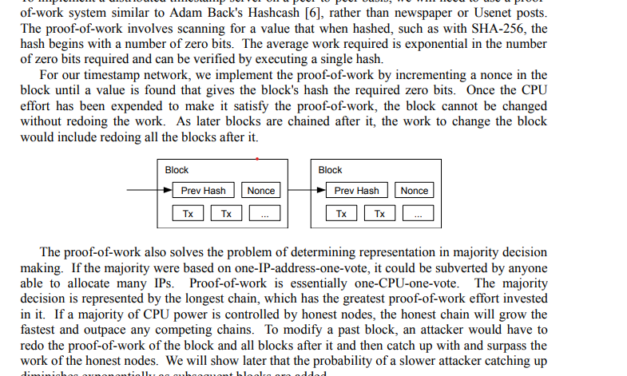
In an industry built on transparency and verifiability, newcomers might assume that crypto and blockchains leave very little room for mystery. They’d be completely wrong of course, because the murky world of digital assets is rife with underhanded dealings, unsolved enigmas and fortunes disappearing behind pseudonyms.From the identity of Bitcoin’s mystery creator to what really happened to a DAI developer on a beach in Puerto Rico, here are 10 crypto mysteries that remain unsolved. 1. Who is Satoshi Nakamoto?More than 17 years after Bitcoin’s creation, the greatest unsolved crypto mystery persists. We still don’t know who Satoshi Nakamoto is, or even whether Satoshi was one person.He, she, or they published the Bitcoin white paper in 2008, mined the genesis block in January 2009 and remained active in its early development before disappearing from public view in 2010. The quest for Satoshi’s identity has since produced an endless parade of possible candidates, from cryptographers and cypherpunks to British academics, early Bitcoin developers and even convicted sex offenders. The latest serious attempt to solve the mystery came in April 2026, when The New York Times published a lengthy investigation naming British cryptographer Adam Back as its leading candidate. Related: Satoshi-era Bitcoin wakes after 16 years of dormancy as 600 BTC movesThe Times claimed there were similarities between his writings and Satoshi’s, their shared cryptographic interests, Back’s work on Hashcash — which was cited in the Bitcoin white paper — and a series of other circumstantial clues, all of which Back strenuously denied.Adam Back’s Hashcash is cited in the Bitcoin Whitepaper. Source: Bitcoin.orgOther suspected candidates over the years have included core developer Peter Todd, cryptographer Hal Finney, Twitter founder Jack Dorsey and others. Self-proclaimed Bitcoin creator Craig Wright is the only major Satoshi candidate to have been formally ruled by a UK court not to be Satoshi.There were even some bizarre online claims that notorious sex offender Jeffrey Epstein could be Satoshi after a newly released tranche of the Epstein files revealed the sex trafficer had been involved in the early crypto industry, and made a 2014 investment in Back’s Blockstream. There is no credible evidence that Epstein was Satoshi, , and so the enigma remains: Who is Satoshi Nakamoto and where is he now? 2. Who was the Patoshi miner?If you thought the Satoshi mystery was strange, try digging into Bitcoin’s earliest blocks like blockchain researcher Sergio Lerner.In 2013, he discovered a pattern in the way Bitcoin’s earliest blocks were mined and linked it to a single miner he later dubbed “Patoshi.”Lerner estimated that the miner had accumulated about 1.1 million BTC across 22,000 blocks, which makes the enigmatic figure the largest holder of BTC today, above Coinbase, BlackRock and Strategy.Satoshi Nakamoto is the top Bitcoin holder. Source: ArkhamWhile Patoshi has never conclusively been proven to be the mysterious Bitcoin creator, the pattern is still one of the strongest pieces of evidence linking a huge stash of early Bitcoin to Satoshi. So who was Patoshi? Was it Satoshi operating a single machine, another early Bitcoin enthusiast, or something else entirely? 3. What happened to Mt. Gox’s missing Bitcoin?When Mt. Gox collapsed in February 2014, it claimed that around 850,000 BTC had disappeared — only to later uncover some 200,000 BTC hiding in old-format wallets it previously believed to be empty. To this day, the rest of the coins’ whereabouts remain a mystery. More than 12 years later, creditors are finally getting some of their money back, but what happened to Mt. Gox’s missing Bitcoin has never been resolved. Related: Mt. Gox moves $739M in Bitcoin from cold wallets: ArkhamInvestigators have traced portions of it, including some coins connected to Russian cybercriminals and the BTC-e exchange. US prosecutors have also alleged that Russian nationals stole and laundered roughly 647,000 BTC from Mt. Gox, yet the full story of the stolen coins has not been completely solved. Russian nationals charged with hacking Mt. Gox. Source: DOJWho stole them? How long had the theft been happening? How much was taken through hacking versus internal failures? And more importantly, where are all those coins now?4. What really happened to QuadrigaCX’s missing funds?Canadian exchange QuadrigaCX shot to the top of crypto’s mystery list in December 2018 after its founder, Gerald Cotten, died suddenly in Jaipur, India.The exchange was unable to access millions of dollars in cryptocurrency that customers had deposited, and it was popularly believed at the time that Cotten had taken the exchange’s private keys with him to the grave.An investigation by the Ontario Securities Commission later found that he had actually transferred millions of dollars of client funds to his and his wife’s personal accounts, and had also used client assets to cover his own trading losses and personal expenses.Was Quadriga a massive fraud that collapsed when its orchestrator died? Did Cotten leave behind wallets nobody has found, or did he fake his death and pocket the funds?5. Where is the CryptoQueen?Few crypto mysteries involve a missing person quite as notorious as Ruja Ignatova, AKA the CryptoQueen.The charismatic Bulgarian founder of OneCoin allegedly helped build one of the world’s biggest crypto scams, with the FBI saying the scheme defrauded victims worldwide of more than $4 billion. In October 2017, Ignatova flew from Sofia to Athens and then promptly disappeared, never to be found again.The FBI added Ignatova to its 10 Most Wanted Fugitives list in 2022 and still offers a reward of up to $5 million for information leading to her arrest and conviction. In a 2026 update, the FBI said she remains at large and described her as “well-funded” and “well-connected.”Rula Ignatova is still at large, according to the FBI. Source: FBISo, is she still doing the crypto conference circuit undercover today, scheming for her next victims? Was she killed, or did she escape with millions of dollars and is living under a new identity with the aid of extensive plastic surgery? Where is Ruja Ignatova? Maybe she’s sipping Mumbai Mules on a beach somewhere with Gerald Cotten.6. Will James Howells ever get his lost Bitcoin back?Back in 2013, Welsh IT worker James Howells accidentally threw away a hard drive containing the keys to what would later become a massive Bitcoin fortune, unwittingly becoming the poster child for how not to self-custody your BTC.Related: Tips for crypto newbies, vets and skeptics from a Bitcoiner who buried $700MHowells insists that the infamous hard drive ended up in a massive landfill and spent years trying to recover it, even proposing to excavate part of the landfill with specialist equipment and AI-powered sorting systems to search the waste.But after years of legal battles and failed attempts to persuade Newport City Council to let him excavate the site, his efforts to recover the drive have been in vain. A High Court judge ruled that he had no realistic prospect of succeeding in January 2025. James Howells’ BTC is still on the blockchain. Source: Mempool.spaceThe Bitcoin itself, however, isn’t gone; it’s still sitting on the blockchain, visible to anyone who cares to look in the natural history museum of self-custody blunders. 7. Who was the DAO hacker?Remember the 2016 DAO hack that would change Ethereum forever? This epic exploit wasn’t just one of crypto’s biggest early hacks; it helped determine what Ethereum would become.An attacker exploited a vulnerability in The DAO’s smart contract to drain more than 3.6 million ETH into a child DAO, siphoning over 30% of the DAO’s funds before the attack stopped.The attacker was never identified, and the aftermath would change crypto history, ultimately splitting Ethereum into two blockchains: the one we all know today and a smaller purist version, Ethereum Classic. In 2022 Laura Shin claimed the attacker was Austrian programmer Toby Hoenisch, but he denied the claims and has never been charged.The DAO hack raised questions that persist today about whether code is law and blockchain transactions are immutable, or whether they can be rolled back if we don’t like them.8. Who really stole the $400 million from FTX?FTX’s collapse was already one of crypto’s biggest disasters when, just hours after the exchange filed for bankruptcy, hundreds of millions of dollars in digital assets began disappearing from its wallets. About $415 million in crypto was ultimately reported stolen.Of course, the timing immediately raised suspicion, with FTX in chaos, employees trying to secure assets, bankruptcy proceedings beginning and different groups racing to determine who actually controlled the exchange’s wallets. The US Department of Justice eventually seized hundreds of millions of dollars in assets linked to FTX and investigators have traced parts of the movements, but the identity of the attacker remains an unsolved crypto mystery. Was it an opportunist outside hacker who happened to strike at the perfect moment? Was it somebody with inside access, or did the swirling chaos around the collapse create an opportunity that someone close to the exchange exploited? To this day, we don’t have an answer.9. What really happened to Nikolai Mushegian?Nikolai Mushegian was an early MakerDAO developer and a co-founder of Balancer who helped shape some of DeFi’s first infrastructure.On Oct. 28, 2022, Mushegian was found dead in the waters off Condado Beach in San Juan, Puerto Rico. Local police said he had been out swimming and was caught by strong ocean currents.Not everybody buys that version of events, however, since Mushegian had taken to Twitter to warn of his impending assassination just hours earlier. In a series of disturbing and paranoid messages, he claimed that the CIA, Mossad and “pedo elite” were involved in a sex-trafficking operation in the area and were planning to frame him and kill him.Nikolai Mushegian alerted his followers of his death before it happened. Source: Nikolai Mushegian The Puerto Rico Justice Department investigated his death for almost a year and determined no criminal involvement, but given his online messages, questions about what happened remain.Was Mushegian really caught by currents, as authorities reported, or was something more sinister going on in his final hours? 10. Why did someone deliberately burn 107 BTC?Perhaps one of the weirdest mysteries of all is why anyone would burn a Bitcoin fortune after HODLing it for more than 12 years? Yet that’s exactly what happened in May 2026.Someone sent 107 BTC, worth about $8.5 million, to a Bitcoin address from which the coins are rendered unspendable, effectively destroying them. The coins had been acquired around 2014, when Bitcoin was trading below $600, making the timing particularly strange. Why would anyone voluntarily destroy millions of dollars in Bitcoin after holding it through a 12,000% rise in its value?Stranger still, one of the five wallets suddenly sent about 20 BTC, worth roughly $1 million, to what appeared to be a large crypto custodian in March. Almost exactly the same amount came back three weeks later, before the Bitcoin was ultimately burned, adding another layer to the mystery. For an industry still in its teenage years, crypto sure has endured its fair share of intrigue. Be careful next time you decide to self-custody your fortune — you might just end up as one of crypto’s next great mysteries.Magazine: Is Bitcoin too volatile to risk your retirement on?Cointelegraph publishes long-form journalism, analysis and narrative reporting produced by Cointelegraph’s in-house editorial team with subject-matter expertise. All articles are edited and reviewed by Cointelegraph editors in line with our editorial standards. Some articles contain affiliate links, from which Cointelegraph may earn a commission. These relationships do not influence which products we review or our editorial conclusions. Content published in here does not constitute financial, legal or investment advice. Readers should conduct their own research and consult qualified professionals where appropriate. Cointelegraph maintains full editorial independence.

Čítaj viac
Is Bitcoin too volatile to risk your retirement on?

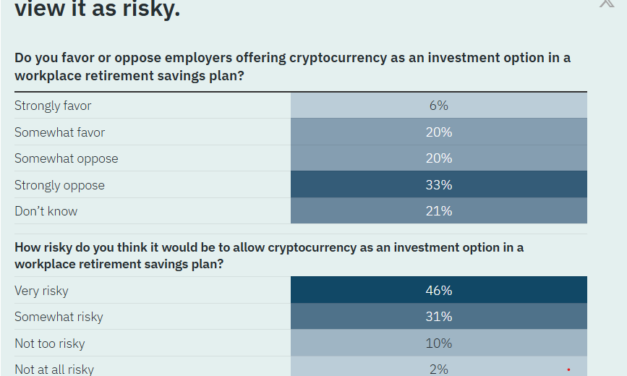
You stack sats. You farm yield, and you’d rather sell your car than part with your BTC. But does that mean you should bank your golden years on Bitcoin?Many retirement industry professional such as MIT finance professor Jonathan Parker say there is a sweet spot level for crypto exposure in a diversified retirement portfolio:“Yes, zero.”Parker, whose research spans portfolio choice, personal finance, retirement finance and Bitcoin, is unusually blunt about where the cryptocurrency belongs. But it’s a view shared by the average citizen.A recent survey by the National Institute on Retirement Security found that 77% of Americans consider cryptocurrency in workplace retirement plans as risky. But regulators and investment firms alike have been steadily opening the door to greater crypto exposure in retirement savings in recent years.BlackRock, for example, says a 1%-2% Bitcoin allocation can be reasonable for a diversified portfolio, where investors can tolerate the risk, while Fidelity says allocations of 2%-5% could improve retirement outcomes. A smaller position allows investors to benefit from Bitcoin’s volatility while limiting the downside. But there’s a more interesting question than whether crypto is too risky in the abstract.Can you be a passionate believer that Bitcoin is the ultimate in sound money, or that Ether will be the future of finance — and still decide your retirement savings are better off without it?Bitcoin is already creeping into retirement portfoliosRyan Firth is the founder of Mercer Street Personal Financial Services, a financial planner who specializes in digital assets. He views Bitcoin as something that can sit within a conventional portfolio rather than a stand-alone retirement bet. He says BTC can potentially replace some stock exposure rather than simply being piled on top of it. He tells Magazine:“Bitcoin offers higher return potential than stocks but with more volatility.”Americans have mixed views on cryptocurrency in retirement plans. Source: National Institute on Retirement Security He says his general rule of thumb is that crypto assets shouldn’t make up more than 5% of your investable assets, adding:“The conservative approach is to invest only what you are willing to potentially lose.”Related: US lawmakers push back on Labor Department plans to include crypto in 401(k)sRetirement funds are taking positions themselvesThe average person might think the crypto industry is too risky, but institutional investors see it as an opportunity. Public filings show pension funds and other large investors holding regulated spot Bitcoin exchange-traded funds (ETFs), while others have gained exposure through publicly traded companies closely tied to the sector.CalPERS, for example, the largest public pension fund in the United States, has disclosed an investment in Strategy, the largest corporate Bitcoin treasury holder, as part of its index-oriented public equity portfolio. CalSTRS, is the largest educator-only pension fund. While it tells Magazine it has not made direct investments in cryptocurrency it has invested in firms that “some might consider crypto companies,” such as Coinbase, “a publicly traded company that operates a cryptocurrency exchange platform.”That difference here is that institutional investors are trying to gain exposure to the growth of the crypto industry, rather than just making Bitcoin a core retirement asset.Your retirement portfolio has one job Bitcoin doesn’tBitcoin’s frequent drawdowns and year long bear markets make it a tricky asset to hold for those nearing or in their retirement years. BlackRock recommends up to a 2% Bitcoin allocation, where investors can tolerate risk. Source: BlackRockWhen you’re young a drawdown is just a blip among a wider uptrend. When you are retired, spending retirement savings that have fallen significantly in value magnifies the damage considerably. Related: Coinbase launches crypto service for Australian retirement fundsBill Bengen, the financial planner and researcher whose work gave rise to the widely cited 4% retirement withdrawal rule, says capital preservation should be the “primary priority” for retirement portfolios.He tells Magazine that although volatile assets like Bitcoin “can be useful,” he recommends limiting them to no more than 5% of a retirement portfolio to “help prevent a disaster.”Firth says the question is not simply whether Bitcoin will recover, but if investors can afford to wait that long:“Will they stay invested and avoid a knee-jerk reaction when prices inevitably fall? […] What if crypto goes to zero? How would that disrupt their plans and what’s their backup plan?”What if your investment thesis is wrong?This question has crossed the mind of even the staunchest Bitcoin HODLer: how much of your future should depend on one investment thesis being right? A hypothetical allocation framework for those who want to invest in Bitcoin. Source: FidelityWhat happens if you haven’t just wasted your life’s work but your retirement fund, if Bitcoin falls victim to quantum attackers, or if something better than Bitcoin is invented.Bengen says many people believe AI is in a bubble.“Bubbles eventually pop. The same could be said for Bitcoin.”That problem rings true for anyone building a retirement portfolio around a high-conviction investment, since conviction does not eliminate the possibility of being wrong.Parker says investors shouldn’t hold cash in retirement accounts and shouldn’t hold peer-to-peer digital cash either. “Currencies are for transacting, not investing. Bitcoin is no different. People should invest in real assets that pay interest, coupon payments, or dividends.” He says investors who want exposure to the success or failure of the crypto industry should own the equity or debt of companies that generate revenue from it, rather than holding Bitcoin itself.You can believe in crypto without betting your retirement on itIf your retirement savings aren’t in Bitcoin, that doesn’t make you any less committed to its long-term growth. You don’t have to choose between believing crypto is the future and casting it as a speculative gamble with no place in a serious portfolio, as Firth advises:“It doesn’t have to be an all-or-nothing proposition.” You can still believe crypto will change the world — without making your retirement depend on being right.Magazine: Recovery specialists crack $1B crypto wallet… but find just $10Cointelegraph publishes long-form journalism, analysis and narrative reporting produced by Cointelegraph’s in-house editorial team with subject-matter expertise. All articles are edited and reviewed by Cointelegraph editors in line with our editorial standards. Some articles contain affiliate links, from which Cointelegraph may earn a commission. These relationships do not influence which products we review or our editorial conclusions. Content published in here does not constitute financial, legal or investment advice. Readers should conduct their own research and consult qualified professionals where appropriate. Cointelegraph maintains full editorial independence.

Čítaj viac

Token buybacks are booming. But are they good for crypto projects?

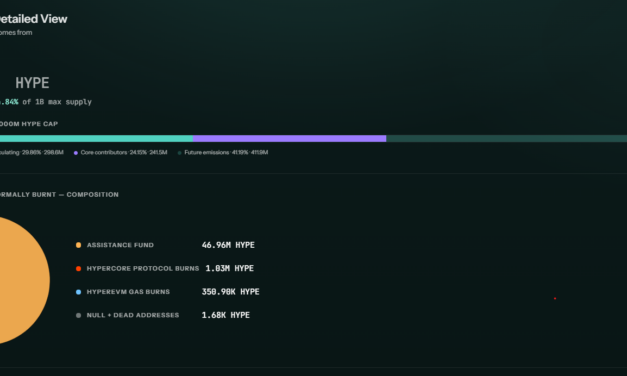
As the industry matures and borrows more pages out of TradiFi’s playbook, crypto projects are starting to adopt some of the behaviors of public companies.The latest craze rocking cryptoville is token buybacks: using revenue to buy back your own token.So far in 2026, crypto projects have spent about $640 million on the practice, up around 17% from the same period the year prior, and an order of magnitude more than the $366,000 spent in 2024. Hyperliquid and Pump.fun accounting for almost 90% of the current spend.So what’s the sudden appeal? Buybacks can create demand for a token, while burns can reduce the supply making each token more valuable. That dynamic can cause upward pressure on the token price.It also gives holders a more tangible connection to the economic activity on the underlying protocol. Orest Gavryliak, chief legal officer at decentralized exchange aggregator 1inch, tells Magazine:“When projects implement revenue-funded buybacks and burns, they typically have one of two objectives in mind: either to decrease the token supply in circulation or to demonstrate the rationale for investing in protocol revenues.”Gavryliak says that telling users a project has “bought and burned tokens” is “much more straightforward” than explaining how governance rights work, how fees are set, or how the protocol is used. Related: Pump.fun laid off workers before they received millions in PUMP tokens: ReportBut there’s a flipside: every dollar a protocol spends buying its token is a dollar it could have spent hiring developers, expanding the business, strengthening its balance sheet or building the product.So, as buybacks become one of crypto’s hottest tokenomics tools, are they actually good for the projects using them?Why crypto projects are buying themselvesYou might wonder if projects buying their own token is counterproductive. After all, projects typically sell tokens to raise funds to cover costs. Almost, but with an important caveat. Using revenue generated to buy back tokens (and then to hold them or burn them) creates an implicit connection between the success of the protocol and the value of its token. That’s something crypto projects have long struggled with. As Max Shannon, senior research associate at Bitwise Europe, explains:“Buybacks and burns remain an effective way to accrue value to tokenholders: they create a continuous bid in the open market for the token, directly tethering token success to the platform’s adoption.”That marks a sea-change for an industry that has spent the past couple of years chasing narratives or speculating on the greater fool theory — users who bought Fartcoin or Peanut the Squirrel didn’t do so for their sound economic models.Some protocols are taking the idea much further than others. Hyperliquid, for example, has used 99% of its revenue to buy back and burn HYPE and 50% of Pump.fun’s revenue goes toward buying and burning its token, with $446.65 million worth of PUMP already removed from circulation.HYPE Burns. Source: HyperliquidDeFi infrastructure protocol Spark offers a slightly different model, acquiring over 143 million SPK through open-market buybacks funded by protocol surplus, according to co-founder and chief executive Sam MacPherson. But those tokens were not burned, and instead remain in the Spark treasury to reward long-term participants in the ecosystem. MacPherson tells Magazine the point is not simply to reduce supply:“Tokenholders should participate in the long-term economic success of the protocol, rather than simply receive a distribution every time it generates revenue.”He says buybacks allow Spark to create that alignment while “retaining flexibility over how and when the acquired SPK is ultimately deployed,” allowing the protocol to make its token economically relevant rather than “a simple dividend mechanism.”Token buybacks are also a highly tax effective way to return revenue to holders, because users don’t cop a hefty tax bill on dividends or rewards.Is buying the token really the best use of the money?While that all sounds perfectly rational, the bigger question is whether buying your own token is really the best use of a project’s funds? Probably not in every case. MacPherson says:“The question should be: what is the highest-value use of the next dollar of surplus?”If a protocol can reinvest capital at attractive returns, he says, that can be “far more valuable” than simply distributing revenue as it arrives.PUMP Burns. Source: Pump.funBuybacks can support token economics without actually improving the underlying business.There is also no ironclad guarantee that buybacks will translate into higher token prices. Pump.fun has been aggressively buying and burning PUMP since July 2025, but the token is still hovering 50% below its September 2025 all-time high. UNI has also given back around half of the gains it made after Uniswap unveiled its UNIfication proposal in November 2025. Related: Robinhood Chain nears $1B TVL as Uniswap drives liquidity: Standard CharteredShannon points out that “many factors” contributed to those price movements, so they don’t prove buybacks failed, but:“They have prompted investors to debate whether these startup-like projects would be better served by reducing the share of revenue committed to buybacks and burns and reinvesting more in the team and the project itself.”Investors should make a careful distinction between a buyback scheme that pumps prices, and a successful business model.A sustainable protocol that generates genuine surplus may decide that buying its token is the best use of some of that money, but equally a project that’s limping along might simply attempt to buyback tokens to move the price. MacPherson notes:“A buyback doesn’t make an unsustainable protocol sustainable.” When a token starts looking like a stockWhile token buybacks may superficially resemble share buyback program, that doesn’t mean tokens are becoming more like stocks. UNI is down around 50% since it started buybacks and burns. Source: CoingeckoA shareholder owns part of a company and may have voting rights, dividends or a claim on its residual assets. Tokenholders generally do not have those same legal rights, and Orest says that distinction is critical. “This is a market mechanism, not a legally enforceable entitlement,” he says.MacPherson describes SPK as a form of “pseudo-equity” for an onchain protocol. While there isn’t a legal ownership structure in the traditional corporate sense, economically Spark is “trying to create many of the same characteristics: participation in governance, long-term alignment, and a mechanism through which those most committed to the protocol can benefit from its success.” When buybacks start looking like dividendsBut as crypto starts to emulate TradFi buybacks, storm clouds may be gathering on the horizon, as regulators consider what those mechanisms actually amount to.While the Digital Asset Market Clarity (CLARITY) Act of 2025 remains a draft and should not be treated as settled law, Gavryliak says its proposed framework highlights the key question of where a token’s value comes from:“If it stems from the functionality of the network itself, then the asset looks like a commodity. But if the value is based on the efforts of the project’s team in matters of shipping, marketing, or providing returns to token holders, then it is already a security. In the end, don’t put the clothes of a stock on the token and expect it to be a commodity.” At the end of the day, crypto investors want to know what sits underneath a token — revenue, users, sustainable economics — and some credible way for the token to benefit from those things.While buybacks may offer a solution, they can also be just another piece of financial engineering that makes a token look more valuable than it actually is without fixing the issues underneath, as Gavryliak points out:“If the buybacks stopped, would there still be a reason to hold the token? If the answer is no, the problem runs deeper than tokenomics.”Magazine: Mystery surrounds why an OG burned $1M in BitcoinCointelegraph publishes long-form journalism, analysis and narrative reporting produced by Cointelegraph’s in-house editorial team with subject-matter expertise. All articles are edited and reviewed by Cointelegraph editors in line with our editorial standards. Some articles contain affiliate links, from which Cointelegraph may earn a commission. These relationships do not influence which products we review or our editorial conclusions. Content published in here does not constitute financial, legal or investment advice. Readers should conduct their own research and consult qualified professionals where appropriate. Cointelegraph maintains full editorial independence.

Čítaj viac
Recovery specialists crack $1B crypto wallet… but find just $10

When a client named Rusty contacted crypto recovery specialist Chris Brooks in 2021, he said he and two others had won 5,000 Bitcoin in a court case, worth around $53 million at the time.They immediately set up a Zoom call to discuss the case. “There were three guys on the call, and one of them holds up a phone. It has like $53 million in a Bitcoin address,” says Brooks, founder and chief executive of Crypto Asset Recovery.The men claimed they were able to withdraw as much as $300,000 a week but wanted to get the whole fortune out. If Brooks and his son, Charlie, flew to Georgia to help them crack the wallet, they would make them millionaires.Brooks and son bought plane tickets and went the next day. At lunch, Rusty, a 6-foot-3 Army veteran, revealed the wallet didn’t only contain 5000 BTC.“Rusty pulls out his phone, and he shows us a billion dollars in ETH. And that’s when I was like, okay, something very odd is going on here.”The men then drove about an hour to a strip mall owned by one of them, where they went into the back office and were handed notebooks containing dozens of recovery seeds. The pair spent the day opening wallets. They found about $10 in Bitcoin.Brooks never established whether the wallets they were given had previously held the BTC or ETH Rusty claimed to own. They were never reimbursed for the flight tickets either.Related: Do the Coldcard attacks mean all hardware wallets are now insecure?Brooks now suspects Rusty had fallen victim to scammers who convinced him he had a large crypto fortune when he didn’t. It was an early lesson for their crypto recovery business.Sometimes crypto is lost. Sometimes the wallet is lost. Sometimes the password is lost.And sometimes, it turns out, the money was never there in the first place.Losing your crypto doesn’t always mean it’s goneFor wallet recovery specialists, “lost crypto” can mean several very different things.They aren’t recovering Bitcoin from the blockchain; they’re recovering the information needed to access a wallet that already exists. While someone may have thrown away a hardware wallet, forgotten a password or part of their seed phrase, none of those things necessarily mean the underlying crypto has disappeared.Bruno Krauss, co-founder and chief technical officer of recovery firm ReWallet, tells Magazine:“If you have some missing words, then you can often recover them.”Bitcoin’s BIP39 seed phrase standard uses a list of 2,048 words, meaning that if someone knows most of the words, specialists can sometimes systematically search the remaining possibilities. The fewer pieces missing, the more manageable the puzzle.Password recovery can work in much the same way.Bitcoin’s BIP39 standard uses a list of 2,048 words. Source: GitHubKrauss says ReWallet once recovered a 20-character password protecting roughly $3 million after reverse-engineering a flawed password generator. Other cases depend less on technical exploits than on understanding how a particular person creates passwords.That means asking clients about personal preferences like favorite foods and places, children’s names and birthdays, personal milestones or memories.In one case, he says a customer was convinced she had used her children’s names, only to remember that the password was actually a phone number connected to a local delivery service:“She didn’t know why, but then she thought about it, and she realized, oh, okay, it was because on this day I got the package delivered to the store and I thought, okay, this would be a nice password.”Passphrases add another layer of complexityTom Bennet, a Bitcoin educator who has studied wallet security, says there is another particularly confusing category: the passphrase.A passphrase is an additional piece of information layered on top of a seed. Enter a different passphrase, and you don’t necessarily get an error message. You can simply get another valid wallet. He tells Magazine:“A wrong passphrase doesn’t throw an error; it succeeds and shows you a zero balance.”So you can have the correct seed phrase and enter it correctly, and still think your BTC has vanished.“Passphrases also don’t have any features to protect users from themselves; no list of 2,048 valid words, no checksum. So if you’ve forgotten a passphrase, it’s basically the same question again: how random was your passphrase? If it’s sufficiently random, there’s often no way to recover it.”With lost or broken hardware wallets, even having the broken device isn’t always much help. If the wallet’s backup seed phrase survives, the keys can generally be restored on another device.That’s why recovery specialists don’t necessarily need the original hardware, but enough information to reconstruct access to the keys.Related: Irish police open Bitcoin wallet years after keys were apparently lostRecovery can also mean fixing mistakes rather than recovering a lost wallet. Crypto sent to the wrong blockchain, like BNB to Ethereum, may sometimes be recoverable if the receiving wallet is under the user’s control. Brooks says Crypto Asset Recovery has been contracted to crack more than 3,000 wallets belonging to around 1,500 people, and has cracked passwords for about 63% of them. Sometimes you really have lost itThere is, however, a hard boundary. Bennet says:“If your seed is truly random and you lose it completely, your Bitcoin is gone.” That is one of the fundamental trade-offs of self-custody. A Bitcoin wallet does not have a bank-style recovery system or a central administrator who can verify your identity and restore your account.Lucien Bourdon, Bitcoin analyst at hardware wallet maker Trezor, puts it even more starkly. If the wallet backup is lost and the wallet containing the keys is inaccessible, “no recovery company can help.” He warns:“If they could, the wallet could be cracked, and self-custody would be fundamentally compromised.” Thanks to randomness, crypto wallets make guessing a private key effectively impossible. In the recent case of Bitcoin hardware wallet Coldcard, a firmware bug weakened seed randomness on some wallets, making the seeds brute-forceable without physical access.Weak random number generation is not a new problem. Source: Jameson LoppBut if a genuinely random seed or private key has been completely destroyed, the number of possibilities is simply too large.Krauss says recovery specialists can occasionally find technical paths into wallets that owners had assumed were permanently inaccessible, and that old wallet software, corrupted files, poorly generated passwords and hardware vulnerabilities can all create unusual opportunities:“Don’t give up on edge cases.” Recovery specialists can sometimes be scammers There is an uncomfortable irony in the recovery business.The person who may be able to help you regain access to your crypto needs the very information that gives someone access to it.A seed phrase isn’t like a password that can be changed after someone sees it. Anyone who possesses the necessary wallet backup can often control the funds.That makes choosing a recovery specialist a security decision in itself. Bourdon says:“If you decide to do it, do the homework. Look for firms with a real track record and reviews you can trace to actual customers. Check that they charge on success rather than up front. And move your funds to a fresh wallet with a new backup as soon as you’re back in.” He says users should also be wary of any unsolicited messages claiming that someone can recover their funds. Krauss says other warning signs include people pushing users onto WhatsApp or contacting them from personal email addresses like Gmail, demanding upfront payments or asking them to open accounts at an exchange.Recovery firms that charge a percentage of successfully recovered funds are not unusual; but paying money upfront to someone who promises to recover a wallet should set alarm bells ringing.Brooks learned another lesson from the Rusty case.While crypto recovery might sound like a technical job, a person who believes they are sitting on millions or billions of dollars can also be a security risk.Crypto Asset Recovery no longer flies out to meet clients in person as it did with Rusty. The company now handles cases remotely, with sensitive wallet information processed through automated and air-gapped systems. Brooks says around 71% of the wallets they crack contain less than $100, and the company doesn’t charge a fee for asset recovery under that amount.If there’s one thing he wishes crypto users knew about asset recovery, it’s this:“Learn what in the world a recovery seed is and why they’re important. That’s the simplest way to make sure you never have to talk to us.” Magazine: Mystery surrounds why an OG burned $1M in BitcoinCointelegraph publishes long-form journalism, analysis and narrative reporting produced by Cointelegraph’s in-house editorial team with subject-matter expertise. All articles are edited and reviewed by Cointelegraph editors in line with our editorial standards. Some articles contain affiliate links, from which Cointelegraph may earn a commission. These relationships do not influence which products we review or our editorial conclusions. Content published in here does not constitute financial, legal or investment advice. Readers should conduct their own research and consult qualified professionals where appropriate. Cointelegraph maintains full editorial independence.

Čítaj viac
Does the Bitcoin rally mean we haven’t wasted our lives in crypto?

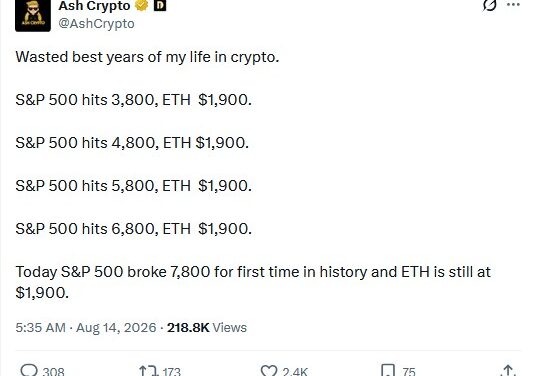
Sentiment in crypto has dived lower than a snailfish in the Mariana Trench in recent months. Miners are capitulating to AI, cold wallets are getting exploited, and you can hardly fire up LinkedIn without reading another message from a newly unemployed crypto journalist searching for new opportunities. Even for an industry that’s endured nation-state bans, exchange blowups, and years of regulatory pressure, morale has rarely felt this low. With business models failing and public interest dropping, many long term crypto fans have begun to question whether we’ve all wasted a decade of our lives on a pipe dream.Source: Ash CryptoUntil the price went up that is.Bitcoin has just seen its best August in years with a 26% return, while Ethereum gained 34%. President Trump even sang the praises of a decentralized offshore perpetual futures venue at the White House. Crypto’s finally getting interesting again. But a short term price rise doesn’t mean all our dreams have come true. For anyone who spent years advocating for sovereign F-you money outside the control of the state and centralized entities, a custodial ETF is not exactly a version of BTC that sticks it to the man. And there’s another problem with calling this a victory lap: many of the companies that helped build crypto’s foundations are no longer around to enjoy the latest pump.Take BitMEX, one of the industry’s first Bitcoin futures exchanges that pioneered the perpetual swap and 100x leverage for degens. It’s shutting down operations in September after 11 years. Former chief executive Stephan Lutz tells Magazine that BitMEX was a victim of its own success.“Every legitimate crypto exchange is using the perpetual swap… every legitimate crypto exchange uses the funding mechanism to bring longs and shorts together that the founders invented originally… That isn’t going away… It’s just not a differentiating factor anymore.”So what if crypto won — just not in the way we thought it would? Crypto’s impact means it wasn’t a waste of timeLutz doesn’t think crypto can simply disappear anymore because the technology has become too deeply embedded in traditional finance to be unwound. “From my point of view, we passed the point of no return,” he says. Utkarsh Ahuja, founder of Moonshot Capital, agrees that crypto proponents have not wasted their lives, and points to the industry’s impact on payment rails, settlement and tokenization. Stablecoins, he says, can have a “very, very lasting impact” as they become integrated into financial payment infrastructure, and “you can literally tokenize anything.” Related: 10 weirdest things ever tokenized… including fartsHe points to crypto’s spillover into energy, healthcare and AI, arguing that the technology is being widely used beyond the industry that created it. Decentralized finance has also made a meaningful impact on the world and is now closer to infrastructure, than an experiment. Wanja Oberhof, chief executive of Subsquid Labs, tells Magazine:“DeFi built the first financial system where you don’t have to trust the operator’s word: you can verify the ledger yourself, in real time, down to every transaction.” Settlement happens in minutes rather than days, he says, while markets run 24/7 and lending protocols can clear billions transparently:“No bank consortium ever shipped anything like it. DeFi removed the intermediary and kept the market.”But while DeFi’s infrastructure has greatly improved, Oberhof concedes the industry “over-promised on timelines and under-delivered on user experience.” He says the real win will come when the technology “disappears into products people use without thinking about it.”Institutions are adopting blockchain technology like crazy, and tokenized funds, stablecoins and blockchain-based settlement are no longer ideas confined to the hallways of crypto conferences.But crypto isn’t so much replacing the financial system as being absorbed by it.The crypto industry’s success is a key reason it no longer feels as exciting or impactful. The more TradFi becomes involved, the more boring crypto seems, especially when compared to the days when the Long Island Iced Tea Corp changed its name to Long Blockchain Corp back in December 2017 and the stock price surged 500%. (It was delisted two months later for misleading the market).Ether printed a God candle on Aug. 22. Source: Lark DavisRegulation has also made crypto much more legitimate but duller at the same time. The EU has implemented its Markets in Crypto Assets (MiCA). The US has gone from treating crypto largely as a regulatory headache to building a framework around it. Senators may even pass the CLARITY act one day.What did we lose along the way?Despite increasing legitimacy, the crypto industry has failed to deliver on many things it promised. Dentacoin failed to revolutionize the dental industry. Bitcoin did not stop all wars. Ethereum is not the default home for global finance (at least, not yet.) Ahuja says:“Has it delivered enough? Not yet, in my opinion. But has it changed our perception completely? Yes, it has.”The audience has changed too.Crypto is no longer some fringe hobby for a tiny band of libertarian cypherpunks and meme-weilding frog armies on Crypto Twitter. Around one in five American adults, or 19%, now says they have invested in, traded or used cryptocurrency, according to Pew Research Center. Broader ownership hasn’t made crypto easier to use. In fact, the explosion of assets and platforms has made the market harder to navigate. Users have to contemplate multiple networks, wallets, exchanges, bridges and onramps, creating the extra layers of friction that crypto was supposed to eliminate. One in five Americans has used crypto. Source: Pew Research CenterAhuja points to another irony: an asset class designed to be borderless is increasingly being shaped by national regulatory regimes, making it harder to move seamlessly across jurisdictions. One Dubai-based crypto user Magazine spoke with receives their salary every month into a large centralized crypto exchange. They say they lose money when converting USDT into local currency, and then have to pay a flat 75 AED fee (roughly 20 USD) just to withdraw. They say:“I wish I could receive a bank transfer instead.” And then there’s the most basic promise of all: self-custody, arguably the biggest paradox the industry faces because the more valuable Bitcoin becomes, the more dangerous it is to hold your own private keys — whether for fear of being bludgeoned to death by a wrench or having your cold wallet exploited by an AI agent. Arguably it’s this failure to deliver the future crypto once promised, that has made the bear market shutdowns and closures hit even harder.Related: MiCA is coming for DeFi vaults, but regulation will be difficultLayoffs are rampant throughout the industry. Projects that survived even the grizzly 2022 bear market have been shutting down this year, or being forced to reinvent themselves as the money and users pivot to AI — which is newer but has seen adoption crypto can only dream of so far.Lutz doesn’t see BitMEX’s fate as evidence that the technology failed; quite the opposite: the technology worked so well that everyone copied it, and the industry has moved from a race to invent the infrastructure to a brutal fight over market share. He says:“Now the differentiating factor is your aggressiveness in the competition, which is a completely different game. Some play that very well, others don’t.”Perhaps the companies and projects that built crypto were never going to be the ones that ultimately benefited most from its adoption. So have we wasted our lives?Well, the purists may not have gotten their sovereign money, the early companies may not have survived, and the average user may still be waiting to catch a break. But the technology is here, the infrastructure is becoming the rails, and the 20% daily candles sure are fun to watch.And one thing that’s always been true, when the price starts going up, the narratives change quickly to explain why it may keep going up forever.Magazine: Do the Coldcard attacks mean all hardware wallets are now insecure?Cointelegraph publishes long-form journalism, analysis and narrative reporting produced by Cointelegraph’s in-house editorial team with subject-matter expertise. All articles are edited and reviewed by Cointelegraph editors in line with our editorial standards. Some articles contain affiliate links, from which Cointelegraph may earn a commission. These relationships do not influence which products we review or our editorial conclusions. Content published in here does not constitute financial, legal or investment advice. Readers should conduct their own research and consult qualified professionals where appropriate. Cointelegraph maintains full editorial independence.

Čítaj viac
Získaj BONUS 8 € v Bitcoinoch

nakup bitcoin z karty

Registrácia Binance

Burza Binance

Aktuálne kurzy