The 100x obsession: Fundamentals grow in importance as crypto matures
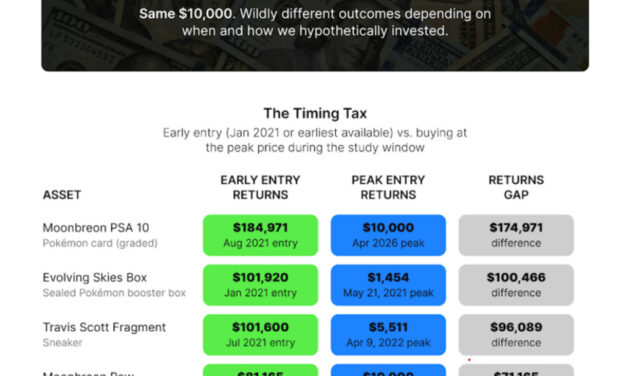
“Investments change fast; human nature and human aspirations stay constant.”That’s how Meir Statman, behavioral finance pioneer and professor of finance at Santa Clara University, explains one of investing’s oldest puzzles. And it may be why every crypto cycle so far has been about chasing the next hot narrative rather than fundamentals, whether its DeFi, meme coins or decentralized compute.In an industry that has spent years maturing into an ecosystem of institutional investors, revenue-generating protocols and real-world use cases, investor attention still gravitates toward the next shiny thing that can offer the promise of outsized returns.“Crypto is still a young asset class, and price discovery in young markets tends to be driven by attention before it’s driven by analysis,” Samar Sen, head of international markets at Talos, tells Magazine.“A new narrative gives investors a simple story to underwrite quickly, while assessing the fundamentals of an established protocol takes real work, from understanding usage and revenue to token design and competitive position.”This behavior isn’t unique to digital assets; it’s just particularly pronounced in an industry that prizes memes over sustainable business models.A Pokémon card, a digital asset and a tech stockA recent MarketWise study compared hypothetical $10,000 investments across cryptocurrencies, stocks, exchange-traded funds and collectibles between January 2021 and April 2026.The study found that a sealed Pokémon card box outperformed Bitcoin, while a pair of limited-edition sneakers nearly matched Dogecoin’s returns. At the same time, some of Wall Street’s most popular artificial intelligence funds lagged the broader stock market despite AI dominating the investment headlines.A $10K investment has very different outcomes. Source: MarketWiseWhat does a Pokémon card, a digital asset and a tech stock have in common? According to Statman, they’re driven by the same thing: investors aren’t simply looking for the best asset; they’re buying a lottery ticket to a life-changing outcome.Investors are chasing transformation, not cryptoTraditional finance tends to assume that investors want to maximize returns while minimizing risk, but Statman argues that people often invest for a very different reason.In an unpublished paper shared with Magazine, Statman argues that many investors mentally divide their wealth into two layers. The first is a “not-poor” layer, which is designed to preserve their standard of living and avoid falling into poverty. The second is a “be-rich” layer, which is for transformative goals, like buying a house, becoming financially independent, or fundamentally changing their circumstances.Within that framework, concentrated investments aren’t necessarily irrational; they exist because diversified investing, while statistically sensible, may never offer someone with limited capital a realistic chance of achieving those goals.James Royal, a senior writer at MarketWise, tells Magazine:“The asset class may change, but the behavior barely does… Investors aren’t exactly loyal to crypto, stocks or collectibles. Their loyalty is to whatever promises lucrative returns next.”Statman says that, while some of today’s investors pin their hopes on meme stocks, “a century ago it was railroad stocks […] today’s investors are simply expressing the same aspirations through a new asset class.”Investors aren’t becoming more tolerant of risk, however, just more willing to accept volatility for a chance of life-changing wealth.“Investors aren’t necessarily on the hunt for risk, but they’ve got a case of FOMO on the next life-changing return, and that can lead them down a path of underestimated downside risk,” Royal says.Why stories beat fundamentalsIf investors are searching for transformation rather than simple returns, that helps explain why narratives so often overwhelm fundamentals, particularly in crypto.The decentralized finance sector is a case in point. Despite some of its largest protocols like Aave or Uniswap generating substantial revenue, attracting billions of dollars in deposits and processing enormous trading volumes, their tokens struggle to capture the same excitement as newer narratives built around the latest craze.Aave’s token was trading at around $98 at the time of writing, some 85% from its 2021 peak, but its TVL is over $14 billion, and had reached over $37 billion at the height of the bull market in October 2025.Aave’s TVL is over $14 billion while its token price is 85% from its 2021 peak. Source: DeFiLlama.Thomas Probst, a research analyst at Kaiko market data provider, says that while assets may outperform in the short term, fundamentals will always be more important in the long term.“Market fundamentals continue to play an important role, particularly resilience, liquidity, and volatility… [an asset’s] ability to establish itself over time also depends on the robustness of its market structure,” he says.Yet, while a mature protocol generating sustainable cash flow may be an attractive long-term investment, it offers little appeal to investors allocating money toward their “be-rich” bucket. A token that might double over several years will always struggle to compete with the possibility, however remote, of a 100x moonshot.“Investors like to confuse a great technological breakthrough with a great investment opportunity,” Royal says, which might explain why many AI-focused ETFs have underperformed, despite AI arguably becoming the defining investment narrative of our time. “The real skill isn’t identifying exciting investments, it’s recognizing when optimism has already been priced in.”That same skill comes in handy with market timing. MarketWise’s report found that investors who bought Bitcoin in January 2021 turned a hypothetical $10,000 investment into more than $24,000 by April 2026, with +141% gains.Those who bought during its cycle peak in October 2025, however, saw the same investment shrink to just over $6,000 with a -38% return by April (and it’d be worth about $5,000 today).Anyone who FOMO’d into AAAVE around the same time would be sitting on +85% losses today.Institutions play a different gameInstitutional investors approach investing from an entirely different perspective, Sen says:“Institutional mandates simply don’t allow for chasing outsized, speculative returns. Institutions are underwriting risk-adjusted performance, liquidity, custody arrangements and operational resilience long before they look at upside potential.”AAVE’s price performance since 2021. Source: CoingeckoAnd while that doesn’t mean institutions are immune to emerging narratives, they generally look at whether the underlying infrastructure can support meaningful capital allocation rather than whether the token could 100x.“It’s usually a mix, and the order matters,” Sen says. “Most of these themes, DeFi, AI, memecoins, do start with a genuine shift: a real technical unlock or a new use case that wasn’t possible before.” Once the narrative begins attracting speculative money, however, prices often move faster than fundamentals, he says.“Investors arriving later in a cycle are often responding to the narrative as much as the fundamentals that started it […] Institutional capital, which tends to move on process and discipline rather than trend-following, is often a step behind the initial narrative and a step ahead of the correction.”The next Bitcoin isn’t really the pointThe search for the next life-changing investment is unlikely to disappear, and neither, Statman argues, is the human desire to improve one’s circumstances.The next 100x token certainly exists, and investors will continue to seek it — even when the odds and fundamentals say they’re looking in the wrong place.Magazine: The real reason DeFi projects that survived 2022 crash are shutting down nowCointelegraph publishes long-form journalism, analysis and narrative reporting produced by Cointelegraph’s in-house editorial team with subject-matter expertise. All articles are edited and reviewed by Cointelegraph editors in line with our editorial standards. Some articles contain affiliate links, from which Cointelegraph may earn a commission. These relationships do not influence which products we review or our editorial conclusions. Content published in here does not constitute financial, legal or investment advice. Readers should conduct their own research and consult qualified professionals where appropriate. Cointelegraph maintains full editorial independence.
Čítaj viac