
Autor Cointelegraph By Cassio Gusson

‘The metaverse will empower human beings’, declares Qatar Airways

Qatar Airways announced Tuesday that it had launched its first metaverse experience, QVerse. This virtual reality platform allows interested parties can virtually visit and navigate the Premium Check-in area at the International Airport of Hamad (HIA).According to the company’s statements to Cointelegraph however, QVerse is merely the company’s first foray into the metaverse. The company said that it intends to expand its virtual environment initiatives and believes that the metaverse is part of the future of human relations.“We believe that the future is virtual. The metaverse will empower human beings, expand their horizons and break their limits by challenging the most basic methods that were once limitations.”Have you got your ticket to the #QatarAirways #QVerse? pic.twitter.com/CNtePu8YgE— Qatar Airways (@qatarairways) April 19, 2022According to the company, its entry into the metaverse reflects its passengers desire for “immersive content that can empower their decision-making before buying a ticket, and are often eager to discover the aircraft they will fly.”Related: Qatar exploring digital banks and central bank digital currencies“That’s why we believe QVerse will change the way passengers make their shopping choices,” company representatives stated.The company also highlighted that it plans to add more functionalities, places and interactions to its metaverse platform, and aims to make the experience sociable and accessible through the Oculus Quest VR platform.It also intends to include the purchase of tickets for physical flights and the choice of seats on real aircraft through the metaverse. The company noted that actions in metaverse gateways like Decentraland and The Sandbox may occur in the future.Related: Qatar Financial Centre Puts Blanket Ban on Cryptocurrency Businesses“We are currently focusing on creating our metaverse rather than investing in Decentraland or Sandbox. But we do not rule out this plan. We continue to explore how we can develop this area and strategically incorporate NFTs into QVerse.”Last year Qatar Airways became the first airline in the Middle East to adopt the IATA Blockchain ‘Digital Passport’, in partnership with the International Air Transport Association (IATA). Recently, the US Air Force also announced its entry into the metaverse and filed a trademark application for an initiative called SpaceVerse. While details of the order and what the SpaceVerse are scarce, the order highlights that this will be a virtual reality training, testing and operations environment for the US defense agency.

Čítaj viac

Brazilian central banker describes how CBDC system can halt bank runs

In a paper recently published by the Bank for International Settlements (BIS), Fabio Araujo, an economist at the Central Bank of Brazil (CBB) who’s also responsible for the country’s central bank digital currency work, revealed that the monetary authority will have greater control over the population’s money once its CBDC is rolled out. Through the so-called Real Digital, the central bank will be able to halt bank runs and impose other restrictions on citizens’ access to money. Real Digital, the digital version of Brazil’s national currency, has been debated at the central bank since 2015 and will have its first tests in 2023 through nine solutions presented by private companies during the recent Lift Challenge event that was carried out by the CBB. Cointelegraph reported that the value of the upcoming CBDC would be pegged against the national fiat payment system STR, also known as the Reserve Transfer System. Brazil could soon be the next Latin American nation to regulate cryptocurrency. A bill has been in the works since 2019 and is now finally set to hit the Senate floor for a vote. https://t.co/ZYEfrsEwm8— Cointelegraph (@Cointelegraph) February 23, 2022Through Real Digital, the central bank says it wants to enable so-called smart payments within a regulated environment. Smart payments include smart contracts, transactions with Internet of Things devices and even Decentralized Finance (DeFi) applications.In the BIS document, Araujo said the main objective of introducing a CBDC is to provide entrepreneurs with a safe and reliable environment to innovate through the use of programmability technologies that make smart payments a reality. “Technologies available for smart payments, as seen in crypto assets, make room for new business models and are better suited to meet the population’s demand,” he said.Related: Fed paper looks at the potential effects of CBDC on monetary policyCentral Bank may ‘stop’ withdrawalsIn the paper, Araujo highlights that the central bank must maintain a partnership with the private sector in providing liquidity to the market. According to Araujo, the central bank envisions the coexistence between the Real Digital and private money issued by institutions regulated by the CBB in the intended smart payments.Therefore, individuals could convert their deposits into tokens capable of accessing the services provided on this new platform, under a commitment that these tokens will be converted into Real Digital. In other words, banks will be able to issue their own tokens aimed at smart contract applications having their balance in Real Digital as guarantor of the operations.[embedded content]”Commercial bank deposit tokens would inherit all the regulations and characteristics of their parent assets, such as fractional reserve requirements,” he said. “Likewise, [payment service provider] deposit tokens would inherit their characteristics, such as total reserve requirements.”However, unlike the cryptocurrency ecosystem, in which users own their assets and no one can lock their operations, in Brazil’s CBDC there will be a system to lock withdrawals.Araujo points out that, at a given time and for various reasons, there may be a bank run where users wish to convert these tokens into the Real Digital that will be guaranteed by the central bank. To avoid such bank runs, the CBB already provides “backstops and restrictions on the conversion flow to and from CBDCs.”The central bank points out that the flow of exchange of these tokens to Real Digital would have a limit and would even need to be scheduled in advance. In other words, the central bank will have the power to control the flow of money within the system.Related: Brazil Stock Exchange wants to provide oracles for Real DigitalThe paper explains:”One source of concerns, though, is the speed at which private tokens could be converted into CBDCs, which could restore coordination mechanisms. To avoid such undesirable flows, large conversions could only be available if scheduled in advance and constraints on daily conversions could be set. In addition to that, circuit breaker mechanisms could be automatically applicable when the continued draining of tokens from any specific institution would render it vulnerable.”Araujo concludes the document by pointing out that Real Digital, by enabling smart contract and programmable money solutions in Brazil’s financial environment, will allow the creation of customized financial services to meet the different demands of society.The paper concludes that these resources, when combined with financial education, can provide efficiency gains and serve the entire population of the country, even those who are still on the margins of the financial system.

Čítaj viac

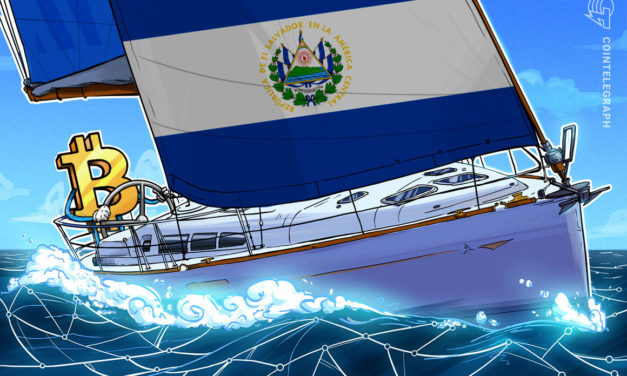
Falling Bitcoin price doesn't affect El Salvador's strategy: 'Now it's time to buy more,' reveals Deputy Dania Gonzalez

Dania Gonzalez, Deputy of the Republic of El Salvador, was recently in Brazil to reveal her country’s experiences with the decision to adopt Bitcoin (BTC) as legal tender. Gonzalez’s invitation to Brazil came from digital influencer Rodrix Digital, who was recently in El Salvador to produce a documentary about cryptocurrencies.Among the lawmaker’s activities in Brazil was attending Bitconf 2022 and meeting with Dape Capital CEO Daniele Abdo Philippi and Ana Élle, CEO of Agency ROE.Between her agendas, Gonzalez spoke with Cointelegraph and revealed how Bitcoin has helped to change people’s lives in El Salvador and how the country’s federal government, led by President Nayib Bukele, has been taking advantage of the resources invested in BTC to improve the economy.El Salvador just bought the dip! 500 coins at an average USD price of ~$30,744 #Bitcoin— Nayib Bukele (@nayibbukele) May 9, 2022Asked about El Salvador’s investment in Bitcoin and how it can impact people’s lives as the value of BTC is falling, Gonzalez highlighted that every investment has a cost and a benefit.”What Nayib Bukele did was buy Bitcoins and make a profit at a certain strategic moment,” she said. “In cryptocurrencies, there are times when you can make a profit and there are times when you have to invest more. Now cryptocurrency is down, this happens, it’s normal, but at this point instead of being sad, instead of thinking that you lost all your investment, it’s time to buy more Bitcoins because now the price is cheap, that’s the strategy.”According to Gonzalez, El Salvador is already benefiting from investments made in Bitcoin; she cited two ventures — a veterinary hospital and a public school — that were made possible thanks to cryptocurrency. She explained:”Bukele built a veterinary hospital to benefit the population where services, any service for your pet, costs US$0.25. Even an operation costs this amount and that is accessible to the entire population. Bitcoin has been converted into a benefit for the people. Now with the reserve we have in Bitcoin, we must build 20 more schools. Before Bitcoin, to do this we had to approve projects, include it in the nation’s general budget and use people’s money to construction. Now these works are done thanks to all the profits made with Bitcoin.”Gonzalez indicated that Bukele’s strategy has already proven to be successful in terms of socioeconomic impact. “This is the main reason why the president also buys Bitcoins,” she said. “He does this to be able to generate profits for social projects for the people […] This is not just words, it is something tangible for the population because they can see part of the public services being realized thanks to Bitcoin profits.”CBDCCointelegraph also spoke with the lawmaker about central bank digital currencies, also known as CBDCs, and how their issuance by nations can impact the cryptocurrency market.Gonzalez stated that she does not see a clash between cryptocurrencies and CBDCs, believing that both should coexist together in the digital ecosystem that will guide nations in the future. Furthermore, she stated that the proposed issuance of CBDCs by countries shows that they have understood the power of the cryptoeconomy.Related: CBDC activity heats up, but few projects move beyond pilot stageThe deputy also highlighted that El Salvador is working to expand the effects of the Bitcoin Law and will build an ecosystem based on cryptocurrencies, with the elimination of taxes for sectors linked to the crypto economy.In addition, she highlighted that other laws will be reformulated to meet the new demands of the digital economy and to reduce bureaucracy in public administration procedures. She explained:“We want it to be possible to open a business in 5 minutes here in El Salvador […] We already have a national digital wallet system for cryptocurrencies and we intend to make a law so that investors from all over the world can have immediate citizenship in El Salvador if they invest in the world of Bitcoin in our country.”El Salvador’s financial inclusion conference has central bankers yelling Bitcoin, literally. Day 3 saw the 44 central bank and financial delegates attending make a trip to the country’s iconic El Zonte or “Bitcoin Beach.” (Reporting via @JoeNakamoto) https://t.co/xkpdtEzrt4— Cointelegraph (@Cointelegraph) May 20, 2022

Bitcoin changes people’s livesGonzález also revealed to Cointelegraph that the adoption of Bitcoin as a legal tender attracted investors and companies from all over the world and strengthened merchants and local communities independence from bank monopolies. “It opened up an opportunity for independent merchants to have a new payment gateway, because the payment channels could be cash or could be credit or debit cards,” she said. “But if you go to a bank and want to apply for the [point of sales] to accept credit payments or debit, you pay a membership fee, you pay a commission that can be up to 9% for each purchase.”Bitcoin, on the other hand, “is fully decentralized financing, there is no commission if you use the national wallet,” she explained.Another direct benefit cited by the deputy is related to the financial remittances made by Salvadorans who live in other countries such as the United States. According to the deputy, there are 7 million Salvadorans living inside El Salvador and approximately 3 million outside the borders, mainly in the United States.Thanks to Bitcoin, remittances from the United States can be made without fees, she said. Gonzalez also claimed that Western Union lost roughly $400 million in remittance business last year because of El Salvador’s Bitcoin Law. Bitcoin Beach and Surf CityGonzalez revealed details about her country’s Bitcoin Beach and Surf City projects, both carried out in the El Zonte region. In them, Bitcoin is used as a form of social transformation that promotes crypto payments and economic development through digital assets. And all the Central Bankers screamed…. pic.twitter.com/MxdOrYD3lc— Bitcoin Beach (@Bitcoinbeach) May 20, 2022

She explained that Bitcoin Beach existed before the BTC law was passed. On Bitcoin Beach, “you can buy a soda or a “Pupusa,” a typical El Salvador food, on the street or go to a prestigious restaurant and you can pay with Bitcoins.”Related: El Salvador’s Bitcoin play: What does the current slump mean for adoption?The deputy also revealed that a project called Surf City is underway in El Zonte, which seeks to train the local community to take advantage of tourism related to surfing, as the beach has some of the best waves for the sport.”These communities have now benefited from job opportunities in businesses or work in hotels and restaurants that now have more potential than before, now more tourists come to El Salvador because they […] can pay for everything they want with Bitcoins,” she said. “I know companies that came from Singapore a few months ago and now have about 50 Salvadorans working on their operations. This shows how Bitcoin has been changing people’s lives in El Salvador.”In addition, the deputy highlighted how Bitcoin has been favoring the unbanked who now, through cryptocurrency, can access financial services without the bureaucracy of traditional systems:”Traditional banks excluded 70% of the country’s population from their services for different reasons. In addition, of the 30% of the population that has access to financial services, only 23% were in banks, while 7% did so through cooperatives with very high rates. Now Bitcoin and cryptocurrencies are favoring this excluded population that now has power and opportunity.”

Čítaj viac

Brazil's Federal Revenue now requires citizens to pay taxes on like-kind crypto trades

Brazil’s Federal Reserve (RFB) has declared that Brazilian investors in the crypto-asset market must pay income tax on transactions that involve the like-kind exchange of cryptocurrencies; for example, Bitcoin (BTC) for Ethereum (ETH).The RFB’s declaration was published in the Diário Oficial da União and was the result of a consultation made by a citizen of the country to the regulator. At the end of last year, the group issued an opinion in which it claimed that trading between cryptocurrency pairs is taxable even if there is no conversion to the real (Brazil’s national currency).Although it does not specify what can be understood as “profit,” since in the exchange of one crypto asset for another there is no capital gain in fiat currency, it points out that there is, even so, the obligation to pay taxes on the eventual profit:”The capital gain calculated on the sale of cryptocurrencies, when one is directly used in the acquisition of another, even if the acquisition cryptocurrency is not previously converted into reais or another fiat currency, is taxed by the individual’s income tax.”However it should be noted that not all crypto investors need to declare their trades, as the regulator established that only investors who trade more than BRL 35,000 (roughly $7263.67) in cryptocurrencies should pay income tax.”Capital gains earned on the sale of cryptocurrencies are exempt from income tax if the total value of the sales in a month, of all kinds of cryptoassets or virtual currencies, regardless of their name, is equal to or less than BRL 35,000, 00 (thirty-five thousand reais),” declared the RFB.Federal deputy Kim Kataguiri (Podemos-SP) previously stated that he considers the Federal Revenue’s proposal to be illegal and asked the National Congress to decree the immediate suspension of the determination.According to Kataguiri, the regulation on the calculation and payment of IRPF establishes that there will only be capital gain in exchanges when currency is involved (articles 134 and 136 of Decree 9,580 and 2018) — which is not the case when trading like-kind crypto assets.”In the exchange between crypto-assets, there is no exchange involving currency; one crypto-asset is exchanged for another, therefore, there is no equity increase,” declared the Kataguiri.The parliamentarian argued that, pursuant to article 110 of the Tax Code, the tax law cannot change the definition of private law institutes, and therefore the Federal Revenue does not have the power to change an understanding of the Tax Code.”If the Union wants to tax the exchange of crypto-assets, legal innovation will be necessary and, even in this case, doubts may be raised about the constitutionality of the new law. What we have is a completely illegal interpretation made by the tax authorities, which clearly exceeds the power to regulate,” said Kataguiri.Brazilian investors in the cryptocurrency market have been required to declare their crypto assets to the regulator since 2016. In 2019, the Federal Revenue Service of the country published Normative Instruction 1888, which determines that all national exchanges are required to report all cryptocurrency transactions between users to the regulator on a monthly basis.

Čítaj viac

Mercado Bitcoin partners with Stellar to create MVP for Brazilian CBDC

Brazilian exchange Mercado Bitcoin announced its partnership with the Stellar Development Foundation (SDF) on Tuesday. The company said it intends to develop one of the nine projects selected for the LIFT Challenge Real Digital, promoted by the Central Bank of Brazil.The LIFT Challenge Real Digital are a collaborative environment carried out by the Central Bank of Brazil (Bacen), in partnership with National Federation of Associations of Central Bank Servers (Fenasbac). With the announcement of Stellar’s integration, SDF will join the consortium created by Mercado Bitcoin to develop solutions for Real Digital and which also has CPQD and ClearSale.CEO of Stellar Development Denelle Dixon said that Stellar’s network is prepared to support Mercado Bitcoin and the Central Bank of Brazil as they explore use cases for the Real Digital’s future. “Stellar was designed for asset issuance, and its built-in compliance tools give Mercado Bitcoin a strong foundation to develop a solution with the features that Bacen expects to see,” she claimed.According to the statement, Mercado Bitcoin selected the Stellar network due to the speed, efficiency and security of the protocol.”We are in a consortium of companies that have the structure and ambition to build robust solutions for the financial market through blockchain technology. Utilizing the Stellar network will allow us to deliver a complete case for evaluation by the Central Bank,” said Reinaldo Rabelo, CEO of Mercado Bitcoin.In addition to the consortium created by Mercado Bitcoin, the Central Bank of Brazil also chose the DeFi Aave protocol and ConsenSys in partnership with Visa and Microsoft to develop use cases for the nation’s Real Digital.In April, Cointelegraph reported that the president of Brazil’s Central Bank had confirmed that the country’s sovereign digital currency pilot will go live this year. However, this release will still be a pilot version and will not be available to the entire population of the country. According to Campos Neto, the Real Digital hopes to enable smart contracts and decentralized finance on the CBDC platform.“The Real Digital initiative is a response to the rapid progress of digital transformation and society’s demand for native means of settlement in a new environment. conditions for important efficiency gains to be achieved”, said Campos Neto last year.Fábio Araujo, coordinator of the Real Digital project within the BC, recently stated that the Central Bank aims to allow the construction or interconnection of the national financial system with decentralized finance (DeFi) and with smart contracts. These are, in his opinion, the great contributions of the blockchain ecosystem and cryptocurrencies.“These fundamental points of the crypto environment we intend to bring within our regulatory perimeter to do a mass thing to give access to more people. We want to bring smart contract and Defi technologies inside so that we can reach a wider audience,” he said.

Čítaj viac

Získaj BONUS 8 € v Bitcoinoch

nakup bitcoin z karty

Registrácia Binance

Burza Binance

Aktuálne kurzy