Autor Cointelegraph by Bryan OShea

Citadel buys bulk of Situational Awareness stock portfolio after AI rout: Reports

Ken Griffin’s Citadel reportedly bought a large proportion of the public stock portfolio of Situational Awareness, the hedge fund founded by former OpenAI researcher Leopold Aschenbrenner.The Financial Times first reported Thursday that Citadel bought the discounted portfolio after heavy losses during July’s artificial intelligence stock market rout. The transaction followed Aschenbrenner’s fund falling about 67% in July, according to The Wall Street Journal, citing a person who saw a letter sent to investors. The letter said the fund remained up about 80% for the year. The Financial Times previously reported the fund was up 439% through June.Those reports suggested Situational had approached existing investors and lenders for fresh capital and offered some investors the option to buy portfolio assets. The Journal also reported Situational needed cash to meet margin calls from its lenders and that the fund agreed late Wednesday to sell $3.5 billion of Anthropic shares to a group led by Greenoaks and Sequoia Capital before withdrawing from the deal Thursday morning.Reuters separately reported the leveraged-portfolio detail but said it could not determine whether formal margin calls had been issued before the sale. Reuters said Situational retained roughly $10 billion in stocks and private investments, including Anthropic.AI holdings suffered steep July fallsSeveral stocks linked to the fund suffered sharp declines in July. Sandisk remained down about 44% for the month even after closing Thursday up 26%. CoreWeave fell nearly 26% in July, while Bloom Energy was down around 32%, Yahoo Finance data shows.Related: Former OpenAI researcher foresees AGI reality in 2027Situational’s US Securities and Exchange Commission filing showed direct share positions in all three companies as of March 31.The same filing showed about $1.11 billion in shares of seven Bitcoin (BTC) mining companies, including Iren, Core Scientific, Riot Platforms and CleanSpark. Cointelegraph previously reported that the positions gave Situational exposure to miners expanding into AI and high-performance computing by repurposing their power supplies and data center sites.It remains unclear what stocks were part of the transaction between Citadel and Situational or whether the fund retained any of its Bitcoin miner positions.Related: Bitcoin miner Core Scientific shifts to AI with 1.5GW data center pushAschenbrenner’s fund takes its name from his 2024 essay series, “Situational Awareness: The Decade Ahead,” which argued that artificial general intelligence could arrive by 2027 and drive enormous demand for computing power and electricity.Before joining OpenAI, Aschenbrenner was a member of the FTX Future Fund’s five-person team and signed its November 2022 resignation notice as FTX collapsed.Cointelegraph contacted Situational Awareness and Citadel for comment but had not received a response by publication.Magazine: The 100x obsession: Fundamentals grow in importance as crypto matures

Čítaj viac

Hedge fund with $1.1B in Bitcoin miner stocks seeks capital after AI sell-off: FT

Situational Awareness, the hedge fund founded in 2024 by ex-OpenAI researcher Leopold Aschenbrenner, has approached investors and lenders for fresh capital after suffering heavy losses in the recent artificial intelligence stock sell-off, the Financial Times reported Thursday.The fund, which the Wall Street Journal said had around $20 billion in assets under management as of June 8, has also offered some investors the option to buy portfolio assets, according to the FT, citing people briefed on the discussions and a July 24 investor letter. The size of the losses and amount sought were not disclosed. Aschenbrenner’s fund had gained 439% after fees through June, according to the letter, but the FT said borrowing increased the size of the fund’s bets, driving up losses when AI stocks collapsed during July’s market rout. Aschenbrenner also reportedly argued in the letter that the sell-off had created attractive investment opportunities.Cointelegraph previously reported that the fund had made a big bet in its portfolio around the power and data centers supporting AI, including Bitcoin (BTC) miners pivoting into AI computing. A filing with the US Securities and Exchange Commission in March showed about $1.11 billion in positions across seven Bitcoin miner stocks, including IREN, Core Scientific, Riot Platforms and CleanSpark.Aschenbrenner wrote a series of essays on artificial general intelligence in mid-2024 around the same time he launched his Situational Awareness fund. In it, he predicted that AGI machines will outpace college graduates by the end of the decade.Cointelegraph contacted Situational Awareness for comment but had not received a response by publication.Related: Bitcoin mining’s 2026 reckoning: AI pivots, margin pressure and a fight to surviveThis article is produced in accordance with Cointelegraph’s Editorial Policy and is intended for informational purposes only. It does not constitute investment advice or recommendations. All investments and trades carry risk; readers are encouraged to conduct independent research.

Čítaj viac

Emirates enables UAE residents to pay for flights through Crypto.com

Emirates, the Dubai-based flagship carrier, has launched Crypto.com Pay on its website and app, enabling eligible United Arab Emirates residents make flight bookings with cryptocurrencies, the airline said Tuesday.Mobile users are sent to the Crypto.com app to authorize payment from their wallet, while desktop customers scan a QR code at checkout, the companies said in an announcement. Emirates settles in UAE dirhams rather than holding crypto, with Crypto.com handling the conversion.The move “reflects the rapidly evolving preferences of a younger, digitally fluent generation who manage their money and plan their journeys primarily from their phones,” said Adnan Kazim, Emirates’ deputy president and chief commercial officer. Neither company indicated whether they would expand the Emirates service beyond eligible UAE residents.The launch implements a partnership announced in July 2025. Cointelegraph reported in May that Crypto.com had received a UAE central bank Stored Value Facilities (SVF) license, which the company said at the time could support integrations with Emirates and Dubai Duty Free.An SVF license allows non-bank companies to hold customers’ money or crypto in a digital wallet and process payments under central bank oversight. It lets customers fund payments with cryptocurrencies while merchants receive dirhams or approved dirham-backed stablecoins.According to CoinGecko, Crypto.com handled around $686 million in trading volume in the 24 hours up to the time of writing. Emirates is not the region’s first airline to add a crypto checkout option. Air Arabia began accepting the dirham-backed AE Coin stablecoin for flight bookings in May 2025.Related: Bhutan launches tourism crypto payments with Binance Pay and DK BankCointelegraph is committed to independent, transparent journalism. This news article is produced in accordance with Cointelegraph’s Editorial Policy and aims to provide accurate and timely information. Readers are encouraged to verify information independently.

Čítaj viac

Travala lets AI agents book hotels with USDC on Base

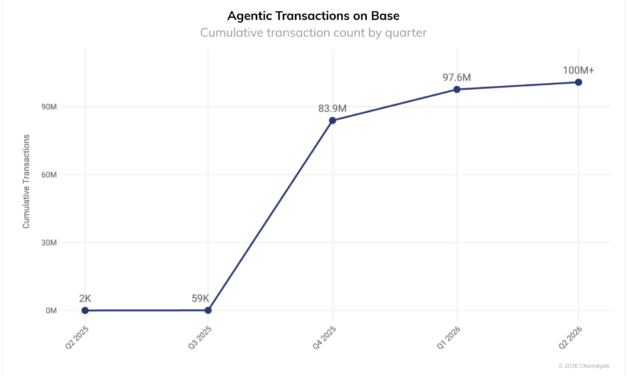
Singapore-based crypto travel platform Travala has launched a protocol it says lets artificial intelligence agents search, reserve and pay for hotels with USDC (USDC) on layer-2 blockchain Base, extending agentic AI stablecoin payments into travel bookings.The Travala Travel MCP is live through Claude Desktop, with outside developers able to integrate it into their own travel agents, Travala said in a statement sent to Cointelegraph.The company said the system connects Travala’s hotel inventory to AI agents through the Model Context Protocol, an open standard for linking AI apps to external tools. Payments use Coinbase’s x402 protocol on Base, with Travala saying the setup allows gasless USDC transactions, near-instant settlement and transaction costs of about $0.01 per booking.AI travel still needs human approvalHowever, final payment authorization still requires manual approval from the traveler, meaning it’s not fully autonomous but more advanced than a chatbot that only recommends itineraries.The launch comes as crypto companies try to make stablecoins useful for machine-to-machine commerce and follows a wave of crypto payment infrastructure aimed at AI agents. Cointelegraph reported recently that x402-linked wallets on Base surpassed 100 million transactions, while Fireblocks, MoonPay, Exodus and Oobit have launched products for AI-driven stablecoin payments.Cumulative agentic transfer volumes on Base. Source: ChainalysisTravala framed the launch as an early step toward autonomous travel booking, even as travelers still retain final approval over payments, and said it is offering developers a 10% Coinbase Wrapped BTC (cbBTC) rebate on completed stays booked through its agents.“The launch of the world’s first agentic AI travel protocol marks the death of the checkout button,” Travala CEO Juan Otero said, calling it the start of “a truly autonomous travel economy.”Travala said the setup uses ERC-7715 session keys, allowing the AI agent to request a payment while keeping final signing authority inside the traveler’s wallet. The company said the protocol can maintain context across searches, bookings and cancellations in a single chat thread.Related: Coinbase-backed x402 adds batch settlement for AI agent paymentsTravala plans broader travel rolloutTravala said the protocol covers more than 2.2 million hotels, including listings from Marriott, Hilton and IHG, which are sourced through its aggregator partners. The company said it plans to expand the protocol beyond hotels to other travel products, including flights, and expects its Travala (AVA) loyalty token to support future Travel MCP use cases.Travala was founded in 2017 and competes with crypto-friendly travel platforms such as Sleap.io and Alternative Airlines, though its latest protocol shifts the comparison from crypto checkout toward AI-agent booking infrastructure. The company says it accepts more than 100 cryptocurrencies alongside fiat currencies. Magazine: AI-driven hacks could kill DeFi — unless projects act nowAdditional reporting by Christina Comben.

Čítaj viac

Získaj BONUS 8 € v Bitcoinoch

nakup bitcoin z karty

Registrácia Binance

Burza Binance

Aktuálne kurzy