Autor Cointelegraph By Brian Quarmby

'Keep Your Coins' bill introduced to restrict government control of crypto

Ohio’s eighth district congressman Warren Davidson has introduced the “Keep Your Coins” bill in the House of Representatives to protect individuals’ self-custodied crypto wallets from U.S. government agency control.The introduction on Feb. 15 comes just a day after the Canadian government invoked the Emergencies Act, giving it the power to freeze bank accounts and monitor large transactions (including crypto) without a court order. The move was in direct response to fundraising efforts by the COVID-19 policy-focused Freedom Convoy protesters. The name of the bill ‘Keep Your Coins’ is a play on KYC and refers to protections for crypto users from having their own digital assets taken out of their control.If passed, Davidson’s bill would “prohibit Federal agencies from restricting the use of convertible virtual currency by a person to purchase goods or services for the person’s own use,” and for other purposes such as crypto transactions. While it appears that the bill has been put forward during an opportune time as the Canadian government’s action causes uproar, Davidson stated on Twitter yesterday that the bill has been in the works for six years before it was introduced to the House of Reps. Our office will be introducing legislation in the US House of Representatives shortly to protect Americans from this version of overt theft.Please let your Member of Congress and Senators know… https://t.co/UbNdcj8ZZ4— Warren Davidson (@WarrenDavidson) February 15, 2022It is unclear how much support the bill will get from the Democrats however, as they have generally been more in favor of clamping down on crypto and blockchain tech: “Been working on that since 2016. Unbelievable that Congress won’t unite to end the unjust, immoral, and unconstitutional practice of civil asset forfeiture — AKA government theft.”The Republican congressman — alongside pro-crypto colleagues such as Senator Cynthia Lummis — has long advocated for the privacy and freedom for individuals’ crypto wallets. Related: Concerns over Fed nominee may stop Senate from confirming Biden’s picks: ReportDuring the Miami Bitcoin conference last year, Davidson stated that the potential over-regulation of the crypto sector concerning private wallets was “a horrible approach.” “I wish the country would take the threat to privacy as seriously as they take the threat to the second amendment,” he said. #DefendFreedom “So, while financial privacy should already be protected by the Constitution (the Fourth Amendment), preventing the government from being able to prohibit or restrict the use of self‐​hosted wallets is a much‐​needed policy improvement.” https://t.co/RfpyY6yLQ8— Warren Davidson (@WarrenDavidson) February 16, 2022

Cointelegraph has reached out to Davidson for comment on the bill, and will update the story once he responds.

Čítaj viac


BBC pulls doco as doubts emerge over trader who turned $50 into $8M

The BBC has pulled a documentary focused on a 20-year-old crypto trader who supposedly turned $50 into an $8 million fortune last year.The doco was titled “The Crypto Millionaire” and followed the story of Birmingham-based Hanad Hassan, who claims to have made a return of around 16,000,000% in one year from trading unspecified crypto assets. The story was set to be broadcast this week and explore how Hassan had started to give back to the community following his newfound wealth, however the show was canned after the Guardian reported on Feb. 10 that it had raised concerns with the BBC’s research: “The Guardian asked the BBC if it was confident in his claimed financial returns and questioned why the program’s promotional material did not mention that Hassan’s cryptocurrency Orfano was abruptly shut down in October, with many unhappy investors claiming they were left out of pocket as a result.”“The BBC swiftly said it had withdrawn the show but did not make any further comment on its editorial checks,” wrote The Guardian’s media editor Jim Waterson.In a now-deleted promotional story for the documentary on the BBC’s website (that can still be found via web.archive.org), it reported that Hassan had initially turned $50 into $1 million in Q1 2021, before going on to co-found his own “special cryptocurrency” that donates all of its profits to charity. It is unclear how Hassan made the remaining $7 million of the reported $8 million figure, as the BBC did not specify the details behind his “net worth” and how he generated the money between Q1 and Q4 2021.According to Coinmarketcap, Hasan’s ORFANO token was released on April 2, 2021, and had a 6% tax on all transactions using the asset. Out of the tax generated from the token, 2% of it was allocated to a wallet address for charity donations. There is no listed price history for the token, however the BBC reported that OFRANO donated $200,000 to charity last year from its profits.Looking at posts from the r/Orfano community on social media platform Reddit, it appears that the project went cold around September before closing down in October suggesting that ORFANO lasted only around five or six months. Numerous users in the subreddit alleged that the project may have been illegitimate, although that’s a fairly common claim made by community members whenever projects end unsuccessfully.Related: UK tax agency cracks down on rules around DeFi lending and stakingIn a message to the community that was reposted on Reddit, Hassan and co-founder Ahmed wrote:“Things haven’t gone the way we had planned and after careful consideration we have decided that we will [be] stopping the continuing of the project. The team have put in every effort to maintain and grow the token but we don’t see any progress and a way to bring Orfano x back to the good days.”

Čítaj viac

iOS jailbreak dev wins $2M bounty for finding critical Optimism bug

Developers from the Ethereum Layer 2 scaling project Optimism announced that a “critical bug” had been identified and subsequently patched earlier this month. The bug, which could have enabled hackers to create as much ‘ETH’ in a Optimism account balance as they wished, was first discovered by white hat hacker and iOS jailbreak software Cydia developer Jay Freeman. Last week, I discovered (and reported) a critical bug (which has been fully patched) in @optimismPBC (a “layer 2 scaling solution” for Ethereum) that would have allowed an attacker to print arbitrary quantity of tokens, for which I won a $2,000,042 bounty. https://t.co/J6KOlU8aSW— Jay Freeman (saurik) (@saurik) February 10, 2022In a deep-dive blog post, Freeman explained that the bug, “would allow an attacker to replicate money on any chain using their ‘OVM 2.0’ fork of go-ethereum”. For his efforts Freeman was awarded one of largest bug bounties to date, netting a total reward amount of $2,000,042According to the Optimism team, “The bug made it possible to create ETH on Optimism by repeatedly triggering the SELFDESTRUCT opcode on a contract that held an ETH balance.”In a blog post, the Optimism team noted that its chain history showed that the bug had not been exploited, except for an accidental activation by a staffer at Ethereum data startup Etherscan, but “no usable excess was generated.”“A fix for the issue was tested and deployed to Optimism’s Kovan and Mainnet networks (including all infrastructure providers) within hours of confirmation,” the team said, thanking Infura, QuickNode, and Alchemy for their fast response times.“We also alerted multiple vulnerable Optimism forks and bridge providers to the presence of the issue. These projects have all applied the required fix.”Late last year Optimism removed its whitelist, allowing for any developer to start building projects on the Optimism network. Prior to this, the network was only accessible to specific projects such as Uniswap and Synthetix. This limitation made it easier for developers to detect and resolve potential bugsRelated: MakerDAO launches biggest ever bug bounty with $10M rewardOptimism is a Layer 2 scaling solution for the Ethereum network, employing “optimistic rollups” that aggregate transactions outside of the Ethereum blockchain. This provides the benefits of reducing slippage, decreasing transaction costs and vastly improving transaction speeds. However, as this bug has made clear, while Layer 2 protocols offer improvements in efficiency, security during ongoing development remains a common point of concern. While this bounty is one the largest to have been paid out so far, MakerDAO has just announced that it will be offering a maximum bounty of $10M to anyone who can point out critical security threats in its smart contracts. This is the largest series of bug bounties ever to have been hosted on bug bounty platform Immunefi.

Čítaj viac

YouTube sees ‘incredible potential’ in NFT video sales despite backlash threat

YouTube is looking at NFT integrations to provide new methods for creators to engage with fans and develop additional revenue streams. The news comes just a few weeks after YouTube CEO Susan Wojcicki hinted that the platform can use Web3 “as a source of inspiration” for growth and possibly adopt NFTs on the website. In a Feb. 10 blog post, YouTube’s Chief Product Officer Neal Mohan outlined a long list of new products, tools and features that the firm intends to roll out in 2022, with Web3 tech, blockchain, NFTs and the Metaverse all getting mentioned. Mohan stated that YouTube is actively seeking out new ways to provide additional support and options for its two million partnered creators after receiving feedback from the community. After referencing that creators often struggle with coming up with new content ideas or figuring out what will be successful on the platform, Mohan pointed to Web3 tech such as NFTs as a potential solution:“Web3 also opens up new opportunities for creators. We believe new technologies like blockchain and NFTs can allow creators to build deeper relationships with their fans. Together, they’ll be able to collaborate on new projects and make money in ways not previously possible.”In potential ways that creators could utilize NFT tech, Mohan suggested they could tokenize their videos, photos, art and experiences as a way to engage with fans.“There’s a lot to consider in making sure we approach these new technologies responsibly, but we think there’s incredible potential as well,” he said. Mohan also paid tribute to the current major buzzword of the moment — “Metaverse”— as he outlined that viewers could expect some new ways to experience content via virtual reality. The YouTube exec stated that the firm will first tackle gaming, but did not reveal any specifics at this stage. “Finally, we couldn’t have a piece about innovation without touching on the Metaverse! We’re thinking big about how to make viewing more immersive. The first area in which you can expect to see an impact is gaming, where we’ll work to bring more interactions to games and make them feel more alive.”“It’s still early days, but we’re excited to see how we can turn these virtual worlds into a reality for viewers,” he added.Related: OnlyFans offers NFT profile picture featureA major tech firm like YouTube outlining any plans to do with NFTs is courageous in the current climate considering the numerous times a public backlash has occurred following NFT announcements from firms such as Discord, Ubisoft and Team17 . Common arguments from opponents include framing NFTs as cash grabs, scams, or responsible for environmental damage due to mining practices of some cryptocurrencies. Reporter for the left wing UK media outlet The Independent, Adam Smith highlighted the public perception among progressives against NFTs earlier today on Twitter, stating that: “A YouTube spokesperson told me they have nothing more to share on huge environmental damage that NFTs cause even though Google is ‘dedicated to sustainability’ so that’s great.”He then offered a chance for YouTube or Google employees to complain to him for an article.Proponents would of course point out that NFTs don’t cause “huge environmental damage” at all, as the blockchains they are tokenized on would use the same amount of electricity regardless of whether NFTs are traded on them or not. And while the backlash is centered on the electricity consumption of proof of work blockchains, other chains hosting NFTs run on proof of stake which is more than 99% more energy efficient.My Youtube content is not meant to be owned. That’s why I make it available FREE. Who the hell thinks this is a good concept?I am so tired of this garbagehttps://t.co/3kjKzTnCjw— Brad Lynch (@SadlyItsBradley) February 10, 2022

Čítaj viac

Nifty News: Land grab in the Shiberse, floor prices fall, NFT house sale and more…

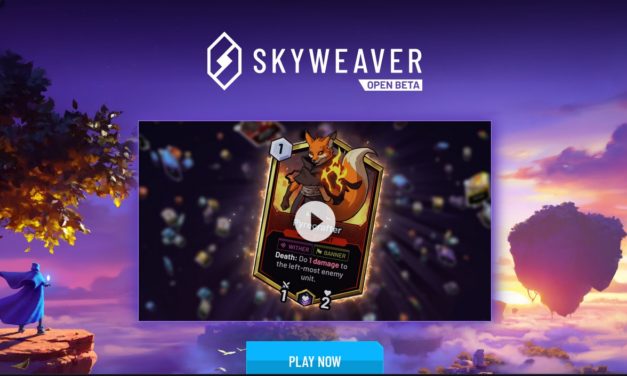
The team behind one of the top memecoin projects Shiba Inu (SHIB) is rolling out tokenized real estate dubbed “Shiba Lands” as part of its upcoming metaverse project.Shiba’s upcoming metaverse is yet to receive a name, with the team referring to it as the “Shiberse,” and stating that the official title will be revealed later this month. The launch date for the tokenized land sales and auctions is also set to be announced soon and hodlers of the LEASH token (which is available via Shiba Swap) will be granted first access to the land sale events. After the first round of sales, access will then be opened up to the public. New Blog: A METAVERSE Story that begins… with an update! Introducing Lands, a queue system, and more!$LEASH holders will be the first to gain access to Shiba Inu Metaverse Lands.Read more… https://t.co/S758ClAbRC— Shib (@Shibtoken) February 8, 2022In a Feb. 8 blog post, the team emphasized the importance of introducing extra utility to the SHIB ecosystem and outlined plans to make the asset more than just a memecoin: “Overall, our focus is not only to disrupt the Metaverse industry but many industries in and outside the crypto world. Therefore we are early, but most importantly, our metaverse serves as the anchor in our sustainable ecosystem, as we add even more utility, projects, and benefits for our beloved ShibArmy.” NFT floor prices in the basement The NFT market has faced a notable pullback this week, with the floor prices of a long list of top projects seeing losses of around 10%. According to data from NFT Price Floor, the Bored Ape Yacht Club (BAYC), CryptoPunks, and Clone X all shed 8.79%, 9.47% and 6.67% apiece over the past 24 hours to sit at a floor price of 91 Ether, 66.95 Ether and 14 Ether respectively. It appears the market is cooling down after seeing a meteoric surge so far in 2022, with the BAYC’s floor, in particular, starting the year at 60 Ether before almost doubling to around 118 Ether as of Feb. 1. A major factor correlated with the declining floor prices of the top projects are the declining trading volumes observed on OpenSea. Cointelegraph reported earlier today that the total trading activity on the platform dropped by 30%. Skyweaver launches betaThe long-awaited rollout of the open beta for NFT turn-based card game Skyweaver has gone live this week, after months of testing behind closed doors for a limited number of players. Skyweaver is based on the Polygon network and was developed by Horizon Blockchain Games, whose team co-created the ERC-1155 token standard. The game enables players to collect and earn tokenized cards from battling each other, then trade the cards via its marketplace.Open Beta: SkyweaverAccording to Skyweaver, the play-to-earn battle and trading card game already has 233,000 app installs. More than three million games were played in the private beta and 345,000 people signed up for the waitlist before the open beta went live on Feb. 8.Horizon Blockchain Games Co-founder and CEO Peter Kieltyka said the firm has been working on making the game as user friendly as possible: “We’ve been crafting Skyweaver for the past four years, fine-tuning the mechanics and user experience to ensure everyone can enjoy — while maintaining the purity of Web3. We’re committed to providing millions of people with easy and secure access to Web3, where everyone can own, use and enjoy digital assets.”Related: McDonald’s files trademarks for McMetaverse restaurants… that deliverPhysical NFT real estateLeslie Alessandra, the founder of a Tampa-based blockchain company DeFi Unlimited is auctioning the property rights to her $650,000 home via NFT. Alessandra’s Spanish-inspired five-bedroom home is going up for sale today in partnership with real estate firm Heckler Realty and start-up blockchain platform Propy. Alessandra’s property: Heckle RealtyBidders will need an NFT wallet to participate in the auction which has a starting price of $650,000. The winner of the NFT auction will receive a tokenized deed to the property along with the physical property in “meatspace” or the real world. “This technology will revolutionize the real estate industry providing speed, transparency, and security on a level not seen before,” Alessandra said on the property’s listing page. Speaking with the Tampa Bay Times on Feb.9, Alessandra stated that she was conducting the property sale via NFT as proof of concept for how the real estate industry could adopt the technology:”This is a real tangible, real-world application of that technology. So, when we NFT the ownership​ documents, it’s instantaneous ownership transfer and that can be from anywhere around the world, which is very powerful.”​Other Nifty News:The stock price of popular video game store chain GameStop (GME) surged roughly 13% on Feb. 8 day following rumors circulating online regarding a partnership with Microsoft to work on nonfungible token (NFT) gaming.San Francisco-based game developer Zynga, best known for the FarmVille and CSR Racing series, has announced plans to release its first blockchain and NFT-based games this year, but hasn’t outlined plans to integrate the tech into existing titles at this stage.

Čítaj viac

Získaj BONUS 8 € v Bitcoinoch

nakup bitcoin z karty

Registrácia Binance

Burza Binance

Aktuálne kurzy