Autor Cointelegraph By Brian Quarmby

Internet Computer founder's $250M plan to help end the war in Ukraine

Internet Computer (ICP) and DFINITY founder Dominic Williams has conjured up an oddball plan to speed up the end of the Russian invasion of Ukraine via smart contracts and $250 million worth of crypto rewards. DFINITY’s Internet Computer was launched in May 2021 and is a public blockchain and protocol that’s trying to decentralize the internet. Williams’ March 16 proposal is focused on countering propaganda, and informing the Russian population — who he suggests are in general “completely ignorant” — on the reality of what is actually taking place in Ukraine, which will then, in turn, spur them on to pressure the government to stop the conflict. “We should not hold out too much hope that sanctions alone will turn the Russian population against their leaders, for the simple reason that they control their media, which dutifully pumps out carefully-crafted propaganda and false information,” Williams wrote. The proposal suggests that blockchain tech and smart contracts could serve as a way to get large numbers of verified Russian citizens to watch “informative media” concerning the war together in virtual reality parties dubbed “people parties”: “Each attendee who proves personhood using the people party system is then identified to smart contracts as an individual human being. The system prevents cheating, such that on each run, a person is only able to attend exactly once.”“In this proposal, smart contracts would open a new crypto account for each successful attendee, which they can access and control using an Internet Identity,” the post added. To incentivize citizens, Williams proposes that crypto rewards in assets such as Bitcoin (BTC) and Ether (ETH) could be utilized. Each Russian citizen would be required to watch until the end of the video/s as pin numbers tied to their accounts would not be unlocked until all of the content is consumed. “The streaming video will tell the truth about the war in Ukraine, and ask Russians to pressure their government into ceasing hostilities. How such a video is best constructed should be left to talented filmmakers. A non-watermarked version should be made available for download, allowing the recipient to show others the video,” Williams wrote. Related: Ukraine’s president signs law establishing regulatory framework for cryptoThe $250 million sum suggested by Willaims is based on his recommendation to pay each participant $50 per video watched, with the hope of attracting 5 million Russians to watch the informative videos. The plan relies on many contingencies falling into place, with the most important being the internet staying online with no interference from the Russian government to facilitate such a grand plan. Responses on Twitter highlighted pointed out that Moscow officials are reportedly weighing up disconnecting the country from cyberspace. “Moscow is prepared to disconnect the country from cyberspace. Though the authorities officially deny the initiative, leaked messages suggest that it will begin to roll out the strategy on the government’s websites this Friday”I wonder how anyone will see the videos— Nicolas.icp (@ICbicycle) March 15, 2022Other Twitter users weren’t impressed with the idea such as “Omega.ic3” who slammed the move as a PR stunt:“There is no way this idea would have any real chance to impact public opinion in Russia. Therefore it looks like a cheap PR shot, ultimately trying to profit off the situation by jumping on the bandwagon of popular opinion and increase visibility.”

Čítaj viac

Truth or fiction? Popular former hacker claims to have $7B in BTC

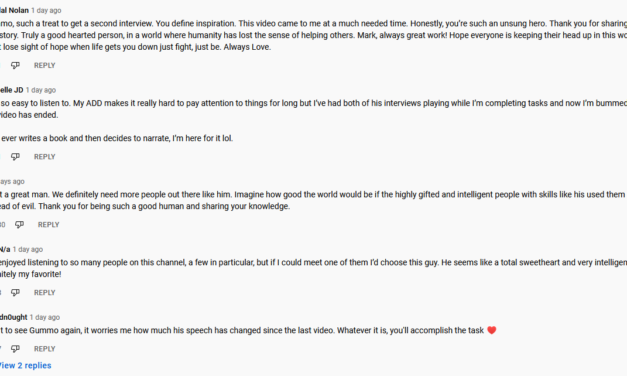
A former blackhat hacker who goes by the name Gummo online claims to have amassed around $7 billion worth of Bitcoin (BTC). Despite a flood of positive comments and posts relating to his interviews with the Soft White Underbelly YouTube channel — which has 3.18 million subscribers — information about Gummo is scarce elsewhere, which could either be by design or suggest that a large pinch of salt may be required when listening to his extravagant claims. He said that he has been working in the field for more than 30 years, and while he started hacking for illicit reasons and got caught by authorities, he has since turned to doing good work — thanks to the support and counsel of his wife — such as threat hunting, cybersecurity and developer consulting. The latest comments came as part of a follow up interview published on March 12, after the initial discussion occurred in late 2020. During the first video, Gummo stated that he built four supercomputers to mine Bitcoin when it was priced at around $200-300 back in 2013, and generated more than 80,000 BTC within a year and half. According to his claims, he has now amassed roughly 179,000 BTC. If his holdings are calculated at current prices that would rank him at around the 369th richest person globally according to Forbes’ 2021 world’s billionaires list: “I’m quite wealthy. Yeah, I do not have to work if I don’t choose to. I have over seven billion dollars worth of Bitcoin. ”nothing will impede the simplicity & decentralized future #Bitcoin .:)— Gummo (@GummoXXX) March 8, 2022Gummo stated that his current work in hacking is not motivated by the desire to have a job or money, but by helping the little guy, as he emphasized the importance of choosing to do the right thing and protect people from online evil. “Knowing that I’m preventing someone’s grandmother from being a victim of some sort of cyber extortion scheme, that’s the thing I get up for each day and those are the things that motivate me currently,” he said. Speaking on the dark side of technological advancement, Gummo warned that the hacking has quickly evolved from “having endless javascript pop-ups” humorously spam PCs to the weaponization of data and software against people: “The landscape is growing darker and more sinister as more people wish to seek their wealth. Whether it be cryptocurrency theft or traditional theft of banking systems.”“The fact that governments now are keen to begin a war on just the idea of software being deployed is quite frightening and unfortunately that will be society’s new reality,” he added.Related: No crypto for criminals: Coinjoin BTC mixing tool to block illicit transactionsLooking at the response to the both interviews, it appears Gummo is fast becoming a beloved figure due to his back story which includes a difficult upbringing, the loss of loved ones and a significant shift from the dark side of hacking to helping people online. The latest video has 14,000 likes so far and there is an almost endless amount of positive feedback for the figure, while the first video has 144,000 likes and the same sentiment in the comments. “This man has inspired me to pursue cyber security with good intent. I’m a broke teacher, LOVE teaching because it helps students so never focused on the paycheck. Now too old to teach. Considered cyber security as a new career to pay the bills, but Gummo has given more meaning to this career, will now pursue the career to make the world a better place too. Thank you Gummo,” wrote YouTube user “Zim Petrichor.” User “quicklern818” stated that: “I don’t think we’re ever going to see this man again, and in a way, I feel that’s appropriate — he’s like a guardian angel, working behind the scenes and always watching. Sending love to him and his family, and a thank you for all of his hard work.”Comments on Gummo follow up interview: Soft White Underbelly YouTube channel

Čítaj viac

Diem team members raise $200M to launch blockchain derived from it

Former Meta employees and key players behind the firm’s defunc stablecoin project Diem have raised $200 million to expand a new project dubbed “Aptos.”Aptos was cofounded by former Novi — Meta’s crypto unit — strategic partnerships lead Mo Shaikh and tech lead Avery Ching. The duo arenow serving as the CEO and CTO for the new firm. Both left the company in December, prior to Diem being sold to Silvergate Capital in February this year. The team is building a decentralized Layer 1 blockchain that is partly based on Move, the coding language initially developed for Diem. The company is now in the process of growing its developer ecosystem and attracting projects to the blockchain, which it touts will be a cheap, secure and scalable network. According to a March 16 announcement, Aptos’ $200 million strategic funding round was led by capital venture giant Andreessen Horowitz (a16z), along with backing from top firms such as Three Arrows Capital, FTX Ventures, Paxos and Coinbase Ventures. The funding will be used to hire new staff and to support “companies, brands and builders” who are looking to develop projects on the Aptos blockchain, with the startup teasing that several DeFi, NFT, Web3, social media and payments projects are already in the works. Speaking with TechCrunch, Aptos refused to disclose a specific valuation but suggested that it is “well off into the unicorn territory” of around $1 billion. Alongside the funding announcement, Aptos has also launched a public devnet with an open-source codebase. The team told the publication that big names such as Anchorage, Binance and Coinbase have been providing guidance and contributing code for the devnet. The announcement stated:“Later in Q2, there will be an incentivized testnet to help scale the network and stress test it as it marches toward mainnet. We invite validators and other infrastructure providers to join our community now in anticipation of that.”Aptos expects Mainnet to launch in Q3 later this year, giving developers roughly six months to build projects before the network is live to the public. Related: Vale Diem: How Facebook’s ambitious stablecoin project came to an endIn a blog post late last month, Aptos emphasized that the focus of its blockchain is based on “absolute safety, extensible scalability, and credible neutrality,” while being able to work on its ideas without intense scrutiny from regulators like in the case of Diem: “Since departing Meta (formerly Facebook) we have been able to put our ideas into motion, ditch bureaucratic red tape, and build an entirely new network from the ground up that brings them to fruition.”“Aptos is using Move, the safe and reliable language originally developed for Diem. The ideas we conceived then are still relevant and will serve as an important foundation for a safe, scalable, upgradable Web3. Our plans for decentralization and permissionless access are progressing quickly and will be developed in the open,” the post added.

Čítaj viac

ESPN's baseball reporter's Twitter account hacked by NFT scammers

In what ESPN Major League Baseball reporter Jeff Passan called the “biggest news day” of his life, scammers hijacked his Twitter account to promote an NFT giveaway. With the MLB and the Players Association (MLBPA) engaged in a long-winded deadlock over a labor deal that resulted in canceled games, Passan had just broken news regarding an important agreement between the two parties concerning the international draft. hey remember that time i got hacked on the biggest news day of my life— Jeff Passan (@JeffPassan) March 10, 2022However, with eyeballs waiting on the next development from Passan, his account suddenly started promoting giveaways for the Skulltoons NFT project. His username was also changed to “Jeff.eth” while his profile picture depicted artwork from the NFTs and his bio read “NFT Enthusiast, MLB Insider, Father, Husband, Mod for @skulltoonsNFT, @Azukizen, @thugbirdz” The tweets (which have since been deleted and salvaged via screenshots) noted that Passan had partnered with Skulltoons to giveaway 20 presale spots for an upcoming drop on March 20, and of course, people needed to click on a nefarious looking link to get a chance of winning. oh no pic.twitter.com/KpkQl1kbiG— Alex McDaniel (@AlexMcDaniel) March 10, 2022

Following reports of the hack circulating online, the team behind Skulltoons distanced themselves from the hacker’s posts as they warned the community to be wary of scams:“Looks like Jeff Passan got hacked by someone trying to scam our community… We are not affiliated with Jeff in any capacity. We hope that he’s able to get his Twitter back ASAP.”Looks like jeffpassan got hacked by someone trying to scam our community as there’s a drive into deep left field by Castellanos and that’ll be a homerun so that’ll make it a 4-0 ballgame— Shortest Stop (@ShortestStop) March 10, 2022

The hack didn’t last long, with ESPN reportedly moving fast to get Passan’s account back within two hours. To announce his return, Passan changed his Twitter background to a white image that simply read “I’m back,” in reference to the famous quote from NBA icon Michael Jordan when he came out of retirement to play for the Chicago Bulls for a second stint. Related: Company auctions 1-of-1 Topps 1952 Mickey Mantle Card NFT in what may be the highest valued sports NFT to dateHackers often attempt to hijack popular social media accounts in a bid to dupe followers into thinking they are seeing legitimate promotions from people they support. Cointelegraph reported in late January that dozens of YouTube accounts such as BitBoy Crypto, Altcoin Buzz, Box Mining, Floyd Mayweather, Ivan on Tech, and The Moon were hacked to promote crypto scams.

Čítaj viac

Stripe announces fiat payment support for cryptocurrencies and NFTs

U.S.-based fintech giant Stripe has significantly ramped up its crypto initiatives after it launched a service that enables payments for NFTs and digital assets via fiat currency. Businesses can use Stripe’s new application programming interfaces (APIs) to accept fiat payments for crypto, provide digital wallets, payout users in fiat, leverage identity and know-your-customer (KYC) solutions, and utilize data to detect and block fraudulent transactions. Stripe co-founder John Collinson shared an announcement via Twitter on March 11, and the firm also partnered with FTX, FTX US, Blockchain.com, Nifty Gateway, and Just Mining to launch the crypto business suite. Stripe now supports crypto businesses: exchanges, on-ramps, wallets, and NFT marketplaces. Not just pay-ins but payouts, KYC and identity verification, fraud prevention, and lots more. https://t.co/3X173SkdPd— John Collison (@collision) March 10, 2022Speaking on the partnership, FTX’s head of strategy Tristan Yver emphasized that the deal will help the firm attract a broader mainstream audience by making it simpler for users to purchase crypto assets: “The optimizations we made in our payments setup with Stripe deliver the smooth on-ramp experience FTX’s growing customer base demands. We’re able to multiply revenue by making it easier than ever for people to invest in crypto.”As part of the move, Stripe also launched an open drop of NFT collectibles dubbed “Cube Thingies” via Nifty Gateway. The NFTs cost between $242.42 and $424.24 each to mint, and all proceeds from the sale will go to non-profit healthcare tech organization Watsi.Stripe now supports NFT sales—and we’re doing a drop of our very own today!An open edition NFT drop presented by @stripe and @niftygateway.All proceeds benefit healthcare nonprofit @watsi. 6:30–8:30 PM ET: https://t.co/Js0qCYQ4KN. pic.twitter.com/iUM6zGj01C— edwin (@edwinwee) March 10, 2022

Stripe initially rolled out Bitcoin (BTC) support back in 2014 but reversed the decision four years later due to the network’s slow transaction speeds and fees at the time.Related: $40K Bitcoin price is in reach, but analysts warn that a sweep of recent lows is likelyHowever, the firm did also state that it would re-enter the sector once crypto payments became more viable, and the firm has been progressively getting back into the crypto sector since late 2021. Cointelegraph reported in October that Stripe was building a team to enable crypto payments for its users.

Čítaj viac

Získaj BONUS 8 € v Bitcoinoch

nakup bitcoin z karty

Registrácia Binance

Burza Binance

Aktuálne kurzy