Autor Cointelegraph By Brian Quarmby

Beer, gambling and crypto: Budweiser races into Zed Run's NFT games

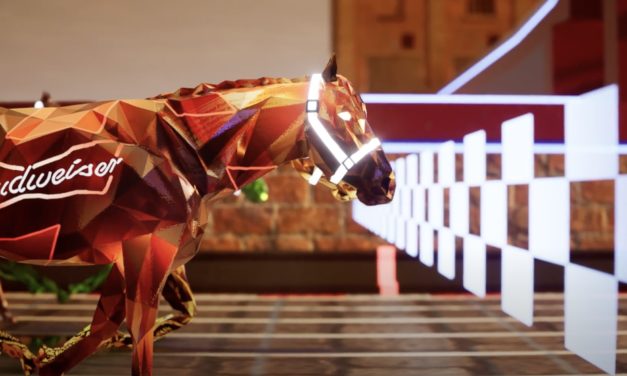
Popular beer manufacturer Budweiser has teamed up with Zed Run to deploy tokenized Clydesdale draught horses in its virtual NFT-based horse racing and wagering game. The latest move from Budweiser adds to the $120,000 it spent on NFT fan art and the purchase of the Beer.eth domain name it purchased via the Ethereum Name Service in August 2021. Zed Run was founded by Sydney-based Virtually Human Studio in early 2019 and its racing horse NFTs initially went for around $30 to $80 and mint but have since gone on to be highly sought after assets that trade for thousands on secondary markets. One user sold a single race horse for as high as $125,000 in April 2021. As part of the deal with Zed Run, the duo will launch a Budweiser-themed race track, Budweiser NFT passes, prize pools for Bud-sponsored virtual horse races starting at $45,000 and three tiers of airdropped Clydesdale NFT skins that are usable in Zed Run.Budweiser Clydesdale NFT: Zed RunThe Budweiser Clydesdales are a well-known group of horses used for company promos and commercials, with the beer makers being a major sponsor of horse racing events across the globe.There will be 2,500 Budweiser Pass NFTs in total that will go up for sale (to users aged 21 and over) for a maximum of 24 hours starting on June 10. The NFTs will cost $225 a pop plus gas fees. Zed Run will host two Budweiser Racing Challenges in July and September which both have prize pools of $45,000, while there will also be a $95,000 tournament in December that also offers the chance to win a year’s supply of Budweiser beer.Hodler’s of the NFTs will be airdropped Cyldesdale skins NFTs in July that can be used to spice up existing racehorse NFTs from the game, while they will also receive Budweiser t-shirt wearables that can be worn by avatars in the Decentraland Metaverse, where Zed Run’s virtual headquarters are located. The duo is rolling out three different versions of the horse racing skins NFT in varying quantities: 1,600 Classic Clydesdales, 800 Bud Bottle Clydesdales, and 100 Gold Clydesdales. After all of the racing tournaments have been completed, the project is also offering rewards to anyone who burns their Budweiser pass NFT, however the specifics have not been revealed yet. Spencer Gordon, the vice president of consumer connections at Budweiser’s beer producer AB InBev, noted that the move marks “an example of how we’re constantly innovating and leveraging new technologies, like NFTs, to create memorable experiences for fans and bolster our brand.”Related: $72M Illuvium NFT Land Dutch auction saves buyers thousands on gas feesZed Run also enables users to bet on virtual races, trade NFTs and breed new tokenized racehorses via mating stallions or colts with fillies and mares.In July last year, the project raised $20 million worth of Series A funding in a round that was backed by Red Beard Ventures and crypto venture capital giant Andreessen Horowitz (a16z).

Čítaj viac


New York Governor yet to commit to signing Bitcoin mining ban into law

New York overnor Kathy Hochul is yet to publicly commit to signing the controversial Proof-of-Work (PoW) crypto mining ban bill, instead noting that her team will be looking “very closely” at the proposal over the next few months.If she signs the bill into law, PoW crypto mining operations backed by fossil fuels would no longer be able to set up shop or renew existing licenses in New York. Under the new regulations, only PoW operations backed by 100% renewable energy would be able to operate. The New York State Senate passed the bill on June 3 to the dismay of members in the crypto community, meaning the fate of the bill is now in the hands of Governor Hochul who has the power to approve or veto the legislation. At this stage, it appears that the Democrat has no intentions of rushing the decision and she may have bigger fish to fry with the upcoming primary election on June 28. During a news conference on Tuesday, Hochul opted not to draw a line in the sand regarding the PoW ban, as she suggested the deliberation process could take a few months: “We’ll be looking at all the bills very, very closely. We have a lot of work to do over the next six months.”Earlier today the Democratic candidates for New York governor including Hochul, Congressman Tom Suozzi and Public Advocate Jumaane Williams faced off in a debate ahead of the election. Reporters such as Times Union’s Josh Solomon followed the event live and noted that Hochul suggested that her team hasn’t had time to fully review the bill, but does support the idea of reducing the environmental impact of fossil fuel mining plants. Hochul now suggests her team hasn’t had time to review the bill for crypto proof of work moratorium of new licenses and supports the concept of preventing fossil fuel plants from doing any harm to the environment. https://t.co/SDCHvNyzpb— Josh Solomon (@therealjsolo) June 7, 2022Speaking on the bill late last month, Hochul also stressed the need to balance both environmental protection and job creation. “We have to balance the protection of the environment, but also protect the opportunity for jobs that go to areas that don’t see a lot of activity and make sure that the energy that’s consumed by these entities is managed properly.” Related: Environmental groups urge US government to take action on crypto minersPoW mining has been a highly divisive subject in New York over the past couple of years, with environmental groups such as the Seneca Lake Guardian speaking out, protesting and lobbying against Bitcoin (BTC) mining firm Greenidge Generation LLC in upstate New York on several occasions. While a long list of organizations, businesses and labor groups also co-signed a letter in October calling on governor Hochul to deny permits for PoW mining firms.

Čítaj viac

New Japanese law may allow seizure of stolen crypto

Japan’s Justice Ministry is reportedly considering a revision of an asset seizure law relating to organized crime to include a stipulation that crypto can be commandeered in such instances. If the reports are found to be true, a potential revision of the Act on Punishment of Organized Crimes and Control of Proceeds of Crime (1999) would enable law enforcement officers and courts to take control of crypto assets used in criminal activity such as money laundering. According to reports from local media outlets such as the Yomiuri Shimbun on June 4, the Justice Ministry will first need to engage in talks with the Legislative Council on the issue before proceeding forward. While it will also need to iron out important details such as how officers can go about obtaining a criminal’s private keys. The talks with the legislative Council could go ahead as soon as next month according to the Jiji Press. As the specific law focused on the seizure of funds/assets from organized crime does not explicitly outline any procedure concerning illegally acquired cryptocurrencies, there is a concern that criminals may be able to continue illicit behavior via their unseized digital asset holdings. As it stands, the law only outlines that the type of assets that can be seized are physical property, monetary claims, and movable assets such as machinery, vehicles, tools, and supplies, with crypto falling under none of those categories. Related: Half of Asia’s affluent investors have crypto in their portfolio: ReportOnce the finer details have been set, the amendment to the law would need to be approved by the cabinet and then signed off by parliament, and may not meet much resistance given the nature of such a proposal. The report comes just days after Japan’s parliament passed a bill to ban stablecoin issuance by non-banking institutions as part of a push to reduce system risk and provide greater consumer protections. Under the bill, only licensed banks, registered money transfer agents, and local trust companies can develop and issue stablecoins.

Čítaj viac

Solana developers tackle bugs hoping to prevent further outages

Developers have fixed the runtime bug that caused the latest outage of the Solana network on June 1. According to a report published by Solana Labs on June 5, Solana’s fifth outage of 2022 was caused by a bug in the “durable nonce transactions feature” which caused the network to stop producing blocks for roughly four and half hours.“The durable nonce transaction feature was disabled in releases v1.9.28/v1.10.23 to prevent the network from halting if the same situation were to arise again.”“Durable nonce transactions will not process until the mitigation has been applied, and the feature re-activated in a forthcoming release,” they added.The term durable nonce transactions refers to a type of transaction on Solana that is designed to not expire, unlike a normal transaction on the network which usually has a short lifetime of around 2 minutes before a blockhash becomes too old to be validated. It is generally used to support transactions tied to avenues such as custodial services which require more time than the usual “to produce a signature for the transaction” according to Solana Documentation. Solana Labs noted that durable nonce transactions require a separate “mechanism to prevent double processing, and are processed serially,” however a runtime bug presented itself after a durable nonce transaction was processed as a regular transaction and failed, but was then re-submitted again and resulted in the network grinding to a halt. “After the failed transaction was processed, but before the nonce was used again, the user resubmitted the same transaction for processing. This resubmission activated the bug in the runtime,“ the p report reads. Related: Is Solana a ‘buy’ with SOL price at 10-month lows and down 85% from its peak?The price of Solana’s native asset SOL has dropped roughly 13.9% since the mainnet outage on June 1 to sit at $39.08 at the time of writing. Investor appetite to trade the asset has only increased, however, with 24-hour trading volume increasing by 61% to $2.141 billion within that same time frame, according to data from CoinGecko. In a broader sense, data from Solana-focused analytics platform Hello Moon shows that the total value moved on-chain (successfully) in terms of a seven-day rolling average has significantly dropped since late March. After topping out at all-time-high levels of around $3.18 trillion on March 24, the figure has plunged to around $159.71 billion as of June 4.

Čítaj viac

MetaBrewSociety to offer voting rights over a brewery via NFTs and DAO

Munich-based MetaBrewSociety (MBS) will soon offer voting rights on the business decisions of a physical brewery via nonfungible tokens (NFTs) and a decentralized autonomous organization (DAO). The MBS was formed in February this year by a group of beer-loving NFT investors and entrepreneurs that came up with the idea to combine a brewery with the Metaverse, a DAO and NFTs to create a “tangible IRL utility that carries a concrete value” for participants. As part of the project, MBS will offer a range of tokenized “beer share” certificates that offer varying levels of governance rights over a physical brewery in Munich that will also have a presence in the Metaverse. The Sandbox platform is being considered as a potential location.All of the NFTs will entitle the holder to at least 100 cans of free beer per year, with the sale of the NFTs helping to fund the purchase and scaling of the brewery. Once the physical location has been purchased, the project will then form a DAO consisting of the NFT holders. Speaking with Cointelegraph, the co-founder and CEO of the MBS, Holger Mannweiler, noted that the DAO will play an important role in the governance of the business moving forward, while also playing a key part in consumer research: “The DAO will take all major business decisions from which beers we´ll brew, how we´ll price them to non-NFT holders, where we’ll sell them, etc.”“The beauty of this DAO is that it also represents a huge permanent target group, something which other consumer brands need to spend a lot of time and money for,” he added.The MBS will roll out a total of 6,000 NFTs in two stages, with first access given to whitelisted members at an unspecified date in the near future. Once 75% of the NFTs have been minted, the MBS will execute a purchase of an existing brewery that will have its name changed to the “MetaBrewery.” Mannweiler stated that the project will most likely “airdrop the beer allowance right for every year to the NFT holders as a separate NFT so they can sell/monetize it if they don´t need the beer in a certain year or hold more NFTs than they can drink.“The MBS will also use the Metaverse-based variant of its brewery as a way to increase the exposure of the project, while also acting as an online shop to purchase its range of beers. Mannweiler highlighted that Web3 concepts such as DAOs and NFTs can help stimulate and modernize “even the most old-fashioned brands” as they enable the creation of dedicated communities that can actively shape the trajectory of a company: “The community holding the NFTs is a permanent target group of young innovative beer lovers that can help to shape and revive any brand by guiding it towards brand and product experiences that resonate with exactly this target group. ““If the NFT holders like what they get they will be our greatest brand ambassadors and will help to onboard friends and family to the MetaBrewSociety experience thus building the basis for insane future growth,” Mannweiler added.Related: Beyond the hype: NFTs can lead the way in transforming business experiencesThe co-founder stated that the MBS may launch a second NFT drop if the option of a second brewery becomes a reality in the future. “In terms of additional tokens there are several options that we will explore with our DAO. First, we may drop more NFTs to buy another brewery… potentially one after another if we see demand for our approach is high enough,” he said.

Čítaj viac

Získaj BONUS 8 € v Bitcoinoch

nakup bitcoin z karty

Registrácia Binance

Burza Binance

Aktuálne kurzy