Autor Cointelegraph By Brian Quarmby

Ethereum fork a success as Sepolia testnet gears up to trial the Merge

The difficulty bomb-delaying Gray Glacier hard fork went live on Ethereum on Thursday without a hitch according to the network’s core devs including Ethereum Foundation’s Tim Beiko.The Sepolia testnet is also set to run through its Merge trial over the next few days and is the second last testnet to go through the trial before the official Merge. According to Etherscan, the Gray Glacier hard fork was initiated on block number 15050000 at roughly 6:54 am ET, June 30. The hard fork will now delay the difficulty bomb by roughly 700,000 blocks or 100 days, giving devs until mid-October to complete the long-awaited Merge. Ethereum Foundation community manager Tim Beiko promptly went to note on Twitter later that day that at 20 blocks past the fork, all monitored notes remained in sync, stating: “20 blocks past the fork and it’s looking good: all monitored nodes except @OpenEthereumOrg, which doesn’t support the fork, are in sync. No blocks on the old chain so far!”Ethereum ecosystem developer Nethermind on Twitter also confirmed the success of the hard fork, adding that the difficulty bomb had been successfully delayed. Gray Glacier hard fork is successful Nethermind nodes are fine. Block time will go back down to 13 seconds.Difficulty bomb delayed pic.twitter.com/NPkZMYhWHn— Nethermind (@nethermindeth) June 30, 2022The difficulty bomb is a mechanism put in place to gradually disincentivize Ether (ETH) miners from Proof-of-Work (PoW) mining on Ethereum ahead of the network’s eventual merge with the Proof-of-Stake (PoS)-based Beacon Chain. This is done by increasing the difficulty level of puzzles in the PoW mining algorithm, thus resulting in longer block times and fewer ETH mining rewards. The mechanism would also make the Merge significantly more complicated for devs to complete due to its gradual slowing of block-creation. Pushing back the difficulty bomb was required as it would have slowed down new block creation so much that it would almost be impossible to introduce new network upgrades. The difficulty bomb has been pushed back on multiple occasions due to the Merge experiencing numerous delays over recent years. The previous Arrow Glacier delay occurred in December 2021 and pushed the bomb back until the middle of 2022. The Merge has been delayed so often that even the memes about it being delayed are ancient.Sepolia Merge Beiko also shared a post on Twitter from the Ethereum Foundation on June 30 announcing that the Sepolia testnet will do a dress rehearsal of the Merge over the next few days, marking the second of three public testnets to do so. “After years of work to bring proof-of-stake to Ethereum, we are now well into the final testing stage: testnet deployments!”“With Ropsten already transitioned to proof-of-stake and shadow forks continuing regularly, Sepolia is now ready for the Merge. After Sepolia, only Goerli/Prater will need to be merged before moving to mainnet,” the post added. Sepolia, the second of three public testnets, is merging If you run a node on the network, now is the time to upgrade to an EL/CL combo Hashrate has been volatile, so we may hit TTD over the weekend https://t.co/OfPTWzRqRN— Tim Beiko | timbeiko.eth (@TimBeiko) June 30, 2022

Related: Ethereum $1K price support in danger as Q2 comes to a closeOn the Ethereum Foundation website, it vaguely estimates that the official Merge will go through during Q3/Q4 this year, and the latest post also adds that “the date for the Ethereum mainnet proof-of-stake transition has not been set. Any source claiming otherwise is likely to be a scam. Updates will be posted on this blog.”

Čítaj viac


BnkToTheFuture unveils 3 proposals to rescue Celsius from oblivion

Celsius’ lead investor BnkToTheFuture has outlined three proposals to save Celsius from bankruptcy while finding a good outcome for shareholders and depositors with funds stuck on the platform.Shared on Twitter by BnkToTheFuture CEO Simon Dixon on June 30, the three distinct proposals include either two options of restructuring and relaunching Celsius, or potentially co-investing in the platform alongside wealthy Bitcoin Whales. “Proposal #1: A restructuring to relaunch Celsius and allow depositors to benefit from any recovery through financial engineering.Proposal #2: A pool of the most influential whales in Bitcoin to co-invest with the community. Proposal #3: An operational plan that allows a new entity and team to rebuild and make depositors whole.”  Dixon previously referred to “financial innovation” being needed to be applied to Celsius, similar to the issuance of equity debt tokens like in the case of Bitfinex in 2016, which were designed to represent $1 of debt per token. “We believe all attempts should be made to make depositors whole in order to maintain shareholder value,” the team wrote, adding it will be calling for a shareholder meeting that “legally cannot be ignored by the Celsius board.”“Bnk To The Future Capital SPC holds over 5% of Celsius shares and therefore we believe that this allows us to call a shareholder meeting as part of our statutory shareholder rights that legally cannot be ignored by the Celsius board.”#DepositorsFirst Celsius Recovery Plan https://t.co/YkGy3N0Gwd— Simon Dixon (Beware Impersonators) (@SimonDixonTwitt) June 30, 2022BnkToTheFuture also suggested that after first submitting these proposals to Celsius and its advisors, is it now looking to “apply pressure” to the firm after getting “worried that time was running out” with its lack of a distinct plan of action. These sentiments were also echoed by Dixon in a Digital Assets News Interview on the same day: “You have to move really fast, because the longer you go on, the more FUD comes out, bad PR comes out, more predatory offers come out, the more the community stops believing in what they originally believed in.”Celsius’ users have been unable to withdraw assets from the platform since June 13 amid the firm’s ongoing liquidity issues, and there are fears that users may never get their funds back if the company were to go bankrupt. Celsius may have its own solutionIn a blog post from July 1, Celsius stated that it is working as fast as it can to stabilize its liquidity problems so that it can be “positioned to share more information with the community.”While the firm did not reveal much about what this entails, Celsius stated that it is exploring options to protect its assets such as pursuing strategic transactions as well as a restructuring of our liabilities, among other avenues.”“These exhaustive explorations are complex and take time, but we want the community to know that our teams are working with experts from many different disciplines,” the blog post read. FTX walked away from Celsius deal over bad financials Related: Contagion: Genesis faces huge losses, BlockFi’s $1B loan, Celsius’s risky modelReports surfaced on June 30 that Sam Bankman-Fried’s crypto exchange FTX recently walked away from a deal to purchase Celsius after finding a $2 billion hole in the company’s finances. According to two unnamed sources close to the matter, FTX had entered talks with Celsius to either provide financial support or acquire the firm outright, however apart from having $2 billion an account for Celsius was said to be difficult to deal with.

Čítaj viac

Contagion: Genesis faces huge losses, BlockFi's $1B loan, Celsius's risky model

It’s been another day of watching the ripples of contagion spread through the crypto market. With Three Arrows Capital being ordered into liquidation by a British court, details have also emerged today of BlockFi liquidating a $1B loan to 3AC, and the fallout from the insolvency was partly to blame for lending firm and market maker Genesis Trading facing losses of “a few hundred million dollars.” Withdrawals remain suspended at the possibly insolvent lending and borrowing platform Celsius, which was revealed to have had a highly risky 19 to 1 assets-to-equity ratio before it ran into liquidity troubles this year. Celsius’ risky businessAccording to documents reviewed and reported on by the Wall Street Journal (WSJ) on June 29, Celsius was operating on very fine and risky margins as it ballooned in value over 2021. According to documents prepared before the last equity raise, Celsius, which claimed to be a less risky alternative to a bank, had an assets-to-equity ratio of $19 billion to $1 billion midway through last year, while also issuing out many loans that were undercollateralized. The assets-to-equity ratio refers to the proportion of a firm’s assets that has been funded by shareholders. The ratio generally represents an indicator of how much debt a firm has leveraged to finance its operations, with higher ratios often suggesting a firm has utilized substantial financing and debt to remain afloat. The ratios differ from sector to sector, as do the assets held by the specific entities, however Celsius’s already high 19-to-1 ratio is seen as extra risky due to the firm’s exposure to crypto, leverage and lending. Eric Budish, an crypto-versed economist at the University of Chicago’s business school stated that “It’s just a risky structure,” as he likened Celsius’ operations to that of financial firms in the lead up to the 2008 housing bubble: “It strikes me as diversified as the same way that portfolios of mortgages were diversified in 2006. It was all housing— here it’s all crypto.“Reports also surfaced that Voyager Digital has sent more than $174 million to Celsius over the past few months. The transactions were confirmed by analytics platform Nansen this week, however the nature of the funding or whether it is a loan is unclear.Genesis facing hundreds of millions in losses Digital Currency Group’s market maker and lending firm Genesis Trading is reportedly facing losses in the hundreds of millions according to sources reported by DCG publication Coin Desk.The losses relate in part to the company’s exposure to 3AC and the crypto lender Babel Finance. Genesis is putting a brave face on the losses and still has hope of receiving partial repayments, with other losses offset by hedging. CEO Michael Moro said the firm had mitigated losses with “a large counterparty who failed to meet a margin call to us.”“We sold collateral, hedged our downside, and moved on. Our business continues to operate normally and we are meeting all of our clients’ needs.”Battle for BlockFi A leaked investor call from hedge fund Morgan Creek Digital confirmed the liquidation of a large unnamed client by BlockFi on June 16 was 3AC. During the call, Morgan Creek’s managing partner Mark Yusko and co-founder Anthony “Pomp” Pompliano stated that BlockFi had “reported” to the firm the loan was worth $1 billion and overcollateralized by 30%. Pomp went on to state that roughly two-thirds of $1.33 billion collateralization was in Bitcoin (BTC) and was immediately liquidated once 3AC was unable to make repayments. The other third was said to be in Grayscale Bitcoin Trust (GBTC) shares worth around $400 million. Grayscale’s BTC trust is designed to be pegged to the spot value of BTC, however it often trades for either a premium or a discount.Related: British Virgin Islands court reportedly orders to liquidate 3ACAccording to Pomp, BlockFi ran into troubles liquidating the position as the GBTC discount dropped to around 34%, and the price went down as the firm went to sell the holdings. With FTX reportedly planning to purchase a stake in BlockFi following the issuance of a $250 million revolving credit facility to the firm, the call also discusses how Morgan Creek was looking to raise $250 million to purchase 51% of the firm. Such a sum would give BlockFi a valuation of just $500 million, well below its reported valuation of $5 billion in June 2021.

Čítaj viac

Nifty news: Sandbox LAND on Polygon, ETH gain a tax loss and more…

Popular Ethereum-based Metaverse gaming platform The Sandbox has unveiled a bridge that enables users to transfer their virtual NFT LAND and native SAND tokens over to Layer-2 network Polygon (MATIC). While The Sandbox will live on Ethereum for the most part, the platform has emphasized that conducting SAND and LAND transactions on Polygon will result in lower gas fees, faster transaction speeds and greener interactions on the blockchain. The firm stated via Twitter on June 29 that it is now ready to start deploying LAND on Polygon, and users will be able to receive a 10 mSAND cashback worth roughly ($10.60) on LAND ported over to the Layer 2. We are ready to deploy LAND to @0xPolygon Each LAND bridged grants a 10 mSAND cashback!LAND multipliers on both mSAND staking programs are back!LAND sales and LAND staking features (on Polygon) are coming soon!BRIDGE NOW ➡️ https://t.co/jlcSKxuBWh pic.twitter.com/1tuAAsqEZP— The Sandbox (@TheSandboxGame) June 28, 2022mSAND is the new ticker for SAND tokens based on Polygon, and has identical pricing to Ethereum-based SAND. As part of the bridge going live, The Sandbox will soon roll out two staking programs for LAND and mSAND, and a new drop of LAND sales on Polygon. The bridge to Polygon and the new staking programs have been in the works since December 2021, and the firm stated in a blog post that “300,000 mSAND will be injected” into the mSand/MATIC staking pool weekly, plus a bonus 200,000 mSAND for the first four weeks to incentivize early adoption. The specific percentage of staking rewards has not been detailed yet however. According to data from CoinGecko, SAND is up 12.9% over the past seven days to sit at $1.06 at the time of writing. However, the Polygon-related announcement doesn’t appear to have had an impact on the price, as SAND is down 2.4% over the past 24 hours. Stack ETH for your tax loss needs Ryan Carson, the founder of NFT venture fund 121G has pulled off a “master class” by selling Moonbird NFT #6969 for $52,000 loss according to NFT trader OxQuit, as it represented a major 74.2 ETH gain while representing a tax write-off at the same time.Carson, the former COO of the Moonbirds project, initially purchased the NFT for 69.49 ETH on April 16 when it was worth $212,000. On June 29, Carson sold the NFT for 143.69 ETH, worth roughly $160,000. Tweeting to their 54,900 followers on June 30, OxQuit, who appears to own a Bored Ape Yacht Club NFT, labeled the move as a “master class in how to stack ETH while also booking a tax loss.”Not everyone agreed however, with self-described NFT degen HollanderAdam commenting: “Or he could have just not bought the bird. Waited and bought 143 ETH today for $160k. And then had an extra $52k in his account.”As it stands, Carson would need to see a 32.5% ETH price increase for his ETH hodling strategy to see him back in the green, although he’d still be on the hook for capital gains tax if he were to sell.Pixels.com launches NFT merch supportOn June 29, Print-on-demand marketplace giant Pixels.com launched a new NFT service that enables owners to copy and paste their wallet address and promptly transform their tokenized artwork into merch. The service is built for hodlers of Ethereum-based NFTs and it works by enabling Pixels to retrieve the NFT artwork and then generate “3D, photorealistic previews of each available product” on the website. Pixels offers customizable products ranging from t-shirts to canvas prints and stationery. Print-on-demand companies are a handy tool for artists and content creators as it enables them to outsource the entire merch manufacturing and shipping process.BAYC framed print: Pixels.comSnoop Dogg says crypto winter is ‘great’Iconic rapper and avid NFT collector Snoop Dogg has expressed thankfulness over the current crypto winter, as it is washing out bad players in the space and will result in “great things” moving forward. Speaking with CNBC during NFT.NYC last week, Snoop stated that the current bear market has “weeded out all the people who weren’t supposed to be in the space and who were abusing the opportunities that were there.”Related: Bear market will last until crypto apps are actually useful: Mark CubanThe rapper went on to suggest that most of the projects and companies that survive the carnage will mostly be offering good products:“Now it’s going to bring on great business, and moving forward, when the market comes back, there will only be great things to pick and choose from.”Other Nifty NewsBlockchain analytics firm Flipside Crypto has launched an online Software Development Kit (SDK) called ShroomDK, which is based on nonfungible tokens (NFTs) and provides an automated means to pull “comprehensive” blockchain data via software. Catalonian director-general of innovation Daniel Marco has revealed that the government is working towards building a Catalonian metaverse called the Cataverse.

Čítaj viac

Flipside Crypto launches NFTs to pull multi-chain data

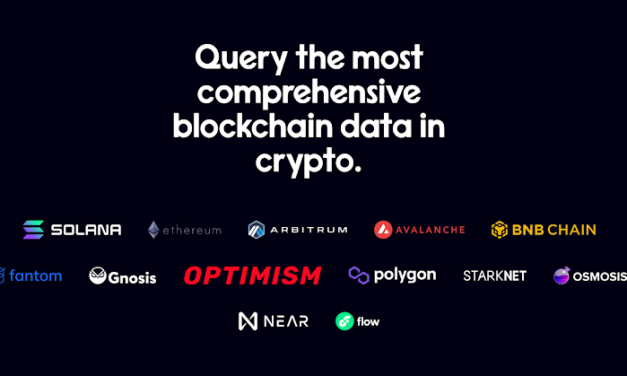
Blockchain analytics firm Flipside Crypto has launched an online Software Development Kit called ShroomDK, which is based on nonfungible tokens (NFTs) and provides an automated means to pull “comprehensive” blockchain data via software. Being NFT-based enables the SDK to be on-sold or upgraded more easily, according to the company.Co-founder Jim Myers said that the ability to query blockchain data from multiple chains in an automated (programmatic) fashion has been a “critical piece of missing infrastructure for blockchain developers and analysts.”Software-as-a-Service, or SaaS, refers to software delivered over the web instead of locally on machines. An SDK generally refers to a kit of software-building tools to create applications for specific devices or operating systems. The tokenized SaaS SDKs from Flipside Crypto allow users to on-sell purchased software development kit access after they have finished with it. ShroomDK NFTs will allow devs to query data from Ethereum, BNB Chain, Avalanche, Solana, Near, Flow, THORChain and Algorand, while Layer-2 solutions such as Optimism and Arbitrum have been named as well. Supported blockchains: Flipside Speaking with Cointelegraph, FlipSide Crypto co-founder and CEO Dave Balter stated the NFTs will save users the trouble of having to “manage nodes, complex data pipelines or petabyte-scale databases,” while also offering users a chance to squeeze more value out of their software licenses: “Wrapping SDK access in an NFT gives a user control over their license. Software licenses are often a sunk cost, meaning if you don’t utilize the purchased license it goes to waste. That’s not great for the end-user, and it’s not great for the provider of the product.” “By transforming the license into an NFT, remaining usage can be resold to anyone. This benefits both the original holder who can transform a sunk cost into something of value and also allows new users to try out a product at a discount,” he added.The NFTs can also be upgraded via additional free NFTs named “Spores,” which enable users to increase their query capacity. Balter stated that the NFTs have already been issued in a closed beta over the past month, and the project has seen strong demand from 50 key analysts and organizations in the crypto space, such as “folks from Rabbithole, Optimism, LlamaDAO, 0x etc.”Related: The community-centered approach to Web3 — Aave founder and CEOCommenting on the notion of NFTs being tied to specific use cases rather than being merely a speculative asset, Balter emphasized that project utility is especially important given the current bear market.“Crypto winter has put added pressure on every blockchain to grow and retain developers and users. Project utility is king, but it requires continuous insights for builders to get it right. That’s why ShroomDK is needed now.”Flipside Crypto is known for enabling on-demand analytics for blockchains, providing data and intelligence to crypto organizations. The firm provides a free, open data platform for “analysts to learn, collaborate and compete to solve analytical challenges via structured bounty programs.”The launch of the SDK follows a recent Series A funding round led by Republic Capital with support from top crypto firms such as Galaxy Digital Ventures and Dapper Labs in April that saw Flipside Crypto raise $50 million in funding.

Čítaj viac

Získaj BONUS 8 € v Bitcoinoch

nakup bitcoin z karty

Registrácia Binance

Burza Binance

Aktuálne kurzy