Autor Cointelegraph By Brian Quarmby

Lummis-Gillibrand crypto bill likely deferred to next year

The major bipartisan crypto bill led by U.S. Senators Cynthia Lummis (Republican) and Kirsten Gillibrand (Democrat) will most likely be deferred to next year according to the duo. Speaking during Bloomberg’s Crypto Summit on July 19, the Senators stated that there is a slim chance that the comprehensive bill would be pushed through the Senate this year, with Lummis noting that: “I think both Kirsten and I believe that the bill, in one piece, as a total bill is more likely to be deferred until next year. It’s a big topic, it’s comprehensive, and it’s still new to many U.S. Senators and so it’s a lot for them to digest in the few remaining weeks we have in this calendar year.” The Responsible Financial Innovation Act was introduced in the U.S. Senate on June 6 and aims to address the role of the Commodity Futures Trading Commission (CFTC) and Securities and Exchange Commission (SEC) when it comes to crypto regulation, along with stablecoin regulation, banking, tax treatment of digital assets and interagency coordination. The pair however noted that there may be specific areas of their bill that could make it through this year via other legislation, with Gillibrand highlighting that fellow Democrat Senator Debbie Stabenow and Republican ranking member John Boozman are working on a bill proposing the CFTC as the key regulator for crypto.The bill rolls in certain parts from the Lummis/Gillibrand legislation in relation to most digital assets being classified as commodities, and therefore falling under CFTC jurisdiction.Lummis also noted that the part of their bill focused on the regulation of stablecoins issued by financial institutions could also be rolled into another bill from the banking committee and voted on this year. The senators noted that they have seen a relatively positive response to the bill from both sides of the political spectrum.“There seems to be some serious common ground forming, and just as Senator Lummis said, the two committees that have the most focused Senators on this topic are banking and agg [agriculture],” Gillibrand said, adding that there’s also been some focus from the finance committee as “Senator Wyden and his committee wrote a good part of the tax provisions in our bill.” Related: CFTC labels 34 crypto and forex firms as unregistered foreign entitiesWhile the duo accept that their comprehensive crypto bill will take time to get the proper attention before it gets voted on next year, Gillibrand emphasized that fellow Senators, regulators and lawmakers are beginning to realize the urgent need to at least get consumer protections in place: “There’s additional interest now, because they’ve seen that this is something important to do, that consumers are not being protected today, there’s no oversight or accountability, and there’s no rules of the road.”“So there’s more urgency now, and also more of a sense that this is something we need to do,” she added. The comments were made in reference to the recent bankruptcy proceedings from crypto lending firms such as Celsius and Voyager in which users have been put at severe risk of losing their deposited assets on those platforms.Lummis also pointed to the $40 billion Terra ecosystem collapse in May, and the risky nature of algorithmic stablecoins which require further oversight.

Čítaj viac
Japan's crypto self-regulation 'experiment' not working

Japan’s self-regulation “experiment” for the crypto industry is reportedly not working as well as intended, according to local government and industry experts. Since 2018, the Japan Virtual Currency Exchange Association (JVCEA), a self-regulation entity, has been tasked with creating guidelines for the country’s crypto industry, with arguments at the time that the entity could be better placed to cope with crypto regulation than a government body. However, speaking with the Financial Times (FT) on July 18, an unnamed source “close to both industry and government” said that the current model of crypto regulation is faltering: “When Japan decided to experiment with self-regulation of the cryptocurrency industry, many people around the world said it would not work. Unfortunately, right now it looks as though they may be correct.”The organization was forged in response to the $530 million hack on the Coincheck exchange in 2018. It is recognized by Japan’s Financial Services Agency (FSA) and has the power to pass and enforce regulatory frameworks for local crypto exchanges.Its members include a long list of top local crypto names such as Coincheck, BitFlyer and Rakuten Wallet Co, along with the Japanese subsidiaries of FTX and Coinbase.Over recent months, the JVCEA has reportedly copped a fair amount of flack from the FSA over its slowness in getting regulation off the ground. According to the FT, the FSA is said to have highlighted key issues with the JVCEA, including its delays in introducing anti-money laundering (AML) regulation and lack of communication between directors, member operators and its secretariat — signaling poor management.The report also noted that the FSA had already once issued an “extremely stern warning” to the JVCEA in December to get its operations in order and that it was not “clear what kind of deliberations the body was having, what the decision-making process was, why the situation was the way it was, and what the responsibility of the board members was”. In June, Prime Minister Fumio Kishida also called on the entity to speed up its listing approval process for digital assets on local crypto exchanges but still be “mindful of the need to protect users.” Another unnamed source close to the JVCEA suggested that the organization is lacking office staff with a genuine knowledge of, or interest in crypto. According to them, the office is primarily composed of retired bankers, brokers, and government workers, and lacks representatives from the JVCEA’s list of crypto member companies.“That is why no one there really understands blockchain and cryptocurrencies. The whole mess shows it is not a simple problem of governance. The FSA is very angry about the whole management.” The JVCEA says it is currently working to make improvements and address the organization’s current issues. However, Meiji University professor and JVCEA board member Masao Yanaga also highlighted that the organization lacks the resources to move quickly. Yanaga also suggested that AML regulation has been difficult to implement as there is an absence of international agreements concerning the sharing of customer data between crypto exchanges. “The operators of the exchanges worry that even if we create these rules, they won’t be able to implement them,” he said.Related: Japan passes bill to limit stablecoin issuance to banks and trust companiesOne area that the JVCEA has made slight improvements in this year is its digital asset listing criteria. The entity is tasked with assessing tokens that local companies intend to list however, it has generally taken the JVCEA around six months or more to conduct its screening process. In March Cointelegraph reported the JVCEA watered down some of its requirements by making a “green list” of 19 assets that no longer require screening, including Bitcoin (BTC), Ether (ETH) and Ripple (XRP). 

Čítaj viac

Ethereum staking service Lido announces layer-two expansion

Crypto staking service provider Lido Finance has announced plans to expand staked Ether (stETH) support across the ecosystem of Ethereum Layer two (L2) networks. In a July 18 blog post, the Lido team noted that it would initially begin by supporting Ether staking via bridges to L2s using wrapped stETH (wstETH). Moving forward, it will eventually enable users to stake directly on the L2s “without the need to bridge their assets back” to the Ethereum mainnet. In terms of partnered L2s, the team stated that before the announcement, it had already integrated its bridged staking services with Argent and Aztec. It added that the next collection of partnerships and integrations would be unveiled over the next few weeks. Once the fully-fledged L2 staking support is ready, the Lido team noted that it will first start with L2 heavyweights Arbitrum and Optimism before expanding out to other L2s that have sufficiently “demonstrated economic activity.” Given that L2s are designed to reduce the cost of Ethereum transactions, the team touted this move will enable users to stake ETH with lower fees while also gaining “access to a new suite of DeFi applications to amplify yields.” “There are several types of L2s. We believe that in the future, a large portion (if not a majority) of economic activity and transaction volume will migrate to both general use and purpose-specific Layer 2 networks.”“Each of these networks will benefit from or need staking solutions to support their users’ economic activities and ensure that all users of Ethereum ecosystem networks have the ability to participate in securing Ethereum,” it stated.According to Lido’s website, it currently has more 4.2 million ETH staked on the platform which is worth around $6.5 billion, making it one of the largest providers in terms of total stETH value and second overall in terms of total value locked (TVL) in decentralized finance (DeFi) platform. Related: Lido DAO price moves higher as the Ethereum Merge moves a step closer to completionLido provides staking rewards on a host of other assets, including Solana (SOL), Kusama (KSM), and Polkadot (DOT), but is primarily used for its ETH staking services, which offer annual yields of around 3.9%. Once a user deposits their ETH into the platform, a tokenized version of their deposit is then minted as stETH, which can be used in other borrowing or yield services from other DeFi protocols.stETH is pegged at an intended ratio to ETH of 1:1. However, the peg famously fell off to represent 0.95 of 1 ETH in May during the aftermath of the $40 billion Terra ecosystem collapse. The depegging of the asset poses limited risks to long-term hodlers and stakers. However, it runs the severe risk of causing liquidations for anyone who takes out leveraged positions against the asset. Now defunct firms such as Celsius Network and Three Arrows Capital have been reported as significant users of stETH. At the time of writing, the peg is sitting at the correct ratio, with Lido offering a 1:1 exchange for ETH and stETH. However, partnered decentralized exchange aggregator 1inch is also offering a 2.36% discount to mint stETH, suggesting that depositors can currently get back more stETH value than the amount of ETH they deposit via 1inch.

Čítaj viac

RUNE Pumps 18% as THORChain deactivates non-native tokens

Cross-chain exchange and proof-of-bond network THORChain has finally activated the killswitch that will progressively wind down support of the BEP-2 and ERC-20-based variants of the RUNE token. BNB.RUNE, and ETH.RUNE, also known as IOU Tokens, are being swapped out for the upgraded and completely native RUNE token after THORChain’s long-awaited mainnet late last month. Moving forward, these tokens will progressively lose their value over the next 12 months as the project aims to foster adoption of its fully unified variant of RUNE, enabling stronger asset interoperability. Users who hold their IOU Tokens on centralized changes will have their tokens automatically upgraded to the new native RUNE. Those who keep their tokens in private wallets must create a new wallet supported by THORChain and then click an upgrade button to make the switch. The THORChain team stated via Twitter on July 18 that killswitch will go live at block 6500000 and that 1:1 exchange rates will “linearly tick down to 1:0 over the next 12 months” as the IOU Tokens become worthless. Today, the BEP-2 and ERC-20 $RUNE killswitch will be activated at block 6500000. Upgrades will no longer be 1:1. Exchange rates will linearly tick down to 1:0 over the next 12 months.If you hold $RUNE in a self-custody wallet, ensure your wallet address begins with `thor1…`— THORChain (@THORChain) July 18, 2022The team previously stated in a blog post earlier this year that this move was part of a push towards further decentralization of its network, as it highlighted issues with having IOU RUNE spread across two separate networks: “THORChain is extremely strict in having no 3rd party dependencies, preferring to manage everything in-house. There are no oracles, no off-shored security, and no reliance on external liquidity.”“However, BNB.RUNE and ETH.RUNE has privileged access to the state machine’s “mint” function. Anyone presenting these tokens can mint fresh RUNE, as well as making THORChain’s state dependent on these two networks,” the blog post read. The move from THORChain has coincided with a significant 18.6% bounce of RUNE prices to $2.61 over the past 24 hours. Measuring over a broader time frame also shows promising signs, with RUNE gaining 65.9% over the past 30 days, according to data from CoinGecko. However RUNE is still down 87.5% since its all-time high of $20.87 from May 19 last year. Related: Total crypto market cap reclaims $1 trillion as Bitcoin, Ethereum and altcoins breakoutApart from enabling users to swap assets by liquidity pools across various networks such as Binance Smart Chain, Ethereum, Dogecoin, and Bitcoin, THORChain also supports the trading of synthetic assets, which are tokenized derivatives that mimic the value of other assets such as stocks and commodities. Under the recently launched mainnet, the project aims to provide enhanced security measures and network stability, greater decentralization, a new governance process, establish new chain integrations, wallet integrations, aggregator implementations, and roll out a single-sided yield feature.

Čítaj viac

Otherside Metaverse demo kicks off with 4,500 participants: highlights

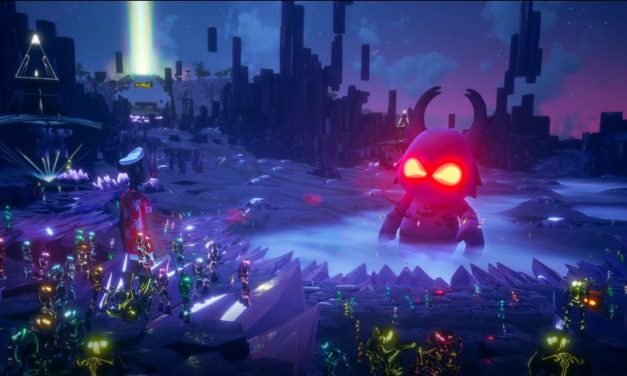
Around 4,500 people havejumped into the “first trip” tech demo of the Otherside Metaverse project associated with Yuga Labs’ Bored Ape Yacht Club (BAYC).The highly anticipated first trip occurred on July 16 and was open to Otherdeed NFT land owners, known as Voyagers, who have all snapped up tokenized land plots in the Otherside virtual world. It appears to have been a resounding success, with numerous community members taking to Twitter to express their enthusiasm for the event. Today’s @OthersideMeta First Trip was truly a wild experience! Jumping through the swamp portal legit gave me chills and it was insane to see 4500 voyagers running around a large, immersive space. pic.twitter.com/Nl5luxaZl3— illuminary.eth (@illuminaryETH) July 16, 2022The first trip The 4,500 Voyagers first joined a blank virtual lobby as Voyager avatars before they all followed a giant Bored Ape through a colorful portal into the Otherside Metaverse. Once the Voyagers arrived in a location called the Biogenic Swamp, they were directed towards a centrally located stadium where they could test out the avatar dynamics such as dancing, running, jumping, and emojis. Such an incredible experience. @OthersideMeta Here are my favorite screenshots from the first trip: pic.twitter.com/XiQkwp9SZm— WRΞN (@wrencrypt) July 16, 2022

From there, they were able to explore a few other select areas and interact with the environment, which featured giant creatures that were walking around attacking Voyagers if they got too close. In the early testing phases of the project, which includes several “trips,” Yuga Labs stated that only Otherdeed owners and third-party developers would be able to access Otherside. The team noted that these Voyagers would be able to provide critical feedback on the platform and essential aspects such as software development kits and in-game building tools. Otherside Metaverse: Yuga LabsLitepaperShortly after the first trip went live, Yuga Labs released a “litepaper” giving a brief of the principles behind Otherside and how the project will progress moving forward. Initially, there will be three phrases; however, only the first one has been outlined so far.Today’s tech demo has ended. Thank you to all the Voyagers who participated: we’ll tweet here when your credit is ready later today. If you’re already hungry for more Otherside, we’ve released a litepaper: https://t.co/XPlNEwPGCC. See for more— OthersideMeta (@OthersideMeta) July 16, 2022

The first phase will include an 11-part storyline game mode surrounding a “mysterious Obelisk” that has appeared in Otherside. The game mode will also allow users to explore what can “be harvested, crafted, traded, bought, and sold” in the game. “Voyagers will play a large role in shaping the core capabilities of the platform through exclusive events, playtesting opportunities, and as co-developers of our Otherside Development Kits (ODKs),” the litepaper reads, adding that:“In order to plant the seeds for a successful community, we are starting development on Otherside with Voyagers, who are our first adopters and believers. They are a crucial part of Otherside’s history and are invited to join the Voyager’s Journey.”In terms of principles, Yuga Labs stated that the platform is being designed with a community-first approach, “genuine” asset ownership, and interoperability that will see the support of NFTs from other projects. The team also hopes to include incentives and support such as education, experience, and leadership from partnered entities that are well “established and respected” in the crypto space. Related: Believe it or not, metaverse land can be scarce after allOtherdeed NFTsThe Otherdeed NFTs have seen strong demand since their launch in May, with the collection generating more than $1 billion worth of sales volume in just three months, according to data from CryptoSlam. In terms of all-time sales, the figure placed Otherdeed as the seventh highest selling NFT project ever. Yuga Labs also notably has a strong foothold in the top 10, with its other original projects, BAYC and the Mutant Ape Yacht Club (MAYC), ranked as the third and fourth highest selling NFT projects of all time at $2.3 billion and $1.6 billion worth of sales apiece. There are 200,000 plots of tokenized land in Otherside, and the floor price of the NFTs on OpenSea is sitting at 2.87 Ether (ETH), worth roughly $3,900 at the time of writing. However, these prices are generally for the smaller and lower-tier land plots.

Čítaj viac

Získaj BONUS 8 € v Bitcoinoch

nakup bitcoin z karty

Registrácia Binance

Burza Binance

Aktuálne kurzy