Autor Cointelegraph By Brian Quarmby

Minecraft ban ‘hypocritical’ and NFTs are inclusive: Animoca’s Yat Siu

Yat Siu, the co-founder of crypto/NFT venture fund giant Animoca Brands, labeled the recent Minecraft NFT ban as “hypocritical” and emphasized that nonfungible tokens (NFT) can be inclusive, despite arguments to the contrary.As previously reported, Minecraft developers Mojang Studios announced a ban on all NFT integrations in the game on July 20. The firm stated that NFTs were against its values, as they foster price speculation, scarcity, exclusion and potential rug pulls. Speaking with Cointelegraph, Siu expressed his frustration at Mojang Studios given the context in which NFTs were being integrated with Minecraft before the ban. Projects such as NFT Worlds were utilizing Minecraft’s open source servers to host a metaverse platform that had crypto and NFT ecosystems built around it. The project appeared to be relatively popular, given that it has generated more than $80 million worth of NFT trading volume and claims to have around 100,000 players. The Animoca Brands co-founder noted that he found it hypocritical that Minecraft would exclude a small portion of the user base, considering that the company’s stated that it values “inclusion” and suggested NFT integrations in games drive exclusion. “The general perspective is that this is hypocritical, NFTs have not hurt anyone at Minecraft, it’s very clearly a minority. This was not a decision of actual evidence of harm, this was a preference decision, purely based on an opinion.”“They did not cite evidence, they didn’t even correctly point out what NFTs are, nor did they talk to NFT Worlds,” he added. While Siu acknowledges many in the traditional gaming community want nothing to do with NFTs, generally out of fear of games becoming over-monetized and “even less fair.” In this instance, users had the choice to play in NFT-affiliated servers or not, and there were no NFT integrations forced on regular Minecraft users. Siu stressed that excluding minority views means “you actually hurt the whole community, and you stifle its growth.”Related: Epic Games ‘definitely won’t’ follow Minecraft NFT banIn terms of NFTs being inclusive, Siu argues that NFT tech or the digital property itself doesn’t foster inclusion or exclusion, and instead, it’s all about how the tech is deployed to drive community value. He noted that in the right contexts, NFTs in games or the Metaverse can offer users a redistribution of the platform’s economy and power. In Siu’s point of view, NFTs enable users to own a tokenized stake in their favorite platforms which can then be utilized how users see fit, as opposed to the Web2 model in which users are not offered ownership over their content and data.“What NFTs do is redistribute the economics of the players who add value to the game which then also has the same effect of decentralizing and redistributing the power dynamics inside games. [Therefore] allowing for more freedoms and power to the community instead of just a community.”“Property rights and freedoms are intertwined, the next natural evolution is digital property rights to either enhance or actually produce true digital freedom,” he added.

Čítaj viac
Blockchain’s use in healthcare ‘essential' to protect sensitive data: Zelis CTO

Kali Durgampudi, the CTO of healthcare payments company Zelis, believes that the implementation of blockchain tech is vital for protecting patients’ sensitive data from cybercriminals.Speaking with Health IT News on July 20, Durgampudi noted that some of the biggest issues in healthcare are privacy and data security as the industry works to digitize its “archaic paper-based processes.”“Blockchain technology has the potential to alleviate many of these concerns,” he said, as he highlighted the importance of utilizing a digital ledger that is “impenetrable” to protect sensitive patient and financial data amid the growing rate of cyberattacks across the globe. “Since the information cannot be modified or copied, blockchain technology vastly reduces security risks, giving hospital and healthcare IT organizations a much stronger line of defense against cybercriminals.”Durgampudi went on to note that blockchain tech can also play a key role in healthcare payments, as it can help provide greater transparency and efficiency over current payment models in healthcare. He said the many payers and providers were hesitant to share information via email as emails could go awry and there was no proof of delivery. “Blockchain provides both payers and providers with complete visibility into the entire lifecycle of a claim, from the patient registering at the front desk to disputing a cost to sending an explanation of benefits,” he added. Real world useOne of the major companies that has worked on blockchain-based healthcare solutions is multinational tech giant IBM.The blockchain arm of the company has rolled out several solutions for healthcare such as health credential verification, the ‘Trust Your Supplier’ service to find verified suppliers, and ‘Blockchain Transparent Supply’, which provides supply chain tracking on temperature-controlled pharmaceuticals. In March 2021, Cointelegraph reported that IBM was working on a trial of a COVID-19 vaccination passport dubbed the “Excelsior Pass” in partnership with former New York Governor Andrew Cuomo. The passport was designed to be able to verify an individual’s vaccination or test results by IBM’s blockchain. Related: Blockchain without crypto: Adoption of decentralized techAnother key player in the blockchain-based healthcare space is enterprise blockchain VeChain. In June last year the project teamed up with Shanghai’s Renji Hospital to launch a blockchain-based In-Vitro fertilization (IVF) service application.VeChain also partnered with The Republic of San Marino in July 2021 to launch an NFT-based vaccination passport that was said to be verifiable worldwide by scanning QR codes tied to the certificate. David Jia, who is a blockchain investor and has a Ph.D. in Neuroscience from Oxford University, echoed similar sentiments to Durgampudi this week. In a July 21 blog post on Medium, Jia emphasized that blockchain tech could significantly improve drug traceability and verification, along with the data management of clinical trials, patient info and claiming/billing. “Accuracy in medical records over the long term as well as accessibility is essential, as it is necessary for an individual’s record to be able to be transferred between providers, insurance companies, and specialists with relative ease. If medical records are stored on a blockchain, they may be updated safely in almost real-time,” he wrote.

Čítaj viac

Epic Games 'definitely won't' follow Minecraft NFT ban

Epic Games founder and CEO Tim Sweeney says his firm “definitely won’t” follow Minecraft’s developers in banning non-fungible tokens (NFTs).As previously reported, Minecraft developers Mojang Studios banned NFT integrations on July 20 as it believes the speculative aspect of NFTs, along with scarcity and risks of exclusion and scams supposedly associated with NFTs being against the game’s principles. The move was seen as highly controversial in the NFT community, while it has been met with praise by the cohort of crypto-skeptic gamers. Sweeney’s company is the creators of the widely successful battle royal game Fortnite, which is also seen as a Metaverse platform. While Epic Games isn’t necessarily pro-crypto or NFTs, the CEO said the firm isn’t looking to enforce any views on the subject on its users: “Developers should be free to decide how to build their games, and you are free to decide whether to play them. I believe stores and operating system makers shouldn’t interfere by forcing their views onto others. We definitely won’t.”Developers should be free to decide how to build their games, and you are free to decide whether to play them. I believe stores and operating system makers shouldn’t interfere by forcing their views onto others. We definitely won’t.— Tim Sweeney (@TimSweeneyEpic) July 21, 2022In response to the post, Twitter user @Low5ive asked Sweeney Epic Games’ policy on prohibiting “hateful/discriminatory content” differs from this. In response, Sweeney suggested that Epic Games does make “editorial” judgements, but NFTs don’t currently fall under them. “A store could choose to make no such judgments and host anything that’s legal, or choose to draw the line at mainstream acceptable norms as we do, or accept only games that conform to the owner’s personal beliefs,” he said. The NFT ban by Mojang Studios has left one particular project dubbed “NFT Worlds” with a major problem to solve, given that it was built on one of Minecraft’s open source servers. Related: Delphi Digital: How to get gamers to accept the integration of NFTsThe community driven play-to-earn (P2E) platform has an entire crypto and NFT ecosystem built around it, with its NFTs generating 51,000 Ether (ETH), or $80.8 million worth of trading volume to date. However, since the news dropped, the floor price of its NFTs has dropped from 3.33 ETH to 1.01 ETH at the time of writing, while its native token WRLD has plunged by 55% within that time frame. After the Mojang announcement, the NFT Worlds team stated it is now “brainstorming solutions” on how to move forward. The team mentioned that it is working to get in contact with Minecraft to see if a possible solution can be found, otherwise a pivot to a “Minecraft-like game engine” or GameFi platform has been outlined as possible options. We’ve just shared the following announcement on our Discord regarding the current @Minecraft & @nftworldsNFT situation. pic.twitter.com/ARbKABRK4A— NFT Worlds (@nftworldsNFT) July 20, 2022

Čítaj viac

Delphi Digital: How to get gamers to accept the integration of NFTs

Crypto research firm Delphi Digital has outlined possible ways in which gamers may accept NFTs as part of their gameplay experience, such as using the tech for additional aspects that don’t impact on the core experience.The lengthy report was published by Delphi Digital on July 20, and explores how non-fungible tokens (NFTs) can be incorporated into games without impacting the core gaming experience or “true competitive play” that gamers tend to value. The report argues that if monetization and NFT elements can be incorporated correctly, gamers might not be so staunchly against the idea: “If untamed, money will always trend towards the dominant motivator. As such, the first port of call is to separate out the market games from the core game loop itself.”Delphi Digital outlined that a way to do this could be for a game to provide a core free-to-play experience for anyone to enjoy, while utilizing NFTs for optional experiences such as tickets to tournaments, new character skins, side-games, and competition rewards. The firm explained that this would allow those who are using the game for its monetization purposes to prosper, while those there for enjoyment can play without being forced to buy NFTs, or struggle to compete with top-spenders within the gaming marketplaces. “Nobody is tricked into playing the other’s game,” the report noted. The report also went on to argue that the “more people care about the game” the more likely they are to spend money on it, suggesting that the core gaming experience needs to be meaningful enough to make hesitant gamers even consider purchasing an in–game NFT: “In theory, the more people care about the game, the more gets spent directly on metagames. By maximizing meaning generation and competition in the core game, we are able to maximize revenues through peripheral monetization around it.”Gamer hate The report addresses the dislike of crypto games from the traditional gaming community by noting that there is “validity to many of the critiques” that have surfaced. In particular, Delphi Digital highlighted that much of the hostility toward crypto appears to stem from the negative implications that monetization has had on traditional gaming, such as developers purposely limiting functionality to push users to spend more money to get the full experience: “Parts of the traditional gaming industry have skewed towards aggressive monetization practices that are sometimes detrimental to the player’s experience.”“As such, when gamers see the need to purchase NFTs to play with early crypto games, or large publishers announce plans to build in this sector, they assume it’s another money grabbing attempt and shy away from it,” the report added. Related: Mojang Studios bans Minecraft NFT integrationsDelphi emphasized that this “isn’t to say that all forms of monetization are bad” but crypto or not, it needs to be done in ways that don’t negatively impact the game. Commenting on the current state of crypto gaming, the report also notes that the sector has so far seen the monetary components of the games trend towards the “dominant motivator” for users. As a result, it argues that the actual gaming quality has suffered while whales have been able to dominate most games for speculative purposes: “The gameplay of these early titles has suffered on two fronts: 1) the primary incentive of the bulk of the player base is the expectation of financial reward rather than play and 2) the core competitive circuit has been subject to pay-to-win mechanics as whales can spend their way to success.”

Čítaj viac

Nifty: Major BAYC hodler loses 100 ETH in 'joke' domain sale gone wrong

A Major Bored Ape Yacht Club (BAYC) NFT hodler lost 100 Ether (ETH), worth $150,000 as a result of a joke bid on his own registered Ethereum Name Service (ENS) domain. The NFT whale, who owns 57 BAYC NFTs and goes by @franklinisbored on Twitter, minted the ENS domain “stop-doing-fake-bids-its-honestly-lame-my-guy.eth” using an alternate wallet on July 20. The move was a part of a meme discussed with other NFT collectors in the community in which he was attempting to trigger the EnsBidsBot account to tweet about a hefty 100 ETH bid on an ENS domain, essentially to mock the purpose of such Twitter accounts. What phrase or meme do you want me to have the ens bot tweet out as a .eth address with a 100 WETH bid? Lol I would have to mint the ENS address myself too.— Franklin ️uilding 57 apes (@franklinisbored) July 19, 2022However, after his ENS domain actually got a bid of 1.9 ETH ($2,900), @franklinisbored promptly accepted the bid but forgot to retract the 100 ETH bid he had placed beforehand. Recounting the move on Twitter, he highlighted the ridiculousness of the situation by noting that “this is a mistake that I can’t imagine anyone else putting in the effort to make.” “I was celebrating my joke of a domain sale, sharing the spoils, but in a dream of greed, forgot to cancel my own bid of 100 ETH to buy it back. This will be the joke and bag fumble of the century. I deserve all of the jokes and criticism.”Oh no, I lost 100 ETH. I was celebrating my joke of a domain sale, sharing the spoils, but in a dream of greed, forgot to cancel my own bid of 100 ETH to buy it back. This will be the joke and bag fumble of the century. I deserve all of the jokes and criticism.— Franklin ️uilding 57 apes (@franklinisbored) July 20, 2022

ENS is a blockchain naming protocol that enables users to mint names as ERC-721 tokens that can link to crypto wallets, and has become a handy tool for removing the need to share lengthy automated wallet address ids. Nickelodeon’s successful NFT drop The first plunge into the NFT space from beloved children’s TV show developer Nickelodeon has gone off with a bang, with trading volumes surging after the project sold out all of its 10,000 NFT avatars this week. The drop went live on July 19 and consists of 10,000 NFTs depicting 12 different characters from the Rugrats and Hey Arnold! with randomized and unique traits. The collectibles were sold for $50 a pop, but the floor price on OpenSea has since risen to 0.29 ETH ($440). Over the past 24 hours, Nickelodeon’s NFTs have generated the second largest amount of trading volume out of any project listed on OpenSea at 1,066.05 ETH ($1.6 million). #⃣1⃣ pic.twitter.com/r0w0jfUDQa— nickelodeon_nft (@nickelodeon_nft) July 20, 2022

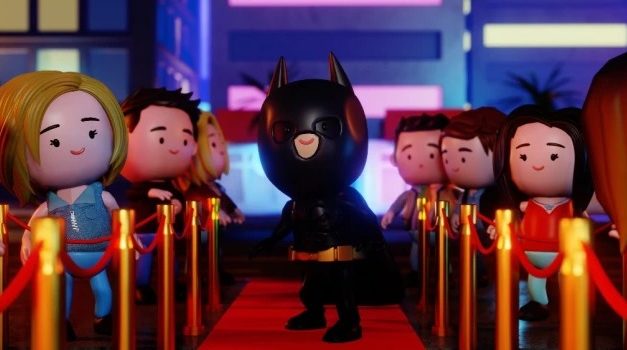
GameStop NFT surges past Coinbase NFTGameStop’s NFT marketplace launch appears to have been a resounding success, with the platform generating more than double the total amount of sales volume of Coinbase NFT since its launch on July 11. According to data from GameStop NFT’s website and compiled by Cointelegraph, the platform has generated more than $8.6 million worth of NFT sales so far. In comparison, Coinbase’s muchly anticipated NFT marketplace has generated just $3.58 million despite launching in May. Notably, GameStop also charges a 2.25% fee on all NFT sales, while Coinbase is yet to introduce fees to the platform. At the time of writing, two projects on GameStop NFT have generated more than $1 million worth of sales volume in MetaBoy and Cyber Crew [C4] with $2 million and $1.59 million apiece. Former Simpsons animator to launch NFT-based animated seriesFormer animator of iconic cartoon series The Simpsons, Erick Tran has partnered up with blockchain-based Film and TV production firm Mogul Productions to launch an NFT-based animated series inspired by the history of Hollywood. The show will be called The Mogies and it will be accompanied by a collection of 1,923 NFTs, in a nod to the 100th anniversary next year of the Hollywood sign being erected. Each Mogie NFT will depict a parodied version of a famous Hollywood celeb, and holders of the tokens will be granted IP rights to the content depicted in their NFT. Tran and his team at the CHAVVO studio are working on the series, and the story is set to follow the stories of the parodied icons as they make their way through Hollywood. The project will also see the launch of the exclusive Mogieland Metaverse for NFT hodlers, who will gain access to benefits such as virtual red carpet events and behind-the-scenes content. The Mogies: Mogul Productions/Chavvo StudiosRelated: NFT and Islamic education: A new frontier to teach religion?Other Nifty News:On Wednesday, Minecraft’s developer Mojang Studios said that it would be excluding the integration of NFTs, alongside blockchain technology as a whole, in its popular namesake game.The United States Office of Government Ethics (OGE) issued a legal advisory recommending various instances when senior government officials are required to disclose their investments in NFTs.

Čítaj viac

Získaj BONUS 8 € v Bitcoinoch

nakup bitcoin z karty

Registrácia Binance

Burza Binance

Aktuálne kurzy