Autor Cointelegraph By Brian Quarmby

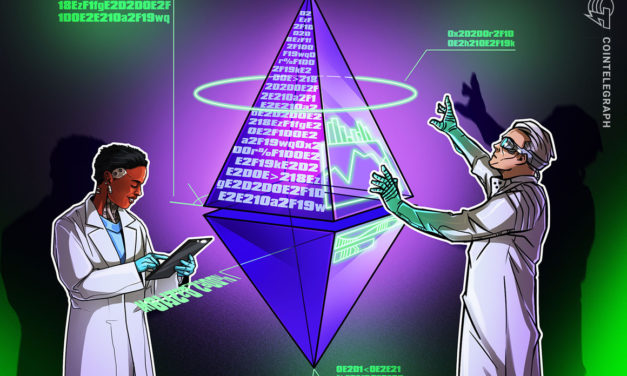
Ethereum Merge on track as Goerli test merge successfully finalized

After Ropsten and Sepolia, Goerli was the last remaining testnet scheduled to undergo the merge, officially becoming a Proof-of-Stake (PoS) blockchain as of 1:45 am UTC, Aug. 11. The Goerli testnet merge has been finalized without any major issues today, suggesting that there will be no delays to the tentative Ethereum Merge date set for Sept. 19. Numerous key devs and figures in the Ethereum ecosystem have taken to Twitter to share their enthusiasm over the successful merge, such as core dev Preston Van Loon and podcaster/ETH proponent Anthony Sassano (@sassal0x) who bullishly noted to his 216,400 followers that “next up is (finally) the Ethereum mainnet!! The Merge is coming.”The Goerli testnet has been successfully merged and is now a full Proof of Stake chain.Next up is (finally) the Ethereum mainnet!!The Merge is coming — sassal.eth (@sassal0x) August 11, 2022However some noted there were minor issues that were also present in the previous two testnet merges.Ethereum developer Marius van der Wijden noted that there was some “confusion on the network because two different terminal blocks and lots of non-updated nodes” that slowed the process down slightly, but stated that things were looking “quite good” anyway. While lead Ethereum dev Tim Beiko also shared a screenshot as soon as Goerli’s switch to PoS went through. pandas on the screen! pic.twitter.com/0nYll6gImH— Tim Beiko | timbeiko.eth (@TimBeiko) August 11, 2022

There is growing confidence now that the highly anticipated Ethereum mainnet merge with the PoS-based Beacon Chain will go through without a hitch, given that Beiko previously stated that the major upgrade will go through on (or close to) his proposed date of Sept. 19 if the final merge trail runs went through successfully. In what is being seen as one of the most significant upgrades in blockchain history, the Merge will significantly reduce Ethereum’s energy consumption while bringing the network one step closer to its long term scalability, security and sustainability goals.Once the Merge is complete, the next major landmark will be the multi-phased sharding upgrade that will significantly enhance the “distribution of data storage requirements, enabling rollups to be even cheaper, and making nodes easier to operate,” according to Ethereum’s website.Related: Optimism TVL surges nearly 300% M/M ahead of The Merge upgradeSharding essentially involves spreading the Ethereum database horizontally across shard chains, giving the network greater capacity while also taking the strain off the core network. The price of Ether (ETH) has been on a meteoric pump in the lead up to the Merge, with the price gaining 72.2% over the past 30 days to sit at $1,890 at the time of writing. And there we go! Goerli has merged Shout out to all client teams, contributors and the whole #Ethereum ecosystem – what a moment to share with you all! #TheMerge is next— Nethermind (@nethermindeth) August 11, 2022

Čítaj viac


Decentralized apps on Polygon hit 37,000, rocketing 400% this year

The number of decentralized applications (DApps) on Ethereum-scaling-platform Polygon has topped 37,000, marking a 400% increase since the start of 2022. The Polygon team shared the figures via an Aug. 10 blog post, which was sourced from partnered Web3 development platform Alchemy, noting that the figure represents the cumulative number of applications ever launched on both the testnet and mainnet. It also noted that the number of monthly active teams — a measure of developer activity on a blockchain — reached 11,800 at the end of July, up a whopping 47.5% from March. The project team also highlighted a breakdown of dApp projects which notably showed that “74% of teams integrated exclusively on Polygon, while 26% deployed on both Polygon and Ethereum.”Polygon’s EVM compatible Proof-of-stake (PoS) blockchain hosts dApps from a long list of prominent projects and brands in the crypto space, such as NFT marketplace OpenSea, Metaverse platforms Decentraland and The Sandbox, decentralized finance (DeFi) lending platform Aave, and NFT venture fund/gaming firm Animoca Brands. The blog post stated dApp usage on Polygon has seen more than “142 million unique user addresses and $5 billion in assets secured” with around 1.6 billion transactions processed on the network to date.Polygon CEO Ryan Wyatt was clearly pleased with the growth, as he took to Twitter to note that “we’re having quite a year at Polygon.”We’re having quite a year at @0xPolygon~500 dApps in November, now 37,000+ with 11.8k active teams. “Many projects are increasingly choosing to build solely on Polygon. Alchemy data shows that 74% of teams integrated exclusively on Polygon”https://t.co/ERiLHJiVdh pic.twitter.com/UzKZPlazWD— Ryan Wyatt (@Fwiz) August 11, 2022Earlier this year, the Polygon team cited its partnership with Alchemy as a key driver behind the surging number of dApps being built on the network, as the Web3 platform’s infrastructure makes it “significantly easier for Polygon developers” to build dApps. “Polygon’s partnership with Alchemy in June 2021 proved to be an adoption catalyst, sending the number of dApps running on the network to 3,000 in October, 7,000 in January, and over 19,000 as of April,” the post read. Related: Ethereum will outpace Visa with zkEVM Rollups, says Polygon co-founderThe post highlighted Alchemy’s platform tooling, Web3 and dApp infrastructure such as application programming interfaces (APIs) and also Alchemy working “hand-in-hand with Polygon to resolve and mitigate network-level incidents when they occur.” With the crypto markets showing signs of a potentially bullish recovery of late, Polygon’s native asset MATIC has pumped a hefty 66.3% in the past month to sit at $0.92 at the time of writing, according to CoinGecko. Its current market cap of $6.9 billion makes MATIC the sixteenth largest asset in crypto.

Čítaj viac

DeFi needs a 'killer app' to go next level, says Ripple exec

A “killer app” for consumers is what will be needed to bring the decentralized finance (DeFi) sector to a level that draws in a mainstream audience, said Ripple Lab’s head of DeFi markets Boris Alergant.Alergant nade the comments during a panel at the Blockchain Futurist Conference titled “The Future of Decentralized Finance” on Aug. 9, which was covered by Cointelegraph reporters on the ground in Toronto, Canada. Alongside Alergant, Aventus Ventures CEO Kevin Hobbs, FLUIDEFI co-founder and CEO Lisa Loud, and Teller Finance CEO and co-founder Ryan Berkin also featured on the panel. The general sentiment among the panelists was that centralized finance institutions will ultimately push DeFi towards mainstream adoption. Alergant suggested that growth will likely come from a user-friendly CeFi app that offers exposure to DeFi services: “For an average user, you tell your mom how to go out and stake on Aave or ETH […] and this is a process. She doesn’t know how to use MetaMask, but she wants to generate that yield somehow. She wants to transact but she doesn’t know how to do it.” “So I think institutional adoption is where it’s going, and the institutions are what is going to enable […] that killer app for consumers to really bring crypto and DeFi to the next level.” FLUIDEFI co-founder and CEO Loud expressed a similar view, noting how the everyday person eventually adopted the internet despite not understanding the internet protocol suite, also known as TCP/IP. “We all use the internet right? The internet was a paradigm shift for us, but we don’t know how to use TCP/IP. Right now, everybody who uses DeFi knows how to use the protocols, it’s not sustainable, it’s not a good model for adoption.”“If we look at two years, I see institutions investing more in DeFi and I see companies making simpler user experiences,” she added. The Ripple executive also outlined that the DeFi sector will soon work hand in hand with the CeFi sector to provide financial services to customers. “DeFi will ultimately supplement and complement CeFi. In the end you don’t really care if a trade is done through decentralized means in a centralized exchange. I just want the best damn execution,” he said. Related: Decentralized finance faces multiple barriers to mainstream adoptionThe Blockchain Futurist Conference is the largest annual blockchain and crypto conference in Toronto, Canada, and is running until Aug. 10. 2022, marking the fifth year of the event. This year’s event is expected to see Ethereum co-founder Vitalik Buterin speak there despite appearing at the Korea Blockchain Week only two days ago.

Čítaj viac

Tether also confirms its throwing weight behind the post-Merge Ethereum

Hot on the heels of an official announcement from USD Coin (USDC) issuer Circle Pay, stablecoin giant Tether has now also officially confirmed its support behind Ethereum’s upcoming Merge upgrade and switch to a Proof-of-Stake (PoS) consensus mechanism-based blockchain. The announcement came on the same day as its stablecoin competitor, who pledged they will only support Ethereum’s highly anticipated upgrade. In an Aug. 9 statement, Tether labeled the Merge one of the “most significant moments in blockchain history” and outlined that it will work in accordance with Ethereum’s upgrade schedule, which is currently slated to go through on Sept. 19. “Tether believes that in order to avoid any disruption to the community, especially when using our tokens in DeFi projects and platforms, it’s important that the transition to POS is not weaponized to cause confusion and harm within the ecosystem.”“Tether will closely follow the progress and preparations for this event and will support POS Ethereum in line with the official schedule. We believe that a smooth transition is essential for the long term health of the DeFi ecosystem and its platforms, including those using our tokens,” Tether added. While the official statement only came out today, the stablecoin issuer’s chief technology officer Paolo Ardoino had already previously indicated in July that they planned to support the post-Merge ETH2.I meant that we plan to support ETH2.— Paolo Ardoino (@paoloardoino) July 31, 2022USDT is currently the largest stablecoin in crypto with a total market cap of $66.6 billion, while USDC is relatively close behind at $54.1 billion according to CoinGecko. Both stablecoins have a significant amount of their circulating supply on Ethereum’s current Proof-of-Work blockchain, with USDT at $32.3 billion and USDC taking the top spot at $45.1 billion at the time of writing. Given the size of these stablecoins and their dominance over the stablecoin market, the show of this support in this instance should result in a smooth transition for the Ethereum, USDT and USDC ecosystems, as well as the broader crypto market as a whole.Related: Institutions flocking to Ethereum for 7 straight weeks as Merge nears: ReportHowever as Vitalik Buterin recently warned, their power could potentially cause issues in future Ethereum hard forks, as centralized entities such as Tether and Circle could choose to utilize the forked chain of their own preference, rather than what the Ethereum community has proposed. “I think in the further future, that definitely becomes more of a concern. Basically, the fact that USDC’s decision of which chain to consider as Ethereum could become a significant decider in future contentious hard forks,” he said. Stablecoin issuers (Circle/Tether) control fork choice in Ethereum.What happens when the state pressures Circle to support a fork that goes against “eth community social contract?” https://t.co/dP7ZPFiJ0u— Brandon Quittem (@Bquittem) August 6, 2022

This week Ethereum will undergo its final Merge trial via the Goerli testnet, and if all goes to plan, there is an expectation that the Sept.19 Merge date is unlikely to be delayed.

Čítaj viac

German crypto bank Nuri with 500K users files for insolvency

Nuri, a German start-up crypto bank with 500,000 customers filed for insolvency on Aug. 9, citing major crypto sell-offs, insolvency of Celsius and other crypto funds earlier this year as a reason for the move. The crypto bank said the move will “ensure the safest path forward” for all its customers, but also stressed that the insolvency will not affect its services, customer funds, investments, or the ability for customers to withdraw their assets from the platform. Nuri filed for insolvency on Tuesday, August 9th, 2022. This does not affect our services, customer funds or investments. You can find a complete statement of this situation on the Nuri Blog: https://t.co/UgAyckWE7J— Nuri (@NuriBanking) August 9, 2022Some customers have reported difficulties withdrawing their assets through Nuri’s mobile app, however, Nuri on Twitter said this has been the result of high traffic and usage, and again stressed that “funds are safe.” Notably, the firm itself doesn’t actually handle customer’s fiat and crypto funds due to a partnership Solarisbank AG. According to the Solaris Group website, Nuri partnered with the bank and its crypto subsidiary Solaris Digital Assets to outsource banking and crypto custody licensing. This enabled Nuri to scale its operations and services by utilizing Solaris’ banking and crypto asset infrastructure/licensing. With Solaris not facing any liquidity issues, Nuri is essentially able to carry on its services while the company undergoes restructuring, unlike other firms that have run into the same issues. “Let us reiterate the most important information for you: All funds in your Nuri accounts are safe due to our partnership with Solarisbank AG. The temporary insolvency proceedings do not affect your deposits, cryptocurrency funds and Nuri Pot investments which have been done with us.”“You have guaranteed access and will be able to deposit and withdraw all funds freely at any time. For the time being, nothing will change and Nuri’s app, product, and services will continue to run,” Nuri added. Nuri stated that it has been facing a “lasting strain” on it’s business liquidity in 2022 due to “significant macroeconomic headwinds and the cooling down of public and private capital markets” such as the global pandemic and the Russian invasion of Ukraine. “Additionally, various negative developments in the crypto markets earlier this year, including major cryptocurrency sell-offs, the implosion of the Luna/Terra protocol, the insolvency of Celsius and other major Crypto funds have led to a crypto bear market,” Nuri wrote. Related: Crypto lending platform Hodlnaut suspends services due to liquidity crisisBerlin-based Nuri, formerly named Bitwala, was founded in 2015 and offers crypto savings accounts, portfolio investment baskets dubbed “Nuri Pots” and crypto trading services which it charges 1% trading fees on. “We are confident that the temporary insolvency proceedings offer the best basis for developing a viable long-term restructuring concept in the company’s current situation,” it added. Nuri joins a host of crypto firms that have run into liquidity issues during the bear market of 2022, with the most notable names being Voyager Digital, Celsius and Three Arrows Capital.

Čítaj viac

Získaj BONUS 8 € v Bitcoinoch

nakup bitcoin z karty

Registrácia Binance

Burza Binance

Aktuálne kurzy