Autor Cointelegraph By Brian Quarmby

Ether price could 'decouple' from other crypto post Merge — Chainalysis

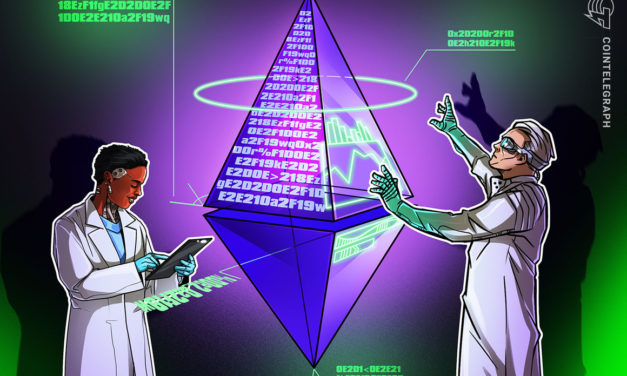
Crypto analytics firm Chainalysis has suggested that the price of Ether (ETH) could decouple from other crypto assets post-Merge, with staking yields potentially driving strong institutional adoption.In a Sept. 7 report, Chainalysis explained that the upcoming Ethereum upgrade would introduce institutional investors to staking yields similar to certain instruments such as bonds and commodities, while also becoming much more eco-friendly.The report said ETH staking is expected to offer a 10-15% yield annually for stakers, therefore making ETH an “enticing bond alternative for institutional investors” considering that treasury bonds yields offer much less in comparison. “Ether’s price could decouple from other cryptocurrencies following The Merge, as its staking rewards will make it similar to an instrument like a bond or commodity with a carry premium.”According to Chainalysis data, the number of institutional ETH stakers — those with $1 million worth of ETH staked or more — has “been steadily increasing” from under 200 as of January 2021 to around 1,100 as of August this year.The firm notes that if this number increases at a faster rate following The Merge, this should confirm the hypothesis that institutional investors “do indeed see Ethereum staking as a good yield-generating strategy.” The Chainalysis report also tips ETH to draw in more retail and institutional traders after The Merge, as the forthcoming upgrade will make staking a much more attractive investment tool.Currently staked ETH is locked up in a smart contract that cannot be withdrawn from until the Shanghai upgrade comes around six to 12 months after the Merge goes through. As such the staked ETH market is currently illiquid, resulting in some staking service providers offering synthetic assets that represent the value of the staked Ether, the drawback however is that “those synthetics don’t always maintain a 1:1 peg,” argues the firm. “The Shanghai upgrade […] will allow users to withdraw staked Ether at will, providing more liquidity for stakers and making staking a more attractive proposition overall,” the report reads. Related: Binance US launches low-barrier Ethereum staking ahead of The MergeAnother factor highlighted is that the Ethereum blockchain’s proof-of-stake transition will see its energy consumption requirements drop by as much as 99% following the upgrade, as per the Ethereum Foundation. “The switch to PoS will also make Ethereum more eco-friendly, which could make investors with sustainability commitments more comfortable with the asset. This especially applies to institutional investors.”ConsenSys, the firm behind the MetaMask wallet and founded by Ethereum co-founder Joseph Lubin, also published a similar report looking at the “impact of the Merge on Institutions” this week. The report echoes similar sentiments regarding ETH staking rewards and environmental sustainability attracting institutions, but also highlights the importance of the PoS Ethereum chain “producing stronger security guarantees for institutional investors” along with ETH’s potential to become a deflationary asset: “Reduced ETH issuance and increased burns will systematically reduce ETH supply — putting deflationary pressure on ETH, thereby alleviating institutional concerns of token price dropping to zero, and increasing likelihood of an increase in value.”

Čítaj viac

Degens borrowing ETH to get fork tokens create headaches for DeFi platforms

The growing number of speculators taking out Ether (ETH) loans to maximize their potential to earn forked Ether Proof-of-Work tokens (ETHPoW) has been causing headaches for decentralized finance protocols. The issue has been gaining traction over the past month or so, given that a significant number of Ether miners are expected to continue working on a forked PoW chain, or possibly even multiple chains post the long awaited Merge. In the event of a fork, on-chain ETH hodlers such as those using non-custodial wallets or those holding on exchanges that are supporting ETHPoW will be airdropped the equivalent amounts of the new tokens to their ETH holdings. This is because your ETH balance on the existing chain will be duplicated on the forked PoW chain.On Sept. 6, the Aave governance community overwhelmingly voted in favor of halting ETH lending “in the interim period leading up to the Merge.”This proposal was initially put forward on Aug. 24 as result of the demand for Aave ETH loans surging to levels that were starting to put pressure on the liquidity supply. Aave has a complex structure for issuing interest rates, and utilizes algorithms to determine percentages taking into account the liquidity and demand for borrowing on the platform. “Once the ETH borrow rate reaches 5%, which happens shortly after 70% utilization rate (we are at 63% right now), stETH/ETH positions start becoming unprofitable,” the proposal stated as of Aug. 24. It was added that if these positions do start to become unprofitable, users would likely race to “unwind their positions up until the ETH borrow rate reverts to a stable level where the APY [Annual Percentage Yield] becomes tolerable.” As such, this would put even more pressure on liquidity supply of ETH on Aave. The vote yesterday polled 77.87% in favor (528,290 people) and 22.13% against (150,170 people), and the proposal was executed on the same day. Earlier this week another DeFi lender Compound Finance also had a forked Ethereum risk mitigation-related proposal that was voted through, and notably had zero votes in opposition to the 347,559 in favor. Compound’s idea, which went live as of Sept. 5, was to set the borrow cap at 100,000 ETH until the dust from the Merge has settled. Additionally the protocol updated its interest model to a “jump rate model with much higher rates after exceeding 80% borrow utilization” which bumps to a maximum rate of 1000% APR if 100% utilization is reached. The hope is that this will deter users from overwhelming Compound with borrowing and withdrawals from the platform. Proposal 122 prepares for the Merge and a potential POW fork by protecting cETH user liquidity.It imposes a borrowing cap of 100,000 ETH, and introduces a new interest model with very high upper bounds.Voting begins in 2 days.https://t.co/7LvUk1lOk7https://t.co/krTBxFUQEe— Compound Labs (@compoundfinance) September 2, 2022Related: Hive Blockchain explores new mineable coins ahead of Ethereum mergeETH outflows on exchanges Users are certainly positioning themselves to get free tokens,despite numerous stablecoins and projects distancing themselves from a PoW chain. Delphi Digital’s latest report notes that despite declining price of ETH of late, exchanges saw outflows totaling 476,000 on Aug. 29. This marks the third largest amount of ETH withdrawals since March, and the firm attributed this to Merge and investors repositioning to collect ETHPoW tokens:“To collect the most amount of ETHPoW tokens, users are likely withdrawing ETH balances from centralized exchanges to non-custodial wallets, leading to an increase in the net outflow of ETH from exchanges.”While it is unclear if the forked chains will attract strong enough interest to develop a lasting ecosystem and community, in the short term crypto degens at least seem keen to gobble up free forked tokens.

Čítaj viac

Binance: No plans to auto-convert Tether, though that ‘may change’

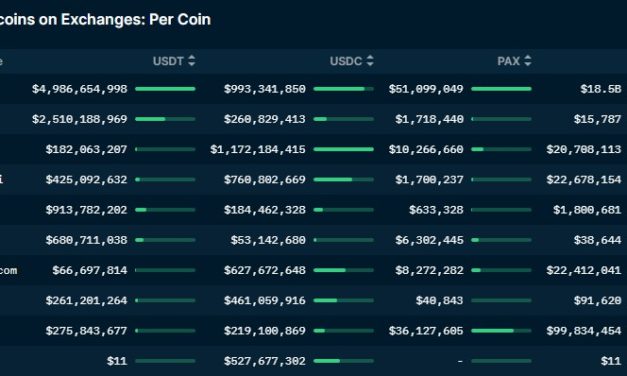
Crypto exchange giant Binance has confirmed it has no plans to “auto-convert” Tether (USDT) to Binance USD (BUSD) at the moment, though noted that this “may change.”On Sept. 6, the crypto exchange surprised the market with the announcement it will cease trading support for U.S. dollar-pegged stablecoin USD Coin (USDC) on its platform, along with USDP Stablecoin (USDP) and TrueUSD (TUSD). Any users that are still holding the three stablecoins on Sept. 29 will begin to have their holdings auto-converted to BUSD at a 1:1 ratio over a 24-hour period.Binance stated that the move was a decision to enhance liquidity and capital efficiency for users, but notably did not make any mention of the largest stablecoin by market cap, Tether USDT. In a statement to Cointelegraph, a Binance spokesperson confirmed there were no immediate plans to do the same to USDT, but noted that this could change, stating: “We do not have plans to auto-convert USDT to BUSD as of now, but may change.”The spokesperson also confirmed that the auto-conversion and move to cease most trading services for USDC is “not a temporary measure,” and that it “will continue.”Binance CEO Changpeng Zhao (CZ) in a Sept. 6 tweet clarified that the company won’t be de-listing the three stablecoins, but is “just merging all liquidity into one pair,” adding that it will offer the “best price, lowest slippage for users.”Binance will also remove the long list of spot trading asset pairs matched to these stablecoins, with the pairings switching primarily over to BUSD. Users will also need to keep an eye out for the use of USDC in the exchange’s staking, savings, liquid swaps, and loans, as those services will be shut down for that asset also. The move from Binance comes alongside a temporary suspension of Ether (ETH) and Wrapped ETH (WETH) deposits and withdrawals from Sept. 6 until the Ethereum Merge goes through later this month. Related: CZ hits back at claims Binance is a Chinese companyData from Nansen shows that Binance has been gradually converting USDC to BUSD since mid August, with roughly $1.5 billion worth switching over during that time according to the analytics platform’s CEO Alex Svanevik. Binance has less than $1B USDC now. pic.twitter.com/Sx4Wjr43V5— Alex Svanevik (@ASvanevik) September 6, 2022As it stands, Binance now has less than $1 billion worth of USDC on the platform, with around $993.3 million at the time of writing. In comparison, Binance holds a whopping $4.9 billion worth of USDT, more than any other exchange across the globe. Stablecoins on Exchanges: Nansen

Čítaj viac

‘Far too easy’ — Crypto researcher’s fake Ponzi raises $100K in hours

Crypto influencer FatManTerra claims to have gathered over $100,000 worth of Bitcoin (BTC) from crypto investors in an investment scheme that was later revealed as fake. The crypto researcher said he created the fake investment scheme as an experiment and to teach people a lesson about blindly following the investment advice of influencers. The account on Twitter has around 101,100 followers and is mostly known for being a former Terra proponent that now actively speaks out against the project and founder Do Kwon following its $40 billion collapse in May. In a Sept. 5 tweet, FatManTerra told his followers he had “received access to a high-yield BTC farm” by an unnamed fund, and said that people could message him if they wanted-in on the yield farming opportunity. “I’ve maxed out what I could, so there’s some leftover allocation and I thought I’d pass it along — priority will be given to UST victims. DM for more details if interested,” he wrote. While the post received a ton of negative responses from people calling it out as a scam, FatMan said he still managed to raise more than $100,000 worth of BTC from the initial post on Twitter and on Discord within a span of two hours.In a Sept. 6 tweet, FatManTerra revealed the investment scheme was fake all along, describing it as an “awareness campaign” to show how easy it is to dupe people in crypto by using simple buzzwords and promising big investment returns. “While I used plenty of buzzwords and put on a very convincing act on all platforms, I made sure to keep the investment details intentionally obscure — I didn’t name the fund & I didn’t describe the trade — no one knew where the yield was coming from. But people still invested.”“I want to send a clear, strong message to everyone in the crypto world — anyone offering to hand you free money is lying. It simply doesn’t exist. Your favorite influencer selling you quick money trading coaching or offering a golden investment opportunity is scamming you,” he added. It is far too easy to scam people in crypto.And this needs to change.If you don’t understand where the yield is coming from, you are the yield.Listen carefully to the vocal critics of any project or investment before getting involved. *Really* listen.— FatMan (@FatManTerra) September 5, 2022FatManTerra claims to have now refunded all of the money and reiterated that “free lunches don’t exist.” The notion of influencers allegedly promoting scams has been in the news of late, with YouTuber Ben Armstrong (BitBoy Crypto) taking legal action against content creator Atozy last month for accusing him of promoting dubious tokens to his audiences, although he has since withdrawn the lawsuit. Related: Do Kwon breaking silence triggers responses from the communityFatManTerra also stated that his fake fund post was inspired by the Lady of Crypto Twitter account which has been accused of shilling questionable investment schemes to its 257,500 followers. On Sept. 5, the Lady of Crypto opened up a whitelist for their new funded trading firm that touts it can trade users’ funds on their behalf and receive an 80/20 split on the profits.

Čítaj viac

Nifty News: Bill Murray’s wallet hacked, FIFA’s tokenized highlights, Muse tops charts, and more…

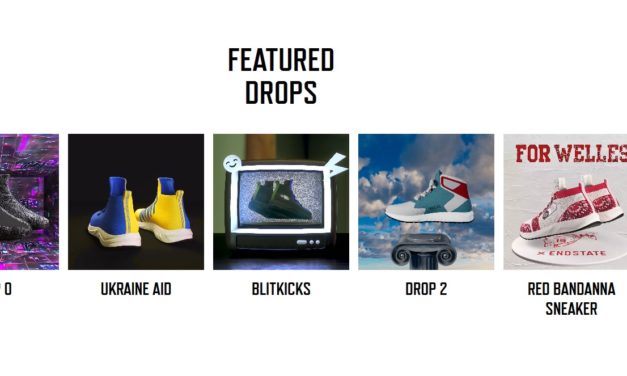
Popular comedic writer and actor Bill Murray had his Ethereum wallet hacked for around 110 Wrapped ETH (wETH) worth $172,000 late last week.The auction for the The Bill Murray 1,000 NFT drop was just coming to a close on Thursday Sept. 1, having generated a total of 119.2 wETH worth of sales as part of a charity fundraiser for Chive Charities. However hackers were reportedly watching Murray’s wallet all day, and pounced to swipe nearly all of the funds as the sale came to a close.While it is not 100% certain how the hackers gained access to Murray’s wallet, it is believed to be via a wallet-draining exploit. They are also said to have then transferred the stolen funds to a wallet address linked to the Binance exchange and Unionchain.ai.Murray’s wallet security team managed to stop the hackers from stealing his blue-chip NFTs such as two CryptoPunks, a Pudgy Penguin, and Damien Hirst NFT by shifting them to safe house wallets. ‘The Bill Murray 1000’ consisted of 1,000 NFTs depicting artwork inspired by 100 stories of Murray’s career. The tokens were launched in partnership with Coinbase’s NFT marketplace, with some of the most highly valued NFTs offering buyers a chance to sit down and have a beer with Murray himself. At the time of writing, Murray’s wallet has just 0.047 ETH remaining, worth roughly $75. FIFA follows NBA Top Shot route FIFA, the international governing organization of association soccer, has announced a new NFT project dubbed “FIFA+Collect.”It will follow a similar method to Dapper Lab’s widely popular NBA Top Shot, which consists of a marketplace and tokenized in-game-highlight collectibles. The project is set to launch later this month via FIFA’s digital content platform FIFA+, and the NFTs will depict historic moments from previous FIFA World Cups and FIFA Women’s World Cups. The Algorand-based NFTs will also be accompanied by digital art and imagery relating to the in-game highlights. The move is part of the promotional build-up to the 2022 World Cup set to take place in Qatar in November this year.A blockchain-based MuseBritish rock band Muse has become the first band to top the UK charts with an album sold in NFT format. The iconic rock band reportedly sold 51,500 copies of its new album Will of the People last week, making it the top-selling album. Notably, that figure outpaced the sales of the next nine top-selling albums combined. As part of the album launch in late August, Muse rolled out 1,000 tokenized copies of the album via the Serenade marketplace. The NFT version differed from the physical album with alternative cover art, and digital signatures from the Muse band members. WE ARE FUCKING FUCKEDThe final track of #WillOfThePeople. Watch the performance video here: https://t.co/VPRtZNexXQ pic.twitter.com/iSQKqxWIcw— muse (@muse) September 4, 2022NFL x NFT sneaker deal Philadelphia Eagles wide receiver DeVonta Smith has penned a unique shoe deal with Web3 startup Endstate to create a signature sneaker line tied to NFTs. According to a Sept. 2 report from Biz Journals, Endstate will first sell NFTs featuring a digital rendition of the Smith’s signature shoe, with buyers then receiving the physical version once they are ready to ship in mid-December.Smith worked with Endstate’s design team to create the shoe, and the NFTs are set to be launched later this month. Part of the appeal of Endstate is the tokenization of the widely popular shoe collecting market. Tying shoes to NFTs on the blockchain will enable buyers to show verified ownership of the shoes online and potentially making it easier to buy, sell and trade their highly sought after sneakers. NFT sneakers: EndstateRelated: NFT Steez and Lukso co-founder explore the implications of digital self-sovereignty in Web3More Nifty News:In an announcement on Twitter last week, NFT marketplace OpenSea stated it will support the new upgraded Proof-of-stake Ethereum blockchain once the Merge goes through. As such, the platform will only support Ethereum NFTs on PoS, and not any that come from potential forks. A group of hacktivists called the Belarusian Cyber Partisans have been attempting to sell NFTs featuring the purported passport info of Belarus president Alexander Lukashenko. The move is part of a grassroots funding campaign to fight “bloody regimes in Minsk and Moscow.”

Čítaj viac

Získaj BONUS 8 € v Bitcoinoch

nakup bitcoin z karty

Registrácia Binance

Burza Binance

Aktuálne kurzy