Autor Cointelegraph By Brian Quarmby

Yield Guild Games: Web3 gaming adoption needs a local touch

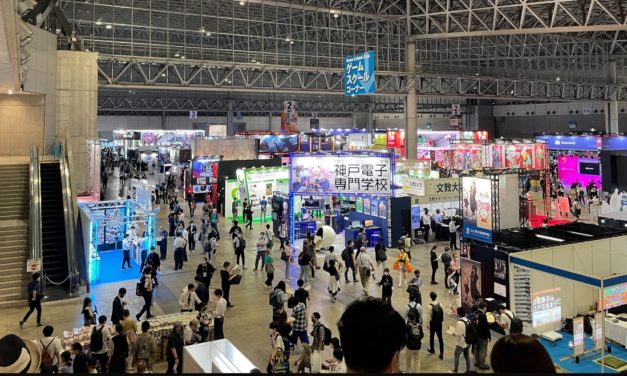
The blockchain-based gaming industry will need to look at localized strategies to attract Web3 gamers, says decentralized gaming guild Yield Guild Games (YGG).Speaking with Cointelegraph at the 2022 Tokyo Games Show last week, Andy Chou, YGG’s head of ecosystem development, and Brian Lu, partner of Taiwan-based VC firm Infinity Ventures Crypto (IVC) gave a rundown of YGG’s plans moving forward, including how it is using its subDAOs. YGG was initially launched in the Philippines in late 2020, but following an early-stage investment from IVC, the duo teamed up to expand YGG across the globe via subDAOs, initially starting in Southeast Asia. As per YGG terminology, SubDAOs act as a “specialized, miniature economy that interacts with a larger, all-inclusive economy” under the YGG umbrella. They were introduced into the YGG ecosystem around July last year. While many may associate YGG with its Philippines-based outfit that offers scholarship programs for play-to-earn (P2E) games such as Axie Infinity, the guild has gradually been expanding to other countries and regions such as India, Japan, Brazil, and Latin America though the use of subDAOs. Chou described the idea of a YGG subDAO as “sort of its own economy, that has its own treasury and its own token” adding that each subDAO has a different setup and business partnerships depending on what country it is located in. For example, Chou noted that while the concept of YGG scholarships — in which players people are are loaned NFT assets so that they can earn from games — has been a key driver for web3 gaming adoption in the Philippines, he doesn’t see this necessarily being relevant in the context of YGG Japan. Instead, Chou suggested that tapping the long list of beloved Japanese “gaming IP” is the best way to attract people to Web3 games in Japan, while Lu confirmed that they are focused on “helping market Japanese games” as opposed to offering scholarships there, stating: “Japanese IPs are something that everybody covets. […] You have [companies like] Sega, Bandai Namco, all those gaming companies want to pivot and come into Web3.”Questioned on what Chou thinks is currently holding back Web3 gaming from mainstream adoption, he outlined that the onboarding process is still a complicated process for new users, something that their YGG Japan subDAO has recently been moving to address.On Sept. 16, YGG Japan announced a partnership with IVC and web3 tech firm KryptoGO to develop a wallet specifically targeted at blockchain gamers. While details were sparse in the announcement, the trio aim to create a simplified interface for users to access blockchain games and host all their assets in one place. Chou said other barriers included a lack of knowledge about what NFTs represent, as many critics still argue that the assets are worthless as they can just right-click and save the NFTs associated artwork. “That whole process of just onboarding, once that gets more smooth, will help bring in more folks. I think even at the education [level], just explaining what it means to actually own a digital item. As opposed to being like ‘oh, I can just copy this and get it.’” “Having that digital ownership of those digital goods. It’s something that just hasn’t really been explored. But as the world gets more and more digital, you know, I feel like that’s where a lot of things are moving,” he added. Related: Bandai Namco, SEGA among gaming giants eyeing blockchain gamingYGG was co-founded in 2020 by Beryl Li and Gabby Dizon, and the latter is also one of the founding members of Oasys, which is tentatively set to launch a gaming-focused blockchain later this year. As of June, YGG’s network across the globe had more than 30,000 scholars. For loaning out their NFTs, YGG offers 70% of in-game earnings to the players, 20% to scholarship managers and the remaining 10% goes to the specific subDAO.

Čítaj viac
Bandai Namco, SEGA among gaming giants eyeing blockchain gaming

Japanese gaming giants are positioning for mainstream blockchain game adoption, and will not be swayed by the section of gamers that are against crypto and nonfungible tokens (NFTs), an exec from the Oasys blockchain project told Cointelegraph. Speaking to Cointelegraph at the 2022 Tokyo Games Show last week, Oasys Representative Director Ryo Matsubara emphasized that the project’s big-name partners such as Bandai Namco, Sega and Square Enix are not just jumping on the crypto bandwagon —there’s a long-term vision for blockchain-based Play-to-Earn (P2E) gaming: “We have a shared vision about blockchain at the executive level. They don’t [want to] change that policy. They really understand the future adoption of blockchain. They’re not thinking about, you know, just the revenue, they want to create the next future [of gaming].” Bandai Namco has developed beloved titles such as Tekken and Pac-Man, Sega’s most famous title is generally seen as Sonic the Hedgehog, while Square Enix is the developer of the widely popular Final Fantasy franchise.Questioned whether these companies are looking to integrate blockchain tech with their current gaming franchises, Matsubara suggested that they are initially looking at developing brand new blockchain games instead.He noted that as this is a completely “new model” of gaming, it needs more time to mature before these big companies will look at broader blockchain integrations with traditional games. “When the model is fixed, becomes sustainable and successful, then strong [popular] IP will be added,” he said.Looking at what needs to be improved in blockchain gaming, Matsubara noted that a “big problem” so far is that many projects are too dependent on the price of in-game tokens. As a result, there is more demand for “speculation” rather than the gameplay itself. He went on to note that there will be an “adjustment” over time as projects work to develop genuine hype for the games themselves, most likely by improving the overall gaming experience. Related: Japanese gov’t issues NFTs to reward local authorities’ workThis echoed similar sentiments to the lead community manager at Australia-based game developer and Animoca Brands subsidiary Blowfish Studios Luke Sillay, who was also at the event. During an interview with Cointelegraph, Sillay emphasized that more people want games that are actually “fun to play” rather than just a hustle to earn tokens. Oasys’ proof-of-stake blockchain is geared directly towards gaming and is tentatively set for an official mainnet launch in the remaining months of this year. Matsubara also hinted that games from its big-name partners will likely be announced next year. Looking outside Japan, major western gaming companies such as Fortnite developers Epic Games have increased exposure to blockchain gaming of late. Last week the Epic Games store listed a new free-to-play NFT game called Blankos Block Party by Mythical Games. The move follows comments from Epic Games CEO Tim Sweeney in July, in which he stated that his company “definitely” wouldn’t follow Microsoft’s Minecraft in banning NFT integrations in games.

Čítaj viac

Nifty News: Rumors of new Yuga Labs collection quashed, Budweiser celebrates the Merge and more…

Yuga Labs co-founder Greg Solana (Garga.eth) has shot down rumors that the Bored Ape Yacht Club (BAYC) creators have plans to launch a new NFT collection dubbed “Mecha Apes” by the end of the year. The rumors started swirling after Protos claimed to have obtained leaked documents detailing that Yuga Labs was looking at raising around $50 million from the sale of 100,000 tokenized land plots. After the news was reported via various outlets online, Garga.eth noted it was all “fake news” via Twitter on Sept. 16. fake news https://t.co/KVMaO18IaF— Garga.eth (@CryptoGarga) September 15, 2022While the rumors have been quashed, given that Yuga Labs has hit the ball out of the park with each project it’s launched so far, and that it has outlined a broad vision for its Metaverse, another NFT project from them in the future doesn’t seem like such a stretch. Ultimately, Yuga Labs hopes to create an interoperable Metaverse ecosystem in Otherside that includes a virtual place for people to socialize, a host of game modes with Play-to-Earn aspects, and a hub for users to receive key education on blockchain, NFTs and the Metaverse. Yuga Labs is valued at around a whopping $4 billion, and to date the BAYC NFTs have generated more than $2.4 billion worth of sales, while Otherdeed NFTs for the Otherside Metaverse have fetched more than $1 billion. Budweiser shares a toast to the Merge Beloved beer manufacturer Budweiser has teased a limited run of beer cans featuring the firm’s Beer.eth Ethereum Name Service domain name following the Merge. Sharing a photo of a Budweiser can featuring “Beer.eth, king of NFTs” in the center on Sept. 16, the firm Tweeted that “This Bud’s for the Merge.”This Bud’s for the Merge. pic.twitter.com/pNRLlmsNMs— Budweiser (@budweiserusa) September 15, 2022

While the firm didn’t provide any further details on the cans, it initially created a select number for its NFT Beer Fest event in March. Questioned by people how they could get their hands on the special cans, the beer maker teased that they “might just make another appearance.”The firm initially purchased the Beer.eth domain for almost $100,000 in August 2021, and has continued to stay involved with the sector since, teaming up with NFT horse racing game Zed Run earlier this year to create Budweiser brands race tracks and horses. NFT minted on last Ethereum PoW block According to data from Etherscan, someone managed to mint an NFT on the final Ethereum Proof-of-Work (PoW) block before the network switched over to PoS. The NFT in question was a VanityBlock token in which the user paid 30.2 Ether (ETH) and a 1.3 ETH gas fee to mint, worth roughly $46,500 at the time of writing. This ACTUALLY happened!Someone filled the final PoW block by minting a VanityBlock NFT!They paid 30.2 ETH with a 1.3 ETH TX fee for the privilege of capping out the 30 million gas limit and creating the final transaction!Legendhttps://t.co/xCoMyJMTyv https://t.co/w2RiIprQoh pic.twitter.com/GmyF6ImlDP— DeFiyst (@DeFiyst) September 15, 2022

The NFT has since been put up for sale on OpenSea, and currently has a highest offer of 10 Wrapped ETH (WETH) worth around $14,700. VanityBlocks offers buyers a chance to own a full tokenized block on Ethereum, as it publishes transactional data onto an entire block. There are just 18 of these NFTs listed on OpenSea, with prices starting at around 1.1 ETH.Despite the current bear market, the lack of bidding action seems surprising given the rarity of this specific NFT which caps off the end of Ethereum’s PoW history. Related: Ethereum community wastes no time minting PoS NFTs right after the MergeFunko utilizing to NFTs to make revenue pop: CEO Andrew Perlmutter, CEO of collectible figure behemoth Funko has outlined that the firm has gotten behind NFTs to meet demand from younger collectors who value digital goods and assets. So far, the firm has released several Funko Pop NFT drops featuring beloved characters from franchises such as Avatar, Hey Arnold and the Teenage Mutant Ninja Turtles. While Perlmutter admitted to Investors.com on Sept. 15 that he’s not well versed in NFTs and blockchain, he understands that the youth is fully engulfed in the digital sphere. “My kids always want the latest Fortnite avatar skin or gun,” he said, adding that “so the way they view digital assets is different from how we dinosaurs view them.””We knew that it just made sense for our brand to be in the NFT business… It’s people collecting digital assets,” Perlmutter concluded. Other Nifty News: On Tuesday, popular NFT project Doodles announced that it had raised $54 million at a $704 million valuation in a funding round led by Seven Seven Six, with participation from 10T Holdings, Acrew Capital and FTX Ventures.Solana-based NFT marketplace Magic Eden has fended off some community backlash following the launch of MetaShield, its new enforcement tool aimed at deterring NFT buyers who bypass creator royalties.

Čítaj viac

Gamers want fun, not a grind fest for tokens — Animoca subsidiary

Blockchain-based games need to spend more time actually being “fun to play” rather than developing flashy tokenomics, an Animoca Brand-owned blockchain game developer told Cointelegraph.Speaking to Cointelegraph on the first day of the 2022 Tokyo Games Show, Luke Sillay, the lead community manager at Australia-based game developer Blowfish Studios said that far too many blockchain games have put the focus on in-game rewards and tokenomics rather than gameplay. “You can see from a lot of other blockchain games that they’re not actually fun to play. Like, yes, you have potential to earn quite a significant amount of token and you get a good return on investment most of the time. But generally speaking, they’re not that fun, right?”Sillay said that generally, many of these games have simplistic game modes that are built around earning, rather than pure enjoyment, and have therefore failed to grasp the attention of traditional gamers thus far.According to data from DappRadar, the most popular blockchain games in terms of active users over the past 30 days are Gameta, Alien Worlds, and Solitaire Blitz with one million, 814,000, and 652,760 users, respectively. The figures show significant interest in the games but pale in comparison to popular traditional games. Sillay said games should primarily be “fun to play” and attractive to look at, stating: “Our kind of thought is that if it’s fun to play and it’s attractive to look at, people want to play it.”Blowfish Studios is an Australian video game developer that was acquired by Animoca Brands for around $6.6 million in July 2021. As part of the acquisition, Animoca has guided Blowfish from Web2 to Web3 gaming, with NFT game Phantom Galaxies (currently in Beta) being the company’s main focus. 2022 Tokyo Games Show Questioned on the type of games that would work best with NFTs and P2E integration, Sillay highlighted free-to-play giants such as Riot’s League of Legends and Epic Games’ Fortnite which already have internal markets built into them. He noted that these types of games generally attract die-hard fans because they are fun to play, and continually update and improve the experience over time. This leads to people who play for multiple years and happily spend money to purchase products such as new character skins. “Say like League of Legends and Fortnite with your skins and stuff like that […] If you can play and enjoy something for a really long time, you know, and then you drop it, in a year or two in, you don’t really have much to show for it. But if you do that with blockchain, you can potentially sell all the assets you’ve earned,” he said. Sillay went on to note that there are some barriers to entry in blockchain games that may be putting some people off, and that if the onboarding process can be ironed out this could attract new users. “It’s a very daunting thing trying to learn about this whole new technology, creating a wallet etc, and there are so many words in blockchains that mean completely different things,” he said. Sega Booth: Tokyo Games ShowPhantom Galaxies is an open-world mecha-robot shooter game expected to have an official early access launch in Q4 2022. Its in-game NFTs have already seen a high level of demand, with more than 517,000 owners of its Origin Collection according to OpenSea. The project also concluded a private NFT sale in May that fetched an estimated $19.3 million. Related: Animoca confirms $110M round led by Temasek, plans new acquisitionsAt this stage, Phantom Galaxies requires just one NFT to get started, making it a relatively straightforward process to get involved. “Then the rest is actually at the moment just like a traditional game basically,” Sillay said.

Čítaj viac

Final Fantasy creators join Oasys blockchain, gamers whine about it

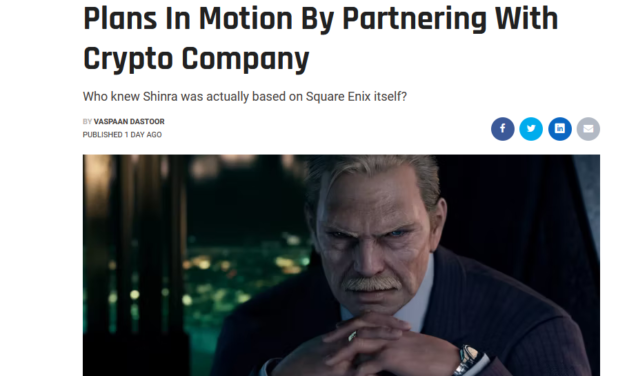
Square Enix, the Japanese game developer behind the beloved Final Fantasy franchise has signed on as a node validator for blockchain gaming project Oasys, with the duo also teaming up to create blockchain games. The move has predictably been met with criticism from some crypto and NFT hating members of the gaming community, irritated that the firm is continuing to double down its focus on blockchain tech. In a Sept. 12 announcement, Oasys revealed that Square Enix had jumped on board to be the project’s 21st node validator, taking up the final slot of initial validators. Moving forward the duo will also team up to develop new games on Oasys’ EVM compatible Proof-of-Stake (PoS) blockchain, which hopes to become a hub for Triple A quality games with Play-to-Earn (P2E) integrations.Square Enix joins a host of big names in gaming to partner with Oasys such as Sega, Double Jump, Bandai Namco and Ubisoft — with the latter also having a troubled history with gamers who have pushed back against the firm’s NFT gaming initiative Quartz. In 2022, Square Enix has done irreparable damage to its image by – Investing in crypto- No longer prioritizing “fun” in gaming- Selling off all their western studiosI’d call it self sabotage, but compared to what’s happened to Warner Bros this year, it’s honestly nothing https://t.co/TD8d1O1nj9— Bruh Momento (@JBoop_is_ballin) September 12, 2022The pitchforks are out While the prospect of having reputable gaming giants jumping behind a blockchain project is welcome news in the blockchain world, the traditional gaming community has not received Square Enix’s move well. The Gamer reported the news, with the headline: “Square Enix Sets Its Dreaded NFT Plans In Motion By Partnering With Crypto Company.” Square Enix article: The Gamer“Unlike most video game developers who decided to announce their ventures into the jpeg-filled world of NFTs, Square Enix has only been doubling down on it,” the article notes, as it questions Square Enix president and CEO Yosuke Matsuda’s previous statements about introducing P2E elements into games: “He probably ignored the fact that so many NFT games aren’t just scams, but also look like they were made by an actual bored ape.”On Twitter gamer @ShyVortex said the partnership was “truly disgusting. Never buying a Square Enix game again,” while @eramaster12 questioned “what does it take to f#ckin force them to stop?.”@Pilnok also chimed in that this “has become tiresome and embarrassing” and @ManuelRomer2 added “what about just don’t entirely?” pic.twitter.com/AVI7Kf2lB0— RecklesFlam1ngo (@RecklesFlam1ngo) September 12, 2022

Square Enix and blockchain Square Enix has been gradually ramping up its blockchain related plans in 2022, despite pushback. Matsuda stated in a New Year’s Letter in January that he was particularly interested in the idea of introducing blockchain-enabled “token economies” into games to incentivize both players and users that generate content to add to the games.“With advances in token economies, users will be provided with explicit incentives, thereby resulting not only in greater consistency in their motivation, but also creating a tangible upside to their creative efforts,” he wrote. Related: Ubisoft cools off on NFTs and blockchain, says it’s in ‘research mode’While blockchain is yet to creep into Square Enix’s games, the firm kicked things off in July by releasing tokenized character figures for $129.99 featuring characters such as Cloud Strife from Final Fantasy.

Čítaj viac

Získaj BONUS 8 € v Bitcoinoch

nakup bitcoin z karty

Registrácia Binance

Burza Binance

Aktuálne kurzy