Autor Cointelegraph By Brian Quarmby

Nifty News: Napoleon Dynamite cast reunites in Web3 animated series, Sega's blockchain game and more…

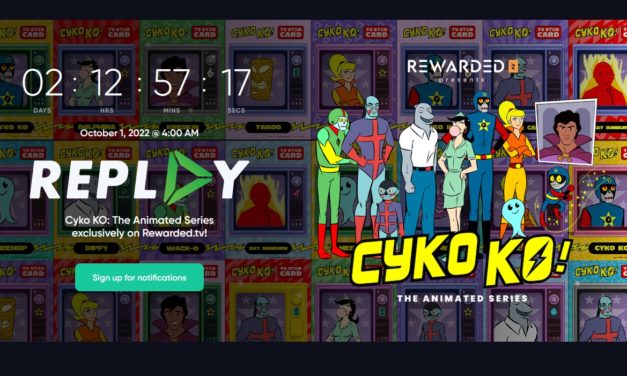
The main cast from the cult-classic film Napoleon Dynamite are reuniting for an animated series which will be released through blockchain technology. According to a Sept. 27 report from Hollywood news outlet Deadline, the stars from Napoleon Dynamite have all signed on to voice characters in CyKo KO, an animated rendition of Rob Feldman’s comic book bearing the same name, with a 12-minute pilot to launch on Web3 streaming service Rewarded.TV. Napoleon Dynamite is an indie-comedy from 2004 that developed a cult following across the globe despite being shot in just 22 days and having a limited budget of $400,000. The main cast includes Jon Heder, Tina Majorino, Efren Ramirez and Jon Gries. Heder, who played Napoleon Dynamite, will take up the role of the main character who also bears the same name as the show. CyKo KO follows the story of a hero and his sidekicks who protect the colonies of “SuperEarth” from enemies and giant monsters. A 12-minute pilot is reportedly in the works at this stage. As part of the fund raising process from the show, Rewarded.TV will host the sale of CyKo KO NFT card collectible packs on October 1. The packs start at $59 a pop and were developed in partnership with Theta Labs. Hodler’s of the NFTs will gain access to all season 1 episodes of the series along with other shows and films on Rewarded.TV. Monthly prizes and a chance to meet the cast of CyKo KO or to cameo in the pilot has also been touted.Cyko KO NFT drop: Rewarded.TVThe Web3 streaming platform enables users to earn RPLAY tokens and NFT rewards for time spent watching media, while people can also earn from launching their own content. Sega’s first blockchain game Japanese gaming giant Sega is set to release its first blockchain game via Oasys’ Layer-2 network called the HOME verse.According to a Tuesday announcement from Oasys, the game is based on the Romance of the Three Kingdoms mythology, which is from Sega’s SANGOKUSHI TAISEN arcade-based card game franchise. The game itself will be developed and operated by double jump.tokyo and it will consist of a digital collectible card game, most likely with a PVP battle mode attached to it. Artwork from Sega’s SANGOKUSHI TAISEN game franchise: OasysWhile it doesn’t represent a triple-A quality game launch, the move is significant as it shows that Sega is finally ready to dip its toes into the blockchain gaming market. Speaking to Cointelegraph at the 2022 Tokyo Games Show earlier this month, Oasys representative director Ryo Matsubara emphasized that big gaming companies in Japan such as Bandai Namco, Sega and Square Enix all hold a long term vision for blockchain-based gaming. “They don’t [want to] change that policy. They really understand the future adoption of blockchain. They’re not thinking about, you know, just the revenue, they want to create the next future [of gaming],” he said. Related: Anonymous makes numerous allegations against Yuga Labs and its Bored Ape Yacht ClubPUBG creator looking at Metaverse game next Brendan Greene, the creator of the highly popular survival shooter game PUBG, has revealed his next game called Artemis will be a Metaverse-focused title that will likely have NFT and blockchain elements. Greene noted in a Wednesday interview with Hit Points that the game will allow players to create whatever they like in a large open world, and that digital items like NFTs will be incorporated so that users can extract value out of the game via digital goods. “We’re building a digital place. That has to have an economy, and it has to have systems at work. And I do believe you should be able to extract value from a digital place; it has to be like the internet, where you can do stuff that will earn you money.” “But it’s not about, like, Chanel and Louis Vuitton. It’s some kid called AwesomePickle selling cool skins because he understands what people want,” he added. Mega ETH borrow against Mega Mutant Apes One ballsy NFT collector has utilized NFT lending platform Arcade to borrow 1,044 Ether (ETH) against two of their Mutant Ape Yacht Club (MAYC) NFTs this week. At the time of writing, 1,044 ETH is worth $1.33 million, and the hodler who goes by @fragmentxyz on Twitter, used the borrowed capital to purchase another rare MAYC NFT for 1,000 ETH. 1000 ETH was borrowed against two mega mutants today on @arcade_xyz! The payback is set to be 1,044 ETH in 90 days (18% APY). Additionally the borrower (@fragmentxyz) has bought a third mega mutant from @machibigbrother pic.twitter.com/0dkWIVOGYo— 0xTIGΞR (@PltTiger) September 27, 2022Under the loan repayment terms, @fragmentxyz has an interest rate of 18% APY that needs to be paid down within 90 days. The move marks a novel method to extract liquidity NFTs without selling them (in theory) and suggests that the hodler is betting on there being no major price volatility for MAYC NFTs over the next three months.Other Nifty News Christie’s has launched its own dedicated NFT “on-chain auction platform,” allowing auctions to be carried out fully on-chain on the Ethereum network. The Walt Disney Company could be on the verge of expanding into the crypto space after posting a new job for an “experienced corporate attorney” to work on “emerging technologies” such as NFTs and the Metaverse.

Čítaj viac

Wintermute inside job theory 'not convincing enough' —BlockSec

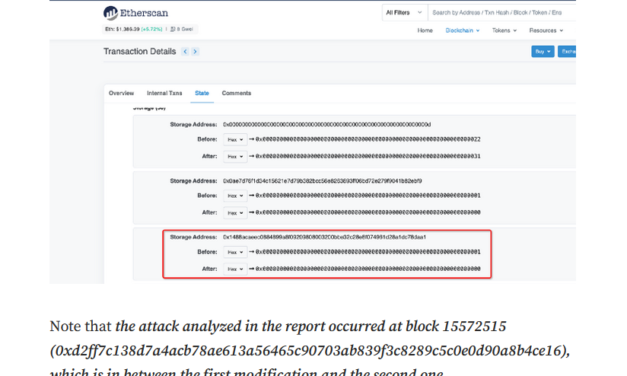
Blockchain security firm BlockSec has debunked a conspiracy theory alleging the $160 million Wintermute hack was an inside job, noting that the evidence used for allegations is “not convincing enough.”Earlier this week cyber sleuth James Edwards published a report alleging that the Wintermute smart contract exploit was likely conducted by someone with inside knowledge of the firm, questioning activity relating to the compromised smart contract and two stablecoin transactions in particular. BlockSec has since gone over the claims in a Wednesday post on Medium, suggesting that the “accusation of the Wintermute project is not as solid as the author claimed,” adding in a Tweet:“Our analysis shows that the report is not convincing enough to accuse the Wintermute project.In Edward’s original post, he essentially drew attention as to how the hacker was able to enact so much carnage on the exploited Wintermute smart contract that “supposedly had admin access,” despite showing no evidence of having admin capabilities during his analysis. BlockSec however promptly debunked the claims, as it outlined that “the report just looked up the current state of the account in the mapping variable _setCommonAdmin, however, it is not reasonable because the project may take actions to revoke the admin privilege after knowing the attack.”Our short analysis of the Accusation of the Wintermute Project: https://t.co/6Lw6FjUrLp@wintermute_t @evgenygaevoy @librehash @WuBlockchain @bantgOur analysis shows that the report is not convincing enough to accuse the Wintermute project.— BlockSec (@BlockSecTeam) September 27, 2022It pointed to Etherscan transaction details which showed that Wintermute had removed admin privileges once it became aware of the hack. BlockSec report: MediumEdwards also questioned the reasons why Wintermute had $13 million worth of Tether (USDT) transferred from two or their accounts on two different exchanges to their smart contract just two minutes after it was compromised, suggesting it was foul play.Related: Tribe DAO votes in favor of repaying victims of $80M Rari hackAddressing this, BlockSec argued that this is not as suspicious as it appears, as the hacker could have been monitoring Wintermute transferring transactions, possibly via bots, to swoop in there.“However, it is not as plausible as it claimed. The attacker could monitor the activity of the transferring transactions to achieve the goal. It is not quite weird from a technical point of view. For example, there exist some on-chain MEV-bots which continuously monitor the transactions to make profits.”As previously stated in Cointelegraph’s first article on the matter, Wintermute has strongly refuted Edwards claims, and has asserted that his methodology is full of inaccuracies.

Čítaj viac

Yat Siu: Asia GameFi opportunity huge as gamers don’t hate NFTs

Animoca Brands co-founder Yat Siu thinks that GameFi has the biggest opportunity for growth in Asia, as gamers there don’t hold the same vitriol towards nonfungible tokens (NFTs) as they do in the West. Sitting down with Cointelegraph during Asia Crypto Week, Siu argued that Asia generally has more of a welcoming culture towards gaming and advancements in tech such as NFTs, digital property and Play-to-Earn (P2E). “I think that Asia has the potential to really lead in blockchain gaming, at least in the short term. And there’s a couple of reasons why I think that’s the case. Not just because, you know, there’s the most gamers in this region of the world. […] but it’s also because gamers in Asia are welcoming NFTs.” “Gaming companies in the West have to deal with consumer resistance that gaming companies in Asia do not have to,” he added. The Animoca co-founder attributed this acceptance of NFTs to a broader Asian viewpoint on capitalism, which he suggested is viewed more favorably in the region — barring China — than in the U.S., as people see it as a path out of poverty. He pointed to examples such as South Korea, which “only four decades ago” had the same size economy as North Korea but has swiftly climbed the global rankings through innovation, “creativity, legal frameworks, and property rights” despite lacking natural resources. “The consumer in Asia looks at capitalism as a net-good fight. In other words, okay, there is inequity. There’s a guy who made a lot of money, but [people] think ‘I can get there too, or I have an opportunity,’” he said. Drawing a contrast to the United States, Siu highlighted that capitalism draws a more demonized view by some people there, and rightly so as many people haven’t seen capitalism “work for them.”He argued that this type of thinking ultimately bleeds into gamers pushing back on NFTs, as people worry about being priced out of the market with expensive NFTs that are seen as a “rich man’s tool.” “When the headline news isn’t a $5 or $10 in-game NFT item, but a $300,000 Bored Ape well, then, you know it’s a little bit like saying the entire car industry is just Lamborghinis. That’s not true either. But that’s what we see. And so the rejection in the West comes from that lens.”Expanding on the Asian context, Siu also emphasized that blockchain gaming is opening up access to venture capital from Silicon valley that hasn’t really been tapped before, especially in the context of countries like the Philippines where P2E gaming guilds have become quite popular.Related: Gamers want fun, not a grind fest for tokens — Animoca subsidiaryHe again highlighted that this is due to a vibrant ecosystem that is growing in Asia as many gamers are adopting the tech while many projects are actively innovating in the space. “Now you have companies like a16z, not just ourselves investing but also Silicon Valley money moving into Vietnam and Philippines. I think that’s unheard of. So that’s kind of exciting as well. I do think Asia is pointing towards a web three blockchain gaming future. Broadly speaking,” he said.

Čítaj viac

Cyber sleuth alleges $160M Wintermute hack was an inside job

A fresh new crypto conspiracy theory is afoot — this time in relation to last week’s $160 million hack on algorithmic market maker Wintermute — which one crypto sleuth alleges was an “inside job.”Cointelegraph reported on Sept. 20 that a hacker had exploited a bug in a Wintermute smart contract which enabled them to swipe over 70 different tokens including $61.4 million in USD Coin (USDC), $29.5 million in Tether (USDT) and 671 Wrapped Bitcoin (wBTC), worth roughly $13 million at the time.In an analysis of the hack posted via Medium on Sept. 26, the author known as Librehash argued that due to the way in which Wintermute’s smart contracts were interacted with and ultimately exploited, it suggests that the hack was conducted by an internal party, claiming: “The relevant transactions initiated by the EOA [externally owned address] make it clear that the hacker was likely an internal member of the Wintermute team.”The author of the analysis piece, known also as James Edwards, is not a known cybersecurity researcher or analyst. The analysis marks his first post on Medium but so far hasn’t garnered any response from Wintermute or other cybersecurity analysts.In the post, Edwards suggests that the current theory is that the EOA “that made the call on the ‘compromised’ Wintermute smart contract was itself compromised via the team’s use of a faulty online vanity address generator tool.” “The idea is that by recovering the private key for that EOA, the attacker was able to make calls on the Wintermute smart contract, which supposedly had admin access,” he said. Edwards went on to assert that there’s no “uploaded, verified code for the Wintermute smart contract in question,” making it difficult for the public to confirm the current external hacker theory, while also raising transparency concerns. “This, in itself, is an issue in terms of transparency on behalf of the project. One would expect any smart contract responsible for the management of user/customer funds that’s been deployed onto a blockchain to be publicly verified to allow the general public an opportunity to examine and audit the unflattened Solidity code,” he wrote. Edwards then went into a deeper analysis via manually decompiling the smart contract code himself, and alleged that the code doesn’t match with what has been attributed to causing the hack. Related: Almost $1M in crypto stolen from vanity address exploitAnother point that he raises questions about was a specific transfer that happened during the hack, which “shows the transfer of 13.48M USDT from the Wintermute smart contract address to the 0x0248 smart contract (supposedly created and controlled by the Wintermute hacker).” Edwards highlighted Etherscan transaction history allegedly showing that Wintermute had transferred more than $13 million worth of Tether USD (USDT) from two different exchanges, to address a compromised smart contract. “Why would the team send $13 million dollars worth of funds to a smart contract they *knew* was compromised? From TWO different exchanges?,” he questioned via Twitter. His theory has, however, yet to be corroborated by other blockchain security experts, although following the hack last week, there were some murmurs in the community that an inside job could’ve been a possibility.The fact that @wintermute_t used the profanity wallet generator and kept millions in that hot wallet is negligence or an inside job. To make things worse the vulnerability in profanity tool was disclosed a couple of days ago.— Rotex Hawk (@Rotexhawk) September 21, 2022Providing an update on the hack via Twitter on Sept. 21, Wintermute noted that while it was “very unfortunate and painful,” the rest of its business has not been impacted and that it will continue to service its partners. “The hack was isolated to our DeFi smart contract and did not affect any of Wintermute’s internal systems. No third party or Wintermute data was compromised.” The hack was isolated to our DeFi smart contract and did not affect any Wintermute’s internal systems. No third party or Wintermute data was compromised.— Wintermute (@wintermute_t) September 21, 2022

Cointelegraph has reached out to Wintermute for comment on the matter but has not received an immediate response at the time of publication. 

Čítaj viac

Reversible transactions could mitigate crypto theft — Researchers

Stanford University researchers have come up with a prototype for “reversible transactions” on Ethereum, arguing it could be a solution to reduce the impact of crypto theft. In a Sept. 25 tweet, Stanford University blockchain researcher Kaili Wang shared a run down of the Ethereum-based reversible token idea, noting that at this stage it is not a finished concept but more of a “proposal to provoke discussion and even better solutions from the blockchain community,” noting: “The major hacks we’ve seen are undeniably thefts with strong evidence. If there was a way to reverse those thefts under such circumstances, our ecosystem would be much safer. Our proposal allows reversals only if approved by a decentralized quorum of judges.”The proposal was put together by blockchain researchers from Stanford, including Wang, Dan Boneh, Qinchen Wang, and it outlines “opt-in token standards that are siblings to ERC-20 and ERC-721” dubbed ERC-20R and ERC-721R. Billions in crypto stolen. If we can’t stop the thefts, can we reduce the harmful effects?Over recent months, a couple other @Stanford researchers and I drew out and prototyped ERC-20R/721R to support reversible transactions on #Ethereum.See post & :https://t.co/38Hs0F9goU— kaili.eth (@kaili_jenner) September 24, 2022However, Wang clarified that the prototype was not to replace ERC-20 tokens or make Ethereum reversible, explaining that it is an opt-in standard that “simply allows a short time window post-transaction for thefts to be contested and possibly restored.”Under the proposed token standards, if someone has their funds stolen, they can submit a freeze request on the assets to a governance contract. This will then be followed up by a decentralized court of judges that need to quickly vote “within a day or two at most” to approve or reject the request. Both sides of the transaction would also be able to provide evidence to the judges so that they have enough information, in theory, to come to a fair decision. For NFTs, the process would be relatively straightforward as the judges just need to see “who currently owns the NFT, and freeze that account.” However, the proposal admits that freezing fungible tokens is much more complicated, as the thief can split the funds among dozens of accounts, run them through an anonymity mixer or exchange them in other digital assets. To counter this, the researchers have come up with an algorithm that provides a “default freezing process for tracing and locking stolen funds.” They note that it ensures that enough funds in the thief’s account will be frozen to cover the stolen amount, and the funds will only be frozen if “there’s a direct flow of transactions from the theft.”Gonna mass-address other comments:- If you think this is an incomplete solution, you’re entirely correct. Our paper provides some pieces of the puzzle (focuses on the mechanics), but we mention many open questions surrounding decentralized gov. That space needs work.— kaili.eth (@kaili_jenner) September 25, 2022

Wang’s Twitter post generated a lot of discussion, with a mixed bag of people asking further questions, supporting the idea, refuting it or putting forward ideas of their own. Related: UK gov’t introduces bill aimed at empowering authorities’ to ‘seize, freeze and recover’ cryptoProminent Ether (ETH) bull and podcaster Anthony Sassano wasn’t a fan of the proposal, tweeting to his 224,300 followers that “I’m all for people coming up with new ideas and putting them out into the ether but I’m not here for TradFi 2.0. Thanks but no thanks” I’m all for people coming up with new ideas and putting them out into the ether but I’m not here for TradFi 2.0Thanks but no thanks https://t.co/pdSIB5Ib05— sassal.eth (@sassal0x) September 25, 2022

Discussing the idea further with people in the comments, Sassano explained that he thinks that reversal control and consumer protections should be placed on the “higher layers” such as exchanges, and companies rather than the base layer (blockchain or tokens), adding:“Doing it at the ERC20/721 level would basically be doing it at the “base layer” which I don’t think is right. End-user protections can be put in place at higher levels such as the front-ends.”

Čítaj viac

Získaj BONUS 8 € v Bitcoinoch

nakup bitcoin z karty

Registrácia Binance

Burza Binance

Aktuálne kurzy