Autor Cointelegraph By Brian Quarmby

Nifty News: Porsche 911 NFTs, BMW files Web3 trademarks, Baby Shark’s NFT game and more…

Porsche to launch 7,500 NFTs for use in a ‘virtual world’German luxury car manufacturer Porsche has suggested it will be significantly ramping up its Web3 efforts after unveiling an upcoming NFT project consisting of 7,500 customizable tokenized vehicles. In a Nov. 29 announcement, Porsche stated that the NFTs will be launched in January, and users will be able to customize various aspects of the cars in relation to performance and appearance. The NFT art itself is being designed by designer and 3D artist Patrick Vogel, with all pieces revolving around the famous Porsche 911 model.Notably these virtual assets will be designed in Epic Games’ Unreal Engine 5, suggesting that gaming integrations are afoot. NFT car designs: PorscheThe company gave a sneak peek into the project at the Art Basel conference in Miami on Nov. 30. While specific details have not been mentioned, the company noted that owners will be able to use the cars in the “virtual world,” most likely meaning some sort of Metaverse.More broadly, Porsche suggested that it is looking to significantly ramp up its exposure to Web3 moving forward, with the announcement noting that: “Digital art is just one aspect of Porsche’s Web3 strategy. The sports car manufacturer is working to integrate the potential of blockchain technology into existing and future processes and solutions.”Porsche previously had a hand in launching soccer-themed NFT collectibles in June 2021 as part of a project called Fanzone, but now appears to be taking the tokenization of its cars more seriously. BMW to get Web3 trademarksSpeaking of German luxury car manufacturers, BMW has reportedly applied to trademark its logo in relation to a host of Web3 products and services. The move was highlighted by USPTO licensed trademark attorney Mike Kondoudis, who frequently shares news regarding Web3 trademark applications in the U.S. from major companies.BMW outlined intentions for its logo to span across collectibles such as virtual clothing, footwear, headwear and vehicles, while also indicating plans for downloadable virtual goods such as online environments and games. BMW is coming to the metaverse!The company has applied to trademark its logo for:▶️ NFT authenticated media + files▶️ Virtual vehicles + clothing + footwear▶️ Retail stores for virtual vehicles + clothing▶️ Virtual environments… and more!#NFT #Metaverse #Web3 #BMW pic.twitter.com/huO0RkiGWz— Mike Kondoudis (@KondoudisLaw) November 30, 2022Baby Shark’s Web3 arcContent from Pinkfong’s massively popular children’s song/music video Baby Shark is set to be tokenized as part of a family-focused blockchain game. Pinkfong reportedly penned a licensing agreement with Toekenz Collectibles to create and issue Baby Shark characters in a child safe digital environment. Baby Shark NFT partnership: ToekenzToekenz Collectibles is an NFT platform targeted at children aged 12 and under, and the focus of the game is to educate kids aged five to nine “about the trading economy of digital collectibles.”The kids will also be able to customize the NFT art to their own liking, and even participate in a Tokenz DAO where they “can exercise democratic decision-making.” This is not Pinkfong’s first dip into NFTs, Cointelegraph previously reported that the South Korea-based company launched a series of limited editions Baby Shark NFTs in December last year. Related: Two Bored Apes sell for $1M each: Nifty Newsletter, Nov. 23–29Deadmau5 rolling out music metaverseA Web3 startup co-founded by popular crypto-friendly DJ Deadmau5 (Joel Zimmerman) is gearing up for the launch of a music and gaming focused Metaverse platform. Announced at the Art Basel event on Nov. 29, the start-up known as Pixelynx stated that the Polygon-based platform will launch this week, and kick things off with an Augmented Reality (AR) scavenger hunt set on Miami Beach. The firm’s CEO and co-founder Inder Phull described the AR scavenger hunt as a “Rock Band meets Pokémon Go experience,” in which virtual gaming features are merged with real locations on maps via smart devices. [embedded content]Users who hold Deadmau5’s Droplet NFTs will gain early access to Pixelynx’s metaverse with the platform aiming to provide a host of virtual experiences for fans of particular musicians and artists.More Nifty NewsNFTs depicting the ongoing protests in China against the country’s tough zero-tolerance COVID-19 policy have found their way to the NFT marketplace OpenSea at the tail end of November.On Nov. 30, decentralized exchange (DEX) Uniswap announced that users can now trade NFTs on its native protocol. The function will initially feature NFT collections for sale on platforms including OpenSea, X2Y2, LooksRare, Sudoswap, Larva Labs, X2Y2, Foundation, NFT20, and NFTX.

Čítaj viac
LBRY says it ‘will likely be dead’ following SEC loss

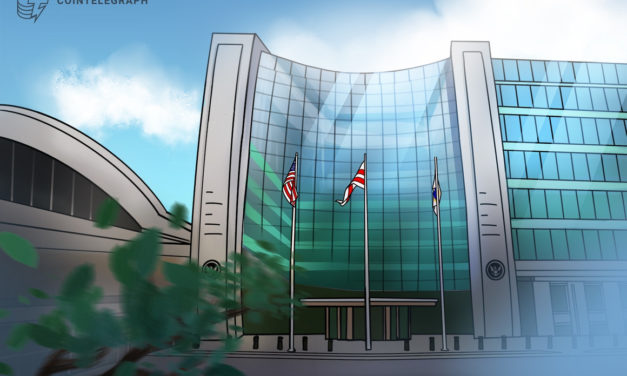
The firm behind the decentralized content platform LBRY said its days are likely numbered following its recent loss against the United States Securities and Exchange Commission (SEC) in court.It is specifically LBRY Inc that must die, the LBRY protocol and blockchain will continue. pic.twitter.com/SWwbqTq9In— LBRY (@LBRYcom) November 29, 2022The SEC initially took LBRY Inc to court in Mar. 2021 over its LBRY Credit (LBC) tokens, alleging that the firm had been conducting unregistered securities offerings since 2016. The SEC ultimately won that battle last month on Nov. 7, after a judge deemed the tokens to be securities in a major blow to the industry. Providing an update on the state of the business via Twitter on Nov. 30, LBRY Inc explained that the company “will likely be dead in the near future,” however the underlying protocol and blockchain will carry on: “We’d like to be upfront about the fact that LBRY Inc. will likely be dead in the near future. We expect the LBRY mission to continue on, but the company itself has been killed by legal and SEC debts.”LBRY Inc essentially provides a blockchain-based alternative to YouTube that offers less stringent censorship policies on its hosted content. The platform also facilitates direct tips in LBC to content creators as opposed to the standard advertising revenue share model. In the SEC’s case against LBRY, it alleged that LBC was designed for pure speculation, while LBRY had argued that the tokens served key utility functions for its platform such as tipping, publishing, purchasing and boosting video content. Despite the SEC winning the court dispute, LBRY suggested on Twitter earlier this week that the government agency has continued to be difficult to deal with in terms of settlement negotiations. Responding to a post about its Nov. 29 status report on its ongoing SEC negotiations, the company noted that it offered the SEC “everything we have” but this proposal was still rejected. Defense lawyer and former federal prosecutor James Filan questioned whether this was due to the SEC seeking out more drastic stipulations on future LBC sales. “Let me guess. That’s because they want a Consent Judgment that also includes a specific agreement that every sale, even on the secondary markets, is a sale of a security,” he said. In response, the LBRY Inc team simply supplied an emoji showing their lips are sealed. — LBRY (@LBRYcom) November 29, 2022

It is also worth noting that Filan, who has 131,000 followers on Twitter, has remained up to date with the LBRY case due to his long running commentary on the ongoing dispute between the SEC and XRP creators Ripple Labs.Related: LBRY alleges Apple forced it to censor certain terms amid COVID-19 pandemicThe cases are of a similar nature to each other in that the SEC has aggressively pushed to get both LBRY and XRP deemed as securities in court. Given that these are some of the first major crypto and securities related court cases, the outcomes could be seen as reference points for future rulings in the future.

Čítaj viac

Tron-based tokens sell at 1200% premium as FTX users scramble to withdraw

Tron-based tokens such as JUST (JST) have surged as much as 1000% on FTX, as users scramble to find ways of extracting locked-up liquidity from the beleaguered exchange. At the time of writing, Tron’s native token TRX is trading at roughly $0.33 on the FTX exchange, more than five times its current market price, according to CoinGecko. Meanwhile, BitTorrent (BTT), JUST (JST) and the Sun Token (SUN) are trading on the exchange at premiums ranging from 525% to 1,196% compared to the market price. As it stands, the prices are extremely volatile and constantly changing. The overinflation of Tron-related tokens comes after a Nov. 10 deal was struck which allows holders of assets such as TRX, BTT, JST, and SUN to withdraw funds. This move has resulted in traders on FTX bidding up the price of Tron-related tokens to be able to recoup their locked funds. However, buying the tokens at the inflated price will likely lead to significant realized losses should they then sell it on any other exchange. This means FTX customers get pennies on the dollar while Tron makes a ton of money.$TRX will be bid up on FTX as that is the only way to get out, but once people withdraw it they’ll have to sell it at market price, taking a huge loss on their original holdings. https://t.co/NkbXatmxXR— leoglisic.eth (@Leo_Glisic) November 10, 2022Limited withdrawalsFTX’s website says that it is currently unable to process withdrawals, with customers in the Bahamas where the company is based understood to be the only ones that can withdraw from the exchange. Subsidiary FTX.US has also suggested that it could soon follow the same path by halting withdrawals. It is also worth noting that FTX disabled new deposits of Tron-based assets as the withdrawals went live. Related: FTX turmoil increases scrutiny of industry, something institutional investors have been waiting forTwitter users such as @davidiach on Nov. 11 have mused that FTX users could potentially get around the Bahamian loophole in particular by getting a local citizen to buy a low-cap asset on FTX, have them dump it on the overseas user and then get the Bahamian to ”withdraw the profits” for them for a fee. One way to withdraw large amounts of money now is: 1. Have a Bahamian buy a very low liquidity coin on FTX2. Pump it hard and let the Bahamian dump that coin on you.3. Have the Bahamian withdraw the profits and give you the money minus a fee. https://t.co/Nei3zT3HMd— David Iach (,) (@davidiach) November 10, 2022

However the feasibility of such appears to be in doubt, given that the Bahamas Securities Commission (BSC) reportedly froze the assets of FTX Digital Markets (FDM) and “related parties” on Nov. 10 and suspended the firm’s registration in the country.

Čítaj viac

Ripple reports XRP holdings below 50% for the first time

Ripple Lab’s XRP token holdings have dropped below 50% of the total circulating supply for the first time in the company’s history. Ripple has faced criticism in the past by some that have raised questions over the firm’s significantly large ownership of XRP tokens, arguing that it gives the company centralized control over its XRP Ledger (XRPL). In a Q3 report published on Oct. 27, Ripple once again refuted that criticism, while also pointing out that its XRP holdings continue to decline, falling below 50 billion tokens, or 50% of the total supply. “Critics have pointed to the company’s XRP ownership as an indicator that the XRP Ledger is controlled by Ripple. This is not true,” Ripple stated, adding that:“The XRP Ledger (XRPL) uses Federated Byzantine Consensus to validate transactions, add new features, and secure the network, which means that each validator node gets one vote regardless of how much XRP they own.” The firm went on to state that it “currently operates 4 out of 130+ validator nodes on the XRPL.”Below 50% – a huge milestone! For 10 years, Ripple has focused on using XRP & the XRPL within our products for its speed, security and scalability for movement of value. As more customers use XRP in their payments flows, it’s clear there is real utility here. https://t.co/jKZwye17uZ— Brad Garlinghouse (@bgarlinghouse) October 27, 2022Ripple disclosed in the report that its total net sales (sales minus purchases) of XRP for Q3 was down to $310.68 million compared to $408.9 million in Q2. “Ripple has continued to sell XRP only in connection with ODL transactions, and ODL volumes have ramped up as Ripple’s ODL [On-Demand Liquidity] business expanded globally,” the report reads. One of Ripple’s key business offerings is its cross-border payments service ODL, and the company outlined that it continued to expand the product in Q3 via a partnership with forex firm Travelex to facilitate transactions between Brazil and Mexico. Related: Ripple’s lead engineer to exit after nearly a decade with the firmSEC battle updateRipple also commented on its lengthy legal dispute with the U.S. Securities and Exchange Commission (SEC), after scoring a big win relating to the elusive William Hinman documents earlier this month. The documents in question relate to a speech from former SEC division director Hinman in which he describes the regulatory status of BTC and ETH in terms that may help Ripple’s case, and contradict the SEC’s arguments. “Since Hinman’s market moving speech, the SEC continues to deliberately create ambiguity, instead of providing clear guidance, and uses that ambiguity to bring enforcement actions to stifle crypto innovation in the United States.”“In terms of next steps, in November, the SEC and Ripple will file reply briefs, and, from there, await the Judge’s decision on the motions,” the report adds. XRP is down 2.4% over the past 24 hours to sit at $0.46 at the time of writing but has gained 3.7% over the past week. Unlike a host of other major assets that hit new all-time highs last year, XRP’s peak was almost five years ago at $3.40 on Jan. 7, 2018.

Čítaj viac

Google still promoting crypto phishing sites warns Binance boss

Binance CEO Changpeng Zhao (CZ) has warned that Google search results are still promoting crypto phishing and scamming websites. Despite Google’s strict policies on crypto marketing for its ads service, scammers have still been slipping through the cracks over the past few years. At times, scam websites have even been displayed higher than legitimate crypto and blockchain projects. In an Oct. 27 tweet, CZ warned that when searching CoinMarketCap on Google, phishing sites with an “ad” tag were showing up in front of the actual website.“This affects users adding smart contract addresses to MetaMask using these phishing sites. We are trying to contact Google for this, and in the meantime alerting users about this through social channels,” he said. Google displays phishing sites when users search CMC. This affects users adding smart contract addresses to MetaMask using these phishing sites. We are trying to contact Google for this, and in the meantime alerting users about this through social channels. pic.twitter.com/3q4860Jl4H— CZ Binance (@cz_binance) October 27, 2022CoinMarketCap is one of the most commonly used crypto data aggregators on the market, was acquired by Binance for an undisclosed fee back in April 2020. Given its popularity, a lot of traffic could be directed towards these scam ads. In some cases, phishing websites can be hard to spot, as they generally use copycat URLs to trick people that aren’t paying attention into clicking. For example, one of the websites CZ highlighted was spelled “coinomarketcaap.”In April this year, blockchain security firm SlowMist uncovered a Terra (LUNC) related phishing scam in which bad actors were using Google Ads to run copycat websites utilizing Achor Protocol and Astroport branding. According to SlowMist, the promoted websites ranked ahead of the actual sites people were searching for and went on to swipe around $4.31 million worth of LUNC from 52 addresses between April 12. And April 21. Related: Sneaky fake Google Translate app installs crypto miner on 112,000 PCsIn November 2021, the research arm of cybersecurity firm CheckPoint also published a report warning that around $500,000 was stolen by scammers who used Google Ads to promote phishing sites that mimicked crypto wallet providers MetaMask and Phantom. Google’s ads service has been a topic of keen interest this week after parent company Alphabet firm highlighted in its Q3 earnings call that spending on search advertising from financial and crypto firms was down quarter over quarter. “We did see a pullback in spending by some advertisers in certain areas in search ads. For example, in financial services, we saw a pullback in insurance, loan, mortgage, and crypto subcategories,” said Philipp Schindler, chief business officer of Google. The firm appears to have no qualms about accepting ad payments from scammers, however.

Čítaj viac

Získaj BONUS 8 € v Bitcoinoch

nakup bitcoin z karty

Registrácia Binance

Burza Binance

Aktuálne kurzy