Autor Cointelegraph By Brian Newar

Crypto lender Maple Finance expands support to Solana

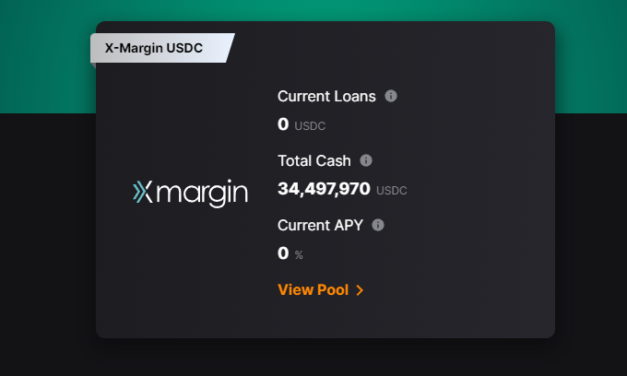
Crypto capital markets platform Maple Finance has expanded support to the Solana blockchain and has deployed a $45 million fund to spur ecosystem growth.Maple provides undercollateralized loans for institutional borrowers on Ethereum (ETH) and now Solana (SOL) from several pool delegates. The project stated in an Apr. 25 blog post that it has already “originated over $1.2 billion in loans and currently count over $900 million in TVL to the platform.”The ecosystem fund was launched in partnership with decentralized finance (DeFi) lending platform X-Margin, with capital being provided by USD Coin (USDC) issuer Circle, digital asset manager CoinShares and several unnamed projects native to Solana. MAPLE SOLANA IS NOW LIVE. With partners @xmargintrading @circlepay @CoinSharesCo and Solana natives, we start with $45M to issue uncollateralized to the thriving @solana ecosystem. By EOY we will grow this pool to $300M, and issue $1BN loans through Maple Solana. pic.twitter.com/RTNuk3eV3A— Maple | Solana & Ethereum (@maplefinance) April 25, 2022Maple’s goal for its Solana arm (Maple Solana) is to “bring Maple’s on-chain capital-market infrastructure to scale the Solana ecosystem” and address financing needs on the network. Maple is expecting the move to immediately drive strong activity on Solana, with the head of Maple Solana Quinn Barry outlining that: “Over the next three months, we expect to bring over $300 million of liquidity to Solana. We will soon welcome another credit-expert to the platform, and share more details on how liquidity protocols are already using Maple’s infrastructure as a launchpad onto Solana.”Providing a further update the following day, Barry also tweeted that Maple intends to launch a permissioned pool and to allow protocols, decentralized autonomous organizations (DAOs), and real-world entities to borrow funds by the end of 2022.Maple Solana will also issue the SYRUP governance token in 2022, which will be analogous to Maple’s MPL governance token on Ethereum.X-Margin serves as the first pool delegate on Maple Solana. The pool currently has $34 million in total cash, but there are no active loans and deposits are not yet generating interest. By the end of 2022, X-Margin expects the pool to control $300 million.The X-Margin lending pool on Maple’s Solana app.Institutions may find appeal in Maple’s platform because it conforms with required know-your-customer/anti-money laundering (KYC-AML) standards, like only a few DeFi lending protocols. Platforms such as Celsius (CEL) requires users to submit KYC information and has been a pool delegate on Maple’s Ethereum app since Feb. Lending protocol AAVE (AAVE) launched its permissioned Aave Arc pool in January which requires users to submit KYC information.Related: The many layers of crypto staking in the DeFi ecosystem

Čítaj viac

Getting Shibby with it: SHIB burning portal launches

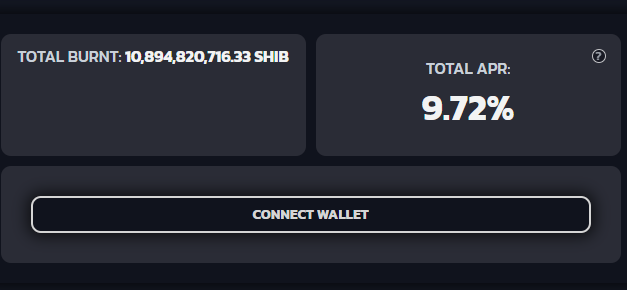
Popular memecoin project Shiba Inu (SHIB) has launched a SHIB Burn Portal to decrease token supply and enable users to earn passive rewards while doing so.The Shiba Inu team stated on the portal website that it was created explicitly to increase scarcity of SHIB and make it “one of the best digital assets in the history of cryptocurrencies.”The portal was created as part of a partnership between Shiba Inu and the Ryoshi’s Vision (RYOSHI), which is an Ethereum-based decentralized finance (DeFi) project that aims to support the growth of the SHIB eco-system. SHIB burners will enjoy two incentives for their efforts. Firstly, they aid in reducing the circulating supply of the memecoin which theoretically makes it more scarce and more valuable. Secondly, they receive burntSHIB tokens in their Ethereum (ETH) wallet which pays holders in RYOSHI rewards at a variable rate.SHIB Burn Portal dashboardThe project tweeted today that within the first 24 hours of the portal coming online, “over 8 BILLION $SHIB was burned” on the portalWoof! In the first 24 hours over 8 BILLION $SHIB was burned through the SHIB Burn Portal!Burn $SHIB and earn passive income at https://t.co/jSnPG8SEoF!IMPORTANT: Read disclaimer at https://t.co/D91bVoMUtz pic.twitter.com/GmhxNdZAvi— Shib (@Shibtoken) April 25, 2022The launch hasn’t done much to sway the price of SHIB however, with the price dropping 3.3% over the past 24 hours to sit at $0.00002345 at the time of writing according to CoinGecko.To date, 410 trillion SHIB tokens have been burned, representing about 41% of the total token supply according to SHIB token tracker Burn Dashboard. SHIB can also be burned by sending it to dead or unused crypto wallets. The project initially sent Vitalik Buterin half of the total supply of SHIB. He famously burned nearly all of it last May and sent the remainder to a charity.SHIB roundup It appears that hype around SHIB is on the rise as pollster Benzinga found in a recent survey published on Apr. 23 that nearly two times as many people believe SHIB will reach $0.001 before Bitcoin (BTC) reaches $100,000. Of the 1000 people surveyed, 64.3% favored SHIB to rise first.Related: Memecoins eye major revamps in an effort to return to their former glorySHIB enthusiasts have also been urged by a SHIB developer to be on the lookout for a scammers who tried to spoof the Shiba Inu: deployer 2 wallet. Kaal Dhairya explained in an April 22 blog post that malicious code was inserted into the wallet so that it could be unclear who sent or received tokens from the deployer.Dhairya said people should be aware of the bug but rest assured that their funds are safe. He wrote:“The scammers / clever marketers make use of programming to fool lot of people of millions, sometimes more malicious code could drain your wallet on approval of the token, we see this everytime and it breaks our heart as we can’t do anything about it for them.”

Čítaj viac

Decentralization 'absolutely essential' in building crypto capital markets

If crypto capital markets have a chance of becoming an institutional reality, decentralization will be one of the key aspects according to one industry insider.Capital markets bring suppliers and those in need of capital together to initiate supposedly efficient transactions. Investments or savings are often funneled between suppliers of funds like banks and those who need capital like businesses, governments and individuals. Co-founder of crypto financial service provider VegaX Holdings Sang Lee told Cointelegraph today that incumbent financial institutions have simply been left behind by the rapid pace of developments in the crypto industry. VegaX Holdings is building a suite of crypto-based financial services. Its VegaX decentralized finance (DeFi) platform allows staking while its Konstellation ecosystem is a DeFi ecosystem based on Cosmos (ATOM).Lee believes decentralization is likely the most important thing that will help crypto enter capital markets. Decentralization involves removing costly intermediaries in decision making and in executing transactions. Lee decried the current state of centralized payments platforms in saying “You can’t send a wire on the weekend which is atrocious. And the amount of times a stock changes hands when you buy it is atrocious.” He added:“We have evolved far enough to say we don’t need people as intermediaries. It was necessary before but not anymore.”Intermediaries tend to increase the amount of fees spent and the amount of time required to make an investment, thereby potentially reducing potential returns. Removing them through decentralization may be a viable way to make markets more efficient and help investors earn higher returns.Lee also believes stablecoins will play an essential role in expanding capital markets in crypto. To him, stablecoins have the strongest potential to leapfrog other digital assets and even fiat currency because most stablecoins, such as Tether (USDT) and Dai (DAI) are still denominated in US dollars. He emphasized that stablecoins allow investors to have a universal unit of account with which to transact. More importantly, stablecoins are things that everyone will be using since they add a sense of constancy, especially if markets become frothy. Lee said:“In an economy where things become murkier and harder to track, a stablecoin helps even things out.”The world’s second largest stablecoin by market cap Circle’s USD Coin (USDC) has already begun making a bid to enter capital markets with new partner BlackRock’s backing.Ultimately, Lee believes the flow of money, people, and things will go from the traditional financial world into blockchain, not the other way around. As he put it, “Crypto will probably refuse to be brought into the incumbent fold. Things off-chain will move on-chain, but it won’t go in reverse.”However, he believes “DeFi and crypto markets need to have a lot more efficiency” to help the rate of adoption increase as the technology improves. In his view, a good deal of inefficiency comes from the “unusable” platforms designed to help inexperienced users bring funds into crypto. He added:“People are avoiding the best performing asset class in history because there’s no way to get there. If platforms were more usable for the layperson adoption would be a lot higher than it is now.”This opinion echoes an analysis made by Cointelegraph on April 12 that sees traditional financial resistance to using crypto as an increasingly obvious exercise in futility.Bringing things on to the blockchain and into crypto requires token bridges, which Vitalik Buterin raised concerns about in early Jan. They have also been the target of several security breaches already in 2022 amounting to nearly $1 billion in losses. Related: Blockchain.com names custody partner for its institutional offeringRegardless, Lee sees them as an essential part of the capital markets infrastructure. He said “We need bridges to build out the capital markets, but the problem is most bridges are pseudo-centralized.”

Čítaj viac

This Earth Day analysts say Bitcoin mining is naturally gravitating to green energy

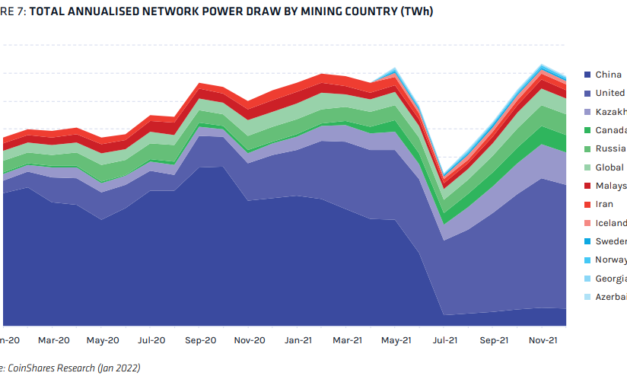
April 22 is Earth Day and with environmental sustainability one of the key topics in the global debate surrounding Bitcoin mining, analysts say the industry has begun to naturally gravitate towards cleaner and cheaper energy sources.According to a January report by the Bitcoin Mining Council, by Q4 2021, the global Bitcoin mining industry ran on an estimated 58.5% renewable energy.The preference for clean energy is due to a combination of environmental conscientiousness, political pressures, and an eye on the bottom line. It’s resulting in a sea change that could have ripple effects that extend well beyond Bitcoin (BTC) mining onto power grid systems around the world.Bitcoin miners in Norway are cleaner than almost anywhere else on the planet thanks to the country’s access to hydropower and other renewables. In fact, 100% of Norway’s electricity is generated from renewable energy. Of Norway’s 157 Terrawatt hours (TWh) of power produced per year, 88% is from hydroelectric, with wind and thermal force making up the remainder. Miners use that renewable energy to produce about 1% of the total Bitcoin hashrate according to data from blockchain research firm CoinShares.Norway contributes about 1% o the total Bitcoin hashrate: CoinSharesMas Nakachi is Managing Director of Miami-based XBTO Group’s Bitcoin mining operation XBTO. Founded in 2015, XBTO’s mining operation takes in upwards of $25 million per year and claims to be completely powered by renewable energy sources. He believes “hydropower is one of the most reliable renewable energy sources available to us.” Wind power depends on the weather and solar power depends on daylight, but rivers can flow all day every day — and in various locales water can be pumped uphill during off peak periods as a way to store excess energy to run generators when needed. Nakachi told Cointelegraph that: “Harnessing hydroelectric power has remained an effective mechanism to maintain the most efficient mining possible.”Whereas a Feb. study published in the Energy Research & Social Science journal concluded “cryptocurrency is unsustainable by design,” Nakachi believes there is a simple path for mining operations to develop both an economically and environmentally sustainable model: “Prioritizing some form of clean energy to power the majority of operations is, in the long term, a sustainable model for successful mining operations.”As reported by Cointelegraph, another option being explored in Texas is the utilization of flexible data centers which can switch from the public grid to temporarily generating its own clean energy from dedicated energy generators to relieve stress on the grid during periods of high retail demand. Related: Marathon Digital moves Montana BTC mine to pursue carbon neutralityTech entrepreneur and self-proclaimed environmentalist Daniel Batten described a multi-pronged way in which the Bitcoin mining industry is creating positive change on the April 22 podcast from Brave New Coin. Batten argued that Bitcoin mining incentivizes building renewable energy plants and helps decarbonize power grids.0/18BREAKING: #BTC Mining can drive us to 70% renewables-based energy consumption by 2030. To say “#BTC mining is good for the environment” is like saying “the sun is warm”: a massive understatement. #BTCmining is our unexpected superhero. Here’s how.https://t.co/Arl1zZXTY6 pic.twitter.com/AleegYAbwM— Daniel Batten (@DSBatten) April 13, 2022Batten believes Bitcoin mining drives increased demand for electricity and therefore investments in renewable energy plants. Mining is suited to intermittent power sources and it can be easily moved to far flung locales to take advantage of excess generation of renewable electricity.The only problem that Batten sees is that the industry may not be big enough to incentivize all the renewable energy required:“My only real concern is ‘Is Bitcoin mining requiring enough electricity to help us build up that grid to the extent we need to?’”

Čítaj viac

Upbit owner Dunamu could see 'monopoly' curbed after investment controversy

The operator of South Korean crypto exchange Upbit, Dunamu, is facing pushback from regulators due to a controversial investment while authorities move to issue restrictions to stifle its monopolistic position.Dunamu’s total assets are valued at over over 10 trillion KRW ($8.06 billion) and Upbit controls an overwhelming 80% of the domestic trading volume. As a result, regulators see Dunamu and by extension Upbit, as a monopoly with too much power that should be curtailed.Regulators could prevent its growth by designating it a large corporation which would restrict its market activities.Large corporations and investment firms in South Korea are subject to strict rules on what information they can share regarding investments under the Capital Markets Act. Corporations and their subsidiaries are prohibited from promoting investments, especially those they own or are related to.Dunamu has been criticized for taking advantage of an apparent loophole in the country’s Capital Markets Act by holding a 40% stake in market tracking firm Triger which started offering crypto-related investment recommendations in March. Dunamu has since dumped its shares in the company. A representative from Upbit told local news outlet Culture Journal on April 19 that it had dropped all of its subsidiary holdings of Triger, but has still asked the site to take down its crypto-related content. The rep stated:“We have requested the termination of the service to prevent unnecessary misunderstanding.”Dunamu straddles the line between a large corporation and a financial investment firm under Korean law. Therefore, the firm is technically allowed to promote investments under the Capital Markets Act. However, Culture Journal reported that an industry insider pointed to such promotional content as a regulatory loophole which “should be revised to improve the situation.”Related: Why NFT adoption is so high in South KoreaThe firm’s standing as a small or medium-sized enterprise (SME) is reportedly likely to change in the near future. Local news source NoCut News reported on April 20 that the Fair Trade Commission (FTC) was seriously considering designating Dunamu as a large corporation partially as a result of its recent activities and for its sheer size.

Čítaj viac

Získaj BONUS 8 € v Bitcoinoch

nakup bitcoin z karty

Registrácia Binance

Burza Binance

Aktuálne kurzy