Autor Cointelegraph By Brian Newar

Lack of transparency among project auditors a big problem: Hacken CEO

Smart contract auditing firm Hacken CEO Dyma Budorin thinks Web3 cybersecurity providers are failing the crypto industry and that “huge blind spots” in market practices are impacting investor behavior.Budorin believes a lack of accountability and transparency in the audits many providers perform falls short of reassuring users and projects.Currently, smart contract auditors take no accountability if a token they have audited gets hacked due to a bug in the code. Unsettlingly, most of the largest hack events in 2022 occurred on projects that were audited by third parties. In a call with Cointelegraph on Apr. 27, Budorin said this makes him uneasy as it compromises the growth trajectory of the Web3 cybersecurity industry which is already lagging far behind non-crypto equivalents according to a report from Hacken.Web3 auditors take a deep dive into the code of a token in search of threats of varying severity. These audits do not assess other factors like the viability of a business model, team experience, and others.Budorin explained that “auditors have a lot of responsibility” which is being ignored because the money is coming in and there is no public outcry for better products. However, to him, the services they provide are inadequate, as he says“They are missing tests, accountability, and transparency in ratings of cryptocurrencies.” Even in the rare instance that a project wanted a more robust audit, they would not be able to get it from cybersecurity firms in Web3 because Budorin says “currently in Web3 cybersecurity, there are no companies offering recurring audits” that happen monthly and go into much more depth about the project.“Right now, the best market practice is to get a token audit and that’s it.”Budorin used token bridges as an example to demonstrate the dangers of an industry without thorough auditing mechanisms. Two of the largest crypto hacks so far in 2022 took place on token bridges Wormhole and Axie Infinity’s Ronin Bridge which lost a combined $920 million. While hindsight is always 20/20, it is likely that a full scope audit of any of the bridges that have been hacked this year including Wormhole, Ronin Token Bridge, Qubit’s QBridge, and Meter’s Meter Passport, could have prevented disaster.In addition to apparent bugs in the code, Budorin said that token bridges further illustrate how there are “a huge amount of blindspots” in cybersecurity because “There is no way of knowing who is responsible for the keys, who mints new tokens, if the tokens are properly bridged, and so on with no transparency.”Related: Plan for $1M bug bounties and double the nodes in wake of $600M Ronin hackBudorin feels that for the Web3 cybersecurity scene to really change, some onus rests on retail investors. In his view, more transparency with reliable information from accountable sources “requires a paradigm shift from crypto investors,” who tend to invest in hyped-up projects. This shift could be sparked by greater availability of information from thorough full-project audits that take into account the team, platform functionality, and other technical aspects rather than just the token.Currently, data aggregators CoinGecko and CoinMarketCap are the outlets of choice for investors to find information about a project. However, Budorin says those platforms are flawed because “projects are manipulating their data” to show very high or very low market caps. He believes that will eventually change as auditors evolve to fill the negative space.“When there is more efficient information about the accountability of blockchain companies that issue a token, [investors] will start to compare fundamentals rather than hype.”

Čítaj viac
Edward Snowden reveals he was one of six who helped launch Zcash

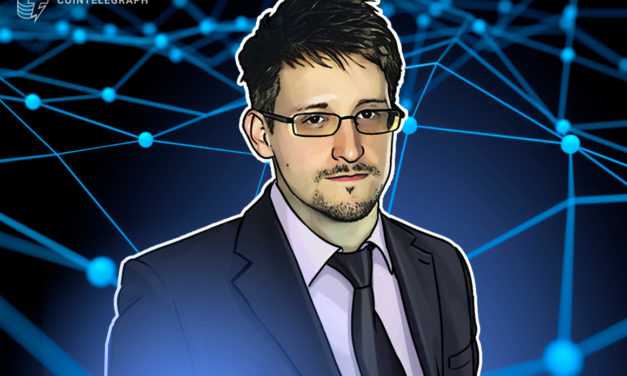
Cybersecurity poster boy and government surveillance whistleblower Edward Snowden has revealed he played a pivotal role in the creation of privacy token Zcash (ZEC).A video from Zcash Media featured an interview with Snowden where he outlined his involvement as one of the six individuals who had a piece of the Zcash multisig private key to launch the project on Oct. 23, 2016. In the video, Snowden stated:“My name is Edward Snowden. I participated in the Zcash original ceremony under the pseudonym John Dobbertin.”Edward Snowden is the whistleblower who revealed U.S. government surveillance tactics and went into hiding in 2013.Zcash is a decentralized blockchain that uses zero-knowledge proofs in its transactions. ZEC transactions cannot be tracked and the amounts transmitted cannot be determined, unlike with relatively transparent Bitcoin (BTC). SURPRISE! Our 2nd video came early.Watch it now to learn about #Zcash’s Ceremony, how it worked, why @ebfull’s Halo breakthrough makes it obsolete, and an exclusive interview with #JohnDobbertin himself, Edward @Snowden.️ https://t.co/Pyk0pwkIto️ https://t.co/RxgJgbtBcR pic.twitter.com/2efMGnmRx1— Zcash Media ️ (@zcashmedia) April 27, 2022The Zcash Ceremony saw Snowden and five other people each combine their portion of the Zcash private key to launch the project. None of the participants knew who the others were nor what portion of the key they held so as to protect their anonymity, one of the tenets of the project.Each person’s key portion needed to be destroyed in order to prevent coins or transactions from being counterfeited in the future. In the interview with Zcash Media, Snowden shared his enthusiasm for the project and his zeal for privacy. He said “The problem with [Bitcoin] is you can’t have truly free trade unless you have private trade.”“I’m just really happy to see that the Zcash project […] is moving us closer and closer towards that ideal of a free currency which is also a private currency.”Another participant in the ceremony, Bitcoin developer Peter Todd recalled the “legendary” lengths the Zcash Ceremony participants went to in order to avoid being hacked.So turns out Snowden was one of the six participants in the Zcash trusted setup that I also participated in. Which I criticized heavily for being busted, followed by Zcash people falsely accusing me of sexual assault in retaliation.Life is so weird and fucked up. https://t.co/bFuvg0izKs— Peter Todd (@peterktodd) April 27, 2022

Todd said that he bought a new computer and installed all the required programs for the ceremony then placed the computer in a faraday cage so as to prevent any unwanted intrusions. A faraday cage is a box lined with aluminum foil, which reflects wifi signals.Related: The loss of privacy: Why we must fight for a decentralized futureHe then drove to a remote area where he took a blow torch to his device in order to destroy his portion of the Zcash private key. News of Snowden’s contribution did not have much effect on the price as ZEC is currently up 1.7% over the past 24 hours, trading at $148 according to Cointelegraph data.

Čítaj viac

Solana DAOs can now bug you to vote with phone calls and texts

You’ll never have an excuse to miss another governance vote if the decentralized autonomous organization (DAO) calls or texts  to badger you to vote. The Notifi Network is banking on this concept to help improve abysmal participation rates in governance votes. Launching with Solana DAOs, it combines popular centralized methods used by the Web3 community such as Telegram and Discord pings with more traditional, and harder to ignore notifications like phone calls, text messages or emails.Backed by crypto venture capital firms Race Capital and Hashed, on April 24 Notifi applied its notification service to all DAOs that launch on the Solana Realms DAO platform. Did someone ask for Telegram notifications??hehehehe… looks like it’s already here pic.twitter.com/YCYefCiLIt— Notifi (@NotifiNetwork) April 26, 2022Notifi founder Paul Kim told Cointelegraph that his project’s mission is simple: “We want to promote communities to be more active. You bought the tokens, so you should use them.” As it stands, chat rooms on Telegram and Discord are among the most common ways DAO participants stay in touch with the project. However, Kim feels this method is inefficient as he said “most users keep their crypto chats muted due to the high volume of messages.”This makes it hard for users to know when new proposals have been made in time to make a vote.Kim hopes to turn the tide on low participation by allowing DAO participants on Realms to choose various ways they can be notified when a governance proposal has been issued. These notifications could start with Telegram or Discord direct messages, but Kim said they can be “escalated” to email, text messages, and even a phone call if they do not initially respond.Although email, SMS, and especially phone calls are not common means of communication in the Web3 world, Kim believes they should serve a very important function for DAOs.“For some reason we just skipped around email from Web2 when we leaped into Web3. Can we challenge the paradigms of Web3 by using Web2 primitives?”There is clearly a problem with voter participation on Solana DAOs. According to data from DAO tracker DeepDAO, fewer than 1% of governance token holders on Solana’s top three DAOs — UXDProtocol (UXP), Mango DAO (MNGO), and Serum (SRM) — are active members. There are 500 DAOs on Realms with a collective treasury value of $1.5 billion according to Kim.In an Apr 24 blog post by Notifi, Solana Labs DAO Software Engineer Sebastian Bor agreed that notification services are currently not pulling their weight for DAOs. He stated, “Notifications are an integral part of informing community members about DAO activity.”Related: Decentralized finance: The best ways to participate and operateEventually, Kim said his service “could be used for all on-chain activity including trades and airdrops, sells, and liquidation alerts.” However, for now “Realms is the proving ground” to figure out if his solution can enable users to step away from their keyboard: “We’re eager to see what the data shows us and what trends actually exist about messaging platform utilization.”

Čítaj viac

Uncollateralized DeFi mortgage taken out on Austin condo via Teller

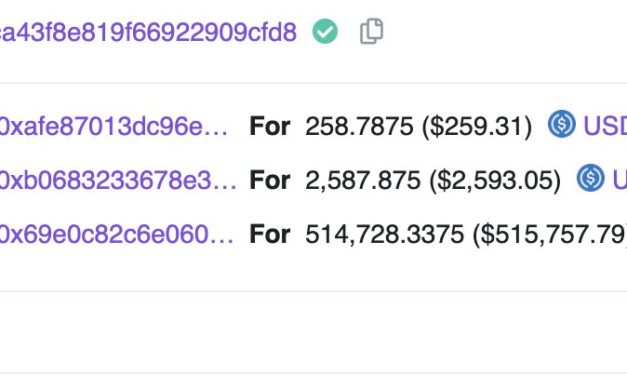
A new homeowner has bought an apartment in Austin, Texas through a program that allows crypto holders to take out traditional uncollateralized mortgages based on their credit scores.The USDC.homes crypto mortgages platform issued its first crypto loan to an Austin resident who bought a $680,000 condo with a $500,000 loan issued in USD Coin (USDC) stablecoin over the Polygon (MATIC) network. This new platform combines practices from traditional lending markets such as leveraging a borrower’s credit score to determine eligibility with new decentralized finance (DeFi) innovations such as cryptocurrency staking to help pay off the balance.Today, we’re excited to debut https://t.co/26BgeWPd0Z and announce the arrival of crypto mortgages to Texas! Read morehttps://t.co/I3wcbfZXRY— Teller (@useteller) April 26, 2022Loans from the platform are issued in USD, but borrowers can make payments in Ether (ETH), Bitcoin (BTC), or USDC. It has been built using the Teller lending protocol and backed by the TrueFi project that issues uncollateralized crypto loans. USDC.homes can issue 30-year mortgages as large as $5 million at a 5.5% interest rate which require a 20% down payment.The first mortgage issued by USDC.homes on the Polygon network.Each borrower’s down payment is staked, not sold, and accrues interest over time that can be used to help homeowners pay off their loan. According to an April 27 blog post from Teller, the traditional need to liquidate one’s crypto assets for fiat to secure a loan exposes American borrowers “to the damages of taxation, fees, and a loss of position.”Real-world loan issuing is becoming a more common use case in the crypto industry. The LoanSnap platform expects to open its services to licensed mortgage brokers this year, according to an April 26 report from Housing Wire.By using an artificial intelligence (AI) loan origination system, CEO Karl Jacob told Housing Wire that LoanSnap has issued “billions of dollars” in traditional mortgages. His company’s services have also extended into the crypto space by working with DeFi lender Bacon Protocol to link mortgage values to a nonfungible token (NFT)Related: Decentralized credit scores: How can blockchain tech change ratingsBacon Protocol has been issuing NFT mortgages since last November with lending rates ranging as high as 3.1%, far less than the 5.55% rate on a traditional 30-year mortgage according to Investopedia.

Čítaj viac

CityCoins expanding services via 11 new incubated projects

The Stacks Ventures project incubator has accepted 11 projects to help make CityCoins more appealing to global mayors who want to utilize a digital asset to receive rewards and bolster their economies. Stacks Ventures is a $4 million incubator for projects on the Stacks (STX) Bitcoin layer-2 smart contract solution. CityCoins is a project that enables partnered city governments to launch their own token on Stacks, with Miami City And New York City being the first two to sign on with MiamiCoin and NYCCoin.As part of the partnerships, the local governments earn CityCoin rewards and stake the asset to receive additional rewards in Bitcoin (BTC).In its second cohort of 24 projects to be incubated, Stacks Ventures will incubate 11 that add wireless networking, Web3, gaming, nonfungible token (NFT), decentralized autonomous organizations (DAO), education, and decentralized finance (DeFi) capabilities to CityCoins.Along with the added capabilities, Stacks Ventures partner Trevor Owens told Cointelegraph that generating Bitcoin returns could “replace a city’s tax base.” In essence, he says cities could potentially earn enough yield to cover all costs that would otherwise be paid for with taxes.Cities that use CityCoins are rewarded with 30% of the fees paid in STX from miners of the coins. Mayors can sell their STX rewards straight away for USD or stack the tokens to earn Bitcoin yield. Stacking on the Stacks network is similar to staking tokens on Ethereum.Miami’s Mayor Francis Suarez said last November that his city would use its rewards to generate BTC yield, which will be distributed to residents of his city.Owens feels that adding NFTs, DeFi, and Web3 to CityCoins creates the most opportunity for prospective cities. He said “Web3 is all about ownership, NFTs could be used in ownership of all nonfungible assets.”“Mayors can see this is within striking distance. They can add services and apps through CityCoins that make [their] residents happier and healthier.”CityCoins founder Patrick Stanley feels that the new startups working on CityCoins will help it carry its mission to “increase the health, wealth, and happiness of cities and citizens wherever it’s activated.” However, he would ultimately like to have a stablecoin on the project. He told Cointelegraph today that “people will always converge towards a stable asset because the cognitive overhead on volatile assets is way too high.” As a result, volatile assets like Bitcoin (BTC) will likely not become a currency.As CityCoins evolves to serve more cities and more people, Stanley believes the project could help cities fight inflation through stablecoins, which he feels hurts the poor the most. He said“Cities may now have to protect their citizens against inflation. Wouldn’t it be great if they could do that through a stablecoin that earns Bitcoin yield?”The current inflation rate in the U.S. is at its highest level since 1981 at a crushing 8.5% annually according to economy tracker US Inflation Calculator. Stanley’s zeal for stablecoins as a tool for driving crypto adoption echoes that of VegaX’s Sang Lee, who believes stablecoins will be essential in expanding cryptocurrency into capital markets.Related: Quantum computing to run economic models on crypto adoptionRegardless of how it happens, Stanley believes that sooner or later, everyone will hold crypto as familiarity and accessibility increase. Among the new startups joining Stacks Ventures is one focused on education which could potentially aid in teaching the public about Bitcoin.Since its launch last summer, Miami and New York City have begun using CityCoins to generate revenue for their residents. Philadelphia’s city government has expressed interest in partnering with CityCoins, and Austin appears poised to join Miami and New York City.

Čítaj viac

Získaj BONUS 8 € v Bitcoinoch

nakup bitcoin z karty

Registrácia Binance

Burza Binance

Aktuálne kurzy