Autor Cointelegraph By Brian Newar

Ethereum difficulty bomb delayed but network adoption still growing

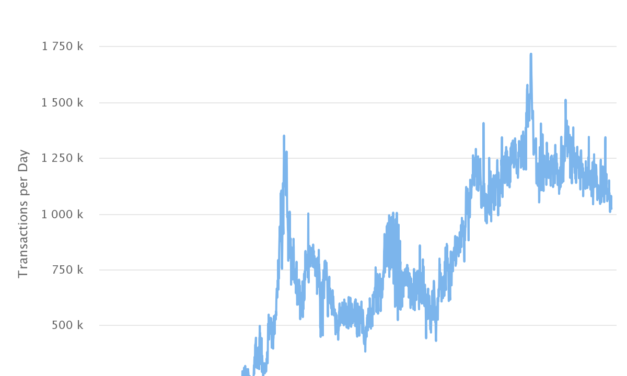
Ethereum network developers have decided to delay the difficulty bomb, a major step leading up to the highly anticipated Merge upgrade for the layer-1 blockchain.They set the delay to two months in order to “be sure that we sanity check all the numbers before selecting an exact delay and deployment time” according to core developer Tim Beiko in a June 11 tweet.In short, we agreed to the bomb delay. We were already over time, and want to be sure that we sanity check all the numbers before selecting an exact delay and deployment time, but we are aiming for a ~2 month delay, and for the upgrade to go live late June.— Tim Beiko | timbeiko.eth (@TimBeiko) June 10, 2022The difficulty bomb will be a measure to disincentivize ETH mining operations from keeping their physical mining devices running as the network transitions from proof-of-work (PoW) to proof-of-stake (PoS). It dramatically increases the difficulty for miners to verify transactions on the network, thus reducing profitability for PoW miners. Eventually, it will become impossible for physical miners to validate a block. The difficulty bomb is a feature of the network added to the code in 2016 as plans for the Merge to become the Consensus Layer (formerly known as ETH 2.0) were being formed.Transitioning to PoS should reduce the Ethereum network’s energy demands by up to 99.9% according to some estimates. Other PoS networks such as Polygon and Fantom Opera, boast negligible power demands compared to other PoW networks.Although Beiko does not mention it, delaying the difficulty bomb could lead to further delays for the Merge itself, which is expected to take place in August 2022. The Ropsten testnet on Ethereum recently completed its own successful merge to PoS on June 9, which developers referred to as the “first dress rehearsal” for the real merge. Ethereum adoption still growingDespite the ongoing bearish sentiments in the crypto markets, the Ethereum user base remains strong. Daily transactions on the network have stayed above one million except for one day since December 2020. Measuring daily transactions gives a simple and concise look into the general load the network handles.Daily transactions on Ethereum since 2015The number of unique addresses is still on a steep increase every month. There has not been a slow down in the number of new unique wallets since it first spiked up in December 2017. There are now about 198 million unique wallets on Ethereum, a 14.5-time increase since December 7, 2017.Related: Ethereum price enters ‘oversold’ zone for the first time since November 2018ETH price is down along with the most other cryptocurrencies over the past 24 hours by 6.8% trading at $1,360 according to CoinGecko.

Čítaj viac

Celsius exodus: $320M in crypto sent to FTX, user withdrawals paused

Crypto staking and lending platform Celsius may be dealing with its rumored liquidity crisis by unstaking $247 million worth of Wrapped Bitcoin from Aave and sending it to thFTX exchange.Speculations among the crypto community are now flaring as the project has been moving massive amounts of WBTC, ETH, and other crypto assets in addition to pausing withdrawals for users. Celsius users have criticized the platform for how they believe the project has mismanaged its funds following the collapse of the Anchor Protocol on the now-named Terra Classic blockchain. The project could be addressing those concerns with the recent moves to stabilize liquidity.Some think that if Celsius fails, it would sell its significant stack of staked ETH (stETH), which would cause it to depeg further from ETH. stETH is a token provided by the Lido DeFi lending platform that is given as proof that a user has staked ETH. It is currently trading about 4.4% lower than ETH.Unusual token movements began at about 18:00 ET on June 12 from Celsius’s main DeFi wallet when it started removing WBTC from the Aave staking and lending platform, which Celsius used to earn interest on its deposits. Celsius withdrew 50,000 Ether and 7,000 WBTC collateral from its Aave position in core DeFi wallet 0x8ace. 6,000 WBTC and 20,000 Ether (so far) have been sent to #FTX…After receiving $169 mil $USDC from FTX… pic.twitter.com/xquMoIcyuZ— Dirty Bubble Media: ⏰ (@MikeBurgersburg) June 13, 2022So far, 9,500 WBTC tokens worth about $247 million have been redeemed from Aave. Following a series of transactions, all of those tokens have been sent to the FTX exchange for an unknown reason. In addition to WBTC, it appears that 54,749 ETH worth about $74.5 million have been sent to FTX.While such activity bodes very poorly for the transparency of Celsius until it explains the moves, the firm may be trying to ensure its liquidity is stable by replacing many of the volatile funds like WBTC and ETH it withdrew from Aave with stablecoins. Since June 12, Celsius has staked 204 million USDC stablecoins on Aave. It also has deposited 10 million USDC plus about 8.2 million DAI stablecoins to Compound, another DeFi staking and lending platform.The total 222 million stablecoins re-staked by Celsius is almost equal to the value of WBTC tokens it removed but still does not come close to matching the combined value of WBTC and ETH.The Celsius team’s plans with the cryptos that have been moved are still not clear. There is a real possibility that it could sell the assets it sent to FTX, but another likely option is that it intends to stake the tokens they are sending to the exchange to earn yields. As of the time of writing, Celsius has sent 9,500 WBTC, 54,749 ETH, 375,343 FTT worth $10 million, 2,455 MATIC ($1,158), 260,000 UNI ($1 million), 2 million Pax Dollars (USDP), and 300,000 TrueUSD (TUSD) stablecoins to FTX. However, token movements were still taking place by 23:00 ET..@CelsiusNetwork is pausing all withdrawals, Swap, and transfers between accounts. Acting in the interest of our community is our top priority. Our operations continue and we will continue to share information with the community. More here: https://t.co/CvjORUICs2— Celsius (@CelsiusNetwork) June 13, 2022

Presently, Celsius users might be biting their nails in anxiousness because the platform paused withdrawals in order to “put Celsius in a better position to honor, over time, its withdrawal obligations,” according to an announcement from the project on June 13.“We are working with a singular focus: to protect and preserve assets to meet our obligations to customers.”Cointelegraph reported in May that Celsius CEO Alex Mashinsky deflected blame for the problems facing the platform, including rumors of insolvency, to shadowy opportunists on Wall Street.Related: Bitcoin price drops to lowest since May as Ethereum market trades at 18.4% lossCrypto investors are largely unimpressed with the new round of FUD coming from Celsius. The total crypto market cap has dropped 7.6% to $1.07 trillion over the past 24 hours. CEL, Celsius’s own token, has dropped more than 60% over the past 12 hours to $0.15. All prices listed in the article came from price tracker CoinGecko.

Čítaj viac

Number of DAOs increases 8X along with spike in votes and proposals

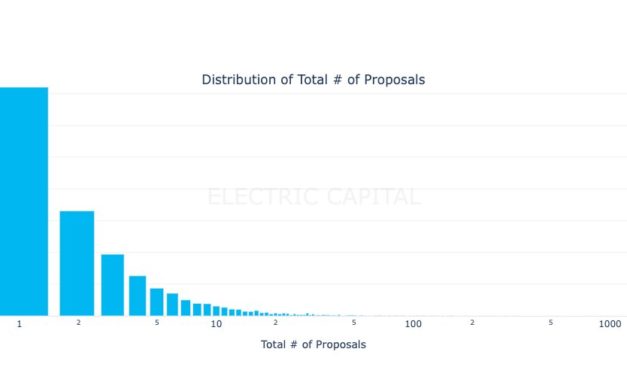
The total number of decentralized autonomous organizations (DAO), the number of governance proposals put forward, and the number of votes cast, have all seen astounding 8X growth over the past 12 months.Data compiled by Snapshot Labs, shared by Electric Capital Engineer Emre Caliskan in a June 9 tweet, highlighted that DAO numbers have increased by 8.8X, from 700 in May 2021 to 6,000 now. The number of proposals has increased by 8.5X, and the number of total votes have increased by 8.3X over the past 12 months, from 448,000 to 3.7 million.1/ DAO governance activity is exploding . In the last year, we have seen:• 8.8x in # of DAOs• 8.5x in # of proposals• 8.3x in # of votesHere are 10+ key insights from @SnapshotLabs data on DAO governance pic.twitter.com/45KAOeER5y— Emre ⚡ (@n4motto) June 8, 2022Snapshot is a decentralized governance participation portal where DAO members can propose new initiatives and vote on them, the data was compiled in collaboration with Electric Capital, a Web3 investment firmWhile the findings look promising for decentralized governance models, the increase in participation was driven by just a small handful of the most active DAOs. New proposals mostly came from just 10% of DAOs, while 60% of DAOs havhad three or fewer proposals since their inception. Nevertheless, the overall growth is an impressive show of confidence in the DAO structure.Rival DAO tracking tool DeepDAO has slightly different figures and shows there are only 4,833 DAOS as of June 10. Related: ApeCoin DAO officially favors remaining within Ethereum ecosystemCaliskan attributed the increase in new proposals to the popularity and wide coverage of Constitution DAO. It was an organization set up last November with the intent of buying an original copy of the US Constitution. The DAO was outbid at the last moment, but it proved the power such organizations can have.Most DAO proposals come from just 10% of organizations.According to DeepDAO, PancakeSwap and Decentraland are the two top DAOs by proposal count with 3,300 and 1,200 respectively. Only the top 72 organizations have at least 100 proposals as of the time of writing.Despite the overall promising numbers in DAO growth, a June 7 draft bill from the US Senate could curtail their growth if no changes are made to it. It initially calls for all crypto projects to register with the government and reveal the identities of their users and founders.

Čítaj viac

Bloomberg Terminal supersizes its crypto coverage: 40 more coins

Financial and technical information platform Bloomberg has vastly expanded its coverage of crypto markets after a decision to include data on the top 50 crypto assets to the Bloomberg Terminal.Product manager for cryptocurrencies at Bloomberg Alex Wenham suggested that as “the global institutional investor” community’s interest in digital assets continues to grow, they will need a way to “seamlessly incorporate digital assets into their workflows.”Bloomberg already had 10 cryptocurrencies in its terminal as of 2018, including BTC, ETH, and XRP. The expansion adds an additional 40 coins to the mix such as SOL, allowing financial professionals and institutions access real-time financial market data and to place trades.This is the largest expansion of its crypto data since Bloomberg Terminal began tracking BTC in 2013.Bloomberg’s market-leading coverage of cryptocurrency data on the Bloomberg Terminal has been expanded to include the top 50 crypto assets, including Bitcoin, Ethereum, Binance Coin, XRP, Solana and more. https://t.co/NknHawFOez— Bloomberg Terminal (@TheTerminal) June 9, 2022Co-Founder of the Three Arrows Capital crypto investment fund Su Zhu seems pleased with the new additions to the terminal. He commented in a tweet on Friday that it is “Also cool that they link to the white papers.” Kinda fun to read the coin descriptions that @crypto has added to Bloomberg TerminalAlso cool that they link to the white papers pic.twitter.com/U7AN3tI7CK— Zhu Su (@zhusu) August 6, 2019

Bloomberg Terminal is considered a seminal tool for professional and institutional investors as it offers analysis, insights on compliance and risk, and allows users to make trades. Bloomberg says it vets assets on the terminal through a data-driven approach and “ensures that approach evolves along with the crypto markets.”Bloomberg Terminal users can access the intraday pricing for all crypto it tracks by visiting CRYP.The addition of so many more crypto assets to Bloomberg Terminal indicates greater maturity in the crypto markets. Institutions are taking a much closer look at their opportunities within the space to both develop platforms and turn a profit. Related: Despite bearish trend, hedge funds are dipping their toes in crypto: PwCTheir interest is evidenced by the Italian stock exchange Borsa Italiana listing a Bitcoin-thematic exchange-traded fund (ETF) on June 7.

Čítaj viac

Bitcoin miners say NY ban will be ineffective and 'isolate' the state

Two Bitcoin miners have told Cointelegraph that if the bill banning Proof-of-Work mining for two years in New York becomes law, it would end up triggering an exodus of mining companies from the state and do little to address the intended goals of the moratorium.GEM Mining CEO John Warren told Cointelegraph on June 8 that he and other miners now view New York as an unfriendly place where they likely would not want to open up shop. “Miners won’t consider going there after the ban became part of the discussion.”Environmental sustainability has been at the heart of the New York state government’s argument against Proof-of-Work (PoW) mining. The controversial mining ban bill would prohibit any new mining operations in the state for the next two years. It would also refuse the renewal of licenses to those who are already operating in the state unless it uses 100% renewable energy. GEM Mining recently commented that the bill will not only miss its intended target but also discourage new, renewable-based miners from doing business in the state. Warren told Cointelegraph that his operation is already 97% carbon neutral.“The regulatory environment in New York will not only halt their target…but will also likely discourage new, renewable-based miners from doing business with the state…”The mining moratorium recently passed in NY. We shared our thoughts with @CNBChttps://t.co/2Trotc5bT3— GEM Mining (@GEM_Mining) June 8, 2022GEM Mining is a South Carolina-based Bitcoin (BTC) mining operation that contributes 1.92 Exahash per second (EH/s) of hash power to the Bitcoin network as of May. Similarly, the CEO of Sweden-based White Rock Management digital asset miner Andy Long also feels that Bitcoin mining is “moving in the right direction toward fossil-free energy use,” as he stated in emailed comments to Cointelegraph. The company boasts 100% dependence on hydroelectric power for its 712 Petahash per second (PH/s) hash power contribution.Long echoed the idea that the PoW mining freeze “would not have the intended effect and sends the wrong message.” “We want to see more states and local governments encourage investment rather than stifle growth with prescriptive regulations that would likely be the thin end of the wedge.”Roughly 10% of the US’s hashing power comes from New York according to the Cambridge Bitcoin Electricity Consumption Index (CBECI). This makes it the fourth-biggest producer in the country. As of April, miners indicated in a survey with the Bitcoin Mining Council that about 58% of the energy used for mining is from sustainable sources.How New York goes, California goesThe bill, should it come into effect, could see an outflow of mining firms from New York into other states just as miners exited China in a rush following its mining ban last year. However, GEM Mining’s Warren believes the contributions from other states will continue to grow whether the moratorium comes into effect or not, adding that it would probably not cause a domino effect of other bans, except that “how New York goes, Cali goes.” He added that even if Governor Hochul signs the moratorium into law, “New York’s hashpower would drop anyway as Kentucky, North Carolina, Texas, and other states add new incentives for miners.”“What you’re seeing throughout the country is a bipartisan support of mining and the jobs that they provide. They add stability to the power grid as well.”Squaring up to the competitionNew York is already losing its competition with states such as Kentucky and Georgia for miners. Georgia is the USA’s top state for hash power. Fortune reported in February that miners may be flocking there for the below-average cost of electricity and the opportunity to offset their emissions with renewable credits. Georgia produces 35.6% of its electricity from nuclear and renewable sources.Kentucky’s Governor Andy Beshear signed into law last March a tax incentive for Bitcoin miners who set up shop and help support the state’s fledgling renewable energy infrastructure. Kentucky has surpassed New York’s hash power for third place in the union but produces only 6.6% of its electricity from renewable sources.Related: IMF recommends eco-friendly CBDCs and non-PoW mechanisms for paymentsThe controversial mining bill is currently sitting on the desk of New York Governor Kathy Hochul, who has yet to publicly commit to signing the bill. Instead, she noted that her team will be looking “very closely” at the proposal over the next few months.

Čítaj viac

Získaj BONUS 8 € v Bitcoinoch

nakup bitcoin z karty

Registrácia Binance

Burza Binance

Aktuálne kurzy