Autor Cointelegraph By Brian Newar

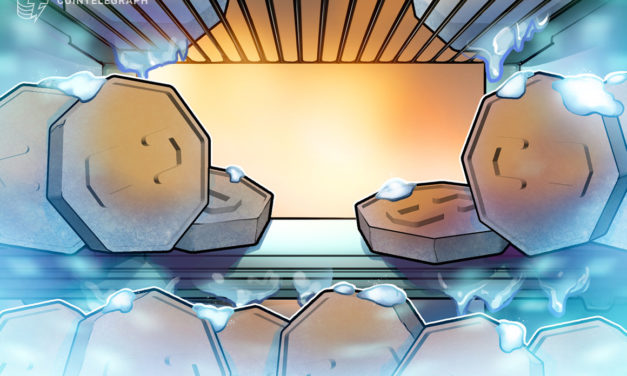
Crypto winter freezes sports sponsorships for digital asset firms

The longer the crypto market stays in bearish territory, the more marketing deals with American sports teams are being taken off the table as crypto firms tighten their belts.Crypto exchange FTX has been rethinking its marketing plan to plaster its name and logo across Los Angeles Angels jerseys, according to a June 20 report from the NY Post. The dramatic market downturn is likely to blame for the retractions.Another patch deal between an undisclosed crypto firm and the Washington Wizards was axed just as the crypto market began its violent tumble in recent weeks.The crypto firm in question could have been FTX.US as the exchange’s NFT platform and the Washington DC-based Wizards have an ongoing partnership. The NY Post said that the deal with the Wizards was desirable for crypto firms looking to curry favor with the DC political base.Sports management professor at Columbia University Joe Favorito told the NY Post that he doesn’t believe any new sports partnerships will be announced while the market is down. “What money hasn’t been spent already you’re going to see curtailed — just like we saw during the dot-com bubble.”During the highs of the last crypto boom, crypto firms shelled out staggering amounts of cash for sponsorship deals. Crypto.com paid $700 million to name the LA Lakers’ home Crypto.com Arena for 20 years. FTX paid $135 to name the Miami Heat’s home arena FTX Arena in March 2021. Additionally, Tezos is paying $27 million annually to put its logo on Manchester United uniforms. There have been dozens of other sponsorship deals between crypto firms and sports teams worth hundreds of millions of dollars.While the sponsorships for basic brand visibility are being re-thought, the deals between real-world products and nonfungible token (NFT) firms appear to be firmly in place as they deliver more practical benefits to the parties involved.Global beer manufacturer Budweiser partnered with the popular NFT horse racing platform Zed Run last week. Budweiser issued tokenized Clydesdales, which users could mint, while Zed Run will launch a Budweiser-themed race track and a tournament with a maximum prize of $95,000 in December.Related: F1 Monaco GP: Bybit’s Red Bull Racing NFTs, crypto-F1 partnerships and moreNFL superstar Tom Brady’s Autograph NFT marketplace has a partnership with the likes of ESPN to create content for the sports TV network. Autograph launched a parallel NFT collection that was launched at the same time as the “Man in the Arena: Tom Brady” docuseries first aired on ESPN on April 6.

Čítaj viac


Ethereum testnet Beacon Chain launched and ready for trial merge

The Sepolia testnet Beacon Chain has gone live, setting the stage for its merge dress rehearsal to give Ethereum network developers valuable technical insights.Upon merging with its dedicated Beacon Chain, the Sepolia testnet will begin reaching consensus using proof of stake (PoS) rather than proof of work (PoW) which will provide data on what may happen when the Ethereum mainnet performs its merge.The Ethereum Sepolia Beacon Chain has been deployed!The Merge is coming https://t.co/IuJBnFp0Xx— Crypto-Gucci.eth ᵍᵐ (@CryptoGucci) June 20, 2022The exact date of the Sepolia merge has not been determined.Testnet merges are essential for Ethereum developers and independent project developers using the Ethereum network to understand what they can expect when the actual merge takes place. Just like on the testnets, the Ethereum mainnet merge will see the entire network transition to PoS consensus and should reduce the energy consumption of Ethereum by 99.9%.Sepolia was launched in October 2021. Core Ethereum developer Tim Beiko confirmed in April that the Ropsten testnet would be phased out over time and replaced by Sepolia. Therefore, projects running apps on Ropsten have been urged to migrate their work over to Sepolia to avoid complications.Public testnets like Sepolia and Ropsten are designed to replicate the operating conditions of their respective mainnets without affecting the live mainnet. Ropsten is the longest-lasting testnet launched in 2016. It underwent its merge on June 8, which was the first instance of a merge trial run for Ethereum.The official merge date on the Ethereum mainnet has been pushed back several times. It is now slated for completion by August 2022, but that date could be delayed further due to a separate delay in the difficulty bomb. Once completed, it will spawn the Consensus Layer, formerly known as Ethereum 2.0.The difficulty bomb is a feature of the Ethereum network which will disincentivize ETH miners using physical devices by vastly increasing the difficulty of producing a new block. Related: What Ethereum use case can make ETH a $500B market-cap asset? Community answersETH price has undergone a slight 3.53% upswing over the past 24 hours, now trading at $1,126 according to the Cointelegraph Price Index.

Čítaj viac

Mark Cuban says crypto crash highlights Warren Buffett's wisdom

Billionaire crypto investor and owner of the Dallas Mavericks Mark Cuban says the current market downturn reminds him of a well-known adage uttered by Warren Buffett.Cuban sees a parallel between the rise and fall of crypto markets and projects, and the 91-year-old ‘Oracle of Omaha’s aphorism that:  “Only when the tide goes out do you discover who’s been swimming naked.”Cuban’s observation was revealed during a June 16 interview with Fortune in which he discussed what he sees as flawed business models of some crypto projects that have fallen on hard times over the past two months. “In stocks and crypto, you will see companies that were sustained by cheap, easy money—but didn’t have valid business prospects—will disappear,” the Shark Tank investor said. “Like [Warren] Buffett says, ‘When the tide goes out, you get to see who is swimming naked.’”Some of the companies that appear to have been swimming naked included Terra, Celsius, and Three Arrows Capital. The Terra ecosystem, now known as Terra Classic, completely collapsed by the middle of May. The fallout from that collapse has seen tens of billions in losses to investors, while a manhunt has ensued for the founder and CEO Do Kwon by several regulatory bodies. The Celsius staking and lending platform is fighting to stay solvent if its recent pausing of withdrawals is any indicator. Investment firm Three Arrows Capital is reported to have faced a liquidation to the tune of $400 million and has been unable to meet margin calls.Despite the gloomy short term outlook for crypto, Cuban said that these downturns tend to have a cleansing effect on a market, and that it would likely be the same for crypto this time around. But he said you should always back innovation:“Disruptive applications and technology released during a bear market, whether stocks or crypto or any business, will always find a market and succeed.”CEO of Avenue Capital Group Marc Lasry has an even more gloomy assessment of the financial markets. He predicted on Bloomberg TV that the pain across the economy in general would continue through the end of 2022 as equity indices could fall up to another 10%. However, Lasry believes that the US economy is strong enough to keep the current downturn relatively abbreviated. Lasry has been a crypto bull since 2018. In 2021 Cointelegraph reported that he lamented that he hadn’t bought enough BTC. But he told Bloomberg TV that Bitcoin (BTC) and Ether (ETH) have already dipped more than expected and that “Nobody knows what the bottom is for that.”He added that even for professional investors it is hard to time a bottom, “so you want to get invested when you can.”Related: 72 of the top 100 coins have fallen 90% or more: Here are the holdouts

Čítaj viac

72 of the top 100 coins have fallen 90% or more: Here are the holdouts

According to price data from CoinGecko compiled by CoinGoLive, the current bear market has seen a whopping 72 out of top-100 tokens fall more than 90% from their all-time highs.The larger cap coins are faring better than most. Among the top ten cryptocurrencies by market cap, nine have dipped less than 90% during the current market downturn. Bitcoin (BTC), the largest crypto, is down 70.3% from its November high of $69,000. Second place is Ether (ETH) which is down 78% from its high of $4,878.Others in the top ten include Binance Coin (BNB), Cardano (ADA), Solana (SOL), and Polkadot (DOT) which are down between 68% and 88%, (excluding the three stablecoins USDT, USDC and BUSD). Ripple (XRP) is the exception, tracking a fall of 90.56% from its ATH.The average fall from ATH for these top 10 coins is 79%, while among the top 20 coins the average fall from the all-time-high is 81.1%. Exchange tokens appear to be doing better than many other sectors with a 68.3% average fall from their ATHs.The best performer there is LEO token, which has only fallen 38.87%, which Cointelegraph reported saw “aggressive buying at lower levels” on June 13. LEO is the Ethereum-based utility token for the Bitfinex exchange and trading platforms managed by iFinex and is used to reduce fees for traders.Coinflex exchange’s native FLEX token is the 83rd largest crypto. It also appears relatively immune to the devastating drawback and is down just 38.6% from from ATH. FLEX is used to pay for transactions and reduce trading fees on its trading platform. The project touts its token burning mechanism as a reason for its price resilience.The utility token for the KuCoin trading platform, KCS, has seen a 61.43% drawdown from its ATH. KCS is an ERC-20 token that is used to reduce fees on the exchange and is the native token for KuChain, a blockchain developed by the exchange.However KCS could see a further dip more than 60% below its ATH if Cointelegraph’s June 12 predictions are right.Many cryptocurrencies have experienced a large portion of their losses within the past week as the total crypto market cap dropped 24% from $1.3 trillion to $996 billion. In that time, BTC also fell about 35% from $30,500 to a low of $20,216 on June 15. Related: Bitcoin bounces 8% from lows amid warning BTC price bottom ‘shouldn’t be like that’BTC is currently trading at $20,486 since the Federal Reserve announced a 75 basis point hike in interest rates to try to combat inflation. As an aside, stablecoins haven’t been immune to falls either, despite theoretically being stable. Since 2018, many have wobbled by 10% to 30% at various points including USDT, USDC, BUSD, DAI, FRAX, USDP, PAXG, CDAI and XAUT. TUSD recorded a 38.4% deviation from its peg in 2018.

Čítaj viac

Maker cuts off Aave's DAI supply as fallout from Celsius continues

MakerDAO has voted to cut off lending platform Aave’s ability to generate DAI for its lending pool without collateral as the risks of Celsius’s liquidity crisis loom large over the entire crypto ecosystem.The decentralized autonomous organization (DAO) made the decision as a means of mitigating the Maker protocol’s exposure to the beleaguered staking and lending platform in case Celsius goes belly up and implodes the stETH peg as well.stETH is a token representing an amount of ETH that is staked on the Lido staking platform. Its peg to ETH has been wavering for several weeks and it’s currently trading about 6% below the price of ETH. Celsius invested a significant amount of user funds into stETH, which is reportedly one of the reasons it paused withdrawals.The Maker Governance has voted to temporarily disable the @AaveAave DAI Direct Deposit Module (D3M).This change is available for execution on June 17 2022 21:03 UTC.https://t.co/3wKQiEvcMw— Maker (@MakerDAO) June 15, 2022A June 14 governance proposal from DAO member prose11 suggested that the Maker protocol should temporarily disable the DAI Direct Deposit Module (D3M) for Aave because Celsius borrowed 100 million in DAI collateralized by stETH, which would be at risk of liquidation if Celsius fails. “The reason we believe this is risky is because out of 200M DAI borrowed on Aave Ethereum v2, 100M DAI is being borrowed by Celsius and collateralized mostly by stETH.”The D3M allows Aave to stabilize the DAI loan interest rates by providing access to liquidity when needed. Aave’s D3M consists of 200 million DAI, 100 million of which have been borrowed by Celsius.If Celsius does collapse, it might sell off its stETH to honor retail responsibilities and get liquidated on Aave, which would likely force stETH to depeg even further. This would put the Maker protocol at the risk of not being able to retrieve all the DAI Celsius borrowed.Around 58% of the 83 voters on the proposal felt that the tail risk presented by Celsius was greater than the loss of revenue from Aave by passing the proposal. The pause will come into effect at 5:03 pm ET on June 17.Related: BitBoy founder threatens class action lawsuit against CelsiusA separate June 14 governance proposal was put forth on Aave itself to determine whether it should freeze stETH, pause ETH borrowing, and increase the liquidation threshold for stETH borrowers. However, opponents have a steep edge on this proposal with nearly 90% of the vote at the time of writing.Maker’s move is an example of decentralized finance (DeFi) protocols observing contagion in the ecosystem and attempting to protect themselves from getting tagged. In addition to Celsius, crypto investment firm Three Arrows Capital is now suffering the effects of contagion, and threatening to spread it further, with reports of a $400 million liquidation and its inability to meet margin calls.

Čítaj viac

Získaj BONUS 8 € v Bitcoinoch

nakup bitcoin z karty

Registrácia Binance

Burza Binance

Aktuálne kurzy