Autor Cointelegraph By Brian Newar

Crypto markets need to hit ‘total panic’ before revival: Kevin O’Leary

Millionaire investor from the Shark Tank TV show Kevin O’Leary says there’s going to be “total panic” and “massive volatility” in the crypto markets ahead before the industry swings back toward stronger firms and clearer regulations.Despite the recent fall of crypto finance firms including Voyager Digital and Celsius, O’Leary told Cointelegraph on July 13 that we’re still missing a “real big event” seen in previous market cycles before we go back to accelerated growth in the space, stating: “This passion play gets played out over and over again.”Some investors have pointed to the current market conditions as a result of over-leveraged centralized finance firms such as Voyager and Celsius. O’Leary said the problems with firms like those come from “idiot managers” who needed to be weeded out to make the industry more viable. “It’s unfortunate that these companies have gone to zero but you end up with much stronger species.”Ben Samaroo, CEO of crypto investment support firm WonderFi Technologies who was also present during the interview with Cointelegraph said the recent bankruptcies are part of the “second wave of crypto crises” in Canada’s history. Samaroo explained that the first “crypto crisis” in Canada was characterized by the fall of now-defunct crypto exchange QuadrigaCX in 2019, which saw $145 million in user funds go missing after the sudden death of its founder Gerry Cotten. The WonderFi CEO believes that this second wave of crypto crises will have regulators focusing on crypto earn products like those from Voyager Digital. “Canadian regulators are looking at anyone in Canada offering earn products to figure out what it means. They’re looking through the rubble of the collapse to layer in restrictions.”The duo suggested that stablecoin regulation will be another major hurdle facing the industry. O’Leary stated unequivocally that “we need more stablecoins, as many as there are commodities,” but that they must keep their peg. Related: Celsius vows to return from bankruptcy but expert fears repeat of Mt GoxAlthough he said that what happened with the destruction of the Terra ecosystem in May with the depegging of Terra USD (UST) was “good,” others cannot go down the same path if they wish to exist. He added that Tether (USDT) may experience more trouble after it wobbled on its peg and fell to $0.95 in May.“Tether breaking peg is going to be a big problem for regulators as they look at what stables are acceptable for platforms for use.”For now, USD Coin (USDC) is the preferred stablecoin on Bitbuy and Coinberry. However, Samaroo noted that the exchanges could list other stablecoins as long as it doesn’t subject users to a “catastrophic event from a stablecoin that isn’t all that stable.”O’Leary and Samaroo appear to have their sights set on the long-term growth of the industry however, with WonderFi recently listing on the Toronto Stock Exchange on June 20 and completing a $38.4 million acquisition of Canadian crypto exchange Coinberry on July 4. It now owns Bitbuy and Coinberry in Canada.

Čítaj viac
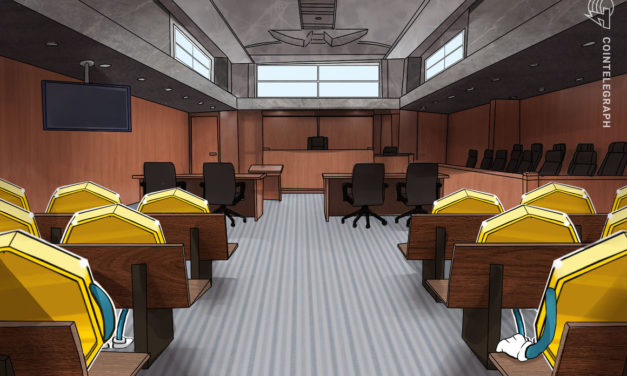
‘Hypocrisy’: Judge denies SEC motion to keep Hinman docs secret in Ripple case

The Securities and Exchange Commission (SEC) has suffered a blow in its case against Ripple, after a U.S. judge has denied its claims for attorney-client privilege regarding internal documents related to the “Hinman speech”.In denying the motion on July 12, U.S. Magistrate Judge Sarah Netburn called out the SEC’s hypocrisy in arguing that the speech — in which a former official Bill Hinman suggested ETH was not a security — was a personal matter for Hinman while also claiming it should be protected because he received legal advice from the SEC to confirm the commission’s policies. “The hypocrisy in arguing to the Court, on the one hand, that the Speech is not relevant to the market’s understanding of how or whether the SEC will regulate cryptocurrency, and on the other hand, that Hinman sought and obtained legal advice from SEC counsel in drafting his Speech, suggests that the SEC is adopting its litigation positions to further its desired goal, and not out of a faithful allegiance to the law.”The draft of the Hinman speech, which the SEC has fought to keep under wraps, has been seen by many in the XRP community as a pivotal piece of evidence that could work in favor of Ripple Labs. The SEC sued blockchain firm Ripple in late 2020 on allegations that senior executives Brad Garlinghouse and Christian Larsen sold Ripple’s XRP tokens as unregistered securities. However, Ripple has argued that the speech made by former director of the Division of Corporation Finance Bill Hinman in 2018 stated that Ether (ETH) did not constitute “securities transactions” — contradicted to the SEC’s stance on the matter. This was not even a nuanced opinion. Judge Netburn tore apart every SEC argument for attorney-client privilege of the Hinman emails.That starts the 14 day clock for an appeal to Judge Torres. And if her recent Orders are any precedent, things will move relatively fast. https://t.co/7k6KJx4Lea— Jeremy Hogan (@attorneyjeremy1) July 12, 2022Barring any further appeals or delays, the ruling states that: “The documents must be produced.”Related: Class action lawsuit claims Solana’s SOL is an unregistered securityDelphi Digital’s general counsel Gabriel Shapiro called it a “big tactical win for Ripple” in a July 12 tweet.wow. big tactical win for Ripple. https://t.co/oS4HRO1u2x— _gabrielShapir0 (@lex_node) July 13, 2022

Some believe that an appeal by the SEC is likely. Founder of crypto legal news outlet Crypto-Law John E Deaton told his 205,000 followers on July 12 that the appeal, along with Ripple’s objection, would come within 30 days. He also believes the appeals judge will side with Judge Netburn’s recent ruling. If there are no extensions granted, Judge Torres will have the SEC’s appeal and Ripple’s objection to the appeal in 30Days. After Judge Torres upholds Judge Netburn’s decision, the SEC can ask Judge Torres to certify an appeal to the 2nd Circuit. She is likely to deny doing so. https://t.co/HtMjbjk2OK— John E Deaton (205K Followers Beware Imposters) (@JohnEDeaton1) July 13, 2022

The SEC continues to insist that Hinman’s speech was a “purely personal errand” that was not meant to offer legal advice. Judge Netburn acknowledged that this could potentially protect the drafts if Hinman were a private citizen. However, Judge Netburn wrote that the commission also argued Hinman would not have had access to the information and resources if he were not already working at the SEC. “It was only in the context of his employment that he was able to solicit the edits and feedback he did.”If the contents of the speech documents are compelling enough, it could be a tipping point for Ripple in the case, which has been seen as potentially setting a precedent for other similar crypto token issuers.

Čítaj viac

Liquidators can subpoena 3AC founders despite 'tricky issues' with crypto assets

A United States (U.S.) court has given liquidators permission to subpoena the founders of crypto investment firm Three Arrows Capital (3AC), including Su Zhu and Kyle Davies.According to a report by Law360 on July 12, U.S. Bankruptcy Judge Martin Glenn issued an order on Tuesday allowing the subpoenas after being told by the counsel for the liquidators that the founders’ whereabouts are unknown and there were fears they could be selling off tens of millions in assets.The counsel, Adam Goldberg, said he didn’t know the current location of Zhu or Davies, alleging the duo have not provided “meaningful cooperation” with the liquidators.Goldberg raised concerns that 3AC may be selling assets by pointing to media reports that a Singapore property worth “tens of millions” was being sold by Zhu.A liquidator’s job is to assess the value of an insolvent company or individual and sell the assets in order to fulfill unpaid debts. Liquidators may have trouble collecting 3AC’s crypto assets if it does not have jurisdiction over the wallets.Presiding Judge Martin Glenn acknowledged that extracting crypto funds from the firm presents “tricky issues” regarding the location of the firm’s crypto wallets.Bloomberg reported on July 12 that Goldberg contends that the crypto wallets fall under U.S. jurisdiction and those assets are now subject to his client’s discretion. Goldberg said,“A key part of this motion is to put the world on notice that it is the liquidators that are controlling the debtor’s assets at this stage.”Three Arrows Capital (3AC) is a high-profile investment firm founded in 2012 and based in Singapore that boasted over $18 billion in assets under management as late as April, but may have lost a significant portion of that net worth after the crash of the LUNA token in May. Since then, 3AC has defaulted on about $1.5 billion in loans from crypto lenders Voyager Digital and BlockFi.3AC founders Zhu and Davies have also remained mostly radio silent since June 14, and their location has remained a mystery to the public. Zhu broke his weeks-long silence on July 12 briefly through a Twitter post condemning the liquidators for baiting him by failing to make a purchase of Starkware tokens.Since June, the layers of 3AC’s alleged dealings have been uncovered, leading to liquidations in the British Virgin Islands and financial calamities on various crypto platforms.Related: Singapore reprimands 3AC for providing false information3AC’s loan defaults have taken part of the blame for Voyager filing for bankruptcy and BlockFi being forced into a position where it could get bought out by FTX.US crypto exchange. 3AC also filed for Chapter 15 bankruptcy on July 1.

Čítaj viac

Helium network team resolves consensus error after 4-hour outage

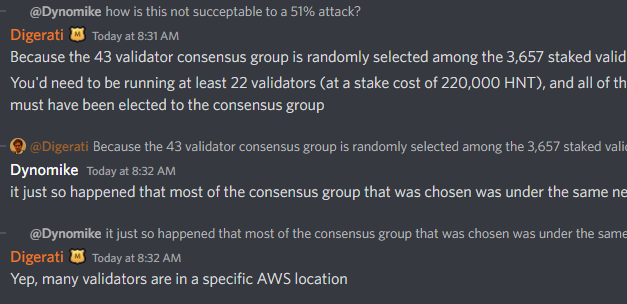
The Internet of Things (IoT) blockchain Helium shut down for about 4 hours on July 11 due to validator outages from a software update, causing delayed transaction finality.During the outage, devices transferring data over the network were not affected, but miner rewards and token transfers were left pending. The team resolved the issue by skipping the blockchain forward by one block and resuming normal functions.At 10:20 am EDT, the Consensus Group stopped producing blocks at block height 1435692 on the Helium (HNT) blockchain, according to a status update. Lacking network consensus, token transfers could not be completed, and new blocks were not being produced. We’re back folks. The chain just processed block 1,435,693. We’ll continue to monitor the chain throughout the day.— Helium (@helium) July 11, 2022Helium is an IoT network that uses physical radio hotspots to allow users to connect to their devices from anywhere there is radio coverage. On the Helium network, a Consensus Group consists of 43 validator nodes randomly chosen in fixed intervals to provide network consensus.In the postmortem for the event, Helium engineers cited two reasons validators stopped creating consensus on the network. First, an issue with a July 8 software update for validators contributed to the problem. The v1.12.3 update was designed to provide support for the 5G Mobile subnetwork and its MOBILE token.Additionally, a “local network outage” was also to blame. In the project’s Discord channel, Helium moderator “Digerati” explained that a high concentration of validators randomly chosen as the Consensus Group at the time of the outage was running on the same Amazon Web Service (AWS) network, which experienced technical difficulties.AWS is a global cloud computing and data storage service that can be used to enhance computer networks like Helium.A Helium community moderator explains an AWS outage affected validators.Compounding the problem was the failure of an auto-skip feature that should have chosen a new Consensus Group automatically. The team stated that “a known issue prevented the auto-skip feature from working as expected.” However, it is not clear what the “known issue” is that the team referred to.Although the network could not choose a different Consensus Group, it was designed with the ability to skip the blockchain a block forward “to mitigate situations such as these,” according to a 10:56 am ET announcement from the team. Related: Cloudflare outage affects multiple crypto exchangesBy 1:45 pm ET, new block production started with block number 1435693. The team said it worked closely with validator operators to ensure they were synced correctly and released a new software update.HNT is down 4.1% over the past 24 hours, trading at $8.76 according to CoinGecko. It is down 84% from its November 2021 all-time high.

Čítaj viac

Capitulation ongoing but markets not at the bottom yet: Glassnode

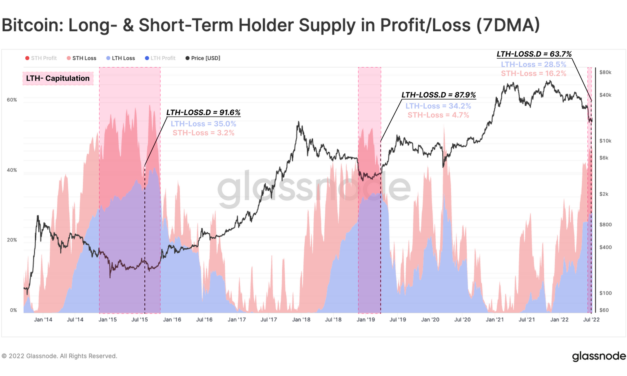
Bitcoin wealth is being distributed from weak hands to strong hands due to ongoing capitulation from retail investors and miners, signaling that the bottom may be close.The latest ‘The Week On-Chain’ report from blockchain analysis firm Glassnode on July 11 explains that market capitulations have been ongoing for about a month and that several other signals suggest bottom formations in Bitcoin prices. However, Glassnode analysts wrote that the bear market “still requires an element of duration” as Long-Term Holders (LTH), who tend to have greater confidence in Bitcoin as a technology, increasingly bear the greatest unrealized losses. “For a bear market to reach an ultimate floor, the share of coins held at a loss should transfer primarily to those who are the least sensitive to price, and with the highest conviction.”They added that the market may need further “downside risk to fully test investor resolve, and enable the market to establish a resilient bottom.”Unrealized losses are losses in the dollar value of a holder’s position before selling.Glassnode made this assessment based on the observation that in previous bear markets in 2015 and 2018, LTH held over 34% of the Bitcoin (BTC) supply that was in unrealized loss. The STH proportion accounted for just 3% to 4%. Currently, Short-Term Holders (STH) are holding 16.2% of the coins in loss, while LTH are holding 28.5%. Coins are moving to new STH who aim to speculate on price but have less conviction about the asset, it added.The proportion of LTH holding coins at a loss may still be too low.This implies that as LTH scoop up more coins, they must have diamond hands, meaning they must not sell, for analysts to note a true market bottom. Cointelegraph echoed this idea acknowledging that Delphi Digital also believes that more time is required under current market conditions to call this the bottom.Related: Despite ‘worst bear market ever,’ Bitcoin has become more resilient, Glassnode analyst saysBitcoin miners selling coins is evidence that the market could be testing bottom ranges. Glassnode demonstrated that miners have sold 7,900 BTC since late May but have recently slowed spending to about 1,350 BTC per month.Duration is again highlighted as a critical factor in determining where the market bottom could be. During the 2018-2019 bear market, miner capitulation took about four months to mark the bottom; they have only been selling in 2022 for about a month or two. Miners still hold about 66,900 BTC, so “the next quarter is likely to remain at risk of further distribution unless coin prices recover meaningfully,” the report concluded.Overall, Glassnode noted that the market looks near the bottom, stating that it “has many hallmarks of the later stage of a bear market” but that investors should be aware that further pain could be in store.“Overall, the fingerprint of a widespread capitulation and extreme financial stress is certainly in place.”Bitcoin is down 3% over the past 24 hours, dipping below $20,000 to $19,939, according to CoinGecko.

Čítaj viac

Získaj BONUS 8 € v Bitcoinoch

nakup bitcoin z karty

Registrácia Binance

Burza Binance

Aktuálne kurzy