Autor Cointelegraph By Brayden Lindrea

AI agent development hasn’t accelerated as expected, Zuckerberg says

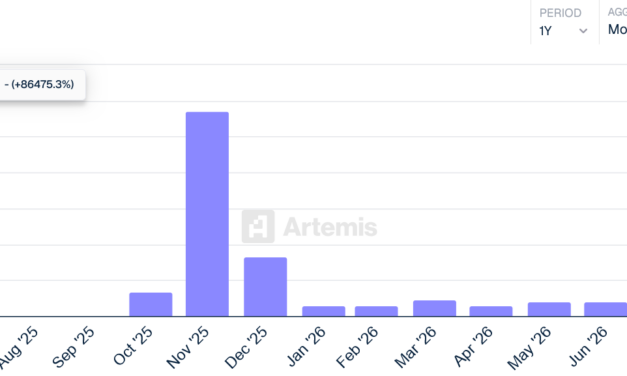
Meta CEO Mark Zuckerberg said AI agent development at the firm is progressing more slowly than expected, even as technology and crypto firms continue pouring resources into the nascent technology. In a company meeting on Thursday, Zuckerberg said the “trajectory of the agentic development over at least the last four months hasn’t really accelerated in the way that we expected,” according to Reuters, which reviewed a recording of the call.The bet on agent adoption hasn’t “come to fruition yet,” Zuckerberg said, adding that executives made an aggressive push into agentic infrastructure in January in part because of fears they weren’t moving “fast enough.” Despite the slower progress, Zuckerberg said he expects the firm’s AI investments to start paying off within the next three to six months.Zuckerberg’s comments offer a reality check for technology and crypto firms betting that autonomous agents will soon become major users of blockchain payments. Meta, along with several crypto firms, has bet big on agentic AI, with many pivoting their business models to cater to autonomous AI agents. In May, Meta cut roughly 10% of its workforce and reassigned about 7,000 employees to AI-focused teams — a restructuring Zuckerberg acknowledged was not as clean as it could have been, with executives miscalculating the timing. Meta expands AI agent feature on three platformsZuckerberg’s concerns come as Meta expanded its Meta Business Agent globally for businesses on Instagram, Messenger and WhatsApp on Thursday.The Business Agent can respond to customer inquiries, make product recommendations and close sales without human intervention, Meta said.Zuckerberg also revealed in March that he was building a personal AI agent designed to support his decision-making as CEO.The crypto industry has been a keen adopter of the technology, with Coinbase CEO Brian Armstrong and Circle CEO Jeremy Allaire among the executives predicting that AI agents will become the dominant users of blockchain-based payments in the coming years.Several notable integrations advancing AI agent-driven stablecoin spending have emerged in recent months, including one by Amazon Web Services in May, when it integrated Coinbase’s x402 payments protocol into Amazon Bedrock AgentCore, allowing agents to transact in the USDC (USDC) stablecoin.Related: OKX launches AI marketplace for autonomous agent economy In April, crypto wallet startup Oobit launched a Visa-supported virtual card for AI agents to make online purchases in USDt (USDT) on behalf of businesses.AI agent payments adoption laggingDespite the integrations, data shows that AI-agent transaction activity on the blockchain remains relatively small, with Artemis data showing that only $2 million in trading volume has been facilitated through the AI agent-supported x402 protocol over the past 30 days.Monthly change in x402 transaction volume over the past 12 months. Source: ArtemisMagazine: The end of anonymity? AI could unmask crypto’s hidden identities

Čítaj viac

Strategy will be ‘less important’ in Bitcoin after STRC incident: Bitwise

Strategy’s era as the dominant Bitcoin buyer may have come to an end following last week’s STRC turmoil, which cast doubt on the company’s Bitcoin-buying strategy and sent the cryptocurrency to a nearly two-year low, according to Bitwise chief investment officer Matt Hougan.“For years, Strategy has been the most dominant Bitcoin buyer in the world and a one-way source of Bitcoin demand. Those days are likely over,” Hougan said Thursday. “I just expect it to be a less important figure in Bitcoin in the next cycle than it was in the last,” Hougan said, adding that investment banks, asset managers, pensions, endowments and sovereign wealth funds will likely replace Strategy as Bitcoin’s primary demand driver.Confidence in Strategy’s Bitcoin-buying model weakened late last month when its main perpetual preferred stock offering — Stretch (STRC) — broke sharply from its $100 par value to below $75, raising fears that its dividend model was unsustainable. The STRC incident coincided with Bitcoin (BTC) falling to a 21-month low of $58,190 on June 25, further rattling confidence across the crypto market. Strategy responded by committing to sell Bitcoin where necessary to fund dividends and by expanding its US dollar reserve to $2.55 billion — easing immediate concerns but weakening its position as the industry’s most aggressive Bitcoin buyer, Hougan said.Hougan said he still expects Strategy to be a “net buyer” in the next bull run, however.Bitwise portfolio manager Gordon Grant (left) speaks with Hougan (right) about Strategy’sfuture outlook with STRC. Source: BitwiseSTRC example of “financial engineering” gone wrongHougan described the STRC incident as “classic end-of-cycle dynamics” and likened its collapse to a similar case of “financial engineering” in 2021, when Grayscale’s GBTC premium imploded.“Money searching for high yields and low volatility was used to buy Bitcoin, which offers neither,” Hougan said. “This money never really fit Bitcoin. And so, it needs to be cleared out before we can find a bottom. That’s what’s happening today.”Strategy’s issue with STRC overblown: Strive CEOStrive CEO Matt Cole, however, said Strategy’s incident with STRC has drawn too much media attention and pushed down Bitcoin’s price more than it should have.Related: Bitcoin doesn’t need Ethereum-style yield, says Strategy’s Michael SaylorSpeaking with NovaDius Wealth Management president Nate Geraci on Thursday, Cole noted that Strategy’s 847,363 Bitcoin represents just 4% of the total supply, and while Bitcoin isn’t a public company, by the US Securities and Exchange Commission’s standards, a 4% stake wouldn’t be considered material. “If one person owned 4%, you don’t even have to report that publicly to the SEC because the SEC deems 4% to be immaterial. They start to view a position to be material at 5%.”Strategy isn’t facing liquidity risk: HouganDespite concern over STRC, Hougan said Strategy has $52 billion worth of liquid assets marked against $7 billion of debt, and that Bitcoin would need to drop another 70% (about $18,500) for the company to be put at risk.Hougan also noted that if Strategy were to start selling its Bitcoin today, it could cover dividends from STRC and its other perpetual preferred stock offerings for the next 28 years.Magazine: Bitcoin decouples from tech stocks, Ether eyes ‘selling wave’: Market Moves

Čítaj viac

UK crypto investors sue Binance, Changpeng Zhao for $200M

Almost 1,700 UK investors are reportedly suing Binance and its founder Changpeng Zhao for 150 million British pounds ($200 million), alleging the crypto exchange offered and sold crypto derivatives without regulatory approval.The law firm representing the investors, KP Law, said Binance’s leverage tokens, futures contracts and options offerings breached the Financial Services and Markets Act 2000 and that these products continued to be offered after the Financial Conduct Authority banned such products from being offered to retail customers in January 2021.“There appeared to be no effective barrier preventing UK customers from accessing them,” the law firm said.Binance told Cointelegraph it would “defend against these claims through the appropriate legal process” and it “remains committed to its obligations to users and to operating in accordance with applicable law.”Source: CointelegraphThe lawsuit adds to a growing list of legal and regulatory challenges for the crypto exchange, including recently failing to secure a Markets in Crypto-Assets-compliant license from a European Union member state before the July 1 deadline. Binance has also been facing allegations that it facilitated $850 million in transactions tied to a sanctioned Iranian financier that flowed to Iran’s Islamic Revolutionary Guard Corps. The crypto exchange strongly denied the allegations.Binance UK customers lost “tens of thousands of pounds”One of the affected customers, Tomas Sutas, was a financial controller who allegedly invested more than 100,000 British pounds ($132,400) into Binance’s derivatives products before the value of his investments was wiped out, the Financial Times reported.Reuters also reported that multiple UK users lost “tens of thousands of pounds” through the products.Related: Australia’s crypto travel rule is coming into effect: Here’s what’s changing KP Law said it is still identifying the full scope of affected customers.“While the precise number of UK customers affected is not publicly known, Binance is one of the world’s largest cryptocurrency exchanges, meaning that a substantial number of users could potentially have been exposed to these issues.”Binance’s operations in the UK became heavily restricted in June 2021 when the FCA informed Binance Markets Limited that it couldn’t operate in the region without written consent.Reuters noted that the lawsuit was filed in the London High Court. The Binance-affiliated Nest Exchange and “persons unknown” were also named as defendants.Magazine: Bitcoin slides to $58K, XRP hits $1 but onchain data promising: Market Moves 

Čítaj viac

SEC wins $5.4M judgment in NanoBit crypto fraud case

The US Securities and Exchange Commission has won its fraud suit against crypto platform NanoBit Limited, nearly two years after the agency accused it of stealing hundreds of thousands of dollars from at least 18 investors between 2023 and 2024.The announcement by the SEC on Monday came nearly two weeks after the US District Court for the Eastern District of New York entered a final judgment against four entities and two individuals tied to the NanoBit fraud case on June 16.The SEC alleged that NanoBit’s operators impersonated financial professionals in WhatsApp groups to trick investors into depositing funds on the fake platform. Instead, the funds were allegedly diverted to scheme participants, the SEC said. The case is another example of the SEC’s continued crackdown on crypto-themed fraud under the Trump administration, even as the agency has softened its regulatory approach to crypto companies and revised what it considers to be a securities offering.On May 29, the SEC charged a Texas man with allegedly running a fraud scheme that raised more than $12 million from roughly 150 investors by falsely claiming to use AI-powered trading bots to generate guaranteed returns. In April, the SEC also charged crypto executive Donald Basile and two companies he controlled for raising roughly $16 million from hundreds of investors through false claims tied to a crypto token called Bitcoin Latinum. NanoBit perpetrators ordered to pay $5.4 millionThe New York court found that the defendants violated US securities laws and issued permanent injunctions against them, prohibiting them from engaging in the issuance, purchase or sale of securities. Related: Crypto scammers exploit World Cup ticket demand, TRM warns NanoBit was ordered to pay a $1.18 million fine, disgorgement of more than $532,000 for the ill-gotten gains and prejudgment interest of nearly $81,200, totaling nearly $1.8 million.NanoBit’s affiliates — Radiant Horizons, Sweet Karma and Zhao Deli — were each ordered to pay a $1.18 million fine, while one of the scheme’s main orchestrators, Jiajie Liu, was ordered to pay about $120,000 in penalties, disgorgement and prejudgment interest.In the September 2024 complaint, the SEC alleged that NanoBit investors were solicited on social media, such as Instagram, before being added to the WhatsApp groups.Investors were allegedly shown a fake dashboard depicting rising returns, creating the illusion that their funds were growing. It allegedly persuaded investors by falsely claiming that its affiliate, NanobitUS Securities, was an SEC-registered broker, while also promoting fake initial coin offerings (ICOs) promising substantial returns. However, “no transactions took place on the NanoBit platform and investors’ funds in fact went to scheme participants who wired more than $2 million to bank accounts in Hong Kong and misappropriated hundreds of thousands of dollars’ worth of investors’ crypto assets,” the securities regulator alleged.The SEC alleged that investors who sought to withdraw funds were met with excuses and asked to pay large fees, while others were removed from the WhatsApp groups for questioning the platform’s legitimacy.Magazine: The end of anonymity? AI could unmask crypto’s hidden identities 

Čítaj viac

Získaj BONUS 8 € v Bitcoinoch

nakup bitcoin z karty

Registrácia Binance

Burza Binance

Aktuálne kurzy