Autor Cointelegraph By Brayden Lindrea

Crypto hacks fell 47% in H1 but ecosystem is no safer: CertiK

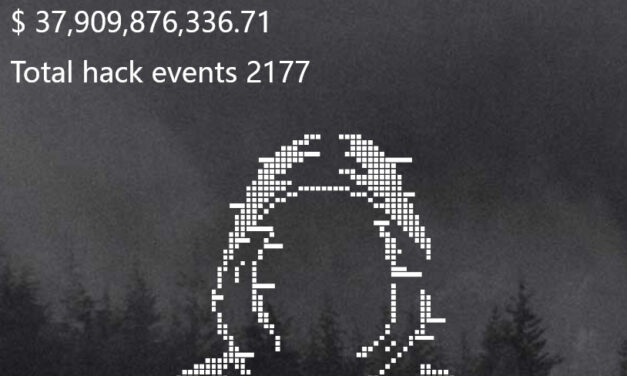
Crypto losses fell 46.8% year-on-year to $1.32 billion in the first half of 2026, but crypto security firm CertiK says the drop is misleading, warning that attackers are becoming more sophisticated and destructive. Phishing drove the bulk of losses in the first quarter, totaling $508.2 million. Wallet compromises were the biggest attack vector in the second quarter, contributing to $807.5 million in losses, CertiK said in a report. More than 70% of the losses in Q2 came from the KelpDAO and Drift Protocol hacks, which are believed to have been carried out by North Korean state-sponsored hackers. “A headline reading of ‘losses down nearly 50%’ would suggest a meaningfully safer ecosystem. The data does not support that conclusion,” CertiK told Cointelegraph, explaining that the losses in the prior year period were skewed by the $1.4 billion Bybit hack — the largest crypto exploit in history.The data shows that North Korean hackers continue to pose one of the biggest threats to the crypto industry, having stolen more than $6 billion worth of crypto since 2017, TRM Labs estimated in April.Monthly change in crypto exploit amounts and number of incidents across H1. Source: CertiKNorth Korean state actors blamed for crypto attacksThe KelpDAO and Drift Protocol incidents even sparked a meeting between US, Japanese and South Korean authorities late last month over how the nations can mitigate North Korea’s malicious cyber activity and illicit revenue generation. The state officials also acknowledged that North Korean IT workers are increasingly using AI to enhance their schemes — a development that some cybersecurity leaders believe has significantly increased the scale, speed and sophistication of protocol exploits.CertiK cautioned that the “industry is absorbing a structurally higher rate of attack activity” than last year and that — excluding the Bybit incident — attacks are becoming “targeted and more financially destructive per event.” TRM Labs reached a similar conclusion in its H1 2026 report on Wednesday, stating that the “decline in total dollars stolen should not be mistaken for a safer environment.””The lower total reflects the absence of another record setting theft, not a reduction in attacker capability.”TRM’s analysis found that the number of incidents more than doubled from 83 to 207 in H1, the highest number TRM has recorded across a six-month period. Smart contract exploits accounted for 125 or 60% of the incidents in H1, TRM added. Protecting private keysCertiK said private keys and multisignature wallet management remain the “most consequential security surface” for attackers to exploit.Related: Crypto hack losses top $630M in April, highest since February 2025 CertiK urged crypto protocols and institutions holding significant onchain assets to harden every layer of private key management — from hardware security and multisignature governance to even geographically spreading out where signers are based.This is an “area where security investment yields asymmetric returns,” CertiK said.Crypto hardware wallet providers like Ledger have also long warned users to store seed phrases offline and never share them as a basic safeguard against phishing.Magazine: The end of anonymity? AI could unmask crypto’s hidden identities

Čítaj viac

Vitalik Buterin shares top priorities for new 'Lean Ethereum' strawmap

Ethereum co-founder Vitalik Buterin has named quantum resistance, scalability and privacy as three of Ethereum’s top priorities under a new “Lean Ethereum” strawmap, which lays out the network’s technical direction for the remainder of the decade. In a post to X on Saturday, Buterin said the collection of upgrades will roll out over the next three to four years, touching nearly every layer of Ethereum in a transformation he compared in scale to the September 2022 Merge, which shifted the network away from energy-intensive mining. “Quantum safety has shifted up a LOT in priority,” he said, adding that finalizing a quantum-safe solution for blobs has “become urgent.” Enhancing privacy is another priority, Buterin said, stating that it has become a “first class goal.”The “Lean Ethereum” strawmap timeline from 2026 through to 2029. Source: Strawmap.orgThe change in roadmap comes amid a series of changes at the Ethereum Foundation, which laid off roughly 20% of its staff last month in a bid to become leaner and reduce its budget by 40%.The leaner structure comes on top of several executive departures in recent months, including Hsiao-Wei Wang and Tomasz Stańczak, while protocol contributors Tim Beiko and Barnabé Monnot also left in May.Buterin is also pushing for the development of a new virtual machine like leanISA or RISC-V to support programmable privacy and better scalability.Questions remain over Buterin’s timelineDankrad Feist, a researcher behind the payments-focused layer-1 Tempo blockchain, praised the new plan but argued the 3-4 year timeline is too slow, stating that AI could help developers ship the upgrades within a year. Related: Ethereum Foundation leadership exodus continues with director’s departure Crypto analyst Ignas Fiodorovas was also in favor of the plan but cast doubt on the Ethereum Foundation’s ability to deliver the upgrades within the stated timeline, citing the organization’s history of missing deadlines. Fiodorovas said the only key feature missing from the roadmap was improved tokenomics for Ether (ETH), which has continued to slide in price amid a broader market downturn. Magazine: Bitcoin decouples from tech stocks, Ether eyes ‘selling wave’: Market Moves Cointelegraph is committed to independent, transparent journalism. This news article is produced in accordance with Cointelegraph’s Editorial Policy and aims to provide accurate and timely information. Readers are encouraged to verify information independently.

Čítaj viac

Moonbeam to pivot from Polkadot to Base, unveils AI agent framework

Polkadot-based interoperability protocol Moonbeam said it is pivoting to Ethereum layer 2 Base to launch an AI agent communication and settlement network, aimed at capturing a share of the emerging market. “This is a pivot to the most exciting frontier in crypto: autonomous AI agents that find each other, negotiate work, and pay each other entirely on-chain, without a middleman,” Moonbeam said in a statement announcing the Moonbeam Protocol on Friday. “We believe AI-native on-chain coordination represents a significant long-term opportunity. This transition allows us to focus resources around that direction,” Moonbeam added.Moonbeam didn’t provide a launch timeline for the Moonbeam Protocol.Source: MoonbeamAgentic development has seen considerable adoption in the crypto industry, with Coinbase CEO Brian Armstrong and Circle CEO Jeremy Allaire among the executives predicting that AI agents will become the dominant users of blockchain-based payments in the coming years.Coinbase’s x402 payments protocol has been one of the biggest drivers behind that push, while layer 1 blockchains Aptos and Near have also rolled out infrastructure to support agent-driven onchain activity.Adoption in blockchain-based payments space has struggled to take off, however, with data from Artemis showing that only $2 million in trading volume has been facilitated through the x402 protocol over the past 30 days. AI agent development is progressing slowly in Big Tech too, with Meta CEO Mark Zuckerberg stating on Thursday that the technology hasn’t accelerated the firm’s workflows as quickly as expected.Moonbeam pivot a blow to PolkadotSeveral members of the crypto community said Moonbeam’s pivot marked a major setback for the Polkadot ecosystem, with one X user calling Moonbeam Polkadot’s “flagship project.” “That’s a real pain in the ass for Polkadot,” another X user said.Moonbeam launched as a Polkadot parachain in January 2022, providing developers the ability to build Ethereum Virtual Machine-compatible applications directly in the Polkadot ecosystem.Moonbeam users instructed to migrate tokensMoonbeam (GLMR) holders will need to bridge their tokens from Moonbeam’s Polkadot parachain to Base before July 31, 2026, including GLMR tied in lending markets, staking contracts and other decentralized finance protocols, Moonbeam said.Related: Why a ‘safe’ AI can turn dangerous in the wrong company Those holding the token on a centralized exchange won’t need to take any action, Moonbeam said.Moonbeam said it will continue providing its cross-chain interoperability services on the Polkadot parachain through the transition period and is not abandoning its existing builders or infrastructure providers.Magazine: Bitcoin decouples from tech stocks, Ether eyes ‘selling wave’: Market Moves

Čítaj viac

US law enforcement group drops opposition to CLARITY Act: Report

The Major County Sheriffs of America reportedly said it no longer opposes the CLARITY Act after initially raising concerns over how the bill would affect illicit finance investigations.In a letter to US Senate Banking Committee chair Tim Scott and Senator Elizabeth Warren on Friday, the MCSA said it shifted its stance on the CLARITY Act to “neutral” after some of its concerns in a May 14 letter regarding Section 604 in the bill were addressed.Section 604 relates to the Blockchain Regulatory Certainty Act, which seeks to protect developers from liability for illicit activity committed by users on their decentralized platforms. The MCSA previously contended that Section 604 could create a loophole for criminals to exploit, making it tougher for law enforcement to investigate crypto-related crimes.Source: Eleanor TerrettWhile the CLARITY Act has bipartisan support, its passage through the Senate has largely been stalled by banking groups seeking to restrict stablecoin yield, which they argue functions like an unregulated deposit product that could drive trillions of dollars in outflows from the traditional banking system. The bill has been awaiting a full Senate vote since May, when the Senate Banking Committee passed the bill mostly along party lines.Senators in favor of the bill are pushing for a full Senate vote this month, in hopes that it can be passed and signed into law before the US midterm elections in November.One of CLARITY Act’s “biggest roadblocks” removedCrypto investor Mark Chadwick described MCSA’s initial opposition to the CLARITY Act as one of the “biggest roadblocks” in preventing the Senate from passing the bill.“With that hurdle now out of the way, the path to passage just got a lot clearer,” Chadwick said. “One more major hurdle down.”MCSA still wants improvements to CLARITY ActThe MCSA said it would like the CLARITY Act to be amended to include state law enforcement in Section 309, which requires the Treasury Department to study decentralized finance and illicit finance risks.Related: Senate leaders push for July passage of CLARITY Act MCSA President Bob Gualtieri argued that Congress should provide the training, technology and resources needed to “investigate increasingly sophisticated digital asset-enabled activity” tied to fraud, narcotics trafficking, ransomware, child exploitation, terrorism financing and other crimes.“State and local law enforcement agencies investigate these crimes every day and must have the tools, partnerships, and resources necessary to identify offenders, trace illicit proceeds, recover assets, and protect victims.”Magazine: Does ‘Paper Bitcoin’ mean there’s an unlimited supply of BTC?

Čítaj viac

Bitcoin P&L ratio falls to 43-month low

Bitcoin’s realized profit and loss ratio has fallen to a 43-month low of -0.35, a figure that signals extreme market-wide loss conditions but has historically coincided with market bottoms, blockchain analytics platform CryptoQuant said.The Bitcoin realized P&L ratio — which measures the net percentage of Bitcoin (BTC) in profit or loss relative to total supply — hasn’t fallen this low since December 2022, shortly after FTX shockingly collapsed and sent Bitcoin below $16,000.“Historically the indicator has marked BTC bottoms with extreme precision,” CryptoQuant said on Thursday. In 2015 and 2019 the Bitcoin realized P&L ratio also fell below -0.35 before price rallies followed. Change in Bitcoin’s P/L ratio since 2012. The data was taken when Bitcoin was trading at $59,000. Source: CryptoQuantThe data could lift market sentiment, which has repeatedly fallen to near-record lows during the course of Bitcoin’s latest 50% drawdown from $126,080, set in October. Market sentiment has risen cautiously over the last 10 days, with Bitcoin up more than 7% since tanking to a near two-year low of $58,190 on June 25.Many analysts blamed that drop on Strategy — the largest corporate Bitcoin holder — after its top perpetual preferred stock offering, Stretch (STRC), broke from its $100 par value to below $75, raising fears that its dividend model was unsustainable.Related: Crypto Biz: Bitcoin maximalism meets the realities of capital markets On Thursday, Bitwise chief investment officer Matt Hougan said the STRC incident squeezed out excess leverage and likely moved the market one step closer to a bottom.“As the market continues to sort things out, I’m convinced the bottom is closer than ever — and that we will enter a new bull market in the fall.”Don’t wait for the bottom, analyst saysSwan Bitcoin analyst Adam Livingston noted that Bitcoin is currently trading only 16% above the realized price — the network’s aggregate on-chain cost basis — a level that has historically coincided with strong forward returns of 41% at six months and 81% at 12 months.Livingston acknowledged that buying Bitcoin right now “feels awful,” but that’s precisely why it’s trading at a discount, he argued.“Waiting for ‘the bottom’ is a wonderful plan with one flaw. The bottom never announces itself,” Livingston said, recommending investors buy now rather than overpay at the top.Magazine: Bitcoin slides to $58K, XRP hits $1 but onchain data promising: Market Moves Cointelegraph is committed to independent, transparent journalism. This news article is produced in accordance with Cointelegraph’s Editorial Policy and aims to provide accurate and timely information. Readers are encouraged to verify information independently.

Čítaj viac

Získaj BONUS 8 € v Bitcoinoch

nakup bitcoin z karty

Registrácia Binance

Burza Binance

Aktuálne kurzy