Autor Cointelegraph By Arnold Kirimi

On Freedom Day, Bitcoin gives South Africans a stake in their financial future

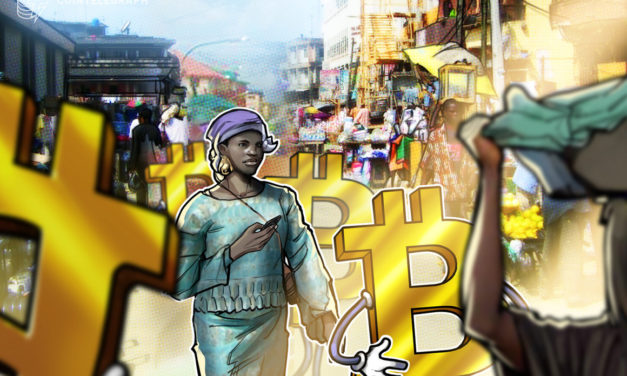
On Wednesday, South Africa celebrated Freedom Day, which honors the country’s first post-apartheid democratic election in 1994.Cointelegraph reached out to different notable individuals in the South African crypto community to see what the holiday meant to them. BitcoinZAR, a Bitcoin advocate in South Africa, noted that “Freedom Day means you are free to use your own money to live your best life,” adding:“We are free on Freedom Day to choose Bitcoin instead of losing value with government money. Stop aiding and abetting state capture, corruption and looting in South Africa. Vote with your money, and buy Bitcoin.”Several crypto-related firms have sprouted in the nation, including Luno, a cryptocurrency exchange, while several businesses now take Bitcoin payments, including retail stores and travel companies.Luno, which was founded by two South Africans in 2013, now has 10 million customers in over 40 countries. The company’s rapid expansion was demonstrated by adding one million new clients in four months last year. In 2017, South Africa’s then-largest online retailer, Pick n Pay, began accepting Bitcoin payments at one of its stores, hinting at cryptocurrency’s potential as a form of payment.Freedom day is celebrated today in South Africa. Freedom is a scary notion. To be free one needs to accept personal responsibility. #Bitcoin will naturally stir you in the direction of learning and making choices instead of waiting for those in power to hopefully take care of you pic.twitter.com/Ib7h50XAdq— UNRAVEL SURF TRAVEL (@UnravelSurf) April 27, 2022Unravel Surf Travel is a South African travel company that began accepting Bitcoin in 2015. According to the travel company, it has primarily served the Russian/Eastern European market since 2011, providing surfing trips to South Africa. The region is presently in upheaval because of Russia’s military incursion into Ukraine. Western sanctions and fiat currency volatility have made Unravel Surf Travel’s clients more open to paying for trips in cryptocurrency. The travel firm added that:”Since 2015, we’ve used Bitcoin to receive payments from clients who wish to travel and enjoy a South Africa surfing experience but would otherwise have been prevented from doing so. Thanks to Bitcoin, we could operate, earn a living, and our clients could travel, despite what their often dubiously elected officials did.”Lukhangele Brabo, a 17-year-old South African who is a Bitcoin supporter and advocate, explained to Cointelegraph why Freedom Day is so important to him. Brabo said that “Freedom Day means having the greatest power and right to act.” Brabo used to work at Surfer Kids in Diaz Beach, South Africa, where he used to receive a salary through fiat. Unfortunately for him, his family used to take all of his money when he was a young man, leaving him with no alternative source of income. However, things began to look up for him after he discovered Bitcoin from Bitcoin Ekasi, a well-known South African Bitcoin advocate:”Now, what happened is l stopped getting paid in fiat and l started receiving my weekly salaries in Bitcoin that became very interesting because l realized that OK, Bitcoin is safer than fiat because no one can take it away from me. It’s on my phone and it’s safer. No matter what they did to try and take it all it couldn’t work because why? They don’t know how it works and how to use it.”Related: The Central African Republic reportedly passes a bill to regulate crypto useAlmost 20% of South Africans, according to Borgen Magazine, survive on less than $1.90 a day. Both inequality and poverty in South Africa are exacerbated by widespread corruption. Former President Jacob Zuma oversaw rampant corruption from 2009 to 2018. Zuma is estimated to have cost South Africa at least $35 billion and perhaps more than three million people fell below the poverty line during his term.

Čítaj viac

'Hyper-deflationary' network launches mainnet amid rising inflation

AXIA, the team behind the novel message-to-earn approach of AXChat, announced the mainnet launch of its blockchain and native currency on Thursday. The new network is designed to provide a “hyper-deflationary” economic model in which the cryptocurrency becomes more and more scarce as its adoption grows. According to its website, the AXIA blockchain is a third-generation blockchain that attempts to address problems like the lack of interoperability, speed and accessibility.The AXIA network uses a participatory hyper-deflationary system. This implies that all activity on the blockchain and within the ecosystem helps to ensure that AXIA Coin becomes scarce over time. An AXIA representative told Cointelegraph that the traditional financial and monetary system is ineffective, promotes inflation and exacerbates income disparity. As per the AXIA, its economic model differs from fiat currencies and other cryptocurrencies in that it features continuous value creation with a continuously decreasing supply of AXIA Coin.”This model is built to provide long-term value, protection against speculative instruments and the loss of value we see with fiat currencies. The model itself is not only sustainable but will continue to evolve over time.”The mainnet launch follows two months after AXIA launched AXchat, a decentralized messaging platform. This blockchain-powered chatting platform allows users to chat with friends and family while earning digital currency rewards.Related: Crypto seen as the ‘future of money’ in inflation-mired countriesAXIA claims that all AXChat messages are encrypted and that accounts are protected by multi-factor authentication (MFA) for enhanced protection. Traditional messaging platforms like Whatsapp and Facebook Messenger do not have these privacy features. According to a spokesperson for the AXIA network, the value they provide is derived from consumers and funneled back into for-profit and centralized interests.Blockchain mainnet launch is a significant step for every project. This is because it is the moment when a project transitions from being an idea to actuality. This year a couple of blockchain mainnets were launched. Some of the most notable include RUNE, Mono X and Bitgert Chain.

Čítaj viac

Bitcoin ATM installed in Mexico's Senate Building

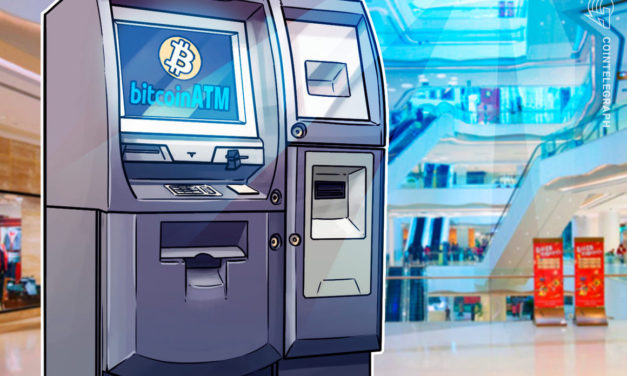
Mexico’s Senate building now houses the country’s 14th Bitcoin (BTC) ATM, a sign of the country’s increasing interest in Bitcoin. The ATM was installed on Tuesday with the support of several legislators, including Miguel Angel Mancera, head of the parliamentary group of the Party of the Democratic Revolution (PRD).Senator and outspoken crypto enthusiast Indira Kempis shared her excitement at the development on Twitter, stating that “for freedom, inclusion and financial education in Mexico.”Por la libertad, inclusión y educación financiera en México.#ToTheMoon @senadomexicano pic.twitter.com/QytQn58A3i— Indira Kempis de I. (@IndiraKempis) April 26, 2022According to Coin ATM Radar data, the country already had 13 such machines in Mexico City, Tijuana, Cancún, Guadalajara, Culiacán, San Miguel de Cozumel, and Aguascalientes.After the BTC ATM was installed, a local news report from El Heraldo de Mexico stated that the PRD representative noted that Bitcoin has already surpassed the transaction volume of payments made through traditional payment systems like PayPal, Visa, and MasterCard.Related: Brazil’s Senate approves ‘Bitcoin law’ to regulate cryptocurrenciesMexico’s interest in cryptocurrency has picked up momentum in recent months. According to Triple A’s crypto ownership data for 2021, 40% of Mexican firms are interested in adopting blockchain and cryptocurrency in some manner. Of this group, 71% are concentrated on cryptocurrency usage.Furthermore, the information shows that Mexico’s major cryptocurrency exchange, Bitso, saw a 342 percent increase in trading volume in 2020. The exchange also has over 1 million users (92% are Mexicans).In February, as reported by Cointelegraph, Nuevo León state senator Indira Kempis stated that she is confident that Bitcoin should be a legal currency in Mexico because its usage may help expand financial inclusion across the world. However, billionaire and Bitcoin advocate Ricardo Salinas believes it will be an “uphill battle” to make this happen because his nation’s mentality is too dependent on its fiat control, which he referred to as “fiat fraud.”

Čítaj viac

Cuban central bank makes it official: VASP licensing coming in May

In a move that could potentially foster the growth of Cuba’s nascent tech industry, the Banco Central de Cuba (BCC), the country’s central bank, will begin issuing licenses for Bitcoin (BTC) and other virtual asset services providers, or VASPs.According to the Official Gazette No. 43 published Tuesday, which includes a Central Bank of Cuba resolution, anyone wanting to provide virtual-asset-related services must acquire a license first from the central bank. It reads:“The Central Bank of Cuba, when considering the license request, evaluates the legality, opportunity and socioeconomic interest of the initiative, the characteristics of the project, the responsibility of the applicants and their experience in the activity.”Furthermore, the document states that those organizations that do not operate under this license and are required to do so must face penalties in line with existing banking and financial rules in the island nation. The Gazette further determines that this decision will enter into force 20 days after its publication, which will be May 16. It also noted that the licenses would be extended for a second year.“Virtual asset service provider licenses are approved for a one-year period, extendable for a second year, given the experimental and novel nature of this type of activity.”It also emphasizes among the bank’s terms that VASPs are not permitted to cease their services without authorization from the central bank.I would escape with my family from the dictatorship that is my country “Cuba” and invest in my private business.#BTC#SOSCuba— El Espejuelo (@ElGlasses) April 27, 2022As reported by Cointelegraph in September last year, the BCC issued a ruling that defined cryptocurrencies like Bitcoin as a legal payment method. Although the institution had reservations about the dangers of utilizing cryptocurrencies, the central bank was made the only entity permitted to grant licenses to VASPs.Related: UAE reportedly plans to issue federal crypto license for VASPsBy legalizing virtual assets, Cubans can now enjoy more accessible remittance services and the ability to send and receive funds freely around the world, which could potentially trigger new cultural waves in local tech development amid 60 years of United States sanctions. Under mounting pressure from Washington, global money transfer firms have largely departed the country.Buenos Aires to Allow Residents to Make Tax Payments With #Bitcoin #Bitcoin is the only HOPE for developing countries like; #Haïti, #ElSalvador, #Venezuela, #cuba, #Nigeria, #Kenya to escape economic oppression. If you agree, consider follow my page and retweeting this. #BTC pic.twitter.com/04FME0g1aM— ₿itcoin Xoe (@Bitcoin_Xoe) April 26, 2022

Indeed, the country is following a similar path to El Salvador and the Central African Republic in embracing Bitcoin amid escalating U.S. sanctions and the economic impact of COVID-19. With virtual currencies linked to the prospect of financial sovereignty for many Cubans, interest in Cuba has been growing over the last couple of years.

Čítaj viac

Fireblocks expands institutional access to Terra's DeFi ecosystem

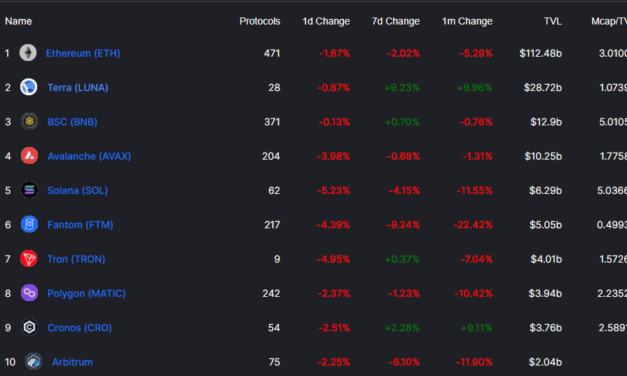
Fireblocks, a digital asset custody platform, announced that it has enabled institutional DeFi access to Terra (LUNA), the second-largest decentralized finance (DeFi) protocol by total value locked (TVL). As per the announcement, Fireblocks users can now securely access all the decentralized applications (DApps) built on the Terra blockchain.The launch is in response to Fireblocks’ Early Access Program users, who invested over $250 million into the Terra DeFi ecosystem within the first 72 hours of its integration going live. According to Michael Shaulov, CEO of Fireblocks, institutional demand for DeFi is only continuing to grow, adding that:“As their appetite expands, so will their desire to be able to access all of the latest and greatest innovations across different blockchain ecosystems.”Mr. Tashish RaiSinghani, the CEO of Unicus.One, a Web 3.0 mild code solution, told Cointelegraph that “interoperability of blockchains” is one of the key characteristics of Web 3.0 ecosystems. He noted that this change has given users greater freedom by tilting the power balance in their favor. They may take quick action whenever they encounter an opportunity because of flexibility, adding:”The integration of Fireblocks with Terra plugs the existing loopholes in the prevalent ecosystem. Conventional Web 2.0 ecosystem lacks an efficient way to access the dApps and the community within the walls of the platform. What is more, security norms in the traditional systems are poor, as the Twitch revelation revealed.”Terra is a blockchain platform designed initially to allow cross-border retail transactions. The platform has seen an increasing number of original DApps created on its blockchain, ranging from DeFi and payment platforms to gaming and NFT. With nearly 4 million different wallet addresses, Terra’s public blockchain has seen 400% growth in users in the last two years, as per the release.TVL Rankings. Source: Defi LlamaThe DeFi market is no longer confined to retail actors as the institutional investment footprint in the cryptocurrency market segment grows larger. In recent times, DeFi has emerged as a major attraction for big-money players, with financial institutions and banks beginning to invest in the cryptocurrency market segment.Related: DeFi to reach mass adoption via institutional participation, DEX founder saysMeanwhile, authorities are looking more closely at the DeFi industry, with the United States Securities and Exchange Commission (SEC) launching an inquiry into Uniswap in September last year. Stricter monitoring procedures have been a major topic of conversation for regulators in large countries, particularly in the realm of DeFi. In August, SEC Chairman Gary Gensler characterized DeFi as one of seven crypto-related policy concerns for the commission. Gensler has also previously stated that many DeFi platforms are “highly centralized” and would need government licensing.

Čítaj viac

Získaj BONUS 8 € v Bitcoinoch

nakup bitcoin z karty

Registrácia Binance

Burza Binance

Aktuálne kurzy