
Autor Cointelegraph By Arijit Sarkar

House memo details Congress' priorities ahead of crypto CEO hearing

The United States House Committee on Financial Services released a memorandum detailing the points of discussion during the hybrid hearing on digital assets, to be held today at 10:00 a.m. ET.Addressing the members of the Financial Services Committee, the memo confirmed that the hearing will dedicate one panel to six executives from the crypto community as witnesses. The list includes Circle’s Jeremy Allaire, FTX’s Samuel Bankman-Fried, Bitfury Group’s Brian Brooks, Paxos’ Charles Cascarilla, Stellar’s Denelle Dixon and Coinbase’s Alesia Jeanne Haas.The hearing, entitled “Digital Assets and the Future of Finance: Understanding the Challenges and Benefits of Financial Innovation in the United States,” seeks to discuss four key aspects related to crypto exchanges: stablecoin offerings, regulatory concerns in digital assets and federal regulatory responses.The brief reads, “This hearing will examine some of the new products and services offered by major digital assets market participants, the role of cryptocurrency market exchanges in facilitating investments in cryptocurrency and related transactions, the growth of stablecoins and other digital assets, and the current regulatory landscape governing these new products and services.”BREAKING ‼️Chairwoman @RepMaxineWaters Announces #Cryptocurrency CEOs to Testify at Full Committee Hearing | https://t.co/6IBi6jGNAC pic.twitter.com/r4kJqjmhqu— U.S. House Committee on Financial Services (@FSCDems) December 1, 2021While the memo highlights the role of exchanges in serving as an entry point for crypto investors, the hearing will also discuss decentralized finance, given its potential to “replicate and replace conventional delivery of financial services such as loans, asset trading, insurance, and other services.”The document also talks about the differences in operational structures and reserve compositions of stablecoins as compared to fiat currency, adding:“Cryptocurrency markets have no overarching and centralized regulatory framework, leaving investments in the digital assets space vulnerable to fraud, manipulation, and abuse. Digital assets and related service providers can present money laundering, terrorist financing, sanctions evasion, kleptocracy, and other illicit finance risks.”Acknowledging the rise in cryptocurrencies, Congress hopes to develop a clear stance on central bank digital currencies (CBDC) based on the ongoing study conducted by the Federal Reserve to “examine the potential benefits and risks of CBDCs and its impact on the U.S. domestic payments system.”Just yesterday, Circle CEO Jeremy Allaire released statements ahead of the hearing, stating:“In a world where money becomes a core feature of the internet, the U.S. should aggressively promote the use of the dollar as the primary currency of the internet, and leverage that as a source of national economic competitiveness, security and a major upgrade needed for more efficient and inclusive financial services.”Allaire’s firm Circle is the sole issuer of dollar-backed stablecoin USD Coin (USDC). He suggested that the U.S. government can make mainstream use of the stablecoin via dollar-denominated reserves. “Policy frameworks need to support an open and competitive playing field, and allow new technologies to flourish,” he added.

Čítaj viac


Crypto tumblers, exchanges under microscope as DOJ launches new task force

The White House, under the Biden-Harris administration, introduced a five-pillar strategy to counter corruption as a part of the core United States national security interest. The strategy involves establishing a new task force to address potential illicit activities on crypto exchanges and other services that can serve as avenues for money laundering.With the motive to enhance enforcement of Anti-Money Laundering (AML) regulations, as well as criminal and civil laws, the Federal government plans to implement new tools for investigating and prosecuting money laundering offenses. Specifically for cryptocurrencies, “PILLAR THREE: Holding Corrupt Actors Accountable” highlights:“DOJ [Deparment of Justice] will utilize a newly established task force, the National Cryptocurrency Enforcement Team, to focus specifically on complex investigations and prosecutions of criminal misuses of cryptocurrency.”The White House mentioned that the National Cryptocurrency Enforcement Team would be particularly responsible for overseeing “crimes committed by virtual currency exchanges, mixing and tumbling services, and money laundering infrastructure actors.”The DOJ has also expanded subpoena power for certain financial records maintained abroad while imposing new disclosure requirements for beneficial ownership information. The department also plans to incentivize whistleblowers for sharing information that leads to the identification and seizure of illicit proceeds.Related: House committee announces crypto CEOs will testify at Dec. 8 hearing on digital assetsRunning parallel to the White House’s latest initiative, Representative Maxine Waters, the Chair of the House Committee on Financial Services, has invited CEOs of eight major crypto companies to discuss digital assets and the future of finance, to be held on Dec. 8.As Cointelegraph reported, the CEOs of Circle, FTX, Bitfury, Paxos, Stellar Development Foundation, Coinbase and Coinbase Global CFO will be attending the committee hearing.Looking forward to hearing next week with @RepMaxineWaters, ranking member @PatrickMcHenry, and the full committee (@FSCDems) to discuss Crypto and national economic competitiveness for the United States. https://t.co/rVHAvaPMUd— Jeremy Allaire (@jerallaire) December 1, 2021

Čítaj viac

Huobi and Shiba Inu community to help BitMart overcome $200M hack

Following a near $200 million hack on the BitMart exchange, the Shiba Inu (SHIB) community and crypto exchange Huobi Global aim to help the exchange strengthen security and track inflows of stolen assets.On Dec. 5, crypto exchange BitMart became victim to a hot wallet compromise hosted over the Ethereum (ETH) and Binance Smart Chain (BSC) blockchains. As a result, the hackers were able to steal over $196 million, roughly $100 million over the Ethernet network and around $96 million over the BSC blockchain.1/3 We have identified a large-scale security breach related to one of our ETH hot wallets and one of our BSC hot wallets. At this moment we are still concluding the possible methods used. The hackers were able to withdraw assets of the value of approximately USD 150 millions.— Sheldon Xia (@sheldonbitmart) December 5, 2021Soon after BitMart CEO Sheldon Xia confirmed the hack, Huobi announced it would help BitMart track the inflow of assets on its exchange and report matches to the stolen funds.Huobi will do our best to assist #BitMart in handling this issue. If there are any inflows of related assets, we will report and assist in a timely manner.— Huobi (@HuobiGlobal) December 5, 2021

Following suit, the Shiba Inu community also confirmed it would help the hacked crypto exchange, citing their already existing efforts in reviewing potential security threats for ShibaSwap, a community-built decentralized exchange.Dear #ShibArmy,Even though the core of our project is decentralization, we want to show our support and give some love to our friends at @BitMartExchange, who are already working hard to fix the security incident that happened yesterday. pic.twitter.com/CJZjQHaP59— Shib (@Shibtoken) December 5, 2021

Xia also said the exchange would compensate affected investors with its own funds. “We are also talking to multiple project teams to confirm the most reasonable solutions such as token swaps. No user assets will be harmed,” he added.The hack forced the exchange to temporarily stop all withdrawals and deposits. However, Xia is confident BitMart will resume services by Dec. 7.Related: Synapse Bridge prevents $8M hackCross-chain protocol Synapse Bridge recently averted a multi-million dollar exploit on the Avalanche Neutral Dollar (nUSD) Metapool. As Cointelegraph reported, Synapse Bridge prevented a hacker from stealing approximately $8 million worth of cryptocurrencies:“Over the past 16 hours, we encountered and discovered a contract bug in the way that the AMM Metapool contracts handle virtual price calculations against the base pool’s virtual price.”While the threat was averted, Synapse Bridge soon deployed new nUSD pools as a means to further strengthen its security against similar attacks.

Čítaj viac

Bitmart hacked for $200M following Ethereum, Binance Smart Chain exploit

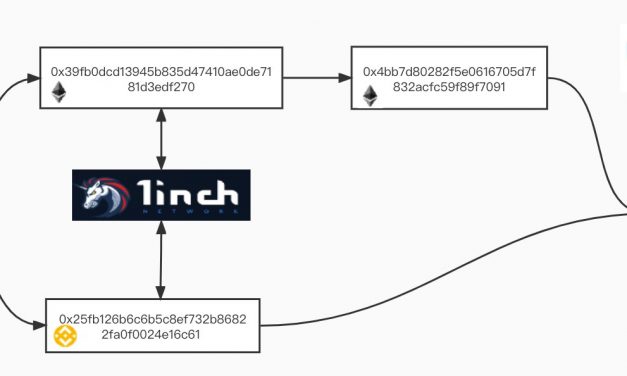
Crypto exchange Bitmart lost nearly $200 million in a hot wallet compromise hosted over the Ethereum (ETH) and Binance Smart Chain (BSC) blockchains.The $200 million Bitmart hack was first revealed by Peckshield, a blockchain security and data analytics company, who initially identified a transfer of roughly $100 million over the Ethereum blockchain. Further investigation from the team revealed a concurrent hack of $96 million over the crypto exchange’s BSC reserves:Total estimated loss: ~200M (~100M on @ethereum and ~96M on @BinanceChain ). (Previously we only counted the loss on @ethereum). And here is the list of affected assets/amounts on @BinanceChain pic.twitter.com/cXXApDFtd7— PeckShield Inc. (@peckshield) December 5, 2021The hackers made away with a mix of over 20 tokens that includes altcoins such as Binance Coin (BNB), Safemoon, BSC-USD and BPay. Sizable amounts of meme coins such as BabyDoge, Floki and Moonshot were also compromised in the hack. According to Peckshield, the hack was a straightforward case of transfer-out, swap, and wash:Transfer of stolen Bitmart tokens. Source: PeckShieldBitmart CEO Sheldon Xia later confirmed the hack over Twitter as a “large-scale security breach” on ETH and BSC hot wallets:“At this moment we are still concluding the possible methods used. The hackers were able to withdraw assets of the value of approximately USD 150 million.”3/3 At this moment we are temporarily suspending withdrawals until further notice. We beg for your kind understanding and patience in this situation. Thank you very much.— Sheldon Xia (@sheldonbitmart) December 5, 2021

Related: Crypto lending firm Celsius reportedly affected in BadgerDAO exploitIn what seems like an ongoing threat to the crypto ecosystem, cryptocurrency lending platform Celsius confirmed a loss of $50 million in the exploit of decentralized finance (DeFi) protocol BadgerDAO.The first reports on BadgerDAO’s security breach surfaced on Dec. 02, with the protocol officially announcing that it received multiple exports of unauthorized withdrawals of user funds on Wednesday. Taking preventive measures similar to Bitmart, the Badger team continued investigating the issue and paused all smart contracts on the protocol to avoid any further losses.

Čítaj viac

FTX releases crypto regulation proposals before US congressional hearing

Bahamian-based cryptocurrency exchange FTX released a list of principles and proposals to help policymakers build the regulatory framework. The policy recommends the market-structure choices made by several leading crypto exchanges and suggests its implementation across all jurisdictions. FTX shared the “FTX’s Key Principles for Market Regulation” blog after Maxine Waters, the chair of the House Committee on Financial Services, invited several CEOs of major crypto firms to testify on the topic of digital assets and the future of finance. Out of the 10 key principles, one of the recommendations calls for an alternative regulatory approach that proposes a unified regulatory regime for spot and derivatives marketplaces. According to the blog:“The regulatory label on a given product or market need not change the core goals of regulation, and the same rulesets should generally apply across all markets.”FTX also explains the need for a direct membership market structure, i.e, allowing entities to perform regulated trades without the involvement of a third party. The exchange also suggests a regulation demanding greater transparency around the custodians of crypto assets, arguing that the platform “users should be given visibility” into how custodial services plan to address concerns related to fraud and theft.The blog further demands frameworks for reporting transactional activity to avoid market manipulation and ensure customer protection. FTX also pointed out the need for regulating stablecoin issuance:“A platform operator that permits the use of stable coins for settlement of transactions should be required to explain the standards the platform operator uses in deciding which stable coins it permits for such purposes.”Related: KYC tools can minimize hassle for US crypto market, FTX CEO saysIn August, FTX CEO Sam Bankman-Fried announced the exchange’s proactive measures to streamline its Know Your Customer (KYC) operations. Citing the importance of KYC tools for cryptocurrency’s mainstream adoption, Bankman-Fried inaugurated a new feature on FTX that confirms a user’s jurisdiction based on their registered phone number:“We check users’ phone numbers against their submitted names in KYC1, in order to further verify them. When this doesn’t work or there isn’t data, we’ll require KYC2 to access some features of the site, including futures.”

Čítaj viac

Získaj BONUS 8 € v Bitcoinoch

nakup bitcoin z karty

Registrácia Binance

Burza Binance

Aktuálne kurzy