Autor Cointelegraph By Arijit Sarkar

OCC Comptroller calls for federal collaboration with crypto intermediaries

The Acting Comptroller of the Currency, Michael J. Hsu, highlighted the need for collaboration and coordination with large crypto intermediaries to better understand the risks within the growing $2 trillion cryptocurrency market. Speaking at the Transatlantic Finance Forum on the topic of “The Future of Crypto-Assets and Regulation”, Hsu pointed out the various venues — crypto exchanges, nonfungible tokens (NFT) and metaverse — where anyone with an internet connection can invest, adding:“The mainstreaming of crypto has occurred despite regulatory and legal uncertainty, and a series of scams, hacks, and other disruptive events. For financial regulators like me, this presents a host of questions. Where should regulatory attention be focused? What should be done? By whom? And why?”According to Hsu, the Office of the Comptroller of the Currency (OCC) reminded banks to demonstrate capability before getting federal permission to engage in crypto activities. The acting Comptroller also highlighted the rising risks in crypto as the holders of USD-backed stablecoins trust that they can redeem their stablecoins for US dollars on demand, at par, with no questions asked:“What if, however, that trust were to waver or be lost? Stablecoin holders, knowing that the first to redeem would have the highest chance of getting their money back, would rationally redeem immediately.” Hsu calls for collaboration with crypto intermediaries to minimize the consequences of a loss of trust in crypto. “While banks and trust companies have a long and successful history of custodying and safeguarding assets, the technology underlying crypto and the associated governance with certain tokens present a host of novel issues warranting careful analysis and consideration,” he concluded.Related: US lawmaker hints at upcoming crypto legislation as Jerome Powell says Fed will release report on digital currency soonAt his confirmation hearing last week, Federal Reserve chair Jerome Powell confirmed that the agency will release a new report on digital currencies despite not being “quite where we needed to get it.”New digital currency legislation coming soon— Tom Emmer (@RepTomEmmer) January 11, 2022As Cointelegraph reported, Powell highlighted ongoing changes in monetary policy, which is expected to address policy surrounding the possible rollout of a central bank digital currency in the United States:“The report really is ready to go and I would expect we will drop it — I hate to say it again — in coming weeks.”

Čítaj viac
22-year-old Indonesian boy makes $1M by selling NFT selfies on OpenSea

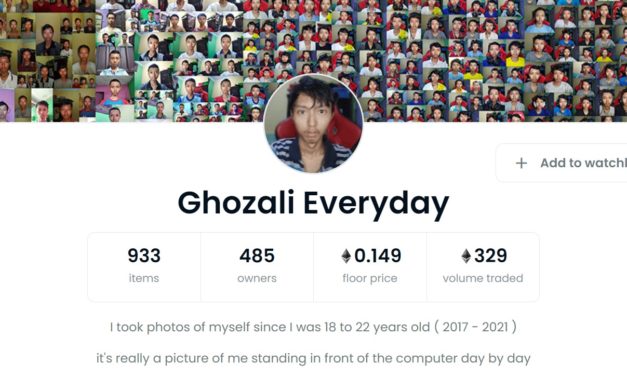
An Indonesian college student has reportedly become a millionaire by selling nonfungible token (NFT) versions of his selfies on the OpenSea NFT marketplace.Sultan Gustaf Al Ghozali, a 22-year-old computer science student from Semarang, Indonesia, converted and sold nearly 1,000 selfie images as NFTs. According to Ghozali, he took photos of himself for five years — between the ages of 18 and 22 — as a way to look back on his graduation journey.Uploading my photo into nft lolhttps://t.co/E3Q4sBmN26#NFT #opensea pic.twitter.com/rD51rdcpzp— Ghozali_Ghozalu (@Ghozali_Ghozalu) January 10, 2022Ghozali selfies were taken sitting or standing in front of his computer, which was later converted into NFTs and uploaded to OpenSea in December 2021. The artist set the price for each NFT selfie at $3 without expecting interest from serious buyers. While monetizing his expressionless images, Ghozali said:“You can do anything like flipping or whatever but please don’t abuse my photos or my parents will very disappointed in me. I believe in you guys so please take care of my photos.”Ghozali’s OpenSea profile. Source: OpenSea.Going against his wildest expectations, Ghozali’s NFT offering blew up as prominent members of Crypto Twitter showed support by purchasing and marketing the offerings.Ghozali happened…the year of Gozali @Ghozali_Ghozalu pic.twitter.com/HKOw7FZddj— Arnold Poernomo (@ArnoldPoernomo) January 12, 2022

With the rising popularity, one of Ghozali’s NFT sold for 0.247 Ether (ETH) on Jan 14. worth $806 at the time of purchase, according to AFP. The young entrepreneur also adds a touch of personalization by providing some background information along with the selfies, which adds to the rarity of the NFT.every #NFT photo I take has a story behindThis photo was taken during the second corona vaccine https://t.co/pZfJKoKuc9— Ghozali_Ghozalu (@Ghozali_Ghozalu) January 11, 2022

At its peak, Ghozali’s selfie NFTs sold for 0.9 ETH, worth roughly $3,000, according to a Lifestyle Asia report. Ghozali’s collection subsequently reached a total trade volume of 317 ether, equivalent to more than $1 million. The young artist also made his first tax payment on the basis of this income through OpenSea.this is my first tax payment in my life https://t.co/VDa8KYYPGs— Ghozali_Ghozalu (@Ghozali_Ghozalu) January 14, 2022

Related: NFT sales and blockchain games continue to grow despite the recent market slump: ReportDespite the recent sluggish performance of the overall crypto market, the NFT marketplace and blockchain gaming industry continues to record high transaction volumes. As Cointelegraph reported, DappRadar data shows that the number of UAW connected to Ethereum NFT DApps grew by 43% since Q3 2021. In addition, the money generated by NFT trading went from $10.7 billion in Q3 2021 to $11.9 billion in the first ten days of 2022.

Čítaj viac

Uruguay reportedly installs its first Bitcoin ATM

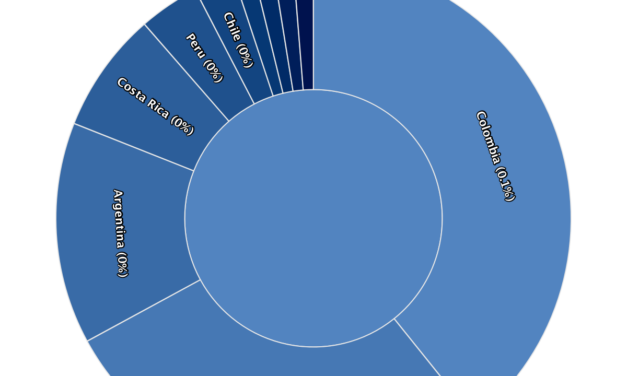
Uruguay has reportedly installed its first Bitcoin (BTC) ATM, making it the 11th South American country to publicly encourage crypto adoption. Prior to Uruguay’s involvement, South America hosted 79 ATMs, which represented 0.2% of global BTC ATM installations.According to Ámbito, Uruguay’s first crypto ATM was installed in the coastal city of Punta del Este, a major tourist attraction in the region. Uruguay’s first Bitcoin ATM was developed and installed in partnership with two local crypto companies — URUBit and inBierto. The crypto ATM in Uruguay currently supports withdrawal and deposits of five cryptocurrencies, namely — BTC, Binance Coin (BNB), Binance USD (BUSD), Ferret Token (FRT) and Urubit (URUB). FRT and URUB are in-house cryptocurrencies managed and distributed by URUBit and inBierto respectively. Adolfo Varela, the CEO of inBierto, confirmed that the initiative was 100% funded by the government of Uruguay. inBierto is a crypto investment platform, who is also a member of the Uruguayan Chamber of Fintech (Cámara Uruguaya de Fintech), a startup accelerator focused on the fintech sector. URUBit is a decentralized token created in Uruguay and deployed in the Binance Smart Chain (BSC).Data from Coin ATM Radar shows that Colombia leads the South American market with 31 crypto ATM installations to date, who is followed by Brazil and Argentina at 22 and 11 installations respectively.Other South American countries such as Ecuador, Venezuela, Aruba and Saint Kits and Nevis have also installed one crypto ATM. inBierto has not yet responded to Cointelegraph’s request for comment.Related: Uruguayan senator introduces bill to enable use of crypto for paymentsLast year, an Uruguayan senator introduced a draft bill seeking to regulate cryptocurrency and enable businesses to accept crypto payments.As Cointelegraph reported, senator Juan Sartori was not keen on adopting crypto as a legal tender. Instead, he suggested:“Today we present a bill that seeks to establish a legitimate, legal and safe use in businesses related to the production and commercialization of virtual currencies in Uruguay.”

Čítaj viac

Hong Kong begins discussions to introduce stablecoin regulatory framework

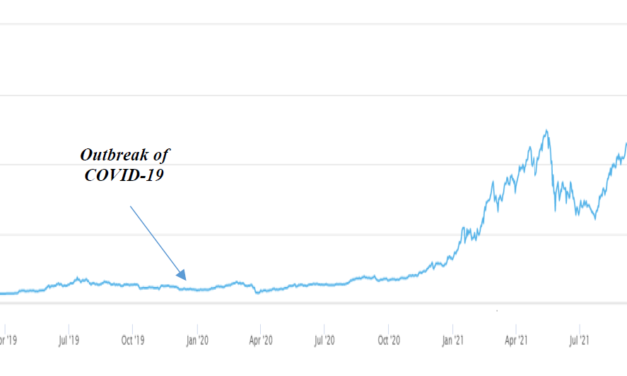
Hong Kong’s central banking institution, the Hong Kong Monetary Authority (HKMA), released a questionnaire to gauge public opinion on regulations for crypto-assets and stablecoins. The state-backed regulator intends to establish a regulatory framework by 2023-24.HKMA’s “Discussion Paper on Crypto-assets and Stablecoins” highlights the explosive growth of the stablecoin market in terms of market capitalization since 2020 and the concurrent regulatory recommendations put forth by international regulators including the United States’ Financial Action Task Force (FATF), the Financial Stability Board (FSB) and The Basel Committee on Banking Supervision (BCBS).Market Capitalization of Crypto-assets. Source: HKMAAccording to the HKMA, the current size and trading activity of crypto-assets may not pose an immediate threat to the stability of the global financial system from a systemic point of view. However, the discussion paper warned:“The growing exposure of institutional investors to such assets as an alternative to or to complement traditional asset classes for trading, lending and borrowing […] indicate growing interconnectedness with the mainstream financial system.”Market Capitalization of Major Stablecoins. Source: HKMA.Based on the above figure, HKMA’s paper shows that the global market capitalization stood at about $150 billion in December 2021, “representing about 5% of the overall crypto-asset market.” The regulator has also shared a list of eight questions to seek policy-related recommendations citing five possible regulatory outcomes — no action, opt-in regime, risk-based regime, catch-all regime and blanket ban:Possible policy options for regulating crypto-assets. Source: HKMA.HKMA expects stakeholders to submit their responses by 31st March 2022, and aims “to introduce the new regime no later than 2023/24.”Major jurisdictions’ regulatory stance towards stablecoins. Source: HKMA.On an end note, the regulator stated that payment-related stablecoins have a higher potential for being incorporated into the mainstream financial system or even day-to-day commercial and economic activities. As a result, the HKMA considers expanding the scope of the Payment Systems and Stored Value Facilities Ordinance (PSSVFO), a law that determines the legality of financial products. Related: Hong Kong real estate giant leads $90M raise for crypto bank SygnumComplementing the local government’s pro-crypto intentions, one of Hong Kong’s largest property developers Sun Hung Kai invested $90 million in Sygnum, a Swiss bank dedicated to digital asset holding. As Cointelegraph reported, the Series B funding round brings Sygnum’s post-money valuation to $800 million, marking a tenfold surge in consolidated revenues from 2021.

Čítaj viac

Cash App integrates Bitcoin Lightning Network for faster BTC transfers

Popular mobile payment service Cash App has integrated the Bitcoin (BTC) Lightning Network as a part of an update, allowing faster and cheaper BTC transfers using the Layer 2 (L2) payment protocol. Cash App is developed and owned by Block (formerly Square), a fintech firm co-founded by former Twitter CEO Jack Dorsey. The announcement of the BTC L2 integration was shared as a notification on the official Cash App application, which made its way through to Crypto Twitter:The news are real! @CashApp added #Bitcoin Lightning ⚡️Network pic.twitter.com/zbbdqcx0dC— Yegor Petrov ⚡️ (@yeg0rpetrov) January 11, 2022The Bitcoin Lightning Network protocol addresses the noted limitations of the BTC blockchain to improve speeds while reducing the costs associated with transactions. Just last month, Dorsey featured in a video with Lightning Development Kit (LDK), a service developed by Spiral, a Square subsidiary focused on building for the Bitcoin ecosystem. LDK allows developers to integrate Lightning protocols into Bitcoin wallets and related services.Prior to leaving Twitter, Dorsey also openly voiced his interest in integrating L2 protocols for the newly launched tipping services on Twitter and BlueSky:Only a matter of time— jack⚡️ (@jack) June 11, 2021

The latest data from Business of Apps shows that Cash App catered to over 36 million users across the United States and the United Kingdom. Related: Block’s Cash App will allow users to gift BTC for the holidaysFavoring ongoing Bitcoin adoption, Cash App launched a service that allowed users to gift BTC and stocks over the holiday season. Cash App allowed users to send a minimum of $1 worth of BTC without needing to own the assets beforehand.

Čítaj viac

Získaj BONUS 8 € v Bitcoinoch

nakup bitcoin z karty

Registrácia Binance

Burza Binance

Aktuálne kurzy