Autor Cointelegraph By Arijit Sarkar

Jack Dorsey on UBI: Bitcoin encourages transparency, long-term thinking

Twitter co-founder and Block (previously Square) CEO Jack Dorsey discussed the implications of a Bitcoin (BTC)-powered universal basic income (UBI) strategy with US congressional candidate and a full-time elementary school teacher, Aarika Rhodes. “Obscurity of information forces and incentivizes people to negative (financial) behaviors that don’t work for them, their community or family,” said Dorsey while pointing out the lack of transparency within the existing centralized financial system. “If there’s one thing to focus on in Bitcoin — the operations are transparent, the code is transparent, the policy is transparent.”This base foundation of BTC is what Dorsey believes has the potential to solve numerous use cases and problems as a direct result of using fiat currency. Through business initiatives including Start Small, the entrepreneur has invested over $55 million across the United States and overseas to experiment on UBI. “We’re about to do a test of the UBI-like concept with Bitcoin as well.”Dorsey’s BTC-powered UBI experiment will involve creating a small-scale closed-loop community of sellers and merchants that adhere to the Bitcoin standards. Based on the happiness quotient and willingness to participate, he intends to identify use cases for wide-scale implementation. Rhodes strongly believes that involving Bitcoin will reduce the costs related to banking fees:“When you have something like Lightning (network), where you can transact at very low fees is a benefit for everyone. It doesn’t matter where are economically.”In terms of financial literacy, Dorsey said that adopting the Bitcoin standard inculcates long-term thinking, however, his skepticism toward a BTC-powered universal basic income will reduce based on the results portrayed by the ongoing experiments:“Just that action of owning it (BTC) will change people’s mindsets in fundamental ways that are net positive and compounds throughout their communities, and encourages other actions like sellers and merchants around them doing similar things.”Along with the benefits that come with the Bitcoin standard, Dorsey is also vigilant about its negative impacts. On an end note, he highlighted the inefficiencies within the government policies and how UBI helps address some of the challenges:“If you intend to help people by giving them money directly is far better than the money that the governments (federal and local) spends on these existing support structures. It’s not helping people.”Related: Jack Dorsey: Diem was a waste of time, Meta should’ve focused on BTCIn a recent interview with MicroStrategy CEO Michael Saylor, Dorsey opined that Facebook (later rebranded as Meta) should’ve used an open-ended protocol like Bitcoin rather than attempting to create its own currency, Diem.As Cointelegraph reported, Dorsey added that making BTC more accessible would also benefit many of Meta’s instant messaging and voice-over-IP services such as Facebook Messenger, Instagram and WhatsApp.

Čítaj viac


FTX acquires Japan's FCA-licensed crypto exchange Liquid

American billionaire and CEO of crypto exchange FTX Sam Bankman-Fried announced that his company acquired Japanese crypto firm Liquid Group and its subsidiaries. As a part of the deal, FTX will acquire Quoine Corporation, a Financial Services Agency (FSA)-approved crypto exchange. As Cointelegraph previously reported, Quoine acquired a Type I Financial Instruments Business license under the Financial Instruments and Exchange Act from the Japanese regulatory authorities.FTX is pleased to announce the acquisition of the Liquid group of companies, including an FSA-registered crypto-asset exchange to provide products and services to our customers in Japan! https://t.co/rO5TznWFCU— SBF (@SBF_FTX) February 2, 2022According to the announcement, the partnership will serve retail and institutional investors in the Japanese and global markets:“Quoine will gradually integrate FTX’s products and services into its own offering, and FTX’s existing Japanese customers will be migrated to Quoine’s platform.”The agreement also requires FTX to comply with Japanese laws while serving existing Japanese users on its platform. Based on this agreement, FTX will transfer its existing users from Japan to Quoine’s trading platform starting March 30.While the acquisition is expected to close in March 2022, the economic terms of the deal are yet to be disclosed.Related: Crypto exchange FTX US closes $400M funding round to reach $8B valuationJust last week, FTX US achieved an $8 valuation following SoftBank Group Corp-led funding of $400 million. As Cointelegraph reported, FTX US president Brett Harrison had planned to redirect the funds to expand the crypto exchange’s offerings and a supporting workforce. Following numerous other concurrent investments, FTX exchange as a whole stands at a $32 billion valuation. Despite concerns raised by experts about a falling crypto market, Bankman-Fried remains bullish:“I think we’re not entering a long-term crypto winter. There have been changes in expectations of interest rates, and that’s been moving crypto markets. But it’s been moving markets more generally as well.”

Čítaj viac

El Salvador relaunches Chivo wallet, plans to deploy 1,500 Bitcoin ATMs

El Salvador, the first country to adopt Bitcoin (BTC) as a legal tender, has relaunched its in-house Chivo wallet to address the existing challenges of BTC transfers locally. With AlphaPoint integration, the updated Chivo wallet is expected to carry out instantaneous low-fee Bitcoin transactions while fixing concerns related to stability and scalability.Within the first month of establishing BTC as a legal tender, President Nayib Bukele announced that Chivo wallet onboarded 2.1 million Salvadorans, which by the end of the year amasses 75% of the population. However, the mass adoption met with numerous roadblocks, including system issues and missing funds. Seeking a permanent solution for over 4 million BTC users, the government of El Salvador partnered with a white label infrastructure provider, AlphaPoint, focusing heavily on Chivo wallet’s stability and uptime, scalability, and social impact.According to the official statement, Chivo intends to expand its current consumer-faced use cases to other day-to-day transactions such as simplifying payments of home utilities, taxes and many other daily transactions in Bitcoin:“The project has aspirations to Chivo is also in the process of deploying 1,500 Bitcoin ATMs around the country to more readily serve the Salvadoran population.”The latest AlphaPoint integration will extend support for point-of-sale systems, websites and the Salvadoran government’s administrative console. In addition, the update includes improved “Lightning integration for nearly instantaneous low-fee Bitcoin transactions via QR and Lightning addresses.” AlphaPoint CEO and co-founder Igor Telyatnikov said:“El Salvador and President Bukele are truly leading globally with this first major experiment in Bitcoin adoption at a country-wide level. We are honored to be involved in the process and provide the scalable and reliable solutions needed for this massive undertaking.”Related: El Salvador explores low-interest loans backed by BitcoinIn pursuit of exploring greater use cases for BTC, the government of El Salvador is exploring the possibility of BTC loans with lower interest rates. As Cointelegraph reported, Mónica Taher, El Salvador’s Director of Technology and Economy International Affairs, hosted a Facebook Live event to share the agenda of providing low-interest BTC loans to small and micro-businesses. Speaking to Cointelegraph, she said:“The Bitcoin small loans will provide access to digital money for the unbanked while helping them create a credit history. El Salvador’s economy will strengthen by empowering its small businesses.”

Čítaj viac

India to introduce 30% crypto tax, digital rupee CBDC by 2022-23

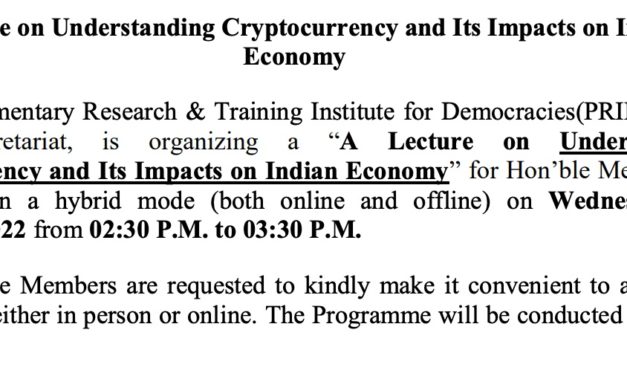
In a speech discussing the budget for 2022, Indian finance minister Nirmala Sitharaman announced the launch of a central bank digital currency (CBDC) by 2022-23 as means to boost the country’s economic growth. Sitharaman highlighted the need for digital inclusion across numerous business verticals while announcing the fund allocation set in the Union Budget. Speaking about the launch of a digital rupee, she added that the introduction of a CBDC will provide a “big boost” to the digital economy. She also highlighted the possibility of a more efficient and cheaper currency management system made possible by digital currencies.“It is therefore proposed to introduce digital rupee using blockchain and other technologies to be issued by the Reserve Bank of India, starting 2022-23.”Complementing the launch of a digital version of the Indian rupee, Sitaraman also proposed the introduction of a 30% crypto tax that targets all transfers of virtual digital assets. She suggested:“Any income from transfer of any virtual digital asset shall be taxed at the rate of 30%. No deductions in respect of any expenditure or allowance shall be allowed while computing such income, except the cost of acquisition.”Any income from transfer of Virtual Digital Asset shall be taxed at 30% : FM @nsitharaman#Budget2022 – 2023#AatmaNirbharBharatKaBudget pic.twitter.com/J88YTIGPz5— All India Radio News (@airnewsalerts) February 1, 2022The finance minister also highlighted that any losses that occurred while transacting digital assets cannot be used as compensation against any other income source. In other words, investors will not be able to show losses or hacks of cryptocurrencies to offset taxation on profits. In order to keep track of crypto investments in the country, Sitharaman further proposed to implement a tax deduction at source (TDS) of 1% above a yet-to-be-determined threshold.Related: Indian parliament’s agenda includes crypto training session, leaves out bill banning digital assetsLocal Indian media publication Lok Sabha highlighted that a parliamentary research group has organized a crypto-focused training for tomorrow, Feb. 2.Excerpt from Jan. 31 Lok Sabha publicationAs Cointelegraph pointed out, the legislative business calendar for the lower house of parliament no longer includes a bill that could potentially ban crypto in the country.Previously, published texts of the bill propose banning “private cryptocurrencies” in India while retaining use of “the underlying technology of cryptocurrency.”

Čítaj viac

UNICEF calls for child safeguards amid mainstream crypto adoption

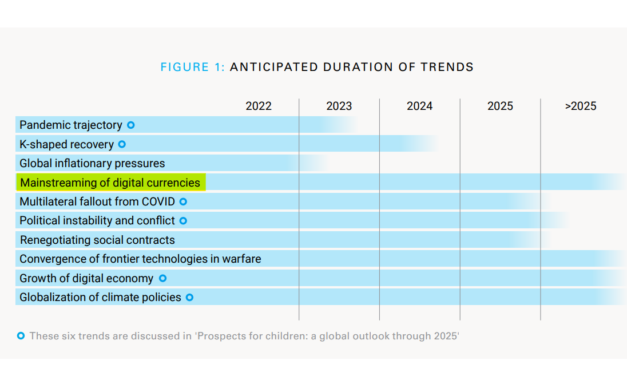
The United Nations Children’s Fund has called for incorporating child safeguards into online child protection initiatives, citing financial and exploitative threats posed by unregulated crypto markets.UNICEF’s “Prospects for children in 2022” report, which examines the impact of global trends on children, anticipates further mainstream adoption of cryptocurrencies — “demonstrating both the promise of greater financial inclusion and the need for new child safeguards.”Source: UNICEFThe report shows that digital currencies have gained widespread interest in 87 countries by the end of 2021, with the majority of jurisdictions experimenting on their own versions of a central bank digital currency. UNICEF expects a similar growth trajectory in 2022, as the report states:“A potential alliance between governments, large banks and investment firms against challenger banks and blockchain-based finance could arise in many countries.”The push for crypto’s mainstream adoption is also fueled by the economic pressures levied by the COVID-19 pandemic. As UNICEF reported, the economic recovery in high-income countries will slow will see an increase this year despite factoring in future disruptions from the pandemic.Source: UNICEFUNICEF also expects the collaboration of governments, large banks and investment firms with crypto and blockchain firms:“These developments will eventually require the emergence of national and international legal and regulatory frameworks. As we wait to see what direction these trends take us in, the implications for children hang in the balance.”With mainstreaming of cryptocurrencies, UNICEF acknowledges the significant benefits bestowed via financial inclusion and “frictionless remittances and more instant, transparent and efficient social assistance programs.” However, the United Nations agency warns about the threats posed by unregulated markets to the well-being of children, such as stability of financial systems and deteriorating government revenues. Calling out for new child safeguarding reforms, the report also highlights some of the possible negative impacts of unregulated transactions that support child trafficking, sexual exploitation, the sale and purchase of content depicting child abuse, and defrauding and extortion of children. On an end note, UNICEF suggested:“Now is the time to begin incorporating cryptocurrency and digital currency child safeguards into online child protection initiatives.”Related: Nations to adopt Bitcoin, crypto users to reach 1B by 2023: ReportA Crypto.com report predicts that global crypto users could reach one billion by the end of 2022. As Cointelegraph reported, the global crypto population increased by 178% in 2021, rising from 106 million in January to 295 million in December.Source: Crypto.comCrypto.com’s report estimates that “If we extrapolate a similar rate of increase in 2022, we are on track to reach 1 billion crypto users by the end of 2022.”

Čítaj viac

Získaj BONUS 8 € v Bitcoinoch

nakup bitcoin z karty

Registrácia Binance

Burza Binance

Aktuálne kurzy